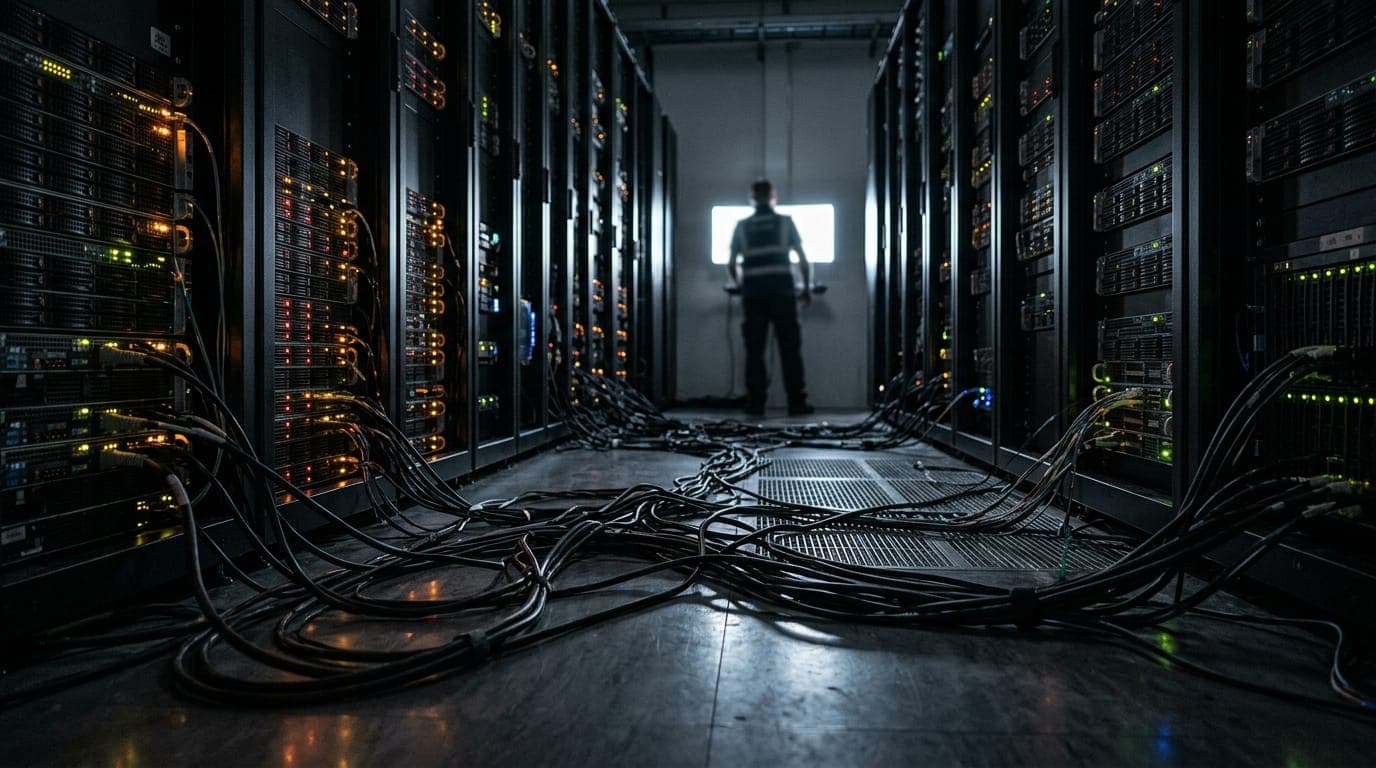
Texas Grid Freeze Locks In Bitcoin Miners as Bernstein Calls Scarcity Event
Gov. Abbott's August 3 directive orders a mandatory PUCT/ERCOT audit before any new data center connects to the Texas grid. With 474 GW in the queue and incumbents already live, Bernstein says the freeze is a scarcity event that floors the value of existing Bitcoin mining and AI sites.
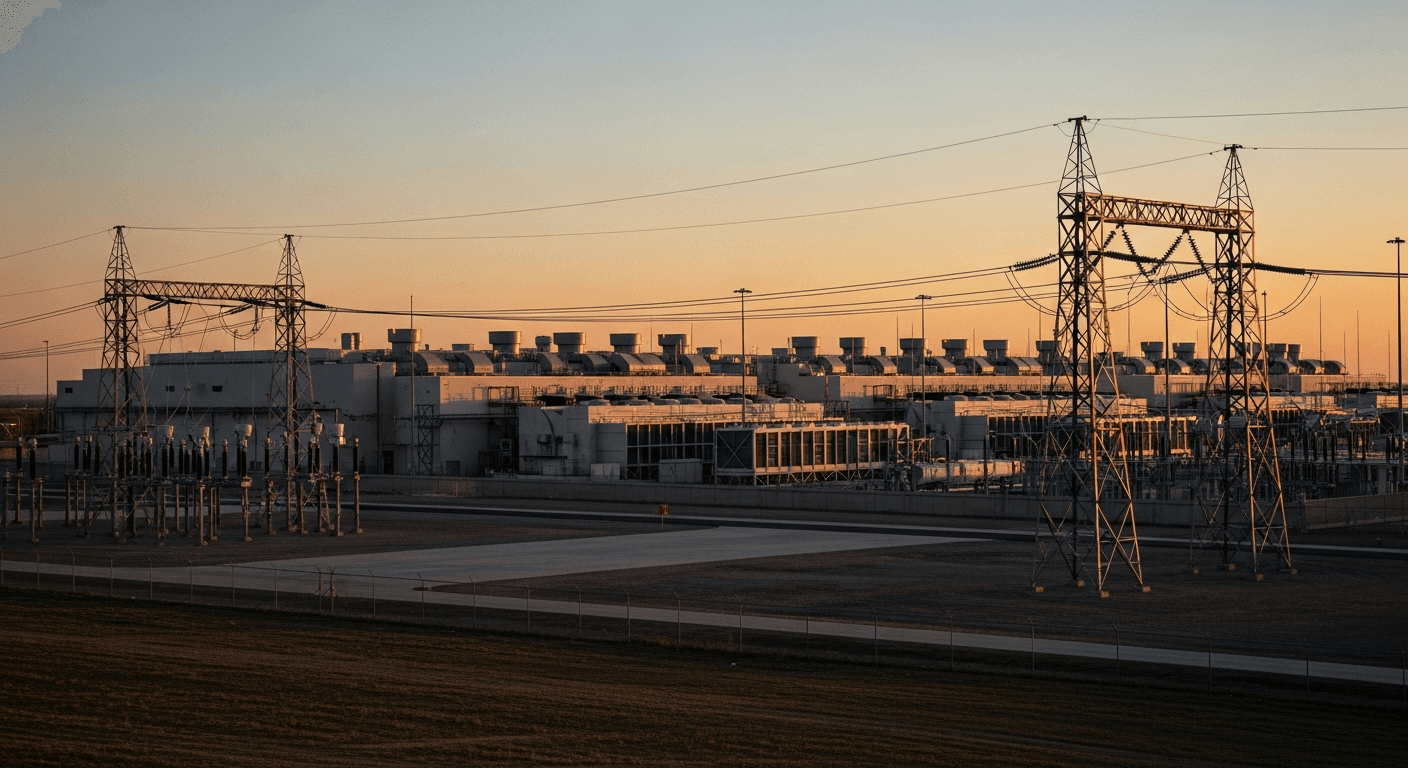
Abbott's mandatory data center audit turns every connected megawatt in Texas into a scarce, legally-protected asset.
Key takeaways
- Gov. Abbott's August 3 directive halts all new data center grid connections in Texas pending a mandatory PUCT/ERCOT audit, with more than 474 GW of requests currently in the queue, over five times the state's record peak demand.
- Bernstein says the freeze is a scarcity event: existing Bitcoin mining and hybrid mining/AI sites with contracted power now hold a structural advantage that new entrants cannot replicate on any near-term timeline.
- Bitcoin miners' proven curtailability on ERCOT gives them a genuine edge in the audit's criteria over rigid AI data center loads, turning a grid-management talking point into a competitive asset.
Gov. Greg Abbott issued a directive on August 3, 2026, ordering the Public Utility Commission of Texas and ERCOT to conduct a comprehensive audit of all data center projects in the ERCOT interconnection queue before any can connect to the Texas grid. Per Abbott's official press release, approximately 90% of those 474 GW of pending requests originate from data centers, per Abbott's office, a figure Abbott's office says strains grid planning for Texas residents. "Any project that fails to comply with the requirements set forth by the PUCT and ERCOT, and by state law, must be denied connection to the Texas grid," Abbott said. "Simply put, Texans must come first."
ERCOT confirmed it would work with PUCT to implement the directive and separately postponed its Batch Zero transmission-planning study, the next phase of interconnection scheduling, deepening timeline uncertainty for every project still in queue.
The Math Behind the Moat
The queue number tells the story bluntly. Texas' record peak demand sits below 90 GW. The 474 GW in the ERCOT interconnection queue is more than five times that. The system cannot absorb that load, and Abbott's directive gives regulators the authority, and the obligation, to prune it.
For projects already connected, none of this applies. Their megawatts are live. For anyone trying to enter the queue now, Bernstein (first reported by The Block) puts the median wait time for 1 GW of new U.S. grid power at roughly 50 months, per prior Bernstein research. The Abbott freeze makes that estimate a floor, not a ceiling.
Per prior Bernstein research shared with Cointelegraph, the firm's deal tracker logged 7.5 GW of AI-related Bitcoin mining contracts as of end-July 2026, equivalent to $150 billion in multi-year commitments. The valuation gap the firm identified in prior research is the clearest expression of what the freeze means in dollar terms: per prior Bernstein research, miners with active AI contracts were trading at roughly $6 million per planned megawatt against roughly $3 million for miners without AI exposure. If new supply is now frozen behind a regulatory gate with no clear exit timeline, the premium on contracted, operating megawatts in Texas has one direction to move.
Federal capital has been chasing the same constrained grid, and Abbott's directive arrives on top of that pressure, not in spite of it.
Why Miners Clear the Bar New Entrants Can't
The audit isn't arbitrary. It scrutinizes whether projects can curtail demand or supply their own generation. Bitcoin miners have been providing dispatchable, curtailable load on ERCOT since at least 2021. They can reduce consumption in minutes when the grid is stressed. AI data centers running continuous inference workloads cannot make the same claim with the same track record.
That distinction matters in two ways. Operationally, miners already have the relationships, protocols, and history with ERCOT that new applicants must build from scratch. Practically, the audit's criteria framework treats curtailability as a real qualification, not a checkbox. Miners pass. Many rigid compute loads do not.
This dynamic plays out beyond Texas too. AI data center protests have blocked or delayed over $286 billion in projects across 42 states, and legislative resistance to new data center buildout has spread across multiple states. Operators who moved on power when the queue was open now hold assets the market cannot replicate through normal channels.
What to Watch
The thesis breaks if PUCT and ERCOT complete the audit quickly, clear the bulk of the queue without material denials, and resume interconnections at near-normal pace. A court injunction against Abbott's directive would have the same effect. Neither outcome looks likely given ERCOT has already postponed Batch Zero. The more probable path is a prolonged review that further entrenches the incumbent advantage Bernstein identified. Watch the pace of audit completions and whether PUCT issues any denial orders, those will be the first hard data points on whether this is a structural freeze or a procedural delay.
Update, August 4, 2026
The Abbott directive is drawing scrutiny beyond the grid math. The PUCT and ERCOT told the governor in July 2026 that the agencies lack authority in key areas and asked the legislature to expand it; PUCT Chairman Gleeson specifically wrote that the commission has not historically regulated end-users and needs new statutory power to do so. That admission hands any denied developer a ready-made legal argument: the agency's own words undercut the breadth of the moratorium. The August 20 PUCT meeting is where the agencies will try to paper that gap through a good-cause exception and rulemaking. Until that rulemaking is published, denials issued without criteria are easier to attack as arbitrary.
The order also goes further on disclosure than the original directive letter signaled. Abbott is requiring data center developers to furnish information on tax breaks they will receive, power use and generation, water use and cooling operations, efforts to reduce impacts on local communities, and ownership of the facility. That ownership-and-water disclosure requirement is new surface area for projects backed by foreign capital or hyperscalers running opaque holding structures.
The political fuel behind the order is also now visible. A University of Texas/Texas Politics Project poll released in June found 56 percent of self-reported Texas voters opposed data center construction in their community.
Politics appears to be shaping Abbott's decision; with Abbott up for reelection and leading challenger Gina Hinojosa by slim margins, the move looks calibrated to win over voters ahead of November. Separately, similar screening rules set by Chicago-based Exelon earlier this year to filter out unserious applicants yielded a 40 percent decline in expected data center load in the second quarter of 2026, suggesting the audit framework alone could meaningfully thin the queue even before a single denial is issued.
Sources
- Governor Abbott's August 3, 2026 Directive
- First reported by The Block
Frequently Asked Questions
No. The directive applies to projects advancing through the interconnection queue, not to operating sites. Miners with live power purchase agreements and active grid connections have no queue to navigate. The audit's impact falls entirely on new entrants.
Batch Zero is ERCOT's transmission-planning study for the next cohort of interconnection requests. It establishes timelines and infrastructure requirements for queue applicants. Its postponement means new projects cannot get a credible schedule for when, or whether, they will connect, extending the effective freeze indefinitely for anyone not already live.
Bernstein's pre-directive estimate of roughly 50 months as the median wait for 1 GW of new U.S. grid power was calculated under normal queue conditions. With Batch Zero postponed and a mandatory audit now preceding any connection decision in Texas, that 50-month figure is a starting point, not an upper bound, for any new applicant entering the ERCOT process today.