U.S. Embassy Warns of Mass Casualty Threat in Moscow as Iran and Poland Crisis Deepen
On October 31, the U.S. Embassy in Moscow warned of a credible mass casualty threat at the Tsaritsyno Museum Reserve. Iran hardened its retaliation doctrine with 'no geographical limitation' language. Poland deployed police to its Constitutional Tribunal. Three state-system failures, simultaneously.
Three simultaneous state-system stress events in a single news cycle, days before U.S. midterms.
Key takeaways
- The U.S. Embassy in Moscow issued a formal security alert on October 31 warning of a "credible threat of a mass casualty event" at the Tsaritsyno Museum Reserve; Russia's FSB confirmed it received the intelligence through partner channels.
- Iranian leadership issued doctrine calling for an "immediate, effective response with no geographical limitation" amid the ongoing post-ceasefire standoff tied to the Strait of Hormuz.
- Poland's constitutional crisis escalated on October 31 as President Nawrocki held emergency talks after riot police were deployed to the Constitutional Tribunal, putting a NATO-member state in institutional disarray.
On Halloween, three separate state-system stress events broke simultaneously: a U.S. terror warning on Russian soil, an Iranian retaliation doctrine with no geographic ceiling, and a NATO ally deploying police to its own supreme court. Any one of these would be a significant news day. All three landing in the same news cycle, days before U.S. midterms, is a different category of signal.
What Happened in Moscow
The U.S. Embassy in Moscow published a formal security alert on October 31 warning of a credible mass casualty threat at the Tsaritsyno Museum Reserve, Dolskaya Ulitsa 1, Moscow. The State Department's consular affairs account posted the warning at 3:38 PM EDT.
The Russian FSB confirmed receipt of the intelligence, stating per TASS: "Information about preparations for a terrorist attack in Moscow has been received from the American side through partner channels." The Tsaritsyno Museum Reserve grounds were temporarily closed following the alert. Canada's government travel account separately echoed the warning.
The precedent matters: the U.S. Embassy issued a similar warning before the March 22, 2024, Crocus City Hall attack that killed more than 140 people. That warning was also largely dismissed at the time.
Iran's Doctrine and the Strait
Iranian leadership issued doctrine language ordering an "immediate, effective response with no geographical limitation" in a meeting with senior military commanders, per Tehran Times and Mehr News Agency. The Iranian army separately warned the U.S. against renewed military action, saying any conflict could spread across the region. Iran's Foreign Ministry confirmed no talks with Washington are planned until its conditions are met.
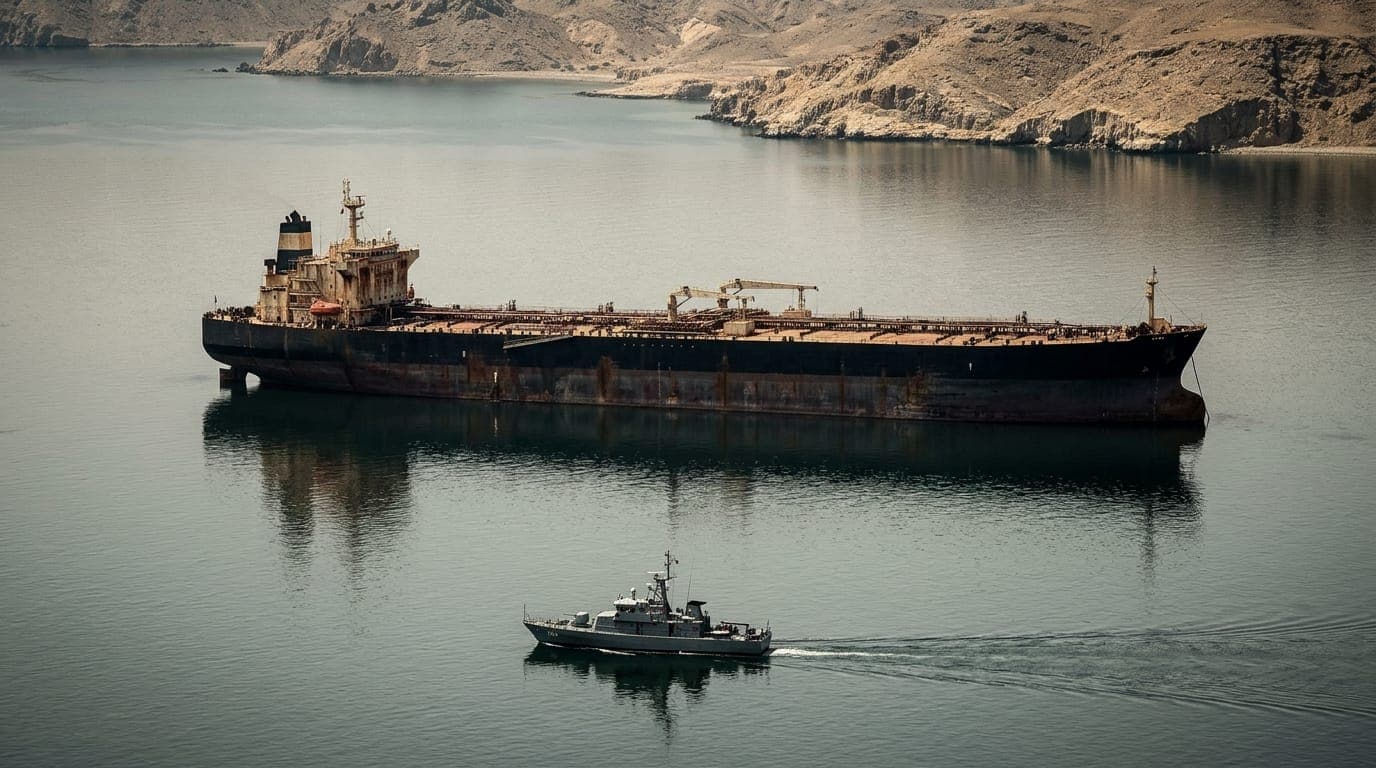
Context the doctrine language requires: this is not a new conflict. The 2026 Iran war began in approximately February, a ceasefire reportedly collapsed in approximately July after Iran resumed attacks on commercial vessels in the Strait of Hormuz, and flows through the corridor have been under sustained pressure. The "no geographical limitation" framing is a hardening of posture in an active, ongoing confrontation, not a fresh threat from a standing start.
Every barrel that doesn't clear the Strait is an inflationary shock to dollar-denominated energy settlement.
Poland's Constitutional Breakdown
Poland's President Karol Nawrocki called emergency crisis talks with political leaders on October 31 after the Tusk government suspended senior Constitutional Tribunal judges and deployed riot police to the court building. Nawrocki accused the government of forcibly seizing the top court. Protesters gathered outside.
The European Commission urged Nawrocki to accept the nomination of new judges at the center of the dispute. U.S. Ambassador Tom Rose called for calm from all sides.
Per AFP, protester Iwona Dudek, 62, put it directly outside the tribunal: "This is Donald Tusk destroying democracy."
A flashpoint tribunal judges' meeting is set for November 3. The rule-of-law standoff traces back to PiS judicial changes from years prior; Nawrocki won the 2025 presidential election as a PiS-backed candidate, putting him structurally at odds with the Tusk government from day one. Details on the crisis mechanics are laid out in Al Jazeera's explainer and AFP's wire.
The Second-Order Read
Treat these as three separate stories and you miss what's actually happening. The connective tissue is state systems failing to provide security, stability, and institutional coherence simultaneously across different geographies.
Start with Moscow. The U.S. warning Russia about a potential terrorist attack on Russian soil is a functioning intelligence back-channel between two countries locked in a proxy war over Ukraine. That channel is one of the last intact trust mechanisms between Washington and Moscow. If it breaks, or if the attack happens anyway, the institutional trust infrastructure degrades another notch in real time. That is precisely the condition that drives demand for rails that don't require trusting states to behave.
Iran's doctrine is being set at the command level, in an already-active conflict, with a geographic footprint that encompasses the Strait of Hormuz, the Gulf, and potentially beyond. Every escalation in that corridor touches oil prices, dollar settlement, and the petrodollar architecture that underpins U.S. monetary hegemony. The broader energy complex carries its own layers of uncertainty.
Poland is a NATO member. The rule-of-law standoff in Warsaw is happening inside the alliance the U.S. depends on for eastern European security. If the constitutional order fractures there, you have a NATO state in internal disarray while Russia sits on its doorstep. That is not a peripheral European drama.
The falsifiable thesis: if the Moscow threat produces no attack, Iran's doctrine signals no follow-through action in the Strait, and Poland resolves before November 3 without constitutional rupture, this cluster dissolves as a signal. Watch Hormuz commercial shipping data and the Polish tribunal session on November 3 as the near-term tells.
Gold has moved on this threat environment. Bitcoin has not, on a relative basis. That gap is the market's current read on whether multi-vector geopolitical stress is a Bitcoin catalyst.
The stress is legible. The repricing hasn't happened yet.
What to Watch
The November 3 Constitutional Tribunal session in Warsaw is the nearest hard deadline. On the Iran front, the metric that matters is Hormuz passage data for commercial vessels, not the doctrine language itself.
In Moscow, the FSB's "appropriate measures" response either holds or it doesn't by end of weekend. U.S. midterms land on November 3 as well, adding political noise to every read. Russia's moves on financial infrastructure are already pointing toward a world where state-controlled rails are the only option inside its borders. The question is whether the next 72 hours add more evidence to that thesis or dissolve it.
Sources
- U.S. Embassy Moscow Security Alert, October 31, 2026
- U.S. Dept. of State / @TravelGov on X, October 31, 2026
- Tehran Times: "Immediate, effective, with no geographical limitation"
- Al Jazeera: Poland Constitutional Court crisis explainer, October 31, 2026
- AFP / France24: Polish riot police deployed as court crisis sets off standoff, October 31, 2026
Frequently Asked Questions
What was the threat at the Tsaritsyno Museum Reserve in Moscow?
The U.S. Embassy in Moscow issued a formal security alert on October 31 warning of a "credible threat of a mass casualty event" at the Tsaritsyno Museum Reserve. Russia's FSB confirmed it received intelligence about preparations for a terrorist attack through U.S. partner channels and said appropriate measures were being taken. The museum grounds were closed.
What does Iran's "no geographical limitation" doctrine mean for the Strait of Hormuz?
Iranian leadership ordered a response posture with "no geographical limitation" in a meeting with senior military commanders. This was issued in the context of the ongoing 2026 Iran conflict, whose ceasefire reportedly collapsed in approximately July after Iran resumed attacks on commercial shipping in the Strait of Hormuz. The doctrine signals that any renewed U.S. military action could trigger Iranian responses beyond the immediate Gulf corridor, directly threatening the energy flows that run through Hormuz.
Why does simultaneous geopolitical stress across multiple state systems matter for Bitcoin?
Bitcoin's core value proposition is that it operates outside state-controlled rails. When multiple state systems, a U.S.-Russia intelligence channel under strain, an active Gulf conflict threatening dollar-denominated energy settlement, and a NATO member in constitutional crisis, fracture simultaneously, the demand case for a permissionless, non-sovereign monetary asset becomes concrete rather than theoretical. The stress test is happening in real time.