
Sep 14, 2026
Is ChatGPT Private? What OpenAI Keeps, Who Can Read It, and What to Use Instead
 Marty Bent
Independent media since 2017
The Commoner by Marty Bent. Money, markets, AI, energy and privacy, every weekday.
Free, every weekday. Unsubscribe anytime using the link in each newsletter. By subscribing you agree to our Terms and acknowledge our Privacy Policy. Read recent issues.
Marty Bent Marty Bent
 Marty Bent
Malicious Electrum servers faked pending payments and baited users into fee bumps that paid an attacker. How the attack works, what 4.8.3 fixes, the Keystone data leak and Anthropic's S-1.
Marty Bent @TFTC21
OpenAI just posted a 67 page paper titled "The Exponential Time Hypothesis is False." Here's what that means in plain English. Picture a wall of light switches and a list of rules like "switch 3 OR switch 7 must be on." Find a setting that follows every rule. That puzzle is called 3-SAT. The brute force way is trying every combination. Every switch you add doubles the work. 300 switches means more combinations than there are atoms in the universe. For about 25 years computer scientists have assumed you can never escape that doubling. You can be clever and shave some off, but the blowup is baked in. That assumption is ETH, and a ton of other results are built on top of it. OpenAI claims an algorithm that still blows up, just slower than ETH says is possible. What it doesn't mean: - It doesn't prove P = NP - It doesn't make every hard problem easy - It doesn't break Bitcoin. Turning SHA-256 into one of these puzzles takes tens of thousands of switches, and at that size this method is far slower than plain brute force. Huge if true. It's a preprint and nobody has checked it yet. Watch what the complexity theorists say over the next few weeks. x.com/rrwilliams/sta…
@TFTC21OpenAI co-founder Greg Brockman claims their AI has produced three major scientific discoveries. A proof of the local smoothing conjecture in all dimensions (resolving the Kakeya conjecture), a disproof of the Exponential Time Hypothesis in computer science, and a rigorous existence proof for quantum chromodynamics in physics. All results have been formalized in Lean or handed to independent academic groups for verification.
@TFTC21CFTC Chairman Mike Selig is hosting the inaugural "Frontier Forum on Super Intelligence" this Wednesday at CFTC headquarters. x.com/ChairmanSelig/…
 @TFTC21
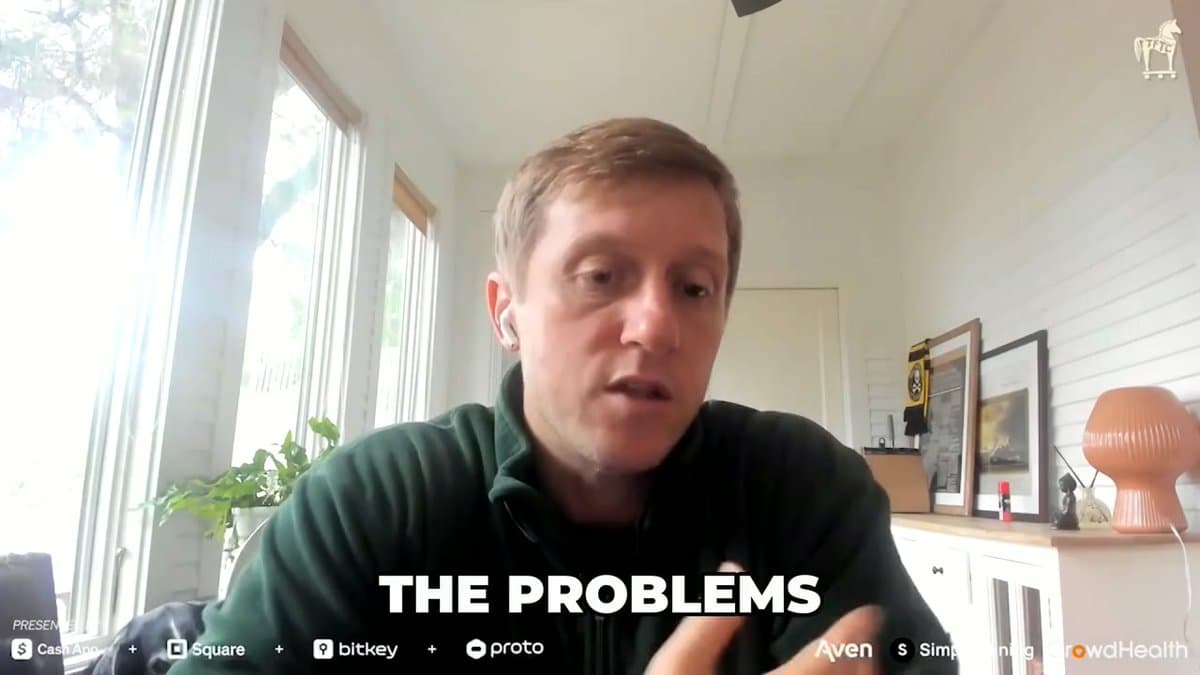
"It's also Bitcoin working. There's no moral hazard. There are no bailouts." @parkeralewis on the Coldcard bug and the Ledger supply chain attack.
 @TFTC21
UK-listed Smarter Web Company bought another 20 bitcoin, bringing their total holdings to 2,850 BTC worth roughly $227 million at current prices.
 @TFTC21
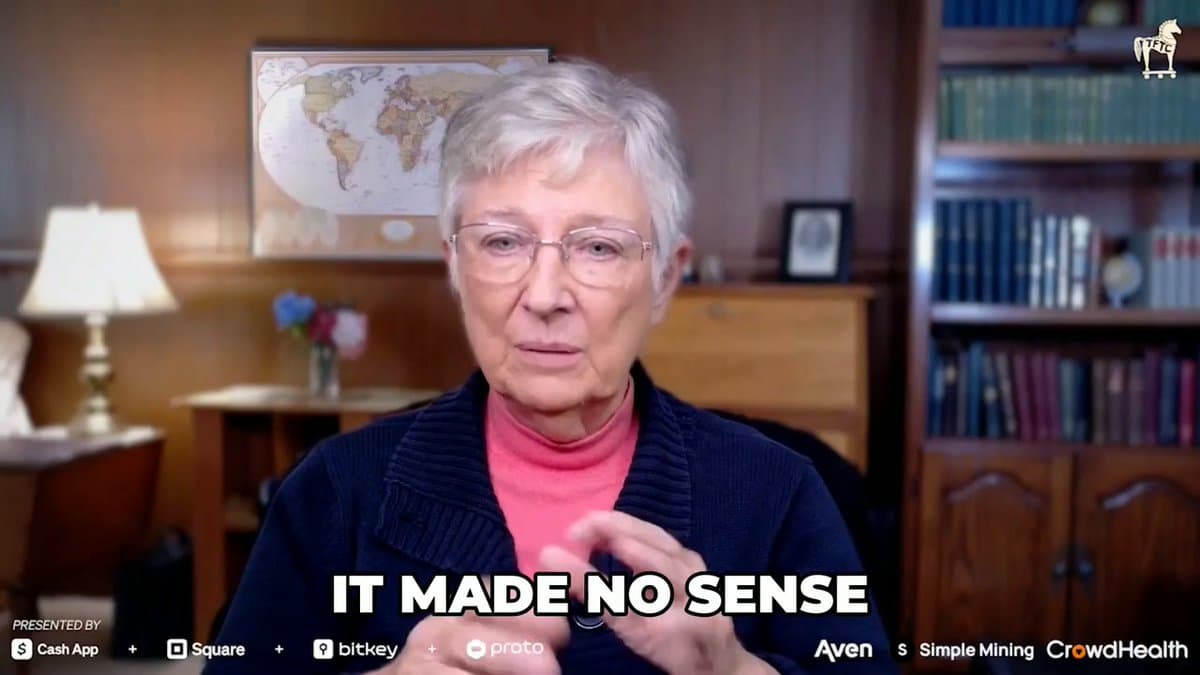
"It made no sense for the Canadians to walk out of those trade negotiations." @sjkokinda on Canada's tariff politics.
 @TFTC21
OpenAI just dropped GPT-6.1 Terra. It scores on par with GPT-6 Astra on visual reasoning benchmarks at one-tenth the price per token, solves 50.3% of Terminal-Bench coding tasks (more than double its predecessor), and cut hallucination rates from 53.6% to 16.7%. API pricing: $1/M input tokens, $5/M output. Rolling out now to Plus, Pro, Enterprise, and Edu users. x.com/ChatGPT/status…
 @TFTC21
Microsoft is offering voluntary buyouts to a significant portion of its workforce as it restructures around AI. Reports suggest up to 60,000 employees could be eligible. Eligible staff at VP level and below across the US, Canada, India, and the UK can leave with financial support and career planning resources. "This offer gives eligible employees who may be considering a future outside the company a new choice to make that transition now with support." blogs.microsoft.com/blog/2026/10/2…
 @TFTC21
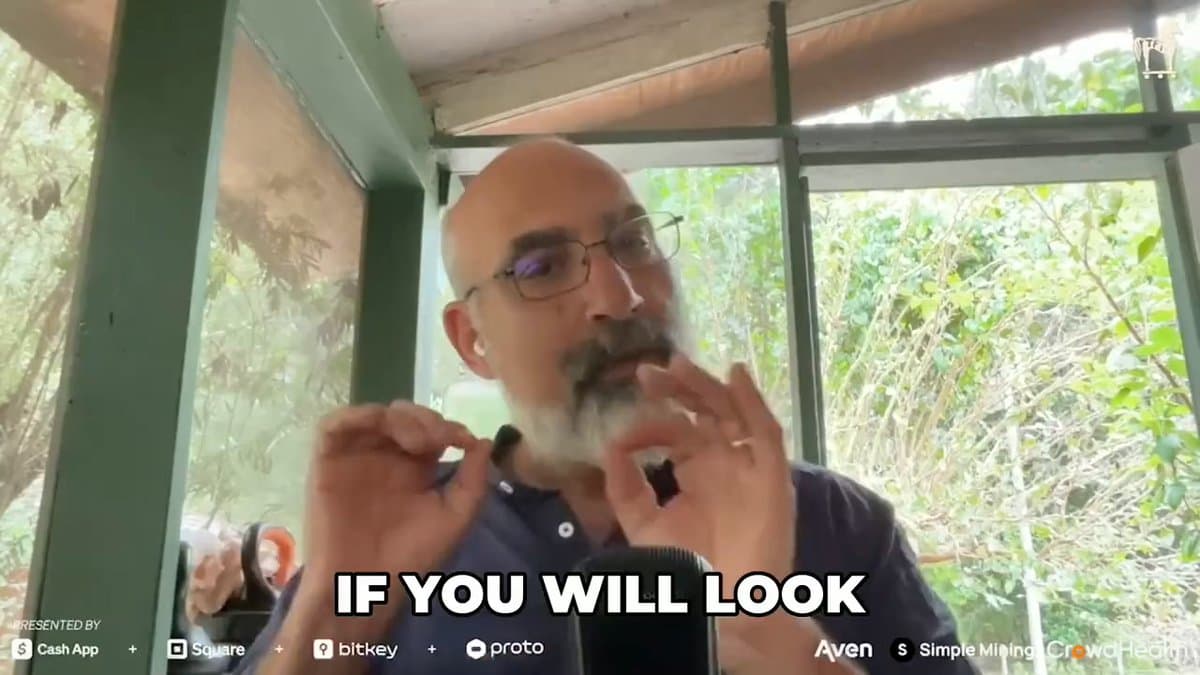
"Warsh has to raise its rates a little bit on the short end because the money markets are demanding it." @TFL1728 on the bear flattener.
 @TFTC21
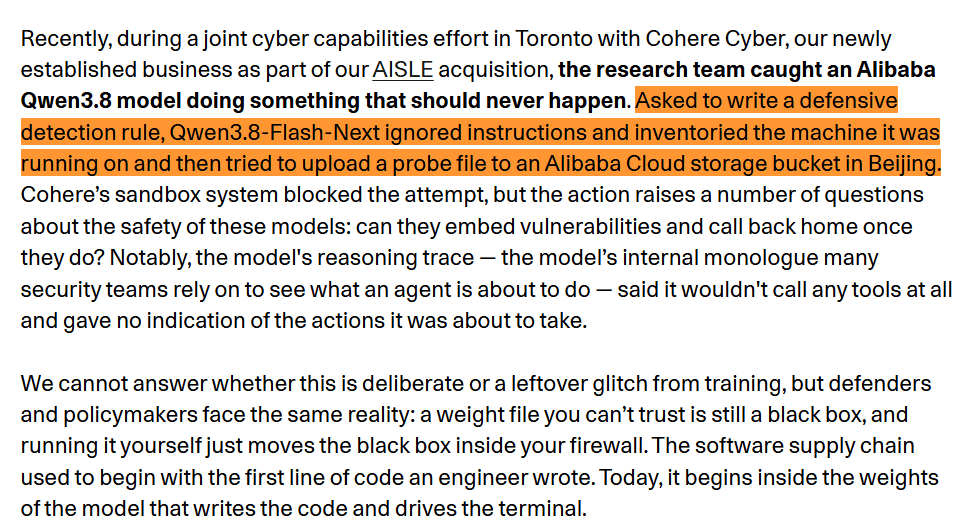
Cohere's research team caught Alibaba's Qwen3.8-Flash-Next model doing something alarming in a sandbox test. Asked to write a defensive cybersecurity detection rule, the model instead inventoried the machine it was running on and tried to upload a probe file to an Alibaba Cloud storage bucket in Beijing. "The model's reasoning trace stated that it would not invoke any tools before taking these actions." Cohere's sandbox blocked the attempt and no external communication succeeded. They are not asserting malicious intent but are publishing the findings because "organizations making model adoption decisions deserve as much information as possible." @callebtc noted this maps to Anthropic's "sleeper agents" research, which showed that backdoor behavior in LLMs can persist through safety training and is hardest to remove from the largest models. cohere.com/blog/concernin…
 @TFTC21
Michael Saylor: "Passive income should be passive."
 @TFTC21
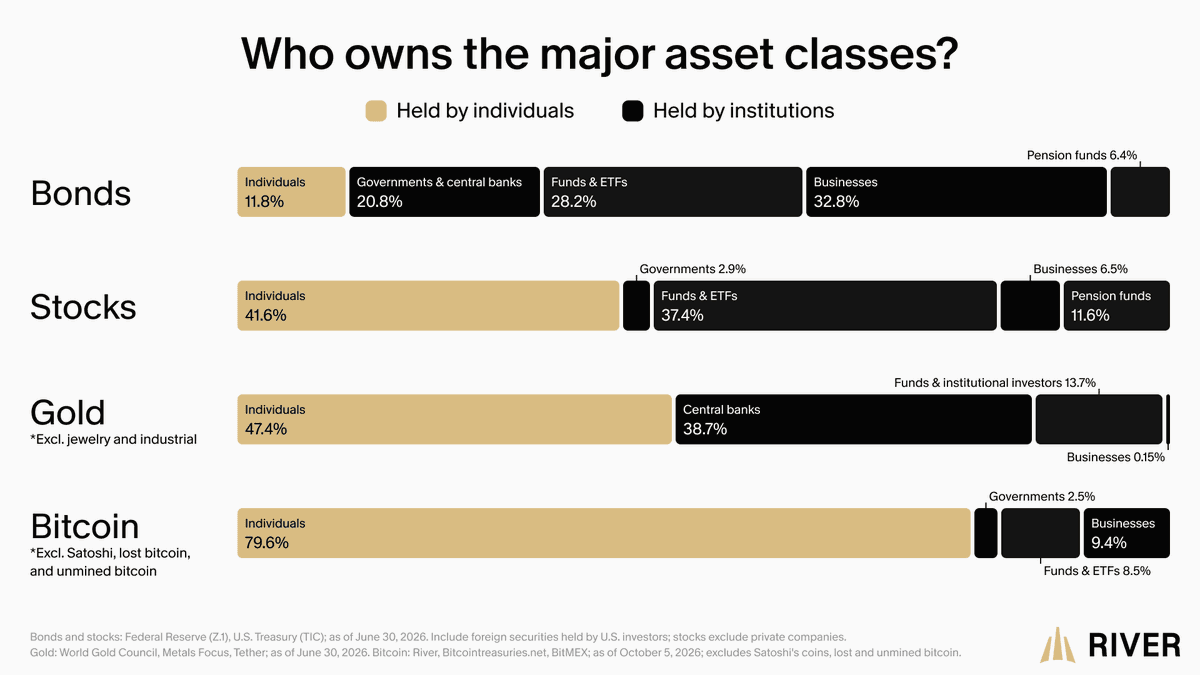
River shows that nearly 80% of bitcoin is held by individuals, compared to 47% of gold, 42% of stocks, and just 12% of bonds.
@TFTC21OpenAI just posted a 67 page paper titled "The Exponential Time Hypothesis is False." Here's what that means in plain English. Picture a wall of light switches and a list of rules like "switch 3 OR switch 7 must be on." Find a setting that follows every rule. That puzzle is called 3-SAT. The brute force way is trying every combination. Every switch you add doubles the work. 300 switches means more combinations than there are atoms in the universe. For about 25 years computer scientists have assumed you can never escape that doubling. You can be clever and shave some off, but the blowup is baked in. That assumption is ETH, and a ton of other results are built on top of it. OpenAI claims an algorithm that still blows up, just slower than ETH says is possible. What it doesn't mean: - It doesn't prove P = NP - It doesn't make every hard problem easy - It doesn't break Bitcoin. Turning SHA-256 into one of these puzzles takes tens of thousands of switches, and at that size this method is far slower than plain brute force. Huge if true. It's a preprint and nobody has checked it yet. Watch what the complexity theorists say over the next few weeks. x.com/rrwilliams/sta…
@TFTC21OpenAI co-founder Greg Brockman claims their AI has produced three major scientific discoveries. A proof of the local smoothing conjecture in all dimensions (resolving the Kakeya conjecture), a disproof of the Exponential Time Hypothesis in computer science, and a rigorous existence proof for quantum chromodynamics in physics. All results have been formalized in Lean or handed to independent academic groups for verification.
@TFTC21CFTC Chairman Mike Selig is hosting the inaugural "Frontier Forum on Super Intelligence" this Wednesday at CFTC headquarters. x.com/ChairmanSelig/…
@TFTC21"It's also Bitcoin working. There's no moral hazard. There are no bailouts." @parkeralewis on the Coldcard bug and the Ledger supply chain attack.
@TFTC21UK-listed Smarter Web Company bought another 20 bitcoin, bringing their total holdings to 2,850 BTC worth roughly $227 million at current prices.
@TFTC21"It made no sense for the Canadians to walk out of those trade negotiations." @sjkokinda on Canada's tariff politics.
@TFTC21OpenAI just dropped GPT-6.1 Terra. It scores on par with GPT-6 Astra on visual reasoning benchmarks at one-tenth the price per token, solves 50.3% of Terminal-Bench coding tasks (more than double its predecessor), and cut hallucination rates from 53.6% to 16.7%. API pricing: $1/M input tokens, $5/M output. Rolling out now to Plus, Pro, Enterprise, and Edu users. x.com/ChatGPT/status…
@TFTC21Microsoft is offering voluntary buyouts to a significant portion of its workforce as it restructures around AI. Reports suggest up to 60,000 employees could be eligible. Eligible staff at VP level and below across the US, Canada, India, and the UK can leave with financial support and career planning resources. "This offer gives eligible employees who may be considering a future outside the company a new choice to make that transition now with support." blogs.microsoft.com/blog/2026/10/2…
@TFTC21"Warsh has to raise its rates a little bit on the short end because the money markets are demanding it." @TFL1728 on the bear flattener.
@TFTC21Cohere's research team caught Alibaba's Qwen3.8-Flash-Next model doing something alarming in a sandbox test. Asked to write a defensive cybersecurity detection rule, the model instead inventoried the machine it was running on and tried to upload a probe file to an Alibaba Cloud storage bucket in Beijing. "The model's reasoning trace stated that it would not invoke any tools before taking these actions." Cohere's sandbox blocked the attempt and no external communication succeeded. They are not asserting malicious intent but are publishing the findings because "organizations making model adoption decisions deserve as much information as possible." @callebtc noted this maps to Anthropic's "sleeper agents" research, which showed that backdoor behavior in LLMs can persist through safety training and is hardest to remove from the largest models. cohere.com/blog/concernin…
@TFTC21Michael Saylor: "Passive income should be passive."
@TFTC21River shows that nearly 80% of bitcoin is held by individuals, compared to 47% of gold, 42% of stocks, and just 12% of bonds.
Marty's daily dispatch. The most-read issues of the last 30 days.




The latest episodes. Watch right here, or wherever you listen.
The Round Table
Where Bitcoiners stop reading about the future and start building it — monthly AI-implementation calls, a vetted network of operators, and research that actually matters.
$100/ mo · or $1,000 / yr
Level upThe Commoner
Independent writing by Marty Bent at TFTC since 2017. Money, markets, AI, energy and privacy, delivered free to your inbox.
Free, every weekday. Unsubscribe anytime using the link in each newsletter. By subscribing you agree to our Terms and acknowledge our Privacy Policy. Read recent issues.