Transcript: Melody Wright: The Housing Market Is Rigged to Fail
Full speaker-labelled transcript of TFTC episode #787 with Melody Wright.

Full speaker-labelled transcript of TFTC episode #787 with Melody Wright. Read the written article: Melody Wright: The Housing Market Is Rigged to Fail. Click any timestamp to watch that moment on YouTube. Machine transcription, lightly cleaned, may contain errors.
Marty Bent [0:07] You've had a dynamic where money's become freer than free.
Melody Wright [0:09] Let me talk about a Fed just gone nuts, all, all the central banks going nuts.
Marty Bent [0:15] So it's all acting like safe haven. I believe that in a world where central bankers are tripping over themselves to devalue their currency, Bitcoin wins. In the world of fiat currencies, Bitcoin is the victor.
Melody Wright [0:29] I mean, that's part of the bull case for Bitcoin.
Marty Bent [0:31] If you're not paying attention, you probably should be.
Melody Wright [0:34] Probably should be. Probably should be.
Marty Bent [0:37] Melody Wright, welcome back to the show.
Melody Wright [0:40] Marty, thank you for having me. It's my pleasure.
Marty Bent [0:43] Well, it's— I think we've got a lot to catch up on. Last time you were on earlier this year, you made some calls, particularly around what we may see in terms of increase in foreclosures. across the country in the housing market. And since then, your call seems to be pretty dead on. You have the latest stats, you just refreshed them, so I'll let you talk about them. But I think a lot of what you described may come to be in the spring of this year has come true through the summer. So what has been happening in the housing market?
Melody Wright [1:20] Yeah, it was just another really disappointing spring season. So we are on now year 4 of a completely frozen in the housing market. You know, last year we had the lowest sales since 1995, and we've increased population by over 20% since then. So that's just, it's worse. It's worse than the GFC from a sales perspective. So, but also what you're now seeing and what I specifically talked about last time is that, you know, we know the housing market has been frozen. We got a little excited at the beginning of the year as rates were a little bit lower. That all changed on February 28th. Rates moved higher and everyone said goodbye to any sort of spring selling season.
Melody Wright [1:20] We're running about, just for perspective, when you look at existing and new home sales, we're running about 2% ahead of next year. I mean, I'm sorry, of last year. But then it's just not meaningful. I mean, we're— this still looks like sort of the depths of 2007, 2008 from a sales perspective. But because you have such low sales and just a complete— we've had, you know, massive government intervention which stopped any foreclosure sales. Those home prices have just stayed high and have stayed sticky because the only people transacting are the ones that can transact, which, you know, the National Association of Realtors said in July that homes priced above $1 million increased 14% year over year.
Melody Wright [1:20] Your typical American can afford about a $300,000 home, and only 8% of people in the country can afford a home over $1 million. And so, you know, that sort of pushing down of any of the default activity has just left prices kind of floating at this point. Now, that's changing because, and these things in the housing market just take so incredibly long to play out, but, In April of last year, they put guardrails on the new, on the loss mitigation program for FHA. That didn't go into effect till October. Because of the way the rules work, an additional relief that borrowers could get, those won't fully run out of room until the end of this year.
Melody Wright [1:20] But you're already starting to see people fail out of those plans, which is why I knew that we would have an increase you know, foreclosure referral rate increase in foreclosures by June. June is typically when you start to see default increase. You come out of the spring season where you have your bonus payouts, your tax refunds. And this year we thought tax refunds would be huge, but we did not. Typically in mortgage, you see a seasonal improvement in delinquency in the spring. We did not see that. And so it's worse, Marty, than even I thought. When I was talking to you back in the, early spring.
Melody Wright [1:20] And so now what's happening is you're going to start seeing those foreclosure sales. My clients are seeing the first foreclosures they've seen since 2019. That's insane. Okay. And so just for perspective, in June, foreclosures referrals, that's where you refer it to an attorney for the process because attorneys handle it in all 50 states, even if it's not a judicial state. We're up 39% year over year. July just got published today. 84% year over year. And you have foreclosure sales up 14% year over year this month. Now, once those sales get registered, that's going to impact your Case-Shiller. So today we got Case-Shiller out. Know that that is for basically, I think, That was probably June data, and they use a 3-month moving average.
Melody Wright [1:20] And so we're not going to see what I'm seeing right now impact Case-Shiller until probably Q1, just because of how delayed that series is. But so let me give you an example. A client foreclosure sale happened on July 28th. No one would have picked that up. in terms of what it did in, you know, impacting a home price index because that deed was not, has not even been recorded yet, probably recorded by now. So these things are so delayed. And in that one, I forget the actual, it was a, oh yeah, it was over a 22% haircut on that one, which is a massive price reduction.
Melody Wright [1:20] And so this is, That's a lot of mumbo-jumbo to say, Marty, that it's just getting started. And we will start to see those distressed sales impact the national price indices probably by either very end of the year or beginning of next year. So for right now, you know, everybody thinks unless you're in some like California, in the West or the South, that home prices are doing okay.
Marty Bent [6:36] But not.
Melody Wright [6:38] There's even places in the Northeast, you know, places like Boston, where you're about to see some real, uh, real issues. So, uh, we're, we're, you know, from— for the places that have already been hit, uh, it's just continuing to kind of degrade. For the places that have not, in the Northeast, some in the Midwest, you're starting to see cities kind of light up in those areas. And we will see sort of a more holistic probably turning of those areas at the end of the year.
Marty Bent [7:08] So there's a ton of lag effect.
Melody Wright [7:10] Oh gosh, yeah. It's insane actually how lagged it really is.
Marty Bent [7:16] And you were saying before we hit record that your clients' numbers typically align very well with the national numbers that eventually get reported and you're Obviously following it throughout the month as it's developing in August is no better than July, correct?
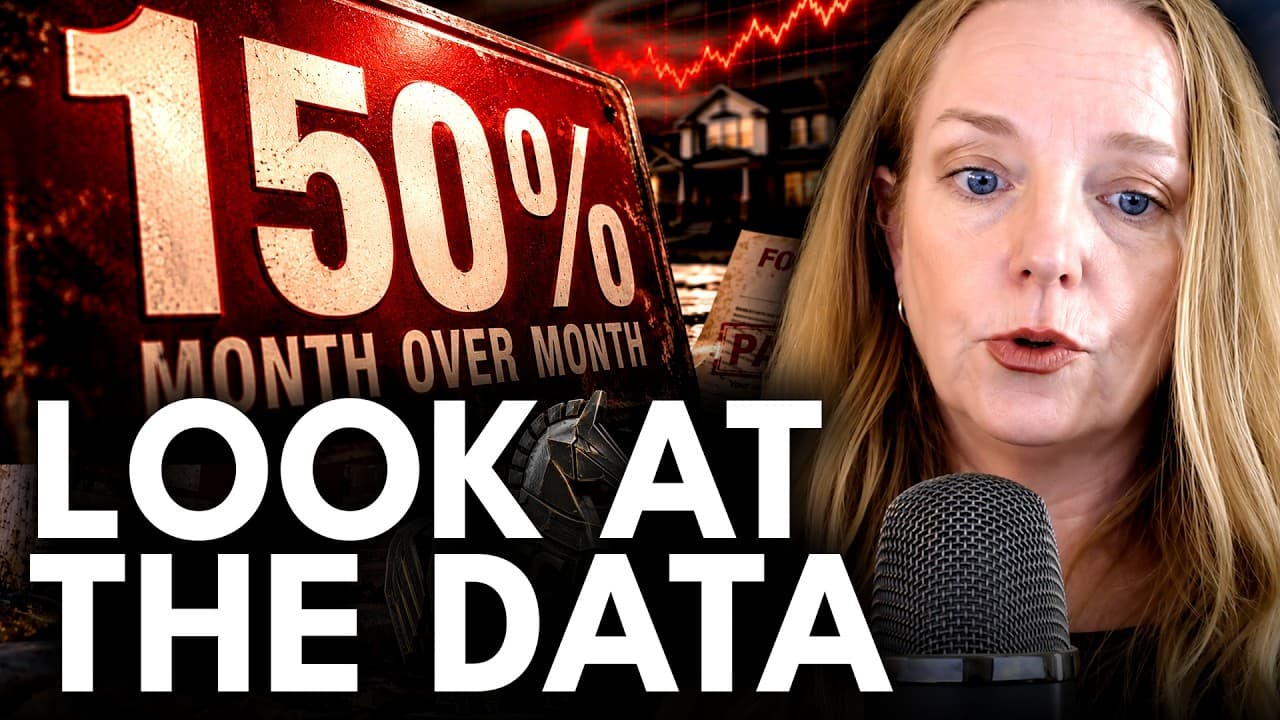
Melody Wright [7:34] It's, it's so much worse. And so I'm even scared to say what I saw in client books. Like you were saying, they typically do, uh, kind of mirror what we see out there. I, I couldn't actually believe what I saw, Marty, when I cracked open these numbers and I saw from basically in August, so And we still haven't ended the month yet. Sitting today, I saw foreclosure starts go up 150% month over month. That is not something you ever see in the default world. And, but they did it to themselves with all of those programs. I mean, Marty, it's really like, it's just been, you know, everything's been held behind this dam.
Marty Bent [8:23] Yeah.
Melody Wright [8:24] You know, and they knew it. And they, and in a way, everybody knows now that like, it is over. It's almost like a scheduled, okay, it's done. And it's all this is starting to come over the top. And for FHA, there's nothing, there's nothing they can really do. And really, for the other thing that I saw last month, and actually in July, was I saw new early Fannie and Freddie delinquency That is supposed to be higher credit quality. And I had seen that through the spring, but I materially saw an increase in June for what you consider the prime cohort. And this is something I've long warned about.
Melody Wright [8:24] We could actually see FHA is around, it goes, it wobbles back and forth, but it's somewhere around 12% delinquent right now, which is, it's hard for someone like me to say that and no one else pay attention. That's massive. But Fannie and Freddie have looked great, like barely, not even a percentage of delinquency. But now we're getting to the point where they're, they're going to start. But FHA may have reached its own peak, believe it or not, for right now, because it has just been so bad for so long. We saw stress there starting back in June of 2023.
Marty Bent [9:45] And so let's dive into the process of how, I mean, really leaning into the idea of the lagging effect that exists in this market and going from a foreclosure referral to a foreclosure sale. How long does that process take and what's happening? And obviously, as that's happening, I have to imagine people are seeing it happening and therefore beginning to cut prices.
Melody Wright [10:09] Yeah. So it takes a lot longer than it used to, Marty, after the GFC and There's certain states where it goes fast, like Georgia and Texas. But if you're in a judicial process, it could take— if this gives you some perspective, I'm helping someone with a foreclosure they inherited from their father from 2007.
Marty Bent [10:31] Oh.
Melody Wright [10:32] 2007 in New York. Now, New York is its own special, special, special case. If you're in somewhere like Georgia and Texas, it can go in 60 days after, but you have to wait a hun— so let's say you go delinquent. Okay, the servicer can't do anything, but they have to advance your payment to, uh, you know, to this— to Fannie Freddie FHA so they can pay the bondholders. They have to wait until you go 120 days delinquent, and they have to get in touch with you. And if they can't, then they typically have to do other things. Then they refer it to foreclosure. If you're in a judicial state— well, let's start with non-judicial, like somewhere like Georgia and Texas, which is Typically 60 days timeline.
Melody Wright [10:32] It gets the attorney, they have to run title, they have to do something called publication where they publish it in a newspaper. And then in Georgia and Texas, you only do foreclosures on one Tuesday every month. It's called Super Tuesday. And they go and they auction them on that Tuesday. So in that scenario, we also have to take into account that probably the borrower is calling in asking for some loss mitigation option. If they're asking for that, then the clock stops. completely. You know, nothing else can happen until they fail out of that. So let's just say it's an investor that walked away. And, you know, I'm already hearing that, I'm already seeing that.
Melody Wright [10:32] Then we'll tell you that timeline, okay, probably around 1/20. Then you've got servicer delays, because I'm already seeing them get really backed up. Let's say on a good day, that got referred around day 150. So, you know, basically, or even like 180, then let's say you're in Texas and Georgia, that's another 60 days. So that's 240 days so far, then you have to do the process. And so you're, you're talking at almost, you know, 6 to 9 months in like the best situation. It's never the best situation. I have one client foreclosure right now, literally, He has been in foreclosure for 4 years because, uh, the V— it's a VA loan and they had a moratorium, which we'll probably see some of that again, I guarantee you, once this gets bad enough.
Melody Wright [10:32] But in a judicial state, this could take, uh, a very long time and at least usually a year. And so if I'm one of these FHA borrowers, just to give you an idea, who Suddenly those new guidelines were put on in October. I went in November and tried my usual game of, hey, I didn't make 3 payments. They said, no problem, you can get a partial claim. But guess something's new? Now you have to do trial payments. And the borrower's like, oh, okay. And so they try to make that first trial, but they can't really make the trial because, Marty, those trial payments were not required before.
Melody Wright [10:32] with this crazy program they did, um, to kind of get us through the election year. Um, and so then that servicer has to wait for you to completely fail out. They, they wait 3 months, then you're— then they, they try to get you into some other thing. And they'll say, okay, you can do a forbearance, but you have to call in every single month, but you can get it for up to 12 months. So, so let's say like last October, And let's say I hadn't used my forbearance and I failed out around January, then I could have a full year still left. But what you're seeing are the people that are out of all their options.
Melody Wright [10:32] So the timelines are drastically different across the country. But let me tell you, the states that are nonjudicial are California, Texas, Georgia, like your big housing market states. Florida is a judicial state. However, they just changed their laws not that long ago to move that process along. Typically in Florida, you could see 3 to 5 year delay on a foreclosure, but they've recently updated that. So I know it's so confusing, but that's how confusing it really is. And, and at any time, if that borrower wants a loss mitigation, they can put the process on hold. When I stopped managing default and I I guarantee you somebody's gonna ask my help here.
Melody Wright [10:32] Even back, I could have told you how to delay a foreclosure in every single state, what action to take, and how to get around it, to be honest, at that point in time. And so you see all kinds of what we call strategic defaults. People will file bankruptcy. And so this stuff just drags on and on and on. But for somebody in Tennessee, They are going to start to see, for instance, they will start seeing this faster than, say, other states because they are also nonjudicial. And that foreclosure I was telling you about that I did the example on was in Tennessee as well. So, so they will start seeing these things and they're already seeing them on the listing sites, Marty, when they go to Zillow and Redfin.
Melody Wright [10:32] So anybody that's paying attention is going to start noticing those more and more when they're looking out at those markets. And so it will impact those estimates as well.
Marty Bent [16:01] How do the discounts work at auction and who's taking that loss?
Melody Wright [16:06] It's so— who's taking— well, the FHA and so the agencies are taking— oh, so everybody loses, Marty. And this is why nobody wants foreclosures. And so this is going to— this might actually blow your mind how this works. If you— the last cycle we had, it was more about private lenders, right? , not government necessarily, although they joined the party. And so there were all these different— I remember sitting next to my foreclosure— it's called your bid team, and they are the ones that prepare the bidding instructions for what Your representative is going to bid at auction. And they— and there was like, like all these workbooks for each investor with all these different things that you had to consider to come up with that final bid, okay, that you're going to make at the auction.
Melody Wright [16:06] Because a lot of times you're going to bid total debt because you need— you're hoping to recoup at least that. Well, what the agencies all learned last time is that nobody wants these things. They're too difficult to manage because you have to take care of the property while it's sitting there. Once you get it into a real estate owned portfolio, it's just too expensive. So now what you have are the agencies with designated haircuts for each state. You might get a different one depending on if it's in an MSA or metropolitan statistical area or not, but these are just across the board. And so, for instance, this property I was just talking about in Tennessee, they got what's called an interior appraisal.
Melody Wright [16:06] And the haircut for that was 30% going out the gate from the appraisal they got. Now, the appraisal they got at, 'cause you have to get an appraisal before you go for a closure sale, was already 10% lower than the Zestimate.
Marty Bent [18:10] Wow.
Melody Wright [18:10] Already, before anything had happened. Because this is what, Zestimate doesn't know if you haven't replaced your roof. Zestimate doesn't know, that you've got mold in the basement. I mean, Zestimate doesn't take any of that into consideration. And so, so that thing, that sucker went, um, for a basically $70,000 less, I believe, than what it last sold for. Um, and so that's insane. And you start seeing that at scale because especially in these new builds, the builders really, really heavily relied on FHA. And so, man, you are just gonna get crucified in these areas where you have clusters of FHA borrowers who are underwater.
Marty Bent [18:54] Aren't structurally sound a lot of ways.
Melody Wright [18:56] Oh gosh, no, no, no. I mean, they're terrible.
Marty Bent [19:00] They're not built well.
Melody Wright [19:01] I mean, and I mean, I've been to these sites. I've seen the liquor bottles and the beer cans and the just the trash and, and just I mean, the state of these sites is, oh, it's something else.
Marty Bent [19:16] And so while all this is going on, you also have the situation with United Wholesale Mortgage where they made a massive derivatives bet that went sideways and they just had to post a massive loss and their dividends. And I'm pretty sure it's putting the owner of the Phoenix Suns at risk. his ownership stake in that franchise right now as well.
Melody Wright [19:41] Yeah, they're going to be bankrupt soon. I mean, had they not gotten that balance sheet fortification deal from Oaktree, it would've been game over. Game over. I'm pretty sure they're having calls right now about breaching covenants on their lending facility, and they've got $3 billion in maturities for their lending facilities coming up this year. Those are going to be very— and they're already at a negative cost of funds. And I mean, Marty, the only reason you get in this business is to have a positive cost of funds, like meaning you're making more interest income than you're paying in expense. And these guys, oh no, like I don't even— I mean, Marty, so I guess I can say this now because I reached out to their investor relations to talk to me about their cash flow statement because I worked in financial planning and I signed off on the financials of my former company, you know.
Melody Wright [19:41] And I could not make heads or tail of their cash flow statement. I called someone that I knew from treasury at my former, uh, company. They could not either. And so I emailed investor relations and I was like, I really need to talk to somebody about this, uh, and explain this to me. And I got the typical, you know, uh, go to our investor relations webpage. But I mean, this looks like a money laundering operation, Marty. I mean, it is— it's the only thing that makes sense to me. I can't make— I don't— I can't even— I— they are not thinking. Now, everyone in the industry has made fun of them for years.
Melody Wright [19:41] I mean, years. Like, we're all like, you're crazy. But this is altogether different. And it feels as if somebody saw that the game was almost up. Um, that's what it feels like. Because this train started— I mean, they had one positive quarter of gain on sale after they IPO'd, and that was in— I think late '20, early '21. Well, it's now 2026. I mean, this should have been gone a long time ago.
Marty Bent [21:47] They were basically riding the ZIRP wave, right? Depending on low cost of capital and interest rates going up completely borked them.
Melody Wright [21:56] Oh yeah, yeah. I mean, but also they had no idea what they were doing in mortgage and they just went for the Let's get as many people in the door as possible. That's really what they did.
Marty Bent [22:14] Well, did they get an amount of people in the door that would make them systemically important to the system, or is this more of a trade risk?
Melody Wright [22:24] I think there's probably a Jamie Dimon-type character just setting off to the side waiting. And salivating now that those capital— we've had a relaxation of capital controls to some degree. Once we get in crisis, we'll have more. And I think probably Chase is just waiting to take those assets, honestly.
Marty Bent [22:47] Yeah. And so how— now that the ball's in motion, bodies are beginning to— Float. Rise to the surface of the sea. How long does this whole process take to play out? How quickly do housing prices come down? I mean, and also considering the backdrop of what Scott Bessent and the Treasury are doing with their focus on geopolitical international trade and war endeavors, it seems like it could be a hiccup for them while they're trying to navigate some pretty precarious waters on the geopolitical side.
Melody Wright [23:27] Oh yeah, yeah. So that, you know, timing is always hard, but I will tell you that I went to sleep on United Wholesale because the timing question was such a question. Uh, I'm not asleep anymore. Um, I— it is now time to start looking at those companies again. And so, you know, what it— what we need, a catalyst, because there is nothing holding the housing market up except for Our top, you know, one percent and narrative, and that's it. And so we need some sort of catalyst to really to get those rage delisters to understand they have like you better sell now or you're or you're losing the opportunity for the next ten years, honestly.
Melody Wright [23:27] And this is a signal for you, Marty. I just tweeted this out before we got on that the Mortgage Bankers Association. after, you know, harassing me— not them specifically, but the industry, uh, you know, calling me crazy for years— has just come out and said, you know, maybe it's time we stop thinking about, uh, the housing market being undersupplied. Maybe it's time to start thinking about demographics, which, you know, has been what I've been saying for some time. And so, uh, I think the time is getting nearer. I think that, um, I think we're probably going to get some sort of blowup in the fall, be it private credit, be it commercial real estate, be— I mean, choose your— be it AI, who knows.
Melody Wright [23:27] But once we have some sort of blowup, or you just— we just keep marching down the foreclosure path, then you're going to start to see the national narrative change. And so if it— let's say we don't have any kind of blowup, I'd say by Q1 of next year, the national numbers will turn. Um, if we do, that's where things get interesting. How fast could it happen? You know, it depends on how aware and how quickly people— because social media meant, you know, one of the reasons why we saw such a rapid increase in home prices was because we had all these speculators going out there trying to buy up— buy a home for passive income.
Melody Wright [23:27] And look how quickly that went up in a span of 2 years. Very different from the last cycle. So we could be looking at, you know, a similar time frame on that initial drop. But again, I think we're going to see a situation where it's going to take years to bottom out, um, just because of how much speculation is out there and how much confusion is out there on kind of our demographics and our current migration habits, which is not moving to the Northeast. And they are just— completely delusional about what's happening there. So yeah, it's hard to say, but I will say this, we are closer.
Melody Wright [23:27] And things are really starting to tell me that we're going to see a real change in narrative by the end of the year.
Marty Bent [26:38] What's up, freaks? This Rip was brought to you by our good friends, the Bitcoin team at Block. Bitcoin at Block. Bitcoin was originally introduced as a peer-to-peer electronic cash system. We all know that. The idea wasn't just to buy and hold, it's to use Bitcoin in many different facets. Holding is one facet, spending, receiving is another facet. We've been working towards this for 17 years and Block has put together a whole ecosystem of companies to really bring about the reality of Bitcoin as everyday money. So with Cash App, you can buy, spend, send, receive, earn, get paid in Bitcoin. When you're trading over $2,000, you're not going to pay any fees on that.
Marty Bent [26:38] So then there's Square, which is helping bring Bitcoin into real-world commerce. Eligible businesses can accept Bitcoin payments over Lightning, With settlement in seconds and 0% processing fees, customers can pay with Bitcoin or even dollars over Lightning through Cash App and help local businesses keep more of every sale. It's making Bitcoin payments feel as easy as tapping a card. And when you're ready to hold Bitcoin, there's BitKey. It's a Bitcoin wallet built for real life. No seed phrases, it's a 2-of-3 multisig, so no single points of failure. It has recovery and inheritance processes and capabilities built in. And the new BitKey device includes a screen so you can verify important actions directly on the device before approving them, so you know exactly what you're authorizing.
Marty Bent [26:38] So together, Cash App, Square, and BitKey are helping make Bitcoin easier to earn, save, Save, spend, and secure. It's a simple idea. Bitcoin works when people can actually use it in the way that they want. That's Bitcoin at Block. So, freaks, when you take Bitcoin seriously, you start with custody. You want to control your keys, avoid single points of failure, and make sure your savings cannot disappear because you or someone else screwed up. That is what Unchained has been focused on since 2016. Unchained is the leader in collaborative multisig custody and Bitcoin financial services that keep you in control. They secure over $12 billion in Bitcoin for more than 12,000 clients.
Marty Bent [26:38] That means about 1 out of every 200 Bitcoin sits inside an Unchained vault. Their model is simple. You hold 2 keys, they hold 1 key. It always takes 2 keys to move Bitcoin, meaning their single key can't access your Bitcoin on its own. Just resilient shared custody that gives you institutional-grade security while keeping you sovereign. Unchained also lets you trade straight from your vault, access Bitcoin-backed commercial loans, open a Bitcoin IRA where you hold your own keys, and set up personal, business, trust, or retirement vaults. They even offer inheritance solutions built for long-term hodlers, or opt for the highest level private client service with Unchained Signature and get a dedicated account manager, discounted trading fees, exclusive access to events and features, and much, much more.
Marty Bent [26:38] com and use the code TFTC10 at checkout to get 10% off your new Bitcoin multisig vault. com.
Marty Bent [29:00] And how do, how do things break down when you separate like multifamily?
Melody Wright [29:04] Oh gosh.
Marty Bent [29:05] From office, commercial real estate, residential, single family?
Melody Wright [29:09] Oh, I have been, I spent I spent the spring and summer looking at multifamily securitizations, agency securitizations, and, and getting angrier and angrier and angrier. Because let me tell you where we have a 2008-style situation. It's in multifamily because they typically do these interest-only loans for 5 years, 10 years. Mm-hmm. And oh gosh, I, I really could talk 10 hours about this, but what happened during this last COVID boom is, you know, people, all these YouTube influencers were saying, go buy your, your crappy multifamily Class B building, put in, um, you know, a swing set and a new garbage can or whatever, you know, raise rent and you're going to become a millionaire.
Melody Wright [29:09] And this is, I mean, so many people bought into this And this idea of value-add to these old multifamily properties, they didn't realize that brand new, all the brand new multifamily construction is out there. And so I think multifamily, uh, from what I've been seeing, is going to be a spectacular blowup. 3 trillion of the outstanding debt, I cannot get a good number on office, what that really is. But it has to be actually lower because total commercial real estate debt is around $5 trillion. 3 trillion that we know of, um, then you've still got retail, you've still got industrial, which includes the data centers.
Melody Wright [29:09] We know there's some pretty big debt out there on those. Um, and so then you have office. And I think, you know, Now that we're kind of here, like office, yeah, it's going to be terrible, but not as systemically bad as multifamily. And this stuff is just blowing up everywhere, Marty. I mean, and, you know, big, big, big people who were making big, big bucks. And so, so this isn't some piddly, you know, $325,000 mortgage. I just recently wrote about a $50 million mortgage, and that money has disappeared. I mean, disappeared. And so the agencies, everybody always says, oh, you know, they have the insurance funds and they have this.
Melody Wright [29:09] Yeah, they don't have enough for what I'm seeing in multifamily. And by the way, Fannie and Freddie, I mean, it's these secure— and so I find it interesting that the executives that just left Fannie Mae were multifamily and also people that work on this thing called low-income housing tax credits. which is a real big scheme that all these developers have been using. And so fascinating. It was that department. I've got somebody from within, like a whistleblower type, I'm going to be talking to in the next few days to get a better sense of what's happened there. But something like you can— I can't even believe what I'm seeing in these securitizations.
Melody Wright [29:09] And I can't Half the time I can't get the offering docs, so the offering documents, um, because only private investors can get those. And so I can only give you part of the picture, but the picture is so, so, so bad. It's so bad. It's really bad.
Marty Bent [32:47] Similar to '08 where they're being trounced and given higher ratings than they deserve.
Melody Wright [32:52] Yeah. Oh yeah. Well, well, this one that I'm telling, like, I'm, I'm going to be doing some open records requests on this because I think something criminal happened here. But this one, uh, got stuffed into a Freddie Mac securitization, a credit risk transfer, when it was delinquent. That should never happen. There was no— I did see that offering document. There was no disclosure that that thing was already delinquent. And so I'm like, all kinds of shenanigans have been going on, and it looks like a lot of it has been going on in multifamily Kind of 2008 style. Not as much as single-family. You had the government, FHA, do the subprime lending, but multifamily looks very 2008-ish.
Marty Bent [33:40] Will we ever learn? Yeah. Who's making these decisions? Is it credit funds backing them? Like, hey, we need to have this mark-to-market so we can go Like marked, not marked to market, like marked at what we market at.
Melody Wright [33:58] Marked to model.
Marty Bent [33:59] Yeah, marked to model. Yeah, we need to mark to model so we can go raise another fund and try to plug the holes with that cash, or what, like something like that going on, or?
Melody Wright [34:07] Oh yeah, oh yeah, oh yeah, oh yeah. I mean, in the builders too. I mean, one of the reasons, like, if they don't sell a certain percent or they take a certain percentage loss on a subdivision, let's say they have to do a 10% haircut Then they have to revalue the whole subdivision. They'd rather just not sell than do that because then that impacts their lending facilities and all of— no one wants to mark to market. I mean, no one, no one. And all the banks, you know, after '23, everybody got a phone call that said, you modify these people or else. And everybody did.
Melody Wright [34:07] And private credit got in last year. and helped refinance a lot. Well, they don't have the money this year. Um, they're, they're, you know, fighting for life. So you've got a situation where you have what's called a hard debt maturity wall. There's no more extension options. And you've also seen a big credit provider step back. Um, but the, the will we ever learn— well, I have a lot of thoughts on that, but I got to tell you, a lot of my anger is because I do know Who's sitting in finance at one of these agencies, and that person should know better. And yes, it's a big agency, and yes, you know, things— it's, you know, there's a lot of bureaucracy and things like that.
Melody Wright [34:07] But man, am I mad. I mean, I'm really mad. And I, and I talked to my former colleagues. We're all mad. We're all really mad because we went through hell so this would never happen again. And so to see this crap, it makes you really angry.
Marty Bent [35:42] What would've been the right thing to do with all this?
Melody Wright [35:45] Oh my gosh.
Marty Bent [35:48] Because the problem in '08, the problem was you just mask it, mask it, mask it, make sure the rating agencies put AAA on it. They stuff everything together and you're basically inflating a bubble that's going to lead to a massive crash, a crash that if you had acted earlier, would not be as impactful as it ultimately was. And it seems like we're doing the same thing again in different parts of the market.
Melody Wright [36:15] And to me, it feels very political because it was the government that did this. I mean, I was so excited in '21, I think it was, when the agencies came out and said, we're capping investor purchases, um, to 7%, meaning like what you're selling them. They were— they're saying, okay, we're only taking X percent of actual investor purchases into our securitizations. They only did that for like a year and a half, and then it was just like every foot went off the brake. And in '21, they quietly removed— and on the single-family side— the debt-to-income threshold from Dodd-Frank. And everybody was off to the races. So had they actually continued with that action, number one, so one, for FHA, they could have cracked down on owner occupancy fraud. That would have been huge, huge. Had they done that in '21, we would not be where we are today. Because—
Marty Bent [37:23] What does that look like? What does that look like?
Melody Wright [37:26] So, so for that one, verifying That the person taking out the loan is going to live in that home for a year. And then, I mean, what you could do is enforcement through, you know, making them mail in some sort of proof, or even as cheap as drive-by inspections are now, you could even do that every 6 months, something like that. But, but what that would have done is you had investors come in, use these to buy short-term rentals. 5% down payment, you know, and so it's very low skin in the game. But had they really enforced owner occupancy, that would've slowed all of that down.
Melody Wright [37:26] And the Philly Fed study that came out in '23 that said, You know what? The investors never left the housing market. They have been all in since the last crash. And in fact, where they are involved, you see fraud about 25% of the time. So they knew, they knew how bad the FHA program was being used. They didn't do anything about it. Now, the very simple thing that Fannie and Freddie could have done, including putting, you know, restrictions on investment properties and second homes, is they could have lowered their conforming loan limits. So this is the limit of what a person can borrow. And so, you know, the median income in the United States is around $84,000, $85,000.
Melody Wright [37:26] Uh, what that salary could afford if they had a down payment and hardly any other debt would be about a $300,000 home. Okay, that's your median buyer. Do you know what those loan limits are today, Marty?
Marty Bent [39:25] No.
Melody Wright [39:26] Over $800,000. And that's not in California. That's in Johnson City, Tennessee, where the median household median income's about $60,000, okay? In California, it, I think it goes as high as to $1.3, $1.5 million. So had we just said, you know what, we're gonna use those loan limits and we're gonna tie them to median income, max 3 times your median income, 'cause that's typically what would somebody, a house can afford, a household can afford, then they would've stopped it all back then too.
Marty Bent [40:04] Mm-hmm.
Melody Wright [40:04] But no, everybody was just having too much fun. And then, then when, you know, the party really stopped in 2022, it was, How can we get the last borrower in? And I, you know, after watching everybody be still skittish about what's called non-qualified mortgage lending, which is, it's not an agency product, 85% of mortgages are typically agency-backed, all of a sudden people like Rocket are saying, We're going into non-qualified lending. Oh, okay. Like, this is the absolute worst time to do it. But they went in crazy to FHA too. In my last Substack, I give the percentages, but unbelievable FHA growth since Q4 of '25, mainly refis at United Wholesale.
Melody Wright [40:04] So, and oh, you asked me about the losses. Sorry. So sure, it's the agencies that lose, but so do these non-banks because they never get fully paid their claims out ever. But most of them weren't around during the last crisis, so they just think they're going to get paid. They're not. They're not going to get paid. And it's not even because the agencies run out of money. They figure out how not to pay them.
Marty Bent [41:23] Right.
Melody Wright [41:23] That's part of their game. And so you'll have somebody like Chase say, well, we don't, we don't actually report non-performing FHA because we know we're backed by the full faith and credit of the government. Well, Chase also knows they're not ever going to be paid back 100%. And in fact, that's why they keep their FHA book low. But yeah, there's all kinds of accounting shenanigans. And then ultimately, who's going to pay? The taxpayer, once it gets bad enough. But yeah, good times.
Marty Bent [41:53] I mean, you mentioned they temporarily set the investment property limit at 7%. What has that ballooned up?
Melody Wright [42:03] Do we know how much Oh no, there's no, there's no threshold anymore.
Marty Bent [42:07] But do we know what the percentage is?
Melody Wright [42:09] Of their outstanding book? I, I don't currently know those numbers, but you also have to know that a lot of your primary mortgages were actually for investment properties too. But yeah, I, I can't remember what it is right now.
Marty Bent [42:26] It's higher than 7.
Melody Wright [42:27] Yeah, yeah, yeah, yeah. And 7 wasn't a magical number or anything. I was just excited to see them do anything.
Marty Bent [42:43] Well, I think this is the question because, I mean, we've been talking about this for the better part of a year now. Housing's obviously unaffordable for most Americans. Is this the reset that we need to make housing more affordable? And again, we just talked about who's going to suffer the losses, and I think the American public could get on board with that. Like, hey, you guys took all the risk, eat the losses. Just let the market find what the true clearing price of this real estate is so that young Americans and even older Americans can step in and buy these assets much cheaper. Do you think that plays out or? Is it save this market at all costs again?
Melody Wright [43:26] If it was save it at all costs, the administration would not have put the lockdown on that FHA program. And so I watch what they do, not what they say. And every action they've taken has been to let this play out. Now, things may change, right? But that Road to Housing bill was so dumb. Like so dumb. I mean, it's so dumb. And maybe it gives a little bit of help to like manufactured housing down the road, maybe. But it was, it was a nothing bill. And so everything they've— my favorite, Marty, sorry, just makes me laugh because they just keep backing themselves into every corner.
Melody Wright [43:26] Like just watching them, you know. So remember when they announced— my life went Whenever he announced that stupid 50-year mortgage and then all the— my life was madness for the longest time. But when they announced buying mortgage-backed securities, Fannie and Freddie, just, I started laughing like really hard. And because that's basically the snake eating itself. But then my favorite part about that, well, they'd already been doing it by the time he announced it. They had started in May of last year. It had already had an impact on rates. He announces it. Um, rates start shooting up again, and then Fannie and Freddie has to come out and say, hey, well, we can't really buy those mortgage-backed securities because if we do, our hedging strategies put pressure on the 10-year and send rates up.
Melody Wright [43:26] This is— so you can see Bessant right now. You can see them all. Like, they're trying everything. They're throwing everything. Let me write a little sticky note. No, let me buy something to— I mean, whatever. And let a reporter take a picture of it. I mean, they are doing everything they possibly can, but they are just out of options on a lot of this stuff. And you can't break this. If you break the securitization market, talk about all hell breaking loose. And it is such a large, large market.
Marty Bent [45:33] All right, freaks. You know I don't take sponsor money from products I wouldn't use myself. So listen up. The Aave and Bitcoin Visa card is one of the most interesting things I've seen in the Bitcoin lending space in a long time. Here's the deal. You can get a line of credit up to $1 million backed by your Bitcoin without selling a single sat. No games, no annual fees, no minimum draws, and your Bitcoin is custodied by BitGo, one of the most trusted names in digital asset security. Aven never lends it out. There's no rehypothecation. You stay in control. You can lock in a fixed rate for up to 10 years.
Marty Bent [45:33] 10 years. That's 10 times longer than most lenders out there, or go interest only for up to 5 years. 99% APR. For a product that lets you keep your stack and still access liquidity, it's hard to beat. On top of this, guess what? You also get 2% unlimited cash back every time you use the card. Spend fiat, keep your Bitcoin. That's the whole game. If you've been stacking for years and you need liquidity without triggering a taxable event, this is worth a serious look. com/bitcoin. com/bitcoin. Check it out, freaks. Look at me, I'm glowing. I've got like an angel's halo going around me. You know why that is?
Marty Bent [46:40] Is I feel good. I feel taken care of. I feel blessed, healthy, happy. And that is because I'm a CrowdHealth member. My family and I have been CrowdHealth members for 5 years now. Literally this month, 5 years ago, we joined CrowdHealth. We've had 2 babies, we've had multiple health events, and we're never going back to health insurance. CrowdHealth is crowdfunded healthcare. So you sign up for CrowdHealth, you pay a monthly fee, you help out with other people's bills, and it's significantly cheaper than health insurance. We were on COBRA as a family of 3 when I left my last job before I went full-time with TFTC.
Marty Bent [46:40] Went on The Crowd Health. Now as a family of 5, we pay, I believe, $700 a month. It's significantly cheaper. They're going to negotiate prices lower for you. They've consistently negotiated healthcare prices as much as 50%, 60%, 80% in many cases. They help out with babies. If you have a pregnancy, you pay the first $3,000 and The Crowd covers the rest. If you have a regular health event, you pay $500 and the crowd pays the rest. com, sign up today, use the code TFTC, opt out of health insurance. I'm uninsured, baby, and I love it. com and you'll get $99 a month for the first 3 months that you're on the CrowdHealth platform in the community.
Marty Bent [46:40] Bitcoiners, you found sovereign money. Now find sovereign health and sovereign healthcare. How does this affect HELOCs?
Marty Bent [48:00] Like, are HELOCs marked to market or Well, they should be.
Melody Wright [48:04] I mean, there's not as many of them in securitizations, although that's probably starting to change right now. But believe it or not, as late as the Mortgage Bankers Association Conference of 2022, I was talking to a HELOC lender. He was private, you know, like private guy, private credit guy.
Marty Bent [48:31] Mm-hmm.
Melody Wright [48:32] And he's like, I can't get anyone to talk to me. And I said, listen, buddy, most of us in this room remember what we sold our HELOCs for. At GMAC, we sold them for 10 cents on the dollar. So like everyone here is not gonna listen to you, but that has radically changed even in the past 4 years. And so, but yeah, they are securitized. There's just not as many of them as say like the primary market.
Marty Bent [49:01] Yeah, I'm just trying to get a sense. I'm just thinking about, obviously, like you said earlier, the only sector of the economic ladder buying homes right now is the top 10, top 5, top 1%. I'm just thinking if there's a cascading effect of they're using their first home as collateral for something and then their second home, what is the cascade there?
Melody Wright [49:25] Yeah. I mean, It's way worse than even that though. Like, so yeah, I, I kind of— I did a lot of that at the beginning, Marty. Like, okay, what, you know, what's good? Then you just realize the things that are happening are so much worse than that, than what happened before it. Like, so, um, my favorite is what the investor bros will do when they— they'll pretend to sell homes to each other. Um, let's say I'm out in Scottsdale, Arizona. You have a property. You're going to pretend sell it to me. We'll do a deed of sale on public record. Pretend that you sold your house that sold for $800,000 a year ago.
Melody Wright [49:25] 7 million. I pretend to give you a check, but I mean, I don't really. I then go to the bank. 7 million when it had previously sold for $800,000. I then take the cash out of that and I go buy another house. Okay, and this just keeps— and so I have now seen real money printing all over the place with people pulling these kinds of shenanigans.
Marty Bent [50:47] And so Taking advantage of 1031 along the way.
Melody Wright [50:51] Yeah, of course. And there's some guru that's going to teach you how to do it. I mean, and I mean, there's so many shenanigans out there. Like the old— like everything we were taught to look for in the last cycle, like it doesn't matter as much this cycle. You know, the ARMs don't matter as much, the, uh, you know, the HELOCs. Because when we did those cash outs— this— so this is something that drives me insane. when the housing analysts like, and I don't like to say names, but there is one, they got the call right from the last cycle because of who was writing for them.
Melody Wright [50:51] Certainly not the person that writes for them now. And literally this person will send an email every month and saying, you know, the house ATM is closed and has been closed since 2012, whatever. I mean, way back then. But here's the thing, it was the house ATM in 2020. The only reason it doesn't look like they pulled all of their equity out is because home prices went up. But they did pull all their equity out. And what these, what we call cash-out refinances, they all took cash out and spent it. And when home prices do correct, it, you're, everybody's going to realize that the ATM that was housing is what fueled kind of pandemic-era spending, you know, post-2020.
Melody Wright [50:51] Um, that along with PPP, ERC, and all the other things the government did. But yeah, so the HELOCs, too late. They're not that big of a deal yet. It's still gonna suck for a lot of people, anybody getting one right now. I'm already hearing of lines being frozen and things like that. I'm hearing of credit card lines being frozen. So I mean, but yeah, they're not the systemic— what, what's really systemic and the hardest to sort of, um, Quantify is the fraud. And I mean, I'm just seeing it. Like, I'm telling you, this multifamily property I was talking about, $50 million printed out of thin air and gone.
Melody Wright [50:51] Where is it? You know, like, it's just— and so just—
Marty Bent [52:59] that's just one private jets to Cabo or something like that.
Melody Wright [53:02] What'd you say?
Marty Bent [53:04] Private jets to Cabo or something?
Melody Wright [53:05] Oh yeah. Oh, well, yeah, they always—
Marty Bent [53:07] it's definitely always with these guys not buying hard assets that can be confiscated in a No foreclosure.
Melody Wright [53:14] No, no. Yeah, it's— and, and that's what I try to tell people because we still have so much FOMO. Um, and it's like, just wait, they're gonna come get that boat. Just wait, and one day you're gonna see the repo guys. And because everybody is living large on leverage, you know, and, uh, it's just like what we're seeing. I don't know if you caught the— I can't remember if it was Rod I can't remember who's really tearing apart. I think so, yeah. Him and Nick Nemeth are tearing apart kind of this Mark Walters stuff, Guggenheim. And I mean, this stuff is crazy.
Marty Bent [53:52] I mean, the fact that one of the related insurance companies owns the TV rights to the Dodgers is mind-blowing to me.
Melody Wright [54:00] Well then, and I just saw LeBron James got a $300 million loan from one of the insurers.
Marty Bent [54:05] I just literally, right before we hopped on, somebody sent me that.
Melody Wright [54:08] Me too.
Marty Bent [54:08] Headline.
Melody Wright [54:09] And I'm just like, okay guys, I mean, we don't have raincoats thick enough for what's coming. I mean, it's going to be epic.
Marty Bent [54:21] Well, talk about learning a lesson. Maybe that's why we didn't learn the lesson from 2008, because nobody went to jail. Do you think the fraud is at a level where many people need to go to prison?
Melody Wright [54:33] Oh gosh, yeah. But I mean, but we're gonna be the ones that have to make it happen if we sit back again. Like, but I don't think we will. I think we're nearing a 100-year cycle, really, um, you know, with where we are. And but yeah, so many of these— I mean, it's all the same people, Marty. It's always all the same people doing the same stuff, just at a larger scale.
Marty Bent [54:57] Well, it's— I mean, it's, it's endemic throughout our society right now. I mean, I don't know your thoughts on COVID and Fauci and all of that, but on this show, we've been following that since COVID was going. It's like, we need accountability there. Yes, we do. Similarly, if there's fraud going on at a larger scale than 2008, that becomes apparent and it begins to affect the housing market and the economy more broadly, we need accountability there. Until we start putting these people in prison, they're just going to keep doing it.
Melody Wright [55:31] I totally agree with that. I totally agree. And, you know, I think, I think that they all got over their skis though, again. And, and honestly, it feels as if, and I could be wrong, but it feels as if they're not going to bail out the private sector, meaning private credit, private equity. Um, you know, I think they'll fence off the banks. Um, and, you know, unfortunately, I think we'll lose a lot of regionals, a lot of smaller banks, which Which is we need more of them. But yeah, I think they're going to let private equity roll.
Marty Bent [56:07] Well, that's where things get interesting. Again, trying to poke and prod my way to the cascading effect. I mean, well, who's backing these private equity funds? Institutions, pensions.
Melody Wright [56:19] Right.
Marty Bent [56:20] Well, yeah.
Melody Wright [56:23] And the insurance and the annuities. And I already forget the big insurance company that's already went under that, uh, people are getting, you know, hugely reduced, you know, paybacks on their annuities or whatever. I mean, but yeah, the pensions— I mean, the public pensions, and everybody now is in AI. And so yeah, I mean, this stuff is— it's just— it's, it's literally everywhere. Um, and I mean, It's hard to even imagine. And I think it was Nick Nima's piece I read today that said, you know, in like 34 of the states, uh, insurance comp— those payouts have to be paid by using state tax. So these municipalities are already— so let's say you had a plan through one of these insurance companies for a certain amount of Payout or annuities, they're not— you don't bail them out.
Melody Wright [56:23] You use the tax payment you get in as a state to pay these people that got screwed by the insurance company. This is brand new information to me, and I've got to confirm it. But if that is true, what you're already seeing at the municipality level— and I was just talking to somebody yesterday who's tracking this, like way greater detail than me. Most of the budgets, they're all in deficits. Um, they, they haven't stopped, like they haven't let go any of those people that they hired during COVID Um, they, their property, properties aren't going up as much, so property, they can't get as much property tax.
Melody Wright [56:23] Somewhere like Boston just continues to raise it, hoping, but they're running out of money. And so these municipalities are already in terrible shape. And many of them are already having to cut services, and many more will soon have to cut services. And so to layer on top of something like that with some kind of crisis at an insurance company where your state has to use its tax funds that it's getting in to pay those out, I mean, good grief. Like you're talking about— I mean, I already thought the municipalities were in horrible shape. I mean, that's even worse. So yeah, and I just read this today, so there's a thousand things I might not understand about it, but that just sounds terrible.
Marty Bent [58:54] I mean, Nick's been on the show twice since he wrote it.
Melody Wright [58:56] Oh yes, okay.
Marty Bent [58:57] And I mean, just the web that's been woven in the insurance and private credit and private equity industry and the sort of related party and the, the intermingling that's going on there. It's astonishing, and it's an incredibly convoluted web that's very hard to—
Melody Wright [59:15] Oh yes.
Marty Bent [59:16] Unweave and figure out exactly who's—
Melody Wright [59:18] Oh yes. Yes. I mean, it is almost impossible, actually. I mean, you can get close, you can't get all the way there. You know, they've gotten close. I mean, I, I've been— I think I found Nick Also like winter, springtime. I just was a big fan of the work that he's been doing. Um, but it is. And so like, this is what I've been doing on the securitizations on the multifamily side, just digging and digging and digging and trying to find who actually is on the hook. And it is, it is so hard. It is so hard. But you know, I'll end up and I'll be like, oh, Well, that securitization's bonds were traded on the Israeli stock exchange. What? How did that? How did that happen? I mean, you're like, what? I mean, it's just. But every one of these deals I look into, I have a moment like that where I'm like, what? No, no, no, no.
Marty Bent [1:00:21] Well, going back to AWM, like Oaktree stepping in, they're a fully owned subsidiary of Brookfield, which is at the middle of a lot of the insurance. uh, debauchery that, that Nick's been reporting on for months. So to your point, it's like the same actors involved in a lot of this stuff.
Melody Wright [1:00:37] Yeah, yeah. And you know, it's, it's been one big shell game for quite a long time. I'm just amazed, I think, at how long people— like, I, I can't— I, I'm a big— I can't— I am really a big fan of the truth. And so I'm not one— like, if I had to carry a lie for more than like 10 minutes or something, I would go insane. Like, how do they live like these, these lies like this? It's just, it's wild.
Marty Bent [1:01:08] No, there was the report of, um, this was a couple months ago now at this time. It was like some guy raised a multi-hundred million dollar multifamily fund and he had to write everything down to zero.
Melody Wright [1:01:21] Oh yeah, that's Scott. Scott, uh, oh. He's, he's— fixed rate is for suckers. That's what he— that was his mantra. Yeah, because he wouldn't use fixed rate loans. Yeah, Scott Everest, or Everett. Yeah, Scott Everett.
Marty Bent [1:01:34] Was he doing multifamily, or was he doing like the, the, um, the storage facility?
Melody Wright [1:01:40] I think he was in several things. That— but Scott, I think it's Scott who you're thinking of. Everett, uh, he was multifamily mainly. And I mean, like 2 of his just written down to zero. I mean, nothing. Like, and, and I have friends who are in the high-stakes real estate little— it's a tiny little club, okay? What I'm hearing is that this has happened to a lot of people, but they haven't told their investors yet. And so—
Marty Bent [1:02:11] That's what I was going to ask, how many Scotts are out there?
Melody Wright [1:02:13] That's— so what's happening is these funds, you know, where they had all these LPs or whatever, they're, they're starting to get the letters. Sorry, your investment is worth zero. And I know that there's just more of that to come based on this guy who kind of runs in those circles. I mean, even Ken McElroy, you probably know him because he's on FinTwit some. I mean, he's in the middle of a foreclosure on a multifamily property right now. Everybody's getting hit.
Marty Bent [1:02:42] Well, that's, I mean, again, going back to if the government doesn't come in and backstop private equity, private credit, if a ton of these Scott-like multifamily funds are popping up and they're masking zeros for as long as they can. And tying it to the beginning of the conversation was like, what's driving the housing market and really the economy? Obviously, the K-shaped economy has been the meme for the last 2 years. That's when you really begin to affect the people driving the economy and spending and all that. That's the question is how much of a financial hit can those actors take, those LPs take before they start tightening the belt?
Melody Wright [1:03:25] I don't think it's as much as we think. And I've heard from a lot of them. Unfortunately, my goal was always to save a lot of people, and unfortunately I hear about it after the fact often. You know, and I've already heard from many people who told me they've lost all of their investments. And, you know, these are doctors who probably still have their medical student loans, uh, so they're not— but they, you know, they have this promise of being rich, and, and everybody lends to them and gives them money hand over fist. And that's why they often are the ones that get in the most trouble— your doctors and your dentists and your lawyers.
Melody Wright [1:03:25] And so I already know several who have had to start tightening the belt, and I just think it's going to get worse. But I think, you know, that, that will be what's very different about, um, this cycle, I think, from the last one, is this cycle will be more like the Great Depression when, uh, you know, the top got hit as well as the bottom. And the bottom's just been taking a beating for, I mean— 3 years, if not longer, you know. And really, the middle class has been taking a beating since—
Marty Bent [1:04:39] It's a structural decline since the '70s, really.
Melody Wright [1:04:42] Yeah, basically.
Marty Bent [1:04:44] You could zoom out that far.
Melody Wright [1:04:45] Um, yeah, 100%. I was just showing someone that I was— I have someone in their early 30s, uh, that helps me out with some stuff, and was— this person was lamenting where they are in life, I said, well, come here, I want to show you this little chart. This is the labor force participation rate chart. And let me tell you the story of this chart and why women went into the workforce in the '70s, and then what happened in 2000, and how we got, you know. And so, but it just, it really makes me mad, Marty, that, um, you got all these kids out there thinking that they did something wrong. And I just, it really makes me mad.
Marty Bent [1:05:26] It should make everybody mad. I mean, that's what I know. You know, this is a Bitcoin-focused podcast, but it's honestly why I've dedicated my professional and social equity to Bitcoin, because I think this is at the core of the problem. Fix the money, fix the world. com, right? Like right when we went off the gold standard officially. Right. And I think a lot of this embedded leverage that we're discussing discussing right now is enabled just by the ability to create this money out of thin air via loan origination, which is really how most of the money gets created. And so you need a forcing function of risk aversion and opportunity cost being brought back to the market.
Marty Bent [1:05:26] And that's what— I'm a sound money guy. I think sound money does that. Again, going back to accountability and not learning the lesson, I don't think we're going to learn the lesson until people go to jail and you at least put a hurdle rate, a true free market hurdle rate next to credit creation to really make sure it doesn't get out of hand. And that's what I think sound money does.
Melody Wright [1:06:45] Right. Right, right. But we as humans always seem to forget our lessons and just repeat the same even after that, right? Like, I mean, pretty much you can say that a lot of why we had any prosperity was because people had learned their lessons from the Great Depression. And then with each generation that kind of passed away, we forgot, forgot, forgot, forgot. You know, and so I, I, I would love to think that we could fix it for forever, but it just feels almost as if we're doomed like Sisyphus to keep creating this credit, uh, you know, inflation, these bubbles and, you know, these tulips or whatever it is. Um, so, but I'm an eternal optimist. Maybe we can really learn and keep I am too.
Marty Bent [1:07:41] I'm optimistic. I am very optimistic. And I mean, yeah, it's like a juxtaposition of everything we've discussed. And then say what you will about the debt exposure of some of the actors in the AI buildout. I use the tools every day. If you have agency, using AI tools to do stuff and be more productive, puts you in a better position than any human throughout history to actually get shit done. I'm optimistic because Bitcoin exists. Yes, it's taken some lumps in the last year, but blocks are still being produced. The ability to send in a peer-to-peer fashion still exists. And it has been there for almost 18 years as an opt-out option for people. And I think as this grift and the fraud and high risk-taking leading to systemic blowups continues, people are going to realize like, okay, maybe this peer-to-peer cryptocurrency actually makes sense and we should anchor to that in some way or another. Right.
Melody Wright [1:08:51] Yeah, you know this space, I do not. But it looks like, I mean, it's Things are looking up past couple of days.
Marty Bent [1:09:01] Yeah. Well, it's because I think people are looking at $40 trillion in debt, Scott Bassett doing and supporting the treasury markets with the buybacks, the increased buybacks. People are beginning to realize, oh well, nothing does stop this train. The only way out is debasement or default. Yeah.
Melody Wright [1:09:22] Watching the 10-year for the past You know, well, I mean, I watch it all the time, but it is this whole summer just watching it just fight, fight, just fighting. And, um, you know, it is, it has been, um, yeah, I think, I think we're at the point where they realize that they don't have as many tools and that their talking about it isn't working as much as it used to. And yeah, it's taken some time, but, you know, since mortgage rates went up right after they cut 50 basis points in '24, you know, I've been saying they're not in charge. I don't know that they ever really were, but they're not.
Melody Wright [1:09:22] The Fed's not in charge, the bond market is. 7-something percent for a 30-year mortgage rate. So we're not outside of the historical norm here by any stretch of the imagination. But if we don't get those lower, lower rates, then everybody who needs to refinance and who dated their rate, be it in your commercial real estate sector, be it in your software sectors, be it in— I mean, those people will not be able to refinance, and that is going to cause a ton of issues. So yeah.
Marty Bent [1:10:44] Yeah. Where is the 30-year right now? Is it around 7?
Melody Wright [1:10:48] 6.72, I believe, before we got on the phone. Oh.
Marty Bent [1:10:52] Yeah. What should people be looking at as we head into fall or looking out for?
Melody Wright [1:10:58] So I've been studying the land cycle, the 18-year land cycle, and I'm finding a lot of this research very compelling. And I think one of the things I kind of missed is that the data center story is a real estate story. And I think So a few things that we know are coming in the fall: the largest hard debt maturity wall we've ever had in commercial real estate, which includes, of course, multifamily. That's going to be big. Another thing that's going to come to fruition in the fall is that we're going to hear more from, you know, Blue Owl, Cliffwater, the Apollos, Blackstone. Blackstone, who's in a ton of trouble, right?
Melody Wright [1:10:58] That could create an issue. And then with each passing day, we get Further realization that we don't have enough power or water for all of these planned data center buildouts. And so Blackstone just got a big canceled one in Virginia, I believe. And so for me, you could really see some sort of credit crisis in the fall or the end of the year, and that would really accelerate things. But once all of the construct— or most of the construction workers come home from, say, the 26,000 that are on site in New Albany, Ohio right now, in that big complex that has the Intel plant, you know, Meta, everybody's there in progress with data centers, 26,000 workers.
Melody Wright [1:10:58] Once those people start going home because projects have to be Postponed either due to they can't get the debt, they can't get the money because nobody's buying their debt anymore. 2, they are, or they don't get the power. They know they don't have the power yet. Once every, once those construction workers start coming home from these sites due to those realizations, we'll know that the land cycle is over for this cycle. I mean, it will start up again at some point, but this is, that's, that'll be your true signal when you, and I think that, you know, like we're getting closer every day. Uh, you know, will we make it through the election?
Melody Wright [1:10:58] It kind of feels like it, um, but we might get a blowup in October where it's too close to the election to change anybody's mind about anything. Like, who knows? But this fall is going to be very, very funky. You know, if you remember last fall, it was very funky. I mean, that's when we first started to see the blowups in private credit. But this is— this one's going to be even worse. And then you're gonna at the same time still have those foreclosures that are increasing. So There's just not any good news. And if we don't, again, soon, we're going to start to feel these increased diesel prices and what the issues that, like, what's going on with corn farmers and fertilizer prices and inflated food prices, like, that's coming in the fall as well.
Melody Wright [1:10:58] And so it's just setting up to be really, really nasty, in my opinion.
Marty Bent [1:14:10] You mentioned the midterms. You can very easily see the midterms actually being the trigger, especially if the split of the House goes a certain way and the market says, oh, wow, this is not good for us. And that creates a sell-off, which creates a cascade. You could see that happening as well.
Melody Wright [1:14:34] I know. Do you feel worn out now? I'm sorry. No.
Marty Bent [1:14:37] Hey, everybody go out there, enjoy the rest of your summer. You can get some summer sun, Get close to the ocean, enjoy it, touch grass.
Melody Wright [1:14:45] Exactly. Enjoy those final days however you can. Yeah, but it's— I mean, everyone I know that sort of thinks about this stuff has had a pretty rough summer just because it's, um, it's really kind of difficult to look around and not have some understanding of what's in our future and what that's going to mean for a lot of people. So that's just, I don't know, it's a hard thing to think about. And it's all I think about at the moment when I'm not in my garden or with my family or whatever. But it's taking up a lot of my headspace.
Marty Bent [1:15:29] Well, thank you for taking on the burden. I know it's not always fun, particularly not fun right now, but I think the information that you put out there is very important. If you're not reading Mellody's newsletter or Substack, make sure you do that. We'll link to that in the show notes. And I have a feeling we'll be catching up later this fall to get an update on everything that's going on.
Melody Wright [1:15:54] Yeah, me too. Me too.
Marty Bent [1:15:55] Until then, appreciate you. Thank you again for coming on.
Melody Wright [1:15:58] Thank you. It seriously is always my pleasure. Thank you.
Marty Bent [1:16:02] Awesome. Peace and love, freaks. Okay. Thank you for listening to this episode of TFTC. If you've made it this far, I imagine you got some value out of the episode. If so, please share it far and wide with your friends and family. We're looking to get the word out there. Also, wherever you're listening, whether that's YouTube, Apple, Spotify, make sure you like and subscribe to the show. And if you can leave a rating, On the podcasting platforms, that goes a long way. Last but not least, if you want to get these episodes a day early and ad-free, make sure you download the Fountain podcasting app. You can go to fountain.fm to find that. $5 a month gets you every episode a day early, ad-free. Helps the show, gives you incredible value. So please consider subscribing via Fountain as well. Thank you for your time, and until next time. Okay.