If Copying Is Free, What's Left to Own?
Open-source clones of Word, Excel and PowerPoint showed up in a week. What does that mean for an economy where IP-intensive industries make up 44% of private-sector GDP? Gunpowder and the Paterson Colt offer a clue, and bitcoin shows what can't be copied.

TFTC - Truth for the Commoner The Commoner | |||||||||||||||||||||||||||
Tuesday, October 13, 2026 | |||||||||||||||||||||||||||
Sup, freaks. Hope you enjoyed the long weekend if you got one. Your Uncle Marty spent a good chunk of it chewing on a question he can't put down. | |||||||||||||||||||||||||||
WHAT TO EXPECT IN THIS NEWSLETTER
| |||||||||||||||||||||||||||
Marty's Bent | |||||||||||||||||||||||||||
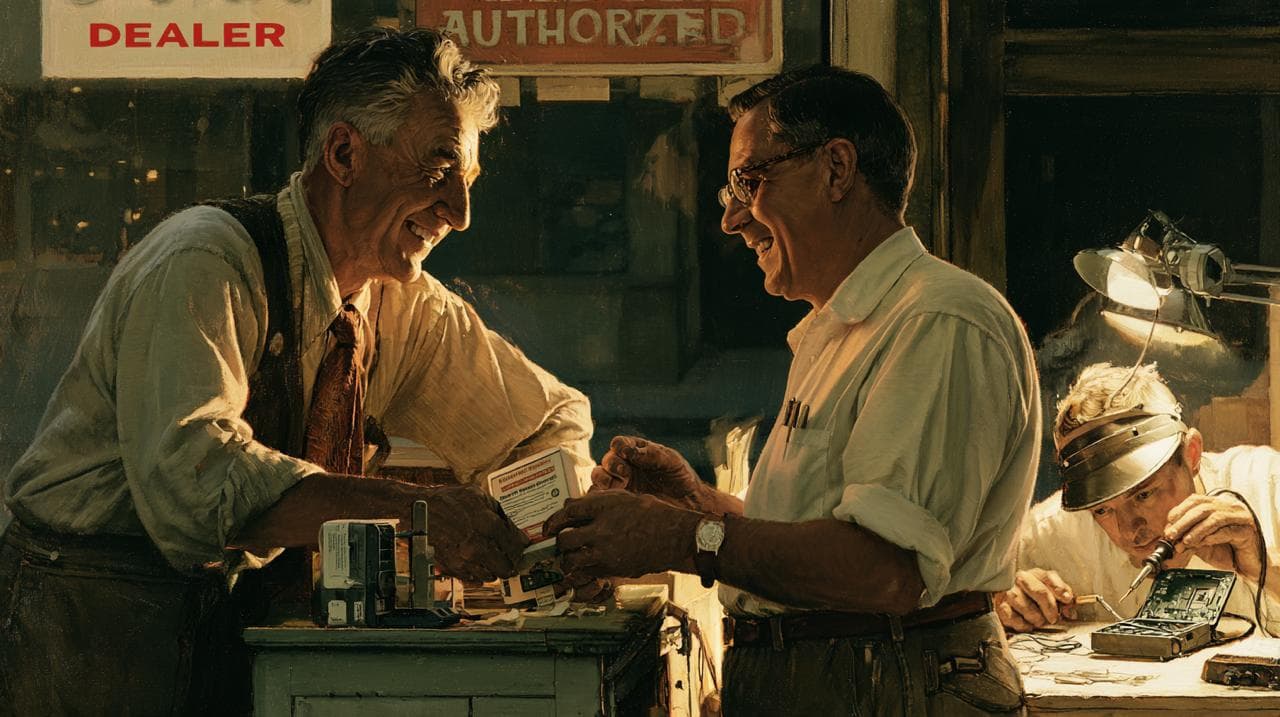
If Copying Is Free, What's Left to Own?Another weekend passes and your Uncle Marty can't shake a question that I'm not sure anybody has a good answer to right now. What the hell is intellectual property when intellect becomes free? Nikita Bier put it this way on Sunday: "I'm no longer sure what 'intellectual property' means when intellect becomes free." Dhruv Bansal answered him on Monday with the cleanest explanation I've seen: "Intellectual property was never defensible. It was just expensive to copy. Now that copying costs nothing, intellectual property is worthless." Strong claim. Is it wrong? Look at what happened over the last week. On Wednesday we wrote about ArtCraft rebuilding Adobe's creative apps with AI agents. The same crew has since released open-source, clean-room clones of Microsoft Word, Excel and PowerPoint called WordCraft, GridCraft and DeckCraft. All three repos were created on October 7 under the Apache 2.0 license. By Monday WordCraft had shipped v0.6.1 with mail merge fields and eight more bibliography styles, and as of this morning it has more than 10,000 stars on GitHub. Stars are attention, not paying customers, and "clean room" is the project's own description of itself. But one of the most defended franchises in the history of software got a free rival that went from an empty repo to mail merge in five days. Five days! What is intellectual property at this point? How much of our economy is dependent on IP laws? The U.S. Patent and Trademark Office estimates that IP-intensive industries accounted for $11.4 trillion, or 44%, of private-sector GDP in 2024. Which of the laws propping that up will be defensible moving forward, if any? Software copyright seems to be standing on the shakiest ground. Hardware feels safer because you still need a fab, a factory and a supply chain to build the physical thing, and utility patent-intensive industries alone make up $5.6 trillion of that USPTO total. But if an agent can read a teardown, write the firmware and lay out the board, how long does that moat hold? Who knows. I certainly don't, and I'd be skeptical of anyone who tells you they do. What I do know is what we said last week. This is something everyone is going to have to come to grips with. The wave is here and there's no putting the lid back on Pandora's box. You can scream about it, sue over it and lobby against it all you want. Human history makes it abundantly clear that once a new technology is introduced, those who leverage it to the best of their abilities first benefit the most, and eventually everybody else adopts it anyway. We saw it with the steam engine. We saw it with the factories of the industrial age. We saw it with gunpowder. Gunpowder is a great example. Chinese alchemists stumbled onto it around the ninth century and the earliest known written formula appears in a Song dynasty military manual from 1044. By 1453 Ottoman cannon were helping bring down the walls of Constantinople, walls that had protected the city for roughly a thousand years. The armies that got guns into the field first took a ton of land. The ones that didn't ended up on the wrong end of them. My favorite version of this story happened right here in the United States. The Comanche were early adopters themselves. They acquired horses in the late 1600s, and according to the Texas State Historical Association, that acquisition turned a mountain people into exceptional horsemen who dominated the Southern Plains for much of the next two centuries. Mounted warriors with bows had a massive edge over Texans who had to stop and reload single-shot guns. Then the Texas Rangers got their hands on a new piece of technology. Not the Colt .45 of legend, which didn't show up until 1873, but the five-shot Paterson Colt that Samuel Colt patented in 1836. According to the Handbook of Texas, Capt. Jack Hays and fourteen rangers charged and routed nearly eighty Comanche warriors at the battle of Walker's Creek in 1844. Hays reported losing one man. Funny enough, Colt's patent didn't save his company. His Paterson operation went bust in 1842 because it couldn't sell enough guns. What put him back in business was Samuel Walker, a former ranger who had taken a lance through the body at Walker's Creek. In 1846, with the Mexican War underway, Walker went to Colt to negotiate an order for 1,000 improved revolvers. The patent didn't make Colt. The men who picked up his tool and used it better than anyone else did. There's an obvious analogy here with those who leverage AI tools and those who don't. Some people are going to pick these tools up like the rangers picked up the Paterson. Others are going to keep reloading their single-shot rifles and insisting the old way is more honorable. History is pretty clear about how that ends. Contrast all of this with bitcoin. Nearly every form of digital property we've known depends on someone enforcing it, whether it's a court, a platform or a takedown notice. Bitcoin doesn't need any of that. The code is open source. Anyone who feels so compelled can download it, copy it, fork it and make whatever changes they'd like, and thousands of people have. You can copy software for free. What you can't copy is bitcoin's network effect: individuals all over the world who use it as sound money for the digital age, completely separate from central banks and governments. You can fork the code. Forking a $1.67 trillion market cap is nearly impossible unless you have overwhelming consensus behind you. If intellect is about to get cheap, the scarce things are energy, time, trust and money that can't be printed. Learn to use the tools and stack sats. Do both, freaks. | |||||||||||||||||||||||||||
SIGNAL | |||||||||||||||||||||||||||
BITCOIN-NATIVE The Ledger drain tally passed $100 millionAn update on yesterday's lead. Bitquery updated its investigation Monday and now counts $102.0 million taken from 324 wallets, after finding a nine-wallet TRON drain worth 8.8 million USDT that it had missed. That's well above the tens of millions people were estimating over the weekend. Most of the loot was stablecoins, and Bitquery says Tether froze $10.0 million of it while the thief pushed about 6,680 ETH into Tornado Cash. The detail that matters if you own one of these devices: Bitquery looked at when victim wallets on TRON, bitcoin and Ethereum first received money. About six in ten were first funded inside Ledger's 90-day window, but more than eight in ten were first funded in June or later. Bitquery is clear that the first-funding date is a clue, not proof of when a device was bought, and Ledger hasn't confirmed a total or changed its guidance. If you bought from CryptoBilis this year, don't wait for the window to widen. Move to a fresh seed on a device you bought directly from the manufacturer. | |||||||||||||||||||||||||||
MACRO Measured in gold, the average Brit is poorer than in 1975Dominic Frisby posted two charts this morning: "How they tell you it's going. How it's actually going." In pounds, UK GDP went from £115 billion in 1975 to an annualized £3.04 trillion in the first half of 2026, up 2,555%. Then he priced GDP per person in gold. In 1975 it bought 28.1 troy ounces. It peaked at 100.9 ounces in 1999. This year it buys 12.7 ounces, down 55% from 1975 and roughly 87% from that peak. You need to denominate growth in sound money to get an accurate reading. Debasement doesn't just eat purchasing power. It distorts perception. Watch the pound figure climb and you feel richer. Measure it in gold and it's glaringly obvious the average Brit is worse off than in 1975. Note how high the line was in the late '90s and early 2000s, and how far it has fallen since. Fittingly, the Treasury sold about half of Britain's gold between 1999 and 2002, near the top of that chart. | |||||||||||||||||||||||||||
MACRO Almost one in five U.S. families is behind on loan paymentsThe Federal Reserve released its 2025 Survey of Consumer Finances on Friday. The headline is that real median family net worth rose 2% to $215,900 between 2022 and 2025, and the Fed says wealth inequality appears little changed. Keep reading. The full report says 19.6% of families reported being late on loan payments, up from 12.2% in 2022 and the highest share since the 2010 survey. Families 60 days or more behind jumped to 8.2%, more than three percentage points higher than in 2022. Is that really surprising? Asset owners are holding their ground while more and more families fall behind on what they owe. That's what life on the wrong side of debasement looks like. | |||||||||||||||||||||||||||
ENERGY FERC sent PJM's data center fast lane back to the statesThe Federal Energy Regulatory Commission largely rejected PJM's plan for bringing data centers and other large loads onto its grid on Friday. The core of the plan would have let big new loads connect without matching new generation if they agreed to be curtailed in the lead-up to grid emergencies. FERC said that framework and PJM's "bring your own new capacity" rules intrude on state jurisdiction over retail rates and appear to discriminate against large loads. It approved PJM's definition of a large load and a registry of these facilities, and told states to decide which customers get cut off when the system is stressed. Jefferies analysts think the ruling means higher capacity prices for longer in PJM. Commissioner David Rosner warned the market could end up "signaling that PJM has more than enough capacity while the region sheds thousands of megawatts of demand on an involuntary basis." Meanwhile, bitcoin miners have been volunteering to be the first load cut off for years. The grid keeps trying to reinvent curtailable demand, and miners already do it for a living. | |||||||||||||||||||||||||||
AI Your AI agent can now pay for the web in satsAmazap is a marketplace of paid shortcuts for AI agents, paid in sats over Lightning. Instead of chewing through a bloated web page, your agent can call Page to Markdown for 12 sats, about a penny, and get back just the readable text. PDF to Markdown costs 24 sats, and Log Squeezer trims a failed build log for 10. Amazap says agents read 98% less in its own test on 20 web pages. You connect one MCP server and top it up with sats. No accounts, no API keys, caps per purchase and per day, and failed calls get credited back. It lists about 1,200 pay-per-call APIs, and sellers in any country can put an API behind Lightning and get paid per call. We tried it for our own agent setup yesterday. Savings are small if your agent already gets clean text, as Amazap itself says. The bigger deal is the rails. If copying gets cheap, people will pay per call for services that do real work, and machines are already settling those calls in bitcoin. | |||||||||||||||||||||||||||
| |||||||||||||||||||||||||||
| |||||||||||||||||||||||||||
⚡ FREEDOM TECH CORNER | |||||||||||||||||||||||||||
Update your ZEUS walletIf you run a Lightning wallet on your phone, now's a good time to update. ZEUS v13.2.3 came out Monday with embedded LND v0.21.4 and an LDK Node build that pulls in rust-lightning v0.2.7 security fixes. The release notes also list a change to verify LSP-wrapped invoices against the invoice they wrap and another to bind LNURL-auth callbacks to the signing domain, plus miscellaneous bug fixes and further security hardening. ZEUS is open source and self-custodial, and it can run its own Lightning node right on your phone. If you want your agent paying for web pages in sats someday, you'd better be comfortable holding and spending them yourself first. Grab the update from your app store or the project's GitHub, and verify the release if you're installing manually. | |||||||||||||||||||||||||||
DATA SNAPSHOT | |||||||||||||||||||||||||||
Spot price, block height and hashrate estimate: October 13, 2026, 9:40 a.m. ET. Bitcoin Lab daily series: October 12, 2026. U.S. spot ETF flows: October 12, 2026. | |||||||||||||||||||||||||||
| |||||||||||||||||||||||||||
Sources: Kraken spot quote, mempool.space block height and hashrate, Bitcoin Lab daily metrics, and TFTC ETF flows. Daily metrics use the provider’s October 12 observation, not live intraday estimates. | |||||||||||||||||||||||||||
| |||||||||||||||||||||||||||
| |||||||||||||||||||||||||||
Talk tomorrow, freaks. | |||||||||||||||||||||||||||
Marty Bent · TFTC · Nostr |