MbS Rejects Netanyahu's Request to Join Yemen War
Saudi Crown Prince Mohammed bin Salman rejected Netanyahu's request, made through US mediators, for Israel to join military operations against Yemen's Houthis, a refusal that signals something bigger than regional diplomacy.
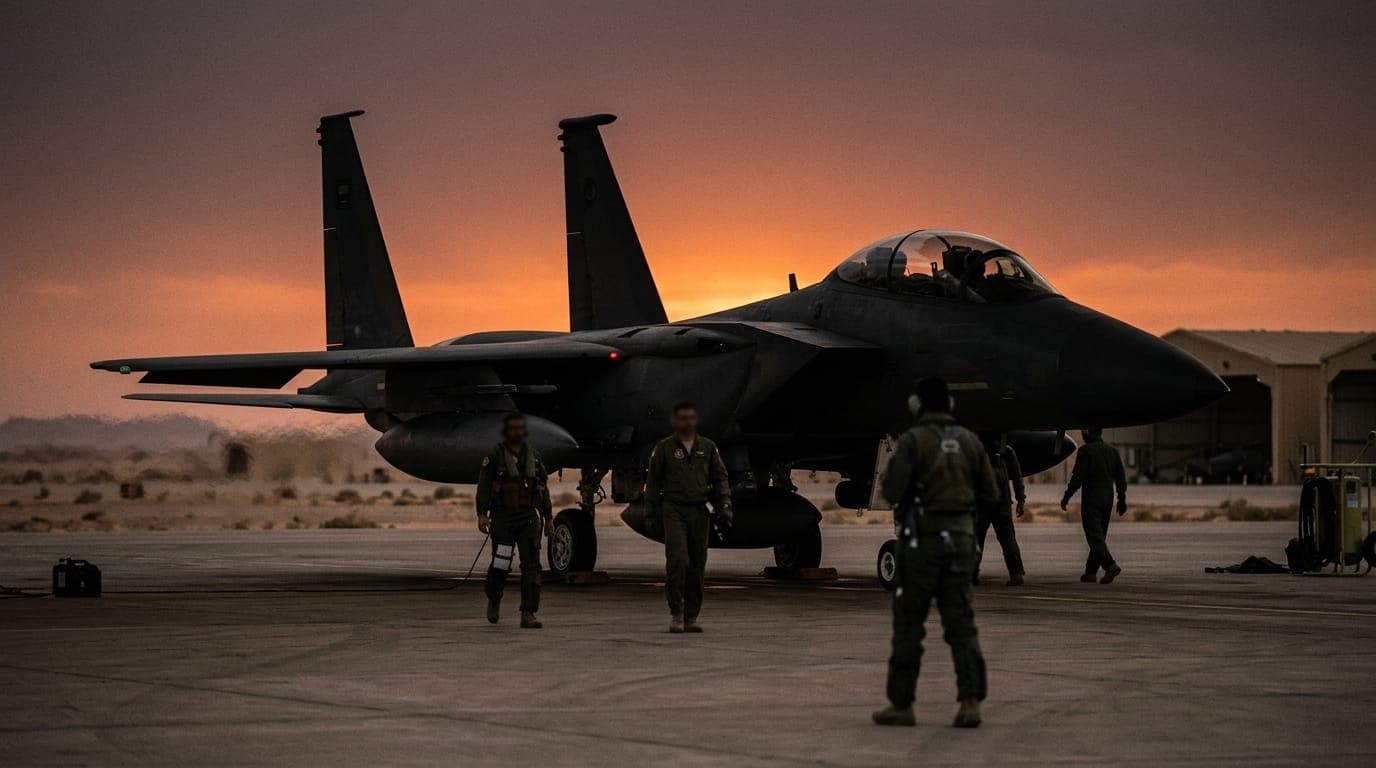
Saudi Arabia's crown prince turned down Israeli military coordination against the Houthis. The refusal is a structural signal, not a tactical hedge.
Key takeaways
- Saudi Crown Prince Mohammed bin Salman rejected Netanyahu's request, made through US intermediaries, for Israel to join military operations against Yemen's Ansarallah movement, citing domestic political backlash, first reported by Haaretz on October 12, 2026.
- Houthi missile and drone strikes have killed more than 20 people and injured more than 370 across multiple attacks on King Khalid International Airport in Riyadh since October 6, with the airport remaining closed through at least October 17.
- Riyadh's refusal to coordinate militarily with Washington's closest regional ally, even under active attack, confirms an independent foreign policy posture with direct second-order consequences for petrodollar reliability.
Saudi Crown Prince Mohammed bin Salman has rejected a request from Israeli Prime Minister Benjamin Netanyahu, relayed through US intermediaries, for Israel to join the Saudi military campaign against Yemen's Houthi movement (Ansarallah), first reported by Haaretz on October 12, 2026, citing a diplomatic source. According to that report, MbS's opposition is firm and Israeli direct military intervention is "completely ruled out." The request came as Houthi strikes turned Saudi civilian aviation into a war zone and exposed the limits of Riyadh's air defenses.
Netanyahu publicly condemned the attacks on October 11, posting on X from the @IsraeliPM account:
"I condemn in the strongest possible terms the horrific terrorist attack on King Khalid International Airport in Riyadh, Saudi Arabia, which claimed the lives of 12 innocent people and injured hundreds more. On behalf of the people of Israel, I extend our deepest condolences to the families of those murdered and our wishes for a full recovery to the injured. Terrorism targets innocent people and seeks to spread fear and instability. It must be confronted with resolve."
The Strikes That Forced Netanyahu's Hand
Between October 6 and October 11, Houthi missile and drone attacks hit King Khalid International Airport (KKIA) in Riyadh and Abha International Airport in a sustained campaign. The October 10 strike was the deadliest, killing at least 13 people of multiple nationalities and injuring more than 300.
On October 8, attacks on KKIA destroyed a Saudia Airbus A320 and killed three Saudi nationals, including a pilot, per Saudi Arabia's General Authority of Civil Aviation. Total casualties across all strikes: more than 20 killed, more than 370 injured. KKIA remains closed, with a NOTAM indicating the closure runs through at least October 17.
Saudi forces have responded with airstrikes against Houthi-held territory. The Saudi-backed Presidential Leadership Council launched a counter-offensive beginning October 4; Saudi-backed Yemeni forces recaptured Mokha, per Yemen's Defense Ministry and reporting from multiple outlets including Bloomberg and The War Zone. Saudi ground and air operations are ongoing.
Netanyahu's rationale for seeking Israeli involvement was straightforward: joint operations against a shared enemy would strengthen Israel-Saudi ties and advance normalization along the Abraham Accords trajectory. MbS's calculus is equally clear. Saudi domestic opinion and the clerical establishment would not tolerate open military coordination with Israel. Saudi officials have also held consistently that normalization requires a credible path to Palestinian statehood, a condition Netanyahu has shown no interest in meeting.
What Riyadh's Refusal Actually Means
The diplomatic framing here is that MbS is managing optics. The more honest read is that Riyadh is managing its strategic sovereignty.
Saudi Arabia is facing a common enemy with Israel and still won't coordinate. That refusal is a deliberate signal to multiple audiences: to its domestic population, to the Arab street, to Tehran, and to Beijing. Riyadh is an independent actor running its own balance-of-power calculus, not a US security client that takes orders.
That independence has a monetary dimension. The petrodollar system is a security and economic relationship in which Gulf states sell oil in dollars, recycle petrodollar surpluses into US Treasuries, and in exchange receive US security guarantees. Saudi Arabia has already exited China's mBridge CBDC project, which at minimum signals it is watching its options carefully.
Every instance of Riyadh acting outside the US security umbrella, whether declining military coordination or hedging on dollar settlement, is one more fracture in the structural demand for US Treasuries that the petrodollar creates. Some analysts have pointed to stablecoins as a potential petrodollar successor, but that thesis depends on Gulf states staying inside the dollar system by choice. A Saudi Arabia managing independent foreign policy is one that can also manage independent reserve positioning.
The Houthi threat to Saudi energy and aviation infrastructure is real regardless of which flags are flying the sorties. Sustained strikes near Aramco infrastructure or the Red Sea shipping corridor push oil price floors higher. Structural inflation signals from energy markets were already present before this escalation. More pressure on Gulf supply routes compounds that.
The falsifiable thesis: MbS's rejection is a structural posture, not a temporary hedge. If MbS reverses course and permits Israeli participation in Yemen operations, or if Saudi Arabia publicly reaffirms dollar-denominated oil settlement and deepens Abraham Accords engagement within the next 90 days, the rejection was a public-optics move and the structural read is wrong.
What to Watch
The airport closure is the near-term signal. If KKIA reopens on schedule by October 17 and Houthi strikes pause, the acute pressure on Riyadh eases and the diplomatic standoff stays frozen. If strikes continue or escalate to energy infrastructure, MbS faces harder choices: accept Israeli coordination under pressure (which would disprove the structural thesis) or absorb the cost independently (which confirms it). US President Donald Trump said on October 10 that the US "may" join Saudi strikes against the Houthis and that Washington would "make a decision" quickly; any formal US entry into Yemen combat operations would reshape the regional equation fast.
Sources
- Netanyahu on X, October 11, 2026
- First reported by Haaretz, October 12, 2026, citing an unnamed diplomatic source
- DropSiteNews on X, October 13, 2026
Frequently Asked Questions
Why won't Saudi Arabia normalize with Israel?
Saudi officials have consistently stated that normalization requires a credible path to Palestinian statehood. Netanyahu has shown no intention of meeting that condition. This is separate from quiet intelligence cooperation that may already exist between the two governments.
What is the petrodollar and why does Saudi independence put pressure on it?
The petrodollar is the informal arrangement by which oil is priced and settled in US dollars, generating structural global demand for dollar reserves and US Treasuries. It is held together by security relationships, not law. When the region's largest oil exporter manages its foreign policy independently of Washington's preferred partners, the security side of that arrangement weakens, and with it the structural demand for US debt.
Do Houthi strikes on Saudi airports affect global oil markets?
Direct hits on aviation infrastructure raise costs and signal vulnerability, but the larger risk is escalation toward energy export infrastructure or the Red Sea shipping corridor. Sustained disruption there would pressure global oil prices regardless of US or Israeli military involvement.