Vulcan Infrastructure Bets Seneca Lake AI Pivot on $39.4M PIPE
Greenidge Generation rebranded as Vulcan Infrastructure and Power in July 2026, raised $39.4 million, and is pushing to convert its 104 MW Seneca Lake plant into a hyperscale AI data center. Local organizers are demanding an environmental review. New York's DEC has not received a permit application.
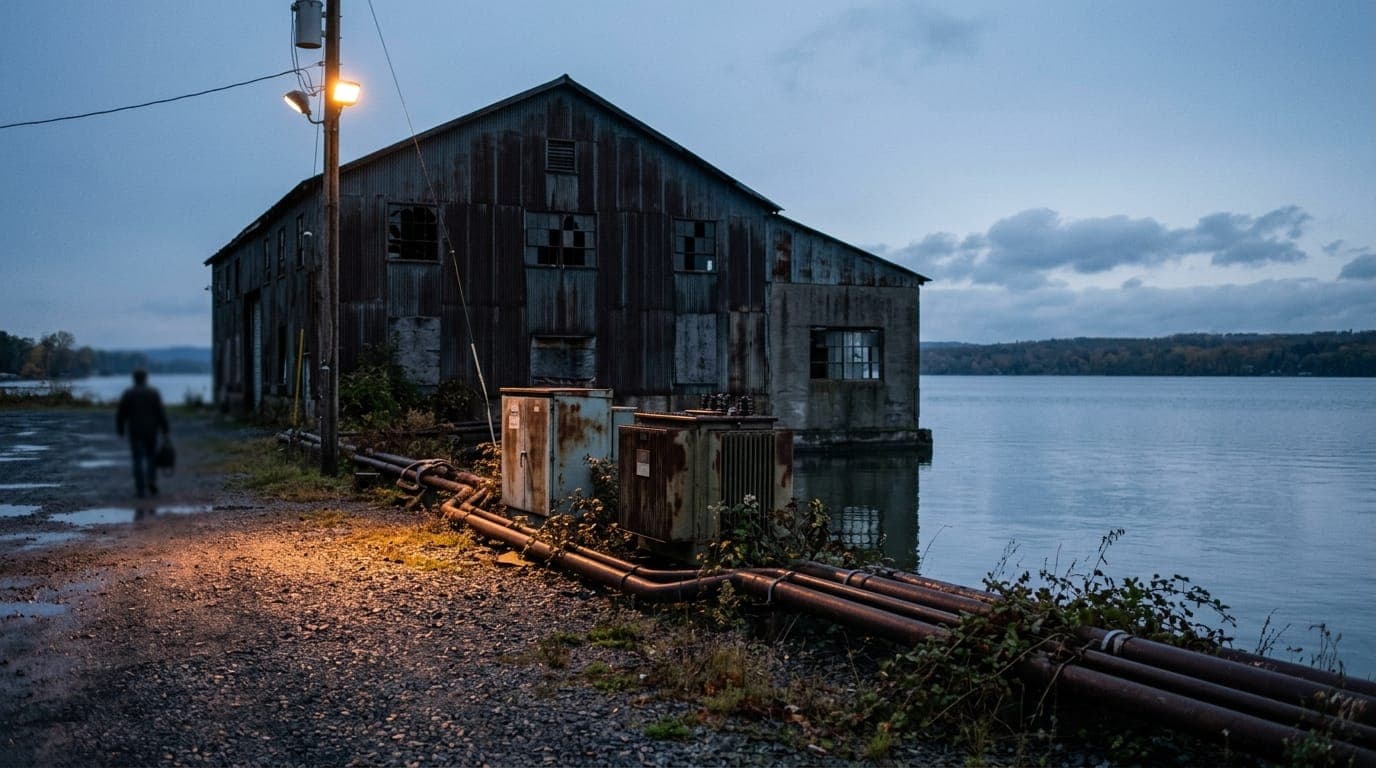
Greenidge Generation's rebranded successor raised $39.4 million and is pivoting its struggling Bitcoin mining plant to hyperscale AI compute, while arguing New York's new data center moratorium doesn't apply.
Key takeaways
- Greenidge Generation rebranded as Vulcan Infrastructure and Power (Nasdaq: VIP) in July 2026 and closed a $39.4 million PIPE transaction in September, backed by Machine Investment Group, Atlas Holdings, and Conversant Capital.
- Community organizers say the proposed AI expansion could draw an additional 260 MW from the grid, roughly tripling the facility's current 104 MW load. Vulcan has secured regulatory approval for 60 MW of non-curtailable power at the Dresden site, per SEC filings.
- Concerned Citizens of Torrey hosted a public forum on October 13, 2026, demanding an environmental impact study. New York's DEC says it has not received a permit application, and Vulcan contends the state's data center moratorium does not cover existing operations.
Greenidge Generation Holdings, the Bitcoin mining company that spent years battling New York regulators over its Seneca Lake power plant, has rebranded as Vulcan Infrastructure and Power (Nasdaq: VIP) and is now asking the same community to absorb a hyperscale AI data center, per a July 20, 2026 SEC Form 8-K. The company's position: it's just changing what the computers do. The community's position: the power draw is about to triple, and nobody has applied for a permit.
The rebrand coincided with a $39.4 million PIPE transaction signed July 19, led by affiliates of Machine Investment Group and Atlas Holdings alongside Conversant Capital and company insiders. The PIPE closed September 10, 2026. CEO Jordan Kovler called it "an important step in our evolution," per the Vulcan Q2 2026 earnings release.
The Gap Between the SEC Filing and the Community's Math
Vulcan's SEC filings confirm the company secured approval for 60 MW of non-curtailable power at the Dresden, New York site. Concerned Citizens of Torrey and the Seneca Lake Guardian characterize the full buildout pipeline as drawing an additional 260 MW from the grid, on top of the facility's existing 104 MW of energized capacity. That gap between 60 MW approved and 260 MW as the stated ambition is where the fight lives.
Dale Irwin, President of Vulcan, offered the company's framing to Spectrum News in August: "We're simply pivoting what the data center computers will be used for, from using computing power for cryptocurrency to high-performance computing." The company states that permitted emissions, water use, and noise will not change under the conversion.
Regulators are not so sure. New York's DEC has said it has not received a permit application tied to the proposed conversion. Governor Hochul signed an executive order placing a moratorium on large-scale data centers requiring 50 MW or more while the state studies grid and environmental impacts. Vulcan claims the moratorium doesn't apply because it's an existing operation. The DEC has not confirmed or denied that interpretation.
This is the same regulatory environment that denied Greenidge's Title V Air Permit in 2022, saw that denial upheld three times in court, and then reversed course when Hochul's administration reached a settlement in 2025 granting a five-year permit. The permit history is not a confidence-builder for the community.
A Struggling Operation Reaching for a Lifeline
The financial context matters. Vulcan's revenue has declined significantly in recent years as permit battles made meaningful expansion impossible. The company then raised $39.4 million in a PIPE to fund an AI pivot. Vulcan is a distressed asset using AI capex as a reset button.
The pattern is repeating nationally. Acquire or inherit stranded mining infrastructure, rebrand for AI, then argue the regulatory clock resets to zero. The AI data center capex buildout is providing cover for exactly this kind of play, and the communities left holding the environmental bag are the ones that already fought the last round.
Yvonne Taylor, VP of Seneca Lake Guardian and President of the National Coalition Against Cryptomining, put it plainly in a statement tied to NY State Sen. Kristen Gonzalez's statewide tour: "The Finger Lakes has too much at stake to accept unchecked hyperscale AI data center development."
The deeper issue, one worth holding alongside the community's legitimate concerns, is centralization of compute. A 260 MW AI campus controlled by a small group of institutional investors is a single point of control over significant computing infrastructure. Finland's regulators stopped Google's €13 billion AI data centers over missing environmental reviews.
New York is wrestling with the same question at a smaller but equally instructive scale.
What to Watch
The Torrey Town Board is weighing a local moratorium. The DEC has not received a permit application, which means the review clock has not started. Sen. Gonzalez's Responsible Data Center Development Act, which would require public hearings and host-community benefit programs before permits are issued, remains pending, with its applicability to existing operators explicitly unresolved.
If Vulcan files a new permit application with the DEC covering the expanded AI load, the regulatory picture clarifies fast. Until then, the company is operating on the claim that it can triple the facility's power draw without triggering a new review process.
Sources
- SEC Form 8-K, July 20, 2026, Rebrand and PIPE announcement
- SEC Form 8-K, September 10, 2026, PIPE closing
- Vulcan Q2 2026 Earnings Release, Form 8-K, August 14, 2026
- SEC Form 8-K, August 17, 2026, Vulcan investor presentation
- Seneca Lake Guardian
- NY State Sen. Kristen Gonzalez, NY Fights AI Data Centers press release
Frequently Asked Questions
Does New York's data center moratorium apply to the Vulcan facility at Seneca Lake?
Vulcan says no, arguing that as an existing operation it falls outside the executive order's scope. The DEC has not confirmed or denied this interpretation and has stated it has not received a permit application from Vulcan tied to the proposed AI conversion. Until the DEC rules on the question or Vulcan files, the moratorium's applicability is legally unsettled.
Why did Greenidge Generation's Bitcoin mining operation fail?
Greenidge's revenue declined sharply in recent years, after permit battles with the New York DEC and sustained community opposition made expansion impossible. The company's Title V Air Permit was denied in 2022 and that denial was upheld three times in court before a 2025 settlement with Hochul's administration granted a five-year permit, allowing continued operations but foreclosing aggressive growth in the mining business.
What is the Responsible Data Center Development Act and would it cover this site?
The legislation, championed by NY State Sen. Kristen Gonzalez, would set energy-efficiency standards, require public hearings, and mandate host-community benefit programs before data center permits are issued in New York. Whether its requirements would apply to an existing operator like Vulcan seeking to expand is explicitly unresolved in the current bill text. If enacted as drafted, it would likely trigger new scrutiny; if Vulcan's "existing operator" argument holds, it may not.