Canada's Electricity Threat Is Bluster: The Math on 2% of U.S. Power
Ontario Premier Doug Ford threatened to cut electricity exports to the United States. The verified numbers, less than 2% of total U.S. power consumption, explain why Trump called it 'lots of bluster.'

Ontario Premier Doug Ford threatened to cut off electricity exports to the United States. The numbers show it would barely register.
Key takeaways
- Canada supplies roughly 85% of U.S. electricity imports, but those imports total less than 2% of overall U.S. power consumption, per Canada Energy Regulator and EIA data.
- Trump escalated on August 24, announcing 50% tariffs on Canadian autos, auto parts, and steel starting January 1, 2027, while turning Ford's own asymmetry against him: Canada ships approximately 75% of its exports to the U.S.
- The episode is a live demonstration of how reserve-currency dominance and consumer-market scale restructure every trade negotiation before it starts, which is exactly the dynamic that makes a neutral, non-sovereign monetary asset worth holding.
Ontario Premier Doug Ford told the Associated Press on August 24 that Canada should cut off electricity and critical minerals to the United States if the trade dispute escalates further, saying "everything is on the table" and that Trump "better have a pack of batteries." Trump responded the same day on Truth Social, announcing 50% tariffs on Canadian cars, trucks, auto parts, and steel effective January 1, 2027, and dismissing Ford's threats as "lots of bluster."
A separate 50% tariff wave had already taken effect August 23 on roughly $20 billion in Canadian imports after trade talks collapsed. Ottawa announced it will retaliate "dollar-for-dollar" after Labour Day, targeting steel and electronics.
The Numbers Ford Left Out
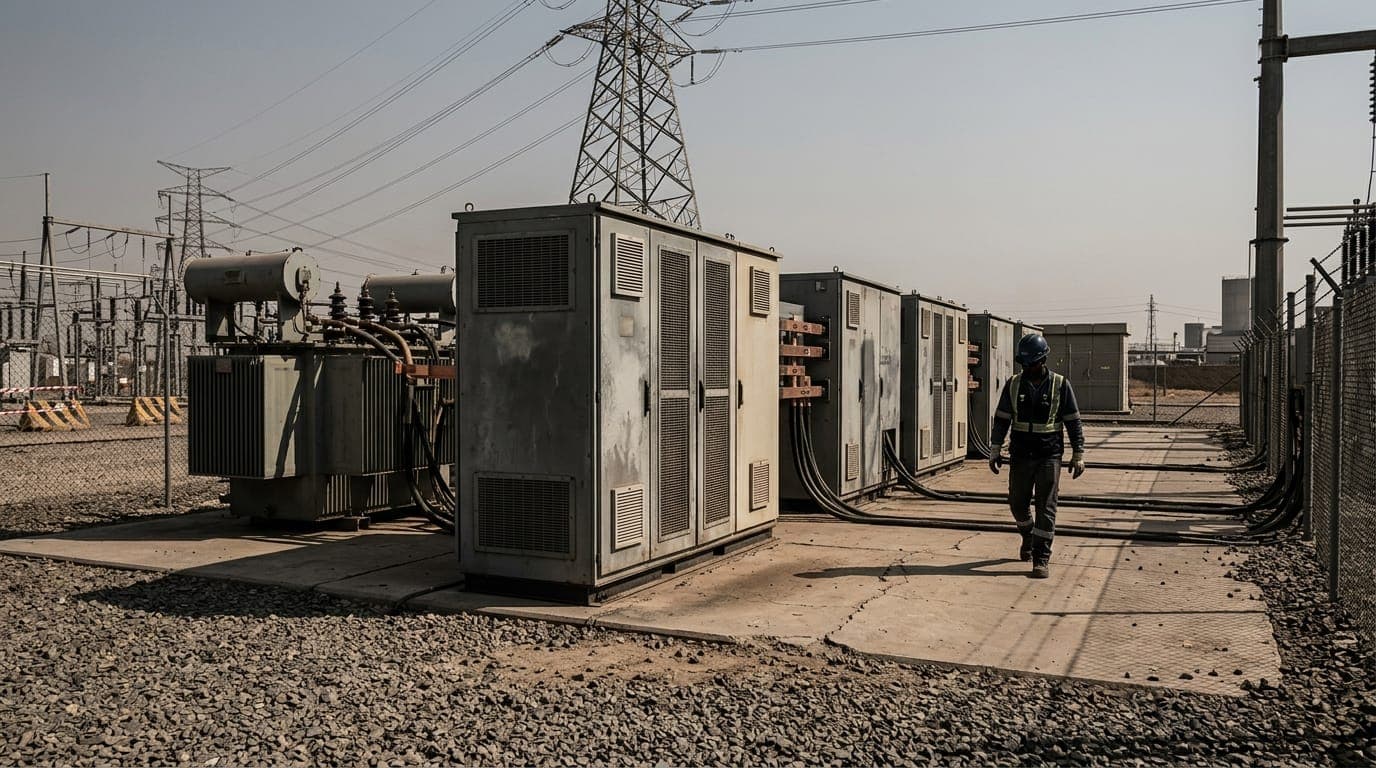
The headline claim from Canadian officials is accurate and misleading at the same time. Canada does supply approximately 85% of U.S. electricity imports, per Canada Energy Regulator data. In 2025, Canada exported 32.7 TWh of electricity to the U.S., valued at $3.3 billion, per the Canada Energy Regulator.
The problem is the denominator. The EIA reports that cross-border electricity exchange "represents less than 1% of their respective total generation." Total U.S. electricity generation runs above 4,000 TWh annually. Canada's 32.7 TWh export lands at under 1% of that figure. Ford's "1.5 million homes and businesses" claim is his own characterization; the grid math puts the national impact near zero.
Regional concentration is real but narrow. Maine draws roughly 64% of its power from Canadian sources. Manitoba supplied about 13% of Minnesota's needs in 2023. Ontario connects to Michigan, New York, and Minnesota.
A cutoff would create genuine pain in those specific corridors. Nationally, it would be a rounding error.
This is not a new threat. Ford imposed a 25% surcharge on Ontario electricity exports to Michigan, New York, and Minnesota in March 2025, then reversed it within days after bilateral talks with U.S. Commerce Secretary Howard Lutnick. The pattern of loud threat followed by diplomatic retreat has repeated across at least three escalation cycles since late 2024.
The Asymmetry That Decides the Fight
The electricity numbers are the sideshow. The structural problem for Canada is the trade dependency running in one direction.
Canada shipped approximately 75.9% of its merchandise exports to the United States in 2024, per Statistics Canada, falling to 71.7% in 2025 as Ottawa worked to diversify. Canada is the largest single export market for U.S. goods, but the U.S. is not comparably dependent on Canada as a share of its total export base. That is not a symmetrical fight, and no amount of press conference rhetoric changes the underlying math.
Trump's counter on Truth Social pointed directly at this: "much of the Electricity, Oil, and Gas that Canada gets is transported through the U.S.A." Canada's energy infrastructure was built around U.S. market access. Redirecting it is a decade project, not a policy announcement. Quebec Premier Christine Fréchette said Canada needs to "hit where there's sensitivity." The sensitivity runs both ways, but the exposure is not equal.
Ford's "dollar to dollar" framing, fighting U.S. tariffs with equivalent retaliation, assumes a symmetry that does not exist. The Triffin Dilemma is the underlying mechanic: the country that issues the world's reserve currency absorbs trade friction that would be existential for its counterparties. The U.S. can sustain this dispute in ways Canada cannot. That is not opinion; it is the structural consequence of running the global reserve currency and the world's largest consumer market simultaneously.
For a Bitcoiner, this is the monetary dominance dynamic in plain sight. Every nation-state trying to pressure the U.S. with tariffs or commodity cutoffs is fighting on terrain the U.S. already controls. The dollar does not need to be deployed as a weapon in any given negotiation because its existence already restructures every negotiation before it starts.
Canada's "dollar to dollar" pledge is hollow precisely because the two sides are not transacting in the same kind of dollar. One country issues it; the other earns it by selling goods south.
Bitcoin is the exit from that structure: an asset with no sovereign issuer, no counterparty that can threaten to cut off pipeline access, no reserve-status moat protecting one side of the table. The more visibly nation-states display this coercive dynamic, the clearer the case for a neutral monetary layer operating underneath it.
What to Watch
The falsifiable question is regional, not national. If cutting Canadian electricity triggered rolling blackouts or emergency price spikes across multiple U.S. metro areas, or if Canada successfully redirected its export base away from the U.S. at meaningful scale within 24 months, the power asymmetry thesis would need revision.
Watch Maine and Minnesota grid data if Ford follows through. Watch whether Ottawa's "dollar-for-dollar" retaliation after Labour Day targets goods with genuine U.S. domestic substitutes or goods where Canada holds a real chokehold. The difference will show whether this is negotiating posture or a credible escalation path.
Sources
- Canada Energy Regulator, 2025 Canada-U.S. Energy Trade (March 2026)
- Statistics Canada, Canadian International Merchandise Trade, December 2025
- EIA, U.S.-Canada Electricity Trade
- Associated Press interview with Ontario Premier Doug Ford, August 24, 2026, via PBS NewsHour
- Trump, Truth Social, August 24, 2026 (no permanent archival URL confirmed)
Frequently Asked Questions
Does Canada actually supply 85% of U.S. electricity imports?
Yes, but that figure describes Canada's share of what the U.S. imports, not what it consumes. Per the EIA, cross-border electricity exchange represents less than 1% of total U.S. generation. The 85% figure is accurate and misleading when deployed as a national influence claim.
Has Doug Ford ever actually followed through on cutting electricity to the U.S.?
Partially. In March 2025, Ontario imposed a 25% surcharge on electricity exports to Michigan, New York, and Minnesota. Ford reversed it within days after bilateral talks with U.S. Commerce Secretary Howard Lutnick. The same threat has been raised and walked back across at least three escalation cycles since late 2024.
What does this trade dispute have to do with Bitcoin?
The Canada-U.S. asymmetry is a live demonstration of how reserve-currency dominance shapes geopolitical power. Any country fighting the U.S. with tariffs or commodity cutoffs is doing so in a dollar-denominated arena the U.S. controls. Bitcoin operates outside those flows: no sovereign issuer, no counterparty risk, no pipeline infrastructure to threaten. The more visible this coercive dynamic becomes, the stronger the case for a neutral monetary base layer underneath it.