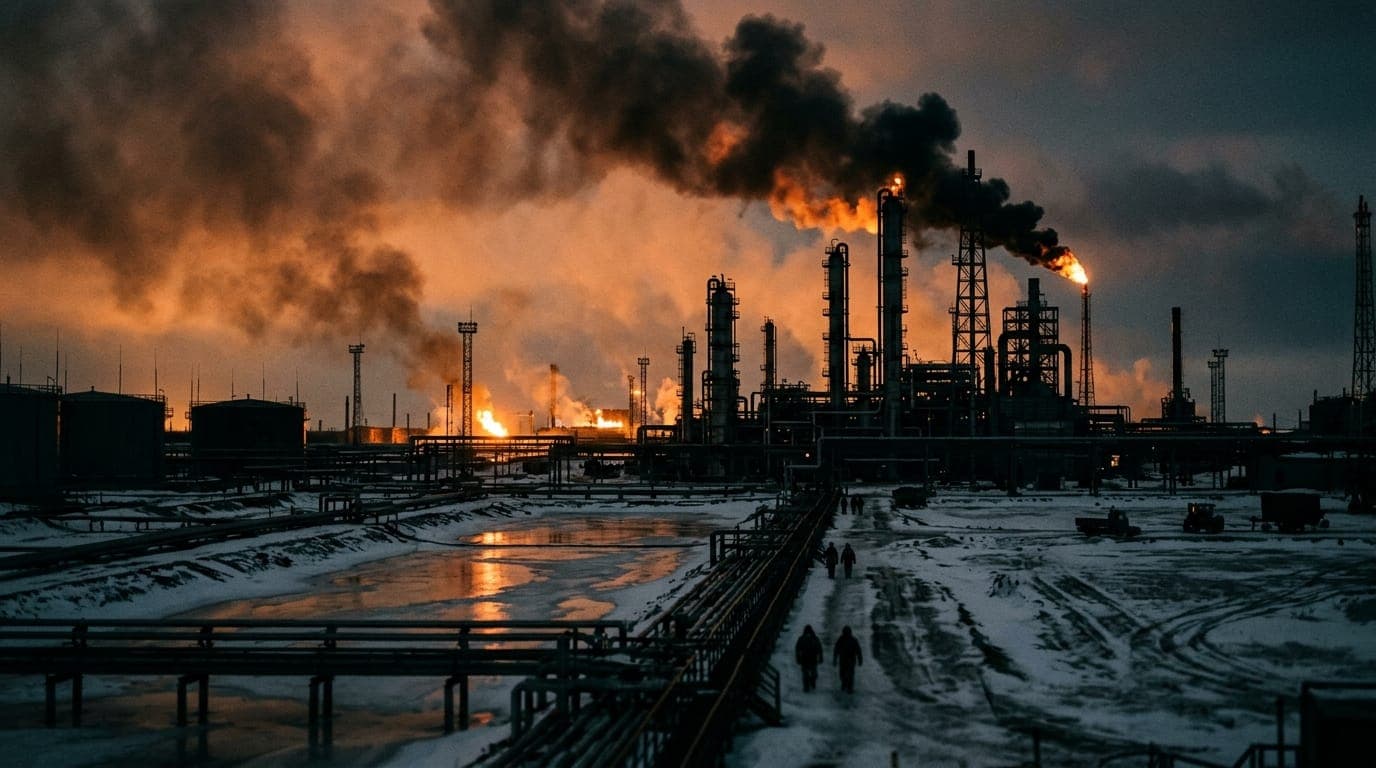
Nobel Laureate David Gross Puts 2% Annual Nuclear War Odds on the Table
Nobel laureate David Gross estimates a 2% annual probability of nuclear war, double the Cold War baseline, giving humanity an expected survival window of roughly 35 years. Every long-duration asset priced on functioning nation-states is ignoring this number.
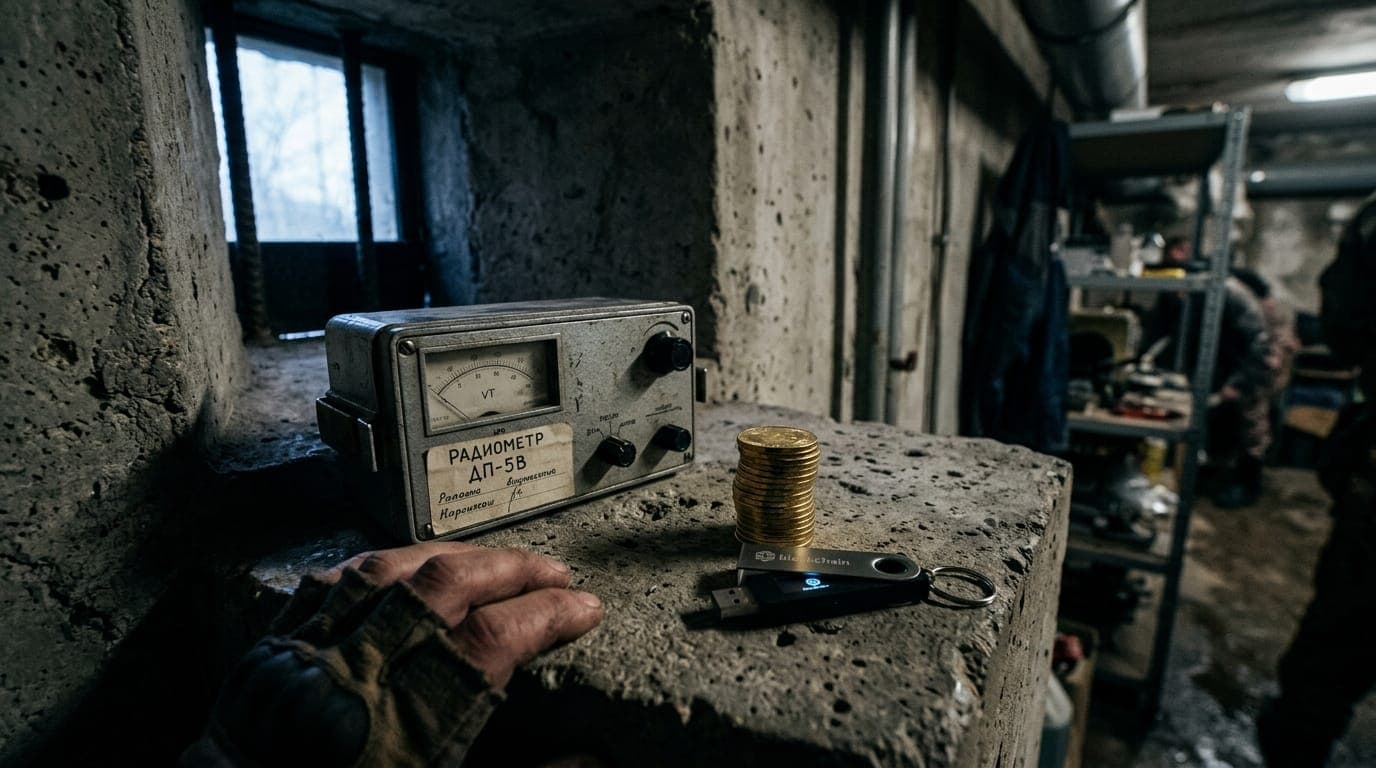
Physics Nobel winner says nuclear war risk has doubled to 2% per year, giving humanity a coin-flip survival window of roughly 35 years.
Key takeaways
- David Gross, 2004 Nobel laureate in physics, estimates the annual probability of nuclear war at 2%, double the Cold War baseline of roughly 1%, yielding an expected survival window of approximately 35 years.
- The structural drivers are all moving the wrong direction simultaneously: nine nuclear-armed states, no major arms-control treaties, hypersonic delivery systems compressing decision windows, and AI embedded in command-and-control chains.
- At 2% per year compounded, the probability of no nuclear war over the next 35 years is roughly a coin flip. Most long-duration assets, and the entire fiat monetary system, are priced as if that risk does not exist.
David Gross, who shared the 2004 Nobel Prize in Physics for the discovery of asymptotic freedom, told Live Science in April 2026 that his best estimate for the annual probability of nuclear war is 2%, roughly double the Cold War rate of 1%. That single number, compounded across decades, turns a background worry into an actuarial problem with a concrete answer most people do not want to see.
His framing was blunt: "The expected lifetime, in the case of 2% [per year], is about 35 years."
The Math Everyone Is Skipping
The 35-year figure is a half-life calculation, borrowed from radioactive-decay mathematics. At 1% per year, the probability of surviving the next 35 years without nuclear war is roughly 70%. At 2% per year, that drops to approximately 50%. A 20-percentage-point swing in civilizational survival probability is not a rounding error.
Gross calls his estimate "conservative," not alarmist. "I think I'm being conservative, but a 2% estimate in today's crazy world," he said in the Live Science interview. A separate Scientific American interview corroborates the figure verbatim.
The structural case he builds is straightforward. Nine nuclear-armed states now exist, compared to the superpower duopoly that structured Cold War deterrence. Every additional actor multiplies the pathways for misread, accident, and regional escalation. Gross is explicit: "In the last 10 years, there are no treaties anymore. We're entering an incredible arms race. We have three super nuclear powers."
Hypersonic delivery systems shrink the authentication window for leaders from minutes to seconds. Gross also flags a distinct escalation vector that receives little attention: AI embedded in military command-and-control, where a single error could tip a crisis into exchange. The 2024 Mainau Declaration, signed by 104 Nobel Laureates, identified the same threat cluster as requiring urgent collective action.
The Unpriced Tail Risk
Here is the second-order problem that the event-level coverage leaves unexamined.
Every serious long-duration asset, including 30-year Treasuries, pension funds, sovereign wealth funds, and infrastructure bonds, is priced on one foundational assumption: that the institutional order persists. Functioning governments, enforceable contracts, and intact payment rails are not inputs to the model. They are the model. Gross's 2% figure, if taken seriously, should reprice the risk premium on all of it.
Bitcoin's design answers a different question. Fixed supply, no counterparty, permissionless settlement across borders, no requirement for functioning state institutions at the base layer. The corporate treasury conversation usually focuses on regulatory risk. The Gross framework surfaces a deeper one: what is the value of any asset whose settlement depends on infrastructure that carries a coin-flip survival probability across a 35-year horizon?
The thesis is falsifiable. If the structural drivers Gross identifies, specifically treaty erosion, nine-power proliferation, and hypersonic compression of decision windows, reverse in a meaningful way (a binding multilateral arms-control regime with real verification, a reduction in the nuclear club), the civilizational-tail-risk framing for Bitcoin weakens materially. The counter-case is also worth naming: Bitcoin's own infrastructure, mining hardware, the node network, the internet backbone, is not immune to the scenarios Gross describes. A true civilization-ending exchange would test the hedge thesis on its own terms.
The AI concentration angle Gross raises maps onto a concern TFTC has tracked separately. Centralized, opaque AI in the hands of nuclear states is precisely the category of risk that decentralized, rules-based systems were designed to route around. The logic is not a direct analogy; it is the same underlying argument about single points of failure in high-stakes systems.
What to Watch
Gross has moved beyond academic commentary. He participated in a Nobel Laureate Assembly focused on nuclear risk reduction and co-organized the Vatican Nobel Assembly in July 2026 that produced the Rome Declaration, signed by more than 200 of the world's most authoritative figures.
The Mainau Declaration gives institutional weight to the campaign. Whether the policy architecture responds (or continues to erode) is the variable to track. Every treaty that lapses, every new delivery system fielded, moves the annual probability in one direction.
Sources
Frequently Asked Questions
What does David Gross mean by a 35-year expected lifetime for humanity?
Gross applies the mathematics of radioactive decay to nuclear war probability. At a 2% annual risk, the expected mean time before a nuclear war occurs is approximately 35 years. This is not a guarantee of catastrophe in year 36; it means that compounded annually, a 2% risk yields roughly a 50% chance of nuclear war occurring within that window. Gross describes his estimate as conservative, not precise.
Does a 2% annual nuclear war risk mean nuclear war is inevitable?
No. Each year is an independent probability event. The 2% figure means that in any given year, Gross estimates a 1-in-50 chance of nuclear war. Compounded over 35 years, that cumulative probability reaches roughly 50%, and over 50 years, approximately 63%.
Gross's own framing uses the term "expected lifetime," borrowed from physics, to communicate this compounding effect rather than a deterministic prediction.
Why does Gross's nuclear risk estimate matter for Bitcoin specifically?
Bitcoin's core properties, fixed supply, no counterparty, no dependence on intact state institutions for settlement, become most relevant precisely when the institutional infrastructure underlying fiat money faces genuine tail risk. If the treaty-backed, nation-state-dependent monetary order carries an unpriced civilizational tail risk, Bitcoin is the only major monetary asset whose base-layer operation does not require those systems to survive.