Four Microreactor Safety Approvals in Weeks While Grid-Scale Stalls
INL's MARVEL and Last Energy both cleared final DOE safety analyses within 48 hours. Westinghouse and Deep Fission hit their own milestones in August. Four programs are moving from paper to physics while gigawatt-scale nuclear idles.
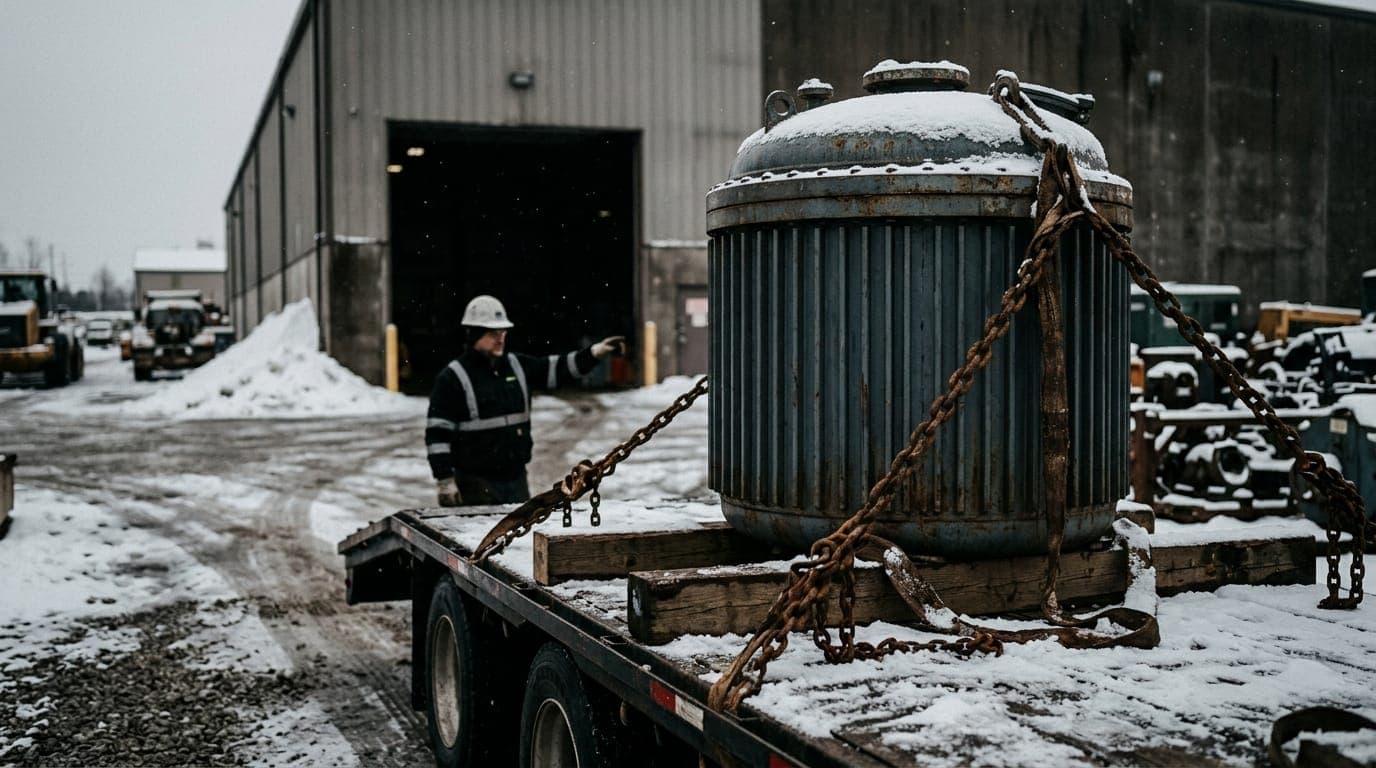
Two final DOE safety analyses cleared in 48 hours. Hardware is shipping. Grid-scale nuclear is still negotiating non-binding frameworks.
Key takeaways
- INL's MARVEL microreactor cleared its final DOE safety analysis and received its primary coolant system on October 6; Last Energy followed the next day with DOE approval of its own final safety analysis for the Texas A&M pilot reactor.
- Westinghouse eVinci achieved zero-power criticality in August 2026 and Deep Fission cleared its nuclear safety design agreement the same month, bringing the count of microreactor programs crossing concrete hardware milestones to four in roughly 60 days.
- Grid interconnection queues now stretch to five years or more for new capacity, per Lawrence Berkeley National Laboratory's Queued Up: 2026 Edition, making on-site microreactor deployments an increasingly credible workaround for industrial power users who cannot wait.
Two microreactor programs cleared their final Department of Energy safety analyses within 48 hours of each other in early October, the clearest sign yet that the small-reactor sector is moving from regulatory paperwork to operational hardware. For Bitcoin miners and other industrial power users facing multi-year grid interconnection waits, this is the development to watch.
Hardware Is Moving
On October 6, Idaho National Laboratory announced that DOE's Idaho Operations Office had approved MARVEL's final Documented Safety Analysis, authorizing the dry criticality configuration. The primary coolant system had already arrived at INL's Transient Reactor Test Facility. MARVEL is a sodium-potassium cooled microreactor producing roughly 85-100 kW thermal and 20 kW electric. INL's Abdalla Abou-Jaoude, MARVEL's project lead, said in the release: "We're ecstatic to not only have our PCS fabricated, but also to get this important approval from DOE, which allows us to move toward MARVEL's initial criticality." The INL press release targets criticality by December, though the INL MARVEL project page has listed dry criticality for 2027 -- readers should note that discrepancy and watch for an updated timeline.
The day after, Last Energy announced DOE approval of the Documented Safety Analysis for its PWR-5 pilot reactor at Texas A&M's RELLIS campus. The DSA is the final and most comprehensive safety analysis in the DOE authorization chain. With it cleared, Last Energy enters the readiness review, the last step before startup authorization.
The PWR-5 uses a full-scale reactor core identical to Last Energy's commercial PWR-20 design and runs on conventional low-enriched uranium fuel, meaning the supply chain is off-the-shelf and the pilot result maps directly to commercial deployment. Last Energy was selected for DOE's Reactor Pilot Program in August 2025 under Executive Order 14301, which directed DOE to streamline reactor testing.
The two October milestones cap a busy stretch. Westinghouse completed zero-power criticality testing for its eVinci microreactor on August 24, 2026 at the National Criticality Experiments Research Center in Nevada, per DOE, in collaboration with Los Alamos National Laboratory and INL. Dan Sumner, Westinghouse President and CEO, called it "turning uncertainty into validated evidence." The eVinci runs on TRISO/HALEU fuel, produces roughly 5 MWe, and is deployable on about two acres. Deep Fission received DOE approval of its Nuclear Safety Design Agreement on August 6 for its underground pressurized water reactor, per the company, which is designed to be placed roughly one mile underground in a borehole.
What This Means for Miners
The grid interconnection queue is the hidden constraint on hashrate growth. A miner signing a large power purchase agreement for grid-connected capacity today is looking at a wait measured in years before a single watt flows. Lawrence Berkeley National Laboratory's Queued Up: 2026 Edition reports that the median duration from interconnection request to commercial operations was over five years for projects built in 2025. The queue is a physics-and-paperwork problem baked into how the grid works.
Microreactors in the 1-20 MWe range sidestep that entirely. A miner who sites a facility and deploys an on-site unit skips the utility queue, decouples hashrate geography from substation proximity, and gets dispatchable 24/7 power that no renewable intermittency risk can touch.
That is not theoretical. Last Energy has a full-scale core on a university campus awaiting startup authorization. Westinghouse split atoms. MARVEL's coolant system is physically on site. This is nuclear execution, not nuclear planning.
The contrast with gigawatt-scale nuclear is stark. No new AP1000s have been deployed. Major bilateral frameworks being discussed carry non-binding terms and no selected sites. Hyperscalers are chasing uprates and restarts at existing plants because new builds take too long.
The congressional support is there. The argument has been won. Execution at grid scale remains the bottleneck, which is exactly why the microreactor track matters.
The falsifiable thesis here: miners who lock in microreactor off-take agreements in 2026-2027 gain energy optionality the grid cannot offer. That thesis breaks if commercial deployments slip past 2030 without a single grid-connected operating unit, if interconnection queues shorten materially below 24 months, or if cost-per-kWh from shipped microreactors lands above grid parity at mining scale. The first commercial off-take contract for a microreactor powering a private industrial load is the trigger to watch.
What Comes Next
MARVEL targets criticality by year-end per the October 6 INL press release. Last Energy moves into DOE's readiness review, the final gate before startup authorization.
Westinghouse's next milestone is fueled operation at INL's DOME facility, with timing unconfirmed. Radiant Nuclear's gas-cooled Kaleidos reactor is also at DOME and conducting readiness reviews, with a DOE authorization for its safety submission confirmed in February 2026. Whether any of these programs produces the sector's first commercial off-take contract with a private industrial operator, including a Bitcoin miner, is the number to watch heading into 2027.
Sources
- INL MARVEL Safety Approval Press Release, October 6, 2026
- Last Energy DSA Approval Press Release, October 7, 2026 (Business Wire)
- DOE: Westinghouse eVinci Achieves Criticality Milestone, September 16, 2026
- Deep Fission NSDA Approval Press Release
- Lawrence Berkeley National Laboratory, Queued Up: 2026 Edition
Frequently Asked Questions
What is a microreactor and how much power does it actually produce?
A microreactor is a factory-fabricated fission unit typically in the 1-20 MWe output range, designed for on-site deployment without the civil construction footprint of a conventional plant. MARVEL produces roughly 20 kW electric. The Westinghouse eVinci targets approximately 5 MWe. Last Energy's commercial PWR-20 is designed for 20 MWe.
These are not grid-replacement units. They are on-site power sources for industrial loads, remote facilities, and data infrastructure that cannot wait for grid interconnection.
Can a Bitcoin mining operation actually run on a microreactor today?
Not today, but the timeline has compressed materially. None of the programs above have shipped a commercial unit to a private customer yet. MARVEL and Last Energy are in the final authorization stages before first criticality.
Commercial off-take is the next milestone after startup is demonstrated. A realistic window for first commercial deployments at private industrial sites, including mining facilities, is 2027-2028 if current momentum holds. The question for miners right now is whether to be in early conversations with Last Energy, Westinghouse, and others or to wait until the market is established and optionality is priced in.
What does it mean that a reactor "cleared its safety analysis"?
DOE's authorization process for reactor pilots runs through several stages. The Preliminary Documented Safety Analysis (PDSA) is an early-stage review. The Documented Safety Analysis (DSA) is the final, comprehensive safety case covering all operational configurations.
Clearing the DSA authorizes the specific test configuration and moves the project into DOE's readiness review, which is the final administrative and technical check before startup authorization is granted. It is the last named gate before a reactor is allowed to go critical. Both MARVEL and Last Energy cleared this gate within 48 hours of each other in early October.