AI Data Centers Raid Used Turbine Market as New Units Queue to 2031
New gas turbines in the US carry a six-year average lead time, per Wood Mackenzie. AI developers are scouring the secondary market for used jet-engine generators. The supply gap validates what Bitcoin miners figured out years ago.
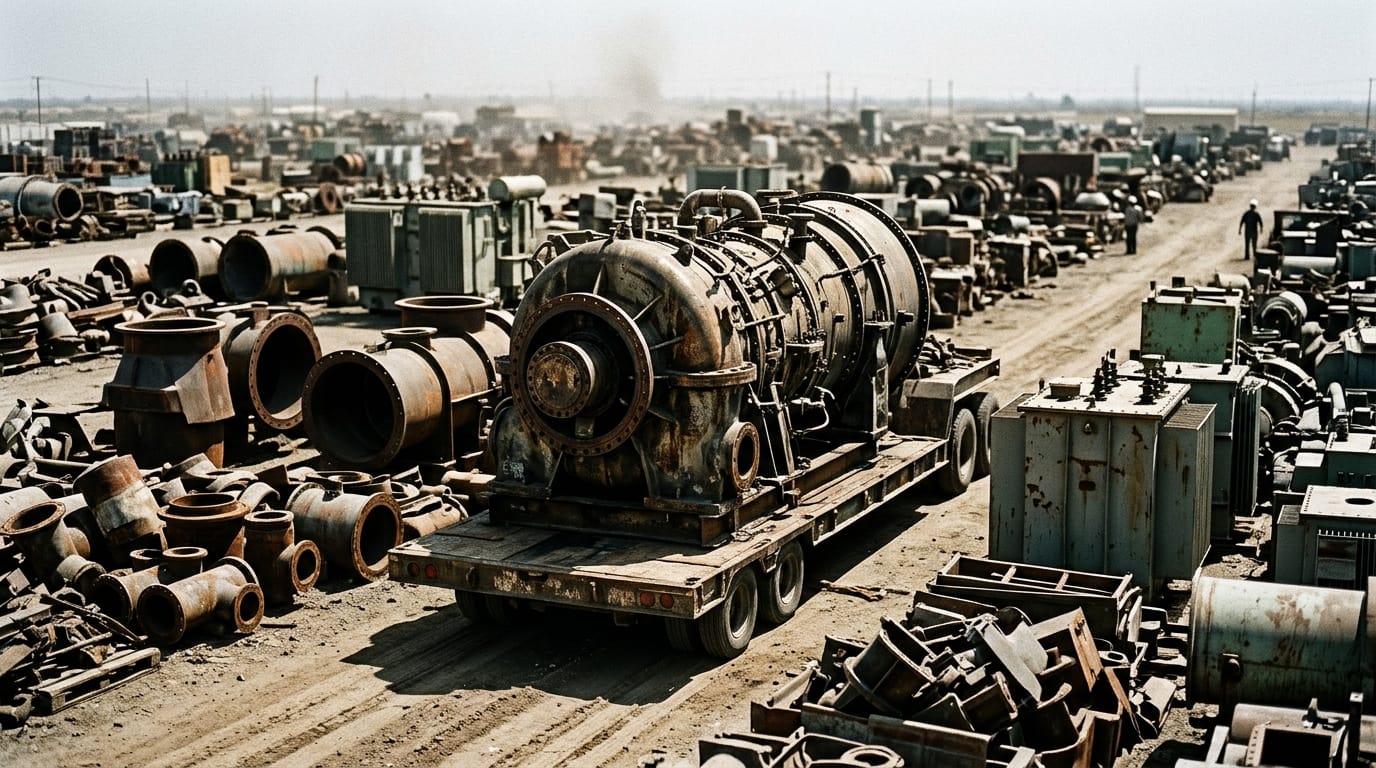
New gas turbines in the US carry a six-year average lead time, so AI developers are turning to refurbished jet-engine generators to close the gap.
Key takeaways
- New gas turbine delivery in the US is now focused on the 2030-2031 window, per Wood Mackenzie senior analyst Aurora Tenorio, with global orders exceeding 100 GW against annual manufacturing capacity of only 60-70 GW.
- Crusoe signed a contract on April 16, 2026 with ProEnergy for 13 aeroderivative gas turbine generator sets totaling 650 MW, targeting delivery by summer 2027, citing speed to power as the decisive factor.
- The structural energy shortfall validates the behind-the-meter, energy-flexible operating model that Bitcoin miners have refined for years, while setting up direct resource competition between AI builders and miners for the same aeroderivative turbine inventory.
AI data center developers are buying used jet-engine-based power generators because they cannot wait for new equipment. Reuters reported November 9, 2026 that the global gas turbine backlog has become structural: orders exceed 100 GW while manufacturers can produce only 60-70 GW per year, and no amount of capital closes that gap on a short timeline.
The constraint is physics meeting production capacity, and the industry is responding by raiding every available used-equipment market it can find.
The Backlog Numbers
Wood Mackenzie senior analyst Aurora Tenorio told Reuters that delivery conversations are "firmly focused on the 2030 to 2031 window." Wartsila energy business president Anders Lindberg put it bluntly: "What's driving the market? Lead times, lead times, lead times." Lindberg added that Wartsila has booked around 3 GW of orders since spring 2025 from US data centers for gas-engine power units.
Sulzer's US aftermarket lead Darayus Pardivala described the demand on the secondary market: "Every few weeks we get a request to say, 'Can you find a used gas turbine to put into a data centre?'"
Jefferies analysts, per Reuters, estimate US data centers alone account for nearly 17 GW of demand in 2026, projected to more than triple by 2028. Set that against total global annual turbine manufacturing capacity of 60-70 GW and the math collapses fast. Siemens Energy, GE Vernova, and Mitsubishi Heavy Industries have all said AI-driven orders have exceeded their production capacity.
The 32 GW power shortfall Morgan Stanley identified through 2028 is already embedded in the order books.
The clearest evidence of how developers are responding: Crusoe, the vertically integrated AI infrastructure company, signed a contract on April 16, 2026 with ProEnergy of Sedalia, Missouri for 13 PE6000 aeroderivative gas turbine generator sets, each rated at 50 MW, for a combined 650 MW of capacity. Delivery is targeted by summer 2027. The PE6000 platform is built on GE Aerospace jet-engine cores, specifically, overhauled CF6-80C2 engine cores, per ProEnergy's own product announcement.
John Adams, Crusoe's Senior Vice President of Power Infrastructure, said: "The acquisition of these 13 PE6000 units is a strategic move to rapidly provide the energy capacity our hyperscale projects require to operate at peak performance."
What the Energy Constraint Actually Means
The AI capex boom has been predicated on a simple assumption: capital can buy speed. In compute, that has mostly held. In energy infrastructure, it has not. A hyperscaler ordering a new gas turbine today will not receive it until 2031, well past the current AI training cycle.
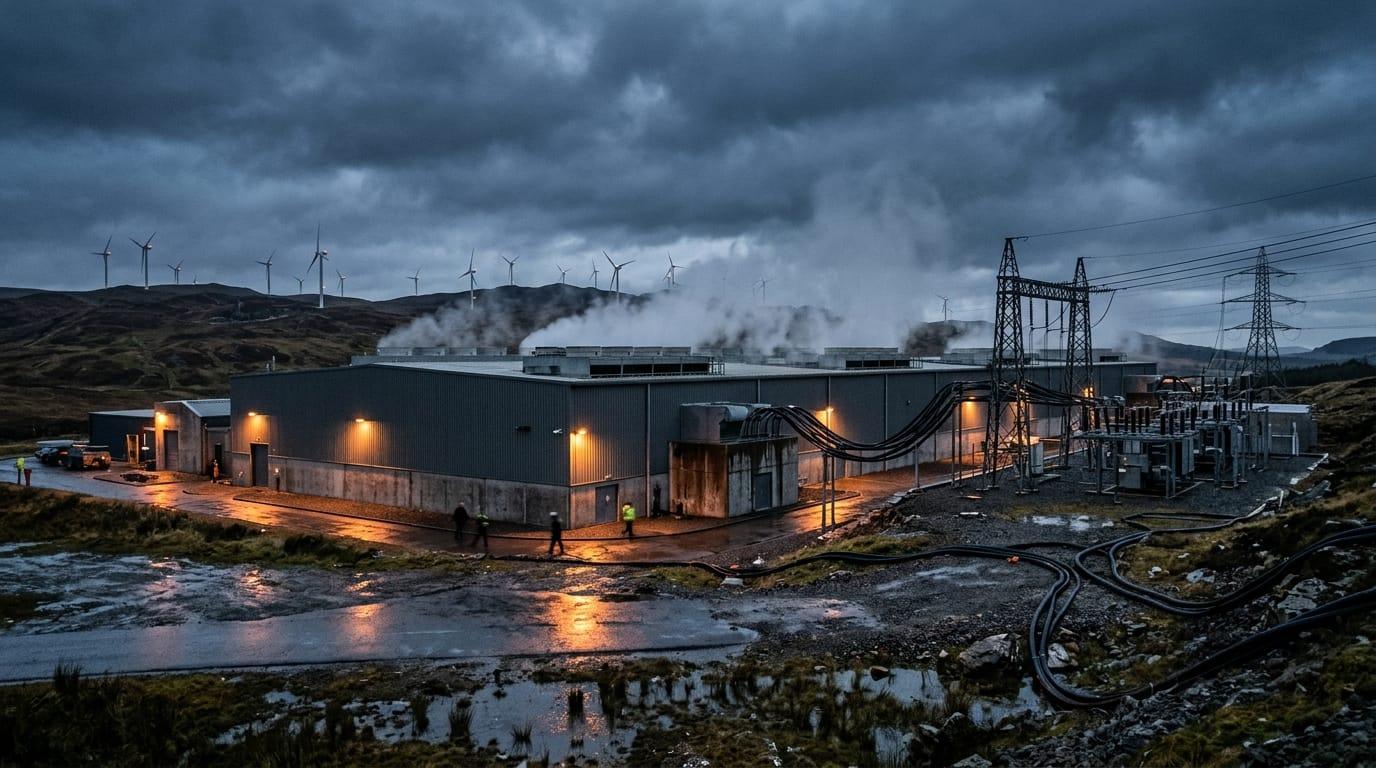
The used-turbine scramble is what happens when that assumption meets a six-year queue. AI developers are now doing what Bitcoin miners have done for years: going behind the meter, using aeroderivative generators built on repurposed jet-engine cores, and capturing power that the grid cannot deliver fast enough. The Crusoe/ProEnergy deal is a large AI company essentially imitating the behind-the-meter playbook that mining operations built their entire economics around.
The competitive implication is direct. AI developers and Bitcoin miners are now drawing from the same pool of aeroderivative turbine inventory. That pressure either raises input costs for miners who have not locked in long-term gas supply agreements, or it raises the premium on those who have. Tennessee Valley Authority has already confirmed that prices for new, used, and refurbished generation equipment have "increased significantly" over the past two years.
There is a falsifiable limit to this thesis. If turbine OEMs materially expand manufacturing capacity through new production lines or modular assembly, or if grid interconnection queues clear substantially within 18 months, centralized AI capex regains its scaling advantage. Neither appears imminent. Siemens Energy, GE Vernova, and Mitsubishi Heavy have all signaled the constraint is structural, not a production scheduling problem they can sprint through.
The AI capex buildout was supposed to be a compute story. It has become an energy story. Bitcoin miners who have been converting stranded and curtailed power into compute for years were ahead of that curve.
What to Watch
The near-term signal is whether aeroderivative turbine pricing moves in the secondary market as AI demand competes directly with mining and industrial buyers for the same units. Watch ProEnergy and comparable US-based aeroderivative service firms for order volume disclosures. Watch whether Crusoe or other AI infrastructure operators move to lock in long-term gas supply contracts, which would signal they expect this competition to persist well past the current turbine backlog window.
Sources
- ProEnergy press release, April 16, 2026
- ProEnergy press release via PRNewswire
- IEA, Key Questions on Energy and AI
- Reuters analysis, November 9, 2026 (first reported by Reuters)
Frequently Asked Questions
What is an aeroderivative gas turbine and why are AI data centers buying them?
Aeroderivative gas turbines are generators built around jet-engine cores adapted for stationary power generation. They are lighter, faster to deploy, and more available in the secondary market than heavy-frame industrial turbines. AI data centers are buying them because new heavy-frame industrial turbines carry a six-year average lead time in the US, and aeroderivative units can be sourced, refurbished, and commissioned far faster.
Why does it take six years to get a new gas turbine in the US?
The delay is a function of concentrated manufacturing, long-lead forged components, and a demand surge that outpaced production planning. Only a handful of OEMs, including Siemens Energy, GE Vernova, and Mitsubishi Heavy Industries, produce large gas turbines at scale. Global orders now exceed 100 GW against annual manufacturing capacity of only 60-70 GW, meaning the industry entered 2026 already carrying a structural multi-year backlog before AI demand accelerated further.
How does the turbine shortage affect Bitcoin miners?
Miners who operate behind-the-meter on stranded or curtailed gas already use aeroderivative and similar distributed generation equipment. As AI developers compete for the same inventory, prices for that equipment rise and secondary market availability tightens. Miners with long-term gas supply agreements and existing generation infrastructure are insulated. Those still building out face higher input costs as a well-capitalized competitor bids for the same hardware.