Goolsbee Says AI Data Center Boom Is 'Old-Fashioned Demand Overheating'
Chicago Fed President Austan Goolsbee said today that AI data center construction has crossed from sectoral noise into broad inflation risk, calling it 'old-fashioned demand overheating' and warning there is 'no question' about the Fed's response.
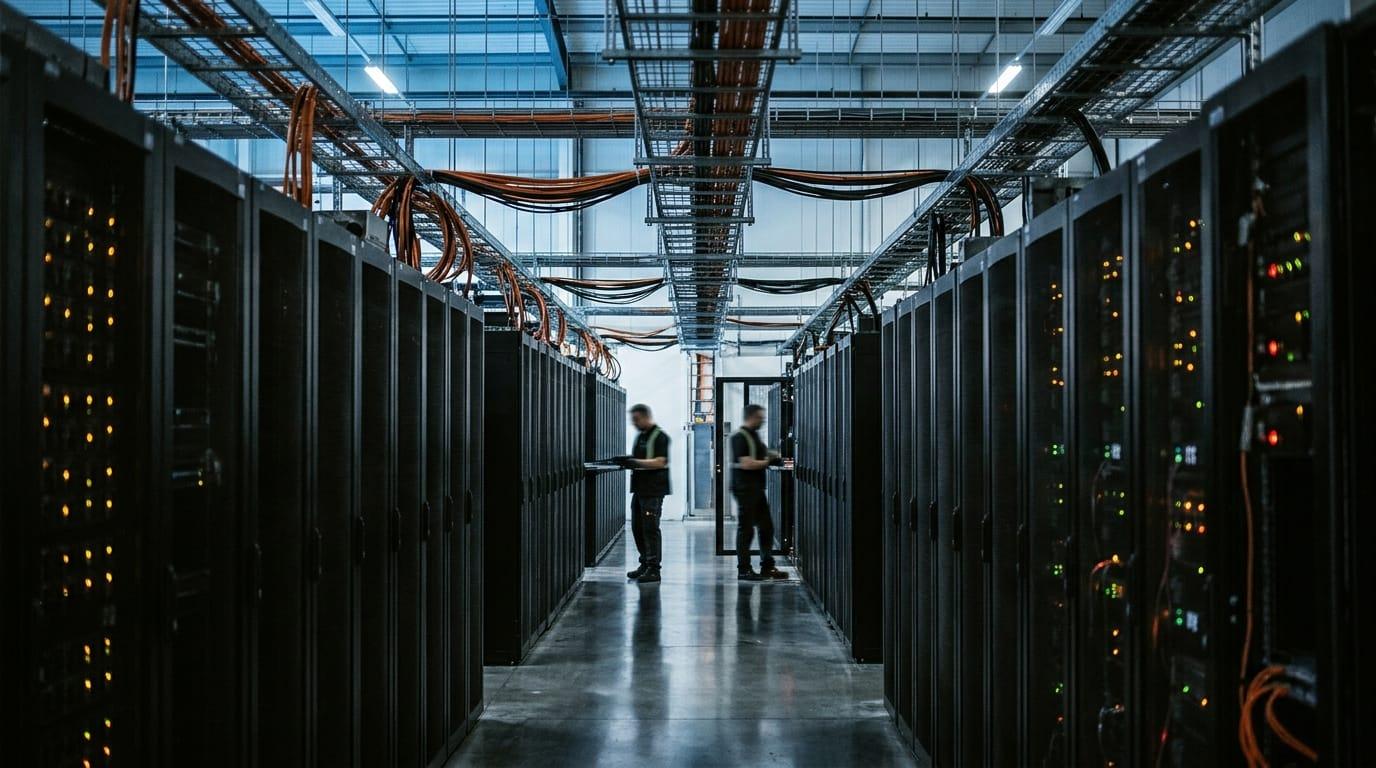
Chicago Fed President completes a three-month escalation, warning the AI buildout has crossed from sectoral noise into broad inflation risk the Fed cannot ignore.
Key takeaways
- Austan Goolsbee said at a November 9 Leadership Greater Chicago event that AI data center construction now looks like "old-fashioned demand overheating" and there is "no question" what the Fed must do if it confirms.
- The remark completes a progression from his September 21 London warning through an October 12 Semafor exclusive, each step moving from "watching" to "nervous" to "this is it."
- Because AI capex is financed through bond markets rather than rate-sensitive equity, a rate hike aimed at cooling the buildout will hit households, small businesses, and Bitcoin miners well before it touches the hyperscalers driving the overheating.
Chicago Fed President Austan Goolsbee said this morning that the AI data center buildout "is, to my eyes, starting to look more just like old-fashioned demand overheating," according to remarks at the Leadership Greater Chicago "Economics: Are We Ready for Tomorrow?" Q&A, confirmed by the Chicago Fed's speaking-engagements page. Goolsbee added there is "no question" what central banks must do when such overheating occurs, without specifying a rate move.
The event was moderated by Subrina Hudson and livestreamed from the Chicago Fed's website. No prepared transcript had been posted as of publication time.
Three Months of Escalating Warnings
The November 9 remarks are the third iteration of a warning Goolsbee has been sharpening since late summer. At an Official Monetary and Financial Institutions event in London on September 21, he said AI construction activity was "spilling out of its own lane" and that any sign of aggregate overheating left "no ambiguity about how the Fed needs to respond," per Axios.
By October, the language had hardened. In an interview first reported by Semafor on October 12, he said he was "getting increasingly nervous that that's just straight, old-fashioned overheating demand." A day later he sharpened the frame further: "This is starting to feel like aggregate overheating, that the AI data center cost increases are jumping out of its lane."
Today's remarks drop "starting to feel like" entirely. He called it what it looks like.
Fed Governor Lisa Cook has offered a contrasting read on the AI buildout, per Semafor, describing it as primarily sectoral rather than aggregate in nature. That internal disagreement matters: Goolsbee is not a voting FOMC member in 2026 per the Fed's current rotation (he joins the rate-setting rotation in 2027), so his view is influential but not yet decisive on the next rate decision.
The Tool Is Blunt, and Goolsbee Knows It
Here is what the event-level read misses. Goolsbee's own framing acknowledges a structural problem: AI data center spending, he has noted, "doesn't have to be interest-rate sensitive." Hyperscalers financing buildouts through bond markets at scale will not stop breaking ground because the Fed raised rates another 25 basis points. The companies absorbing higher borrowing costs in real time are small businesses, homebuyers, and anyone carrying floating-rate debt.
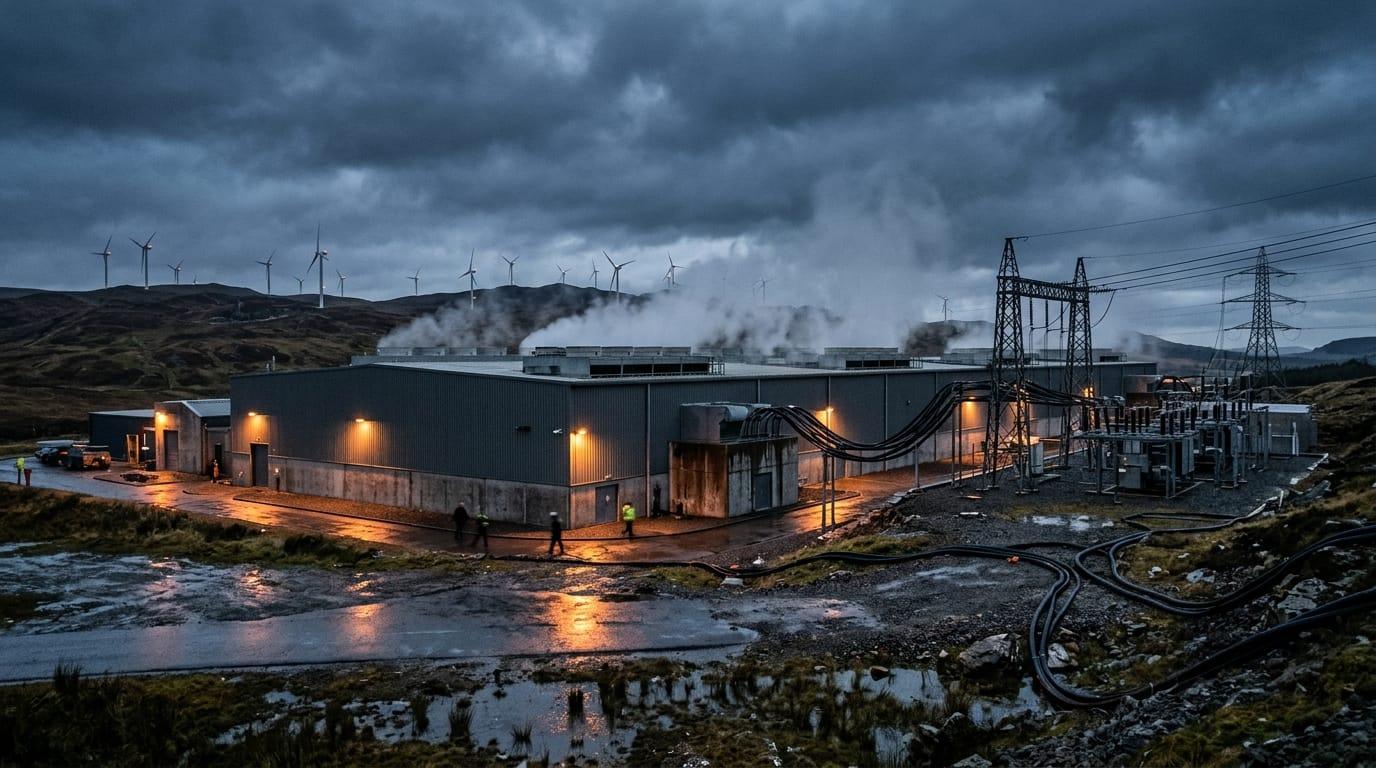
That gap is the policy-error window. A blunt rate instrument gets deployed against an entire economy to cool a resource demand surge concentrated in a handful of corporate capex programs. Morgan Stanley has flagged a 32 GW power shortfall for U.S. data centers through 2028, one measure of how physical that surge has become.
Bitcoin miners live inside this dynamic directly. AI data centers and Bitcoin mining operations compete for the same dispatchable power capacity, the same grid interconnects, the same construction labor, and the same land near substations. When a Fed president says that competition is now hot enough to push broad inflation, he is describing the same resource pressure that shows up in mining operators' power contracts and hosting rates. Wood Mackenzie estimates that 768 GW of data center power requests on file with U.S. grid operators are phantom load that will never draw a watt, but the real buildout that does proceed is disruptive enough on its own.
A rate environment driven higher by AI overheating also hits Bitcoin treasury companies raising debt, mining capex financing, and any Bitcoin-collateralized credit facility. Higher-for-longer, in this scenario, is a direct cost on the Bitcoin ecosystem's capital structure even as it validates the monetary instability thesis that makes Bitcoin necessary.
Goolsbee did offer one escape hatch: if AI pays off at scale, it could eventually deliver "long-run deflation." That is the classic central-bank punt, the same logic that underwrote a decade of zero-rate policy on the promise of future productivity. Future productivity does not pay today's mortgage.
What to Watch
The falsifiable read here: if core services inflation rolls back toward 2% in Q1 2027 without a further rate hike, it means AI capex spending naturally decelerated and the overheating proved sectoral rather than aggregate. Goolsbee's warning would have been a head-fake. That outcome would require hyperscaler buildout timelines to slow materially from current pace, something no major operator has signaled. Until that data arrives, the Fed holds a hammer and the economy is the nail.
Sources
Frequently Asked Questions
Is Goolsbee actually voting on interest rates right now?
No. Goolsbee is not an FOMC voting member in 2026 per the Fed's current rotation. He joins the rate-setting rotation in 2027. His remarks carry weight inside the Fed and in markets, but they are not dispositive on the timing or size of the next rate decision, which is due December 9, 2026.
Why can't the Fed target AI data center demand specifically instead of raising rates economy-wide?
The rate tool does not work that way. A rate hike raises the cost of all borrowing across all sectors simultaneously. Hyperscalers with bond-market financing pipelines absorb that cost differently than a small business carrying a variable-rate line of credit. The Fed cannot surgically cool one sector without tightening credit conditions for every other borrower in the economy.
How does this directly affect Bitcoin miners?
AI data centers and Bitcoin mining operations compete for the same scarce physical inputs: grid-connected power, land near substations, electrical infrastructure, and construction labor. When AI capex bids those inputs up fast enough to register as broad inflation at the Fed level, miners face higher operating costs and slower site development. A rate hike applied in response then also raises the cost of any debt-financed mining capex. Both ends of the problem land on the same balance sheet.