Blackstone Finalizes A$4.3B AirTrunk Loan as AI Debt Hits $334.5B in 2026
Blackstone is finalizing a A$4.3 billion syndicated loan for AirTrunk's SYD3 hyperscale data center in Western Sydney, a 400+ MW facility, as Bloomberg data shows 2026 AI infrastructure debt has already hit $334.5 billion, nearly doubling the $185.5 billion raised across all of 2025.
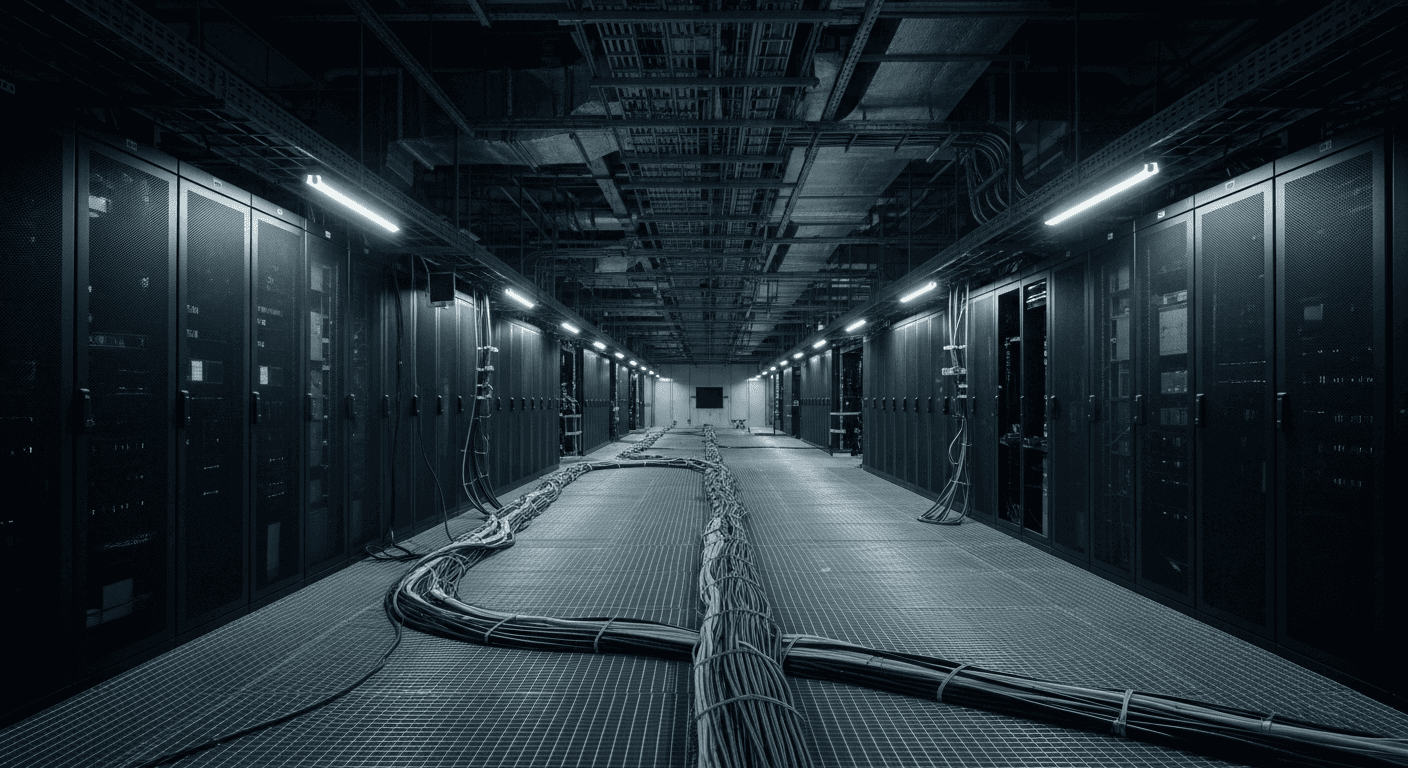
The syndicate is closing despite "growing worries" over data center debt, and the energy math lands directly on Bitcoin miners.
Key takeaways
- Blackstone is finalizing a A$4.3 billion (approximately US$3 billion at the July 22 AUD/USD rate) syndicated loan to build AirTrunk's SYD3 hyperscale data center in Western Sydney, a 400+ MW facility, per Bloomberg reporting on July 22, 2026.
- AI infrastructure bonds and loans issued in 2026 have already reached $334.5 billion year-to-date, nearly doubling the $185.5 billion raised across all of 2025, according to Bloomberg-compiled data cited by The Edge Malaysia.
- SYD3's power draw is financed by fixed-term project debt that cannot curtail, which structurally crowds out flex-load industrial users competing for the same grid capacity, including Bitcoin miners.
Blackstone is finalizing a A$4.3 billion syndicated loan for AirTrunk's SYD3 data center in Kemps Creek, Western Sydney, as the global AI infrastructure debt machine hits levels that are starting to unsettle the lenders still signing on, per Bloomberg. The deal closing is a data point in a credit cycle that has taken on a momentum of its own.
The Deal and the Numbers Behind It
The SYD3 facility, sited on a 52-hectare block on Mamre Road in Kemps Creek, is designed to deliver more than 400 megawatts of hyperscale capacity as the first phase of a larger planned campus. AirTrunk is owned jointly by Blackstone and the Canada Pension Plan Investment Board, which acquired the platform in 2024 for approximately A$24 billion.
Eight banks are in the syndicate: Credit Agricole, DBS Group Holdings, Deutsche Bank, HSBC, ING Bank, Mitsubishi UFJ Financial Group, Morgan Stanley, and United Overseas Bank, according to Bloomberg. The loan is structured as a five-year facility, per Bloomberg's June 18 reporting; the July 22 update has not publicly revised that term. Bloomberg first reported AirTrunk in talks for the loan on June 18; the July 22 update confirms Blackstone is finalizing the bank group.
The facility-level figure is striking on its own. It becomes a different kind of number when you set it against the macro backdrop. Per Bloomberg-compiled data cited by The Edge Malaysia, $334.5 billion in AI infrastructure bonds and loans have been issued globally in 2026 through July 22. The figure for all of 2025 was $185.5 billion.
That is more than an 80% surge in AI debt issuance, year over year, in under seven months, with five months still remaining in the calendar year.
AirTrunk has also been marketing a roughly A$2 billion (approximately US$2.3 billion) syndicated loan for a separate Malaysia data center, which puts the company's active debt raise across two facilities at well over $5 billion in a single cycle.
The Credit Structure Is Outrunning Demand Proof
The thesis embedded in that $334.5 billion figure is straightforward: the AI capex supercycle is being financed on anticipated demand, not demonstrated demand. Lenders are reportedly uneasy. They keep syndicating anyway.
The falsifiable version of that thesis: if facilities like SYD3 come online with customer capacity fully pre-leased at contract close, and energy grids accommodate the load without crowding out existing industrial users, then the credit is underwritten by real cash flows and the fragility argument fails. That is the trigger. Right now there is no public evidence that SYD3's 400+ MW is fully contracted ahead of the debt close.
The AI data center protest wave and the eminent domain battles playing out across Western markets suggest the buildout is pressing forward regardless of community or grid absorption constraints. Residents near Kemps Creek have already raised health and environmental concerns about the campus, according to Information Age.
The macro risk is not abstract. If the revenue cycle for AI services does not materialize fast enough to service this debt, the loan books of Credit Agricole, Deutsche Bank, HSBC, Morgan Stanley, and their syndicate partners become the transmission mechanism for a credit contraction. Energy markets absorb the first shock.
The Grid Collision Is Already Happening
SYD3's 400+ MW draw is roughly equivalent to the entire grid footprint of a mid-tier Bitcoin mining operation, except it is a single building for one company. And unlike Bitcoin miners, who can curtail load, relocate, or sell flexibility back to the grid, an AI data center financed with project debt cannot curtail. The debt service requires the facility to operate. That rigidity is a structural grid-stability risk, and it compounds across every SYD3-scale facility coming online simultaneously.
The DOE has already ordered AI data centers onto backup generators as grid operators forecast record demand. Bitcoin miners are the flex load that grid operators push off first. As AI capex debt forces rapid, committed construction across markets like Australia, the energy cost floor for anyone competing for the same megawatts rises with it.
What to Watch
The SYD3 loan close date has not been announced publicly. Watch for whether Blackstone or AirTrunk disclose pre-leasing commitments alongside the financing announcement, which would substantially change the demand-proof picture.
The Malaysia facility loan is also in active syndication. And the $334.5 billion AI debt figure will keep climbing. The question is whether the revenue cycle catches up before the credit cycle turns.
Sources
Frequently Asked Questions
What is AirTrunk SYD3 and how large is it?
SYD3 is AirTrunk's planned hyperscale data center on Mamre Road in Kemps Creek, Western Sydney. The facility is the first phase of a larger campus buildout on a 52-hectare site and is designed to deliver more than 400 megawatts of capacity. AirTrunk is owned by Blackstone and the Canada Pension Plan Investment Board.
How much has been borrowed globally to build AI data centers in 2026?
Per Bloomberg-compiled data cited by The Edge Malaysia, at least $334.5 billion in bonds and loans have been issued to fund AI infrastructure through July 22, 2026. That figure already exceeds the $185.5 billion raised for the entire year of 2025, a pace that represents more than 80% growth year over year with five months remaining in 2026.
Do AI data centers compete with Bitcoin miners for electricity?
Directly and increasingly. Both compete for grid capacity, but AI data centers financed with project debt are structurally non-curtailable: they must operate to service the debt. Bitcoin miners, by contrast, can reduce load or sell flexibility back to operators. That asymmetry gives AI facilities a de facto priority claim on grid capacity and puts sustained upward pressure on energy costs and availability for flex-load industrial users, including mining operations.