Transcript: Will Harris: How Fiat Food Is Destroying America
Full speaker-labelled transcript of TFTC episode #782 with Will Harris.

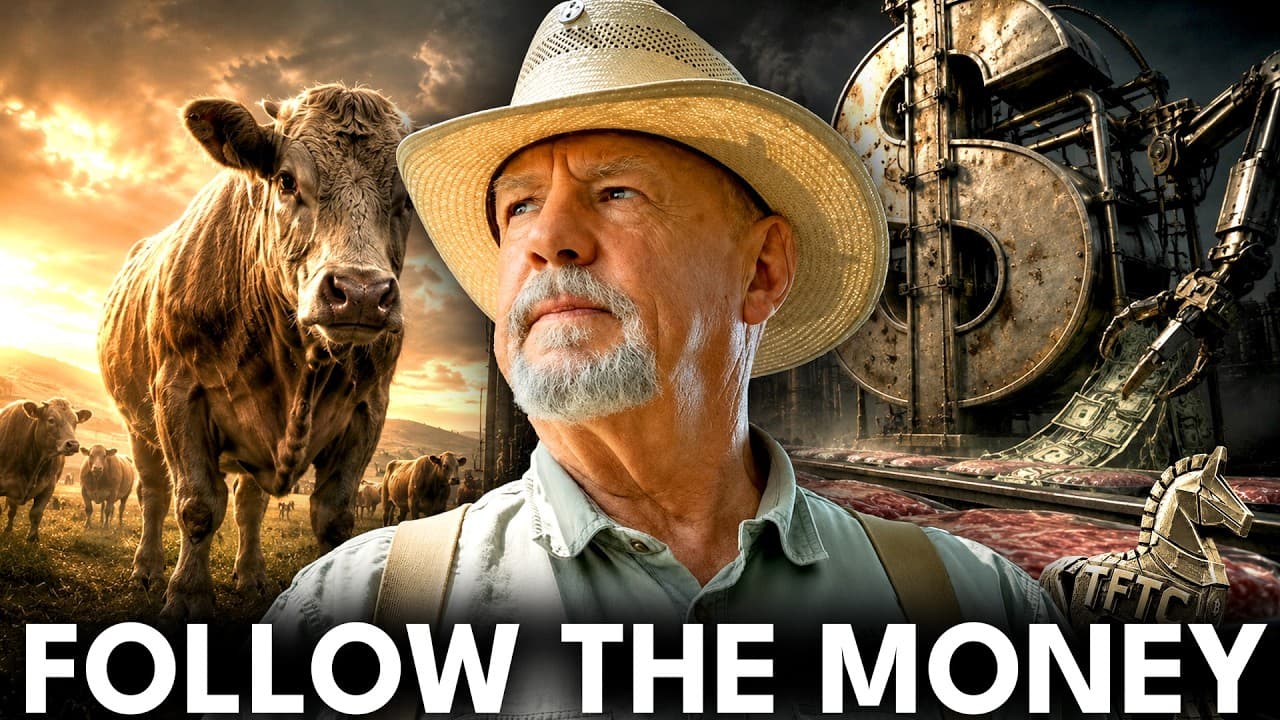
Full speaker-labelled transcript of TFTC episode #782 with Will Harris. Read the written article: Will Harris: How Fiat Food Is Destroying America. Click any timestamp to watch that moment on YouTube. Machine transcription, lightly cleaned, may contain errors.
Marty Bent [0:07] You've had a dynamic where money's become freer than free.
Will Harris [0:09] Let me talk about a Fed just gone nuts, all, all the central banks going nuts. So it's all acting like safe haven. I believe that in a world where central bankers are tripping over themselves to devalue their currency, Bitcoin wins.
Marty Bent [0:25] In the world of fiat currencies, Bitcoin is the victor.
Will Harris [0:29] I mean, that's part of the bull case for Bitcoin. If you're not paying attention, you probably should be.
Marty Bent [0:34] Probably should be.
Will Harris [0:34] Probably should be.
Marty Bent [0:36] Will Harris, welcome to the show, sir.
Will Harris [0:38] Thank you for having me.
Marty Bent [0:40] You were just saying you're honored to be here before we hit record. I'm honored as somebody who's been following your work from afar for many years now. Like I was telling you, We've had a pretty big focus on shaking your rancher's hand here at TFTC over the years. A lot of our audience is going out, meeting their local rancher, buying a quarter cow, half cow, going to their local farmers markets to support local farmers. And I view you, Joel Salatin, and others of that caliber as really leading the charge. So this is a bit of a treat for me specifically, but I guess let's just jump into it. Starting with White Oak Pastures, why, why you decided to go from industrial farming to regenerative farming? And I guess we can get into a conversation about the differences between the two.
Will Harris [1:32] So I was the 4th generation of my family to operate this farm. My children are the 5th, my grandchildren hopefully will be the 6th. My great-grandfather and grandfather operated the farm in a very pre-industrial kind of a way. My dad, born in 1920, took over the farm post-World War II, and he is the generation that really industrialized the farm. Under his watch, it became a monoculture, only cattle. Previously, it'd been a lot of different species of animals. And, you know, he was kind of a pioneer in becoming a link in the chain the industrial chain that beef goes through from the cow-calf producer to the stocker out west, feedlots, to big beef companies.
Will Harris [1:32] And I don't know that my father ever liked that. I don't know, we didn't talk about it. He was cowboy, I was cowboy. We didn't talk about stuff like that. But he was successful with it. And I never wanted to do anything except run the farm industrially, just like my dad. I loved it growing up. I went to the University of Georgia, majored in animal science, came home and ran it industrially for 20 years. And then just, you know, in a fairly short period of time, really got tired of it, really got disgusted with the excesses of it.
Marty Bent [3:05] Yeah. And I think that the excesses of it is something that's become clear to me. And a lot of the conversations we've had around cattle ranching, particularly over the years, have been around where these centralized points of the industry really lie and how that's corrupting incentives for farmers across the country where you're really not incentivized to produce the best product but to produce as much product as possible, get it to these large slaughterhouses, and then distribute it from there. And then not only that, but the whole aspect of bringing meat in from other parts of the world. Just to increase margins. And that's the big question I want to get at is how do we move from this hyper-centralized big farm— or excuse me, big farm industry here in the United States to a more decentralized, and where does regenerative play into that?
Will Harris [4:03] Well, I think you were on the tack for answering that with what you just said. You know, in my Great-grandfather and grandfather ran this farm. They raised a lot of different species of animals. They and their employees got up before, way before day, every day, 6 days a week, and they killed something. Might've been a cow, might've been 2 or 3 hogs, might've been a few sheep or a few goats or something. Loaded on a mule-drawn wagon. Without refrigeration or without USDA inspection, came up the dirt road 3 miles to Bluffton, the little town. That's where I'm sitting right now. And they peddled the meat.
Will Harris [4:03] They went to the hotel, to the boarding houses, to the more affluent citizens and sold the meat they had slaughtered that morning. And they had to sell it. It was sell it or smell it. There was no refrigeration. And they were incentivized to have a really good product because the consumer knew exactly where it came from and they would not buy from them anymore. So they were incentivized to make it the best it could be. Fast forward to now, it's evolved to the point where we meet minimum standards. We don't go for maximum, we go for the minimum. I mean, the USDA publishes the minimum standards acceptable for whatever product you're producing.
Will Harris [4:03] So when you evolve from trying to make your product the best it can possibly be to keep your customer to meeting minimum standards because you're selling into an anonymous market where nobody knows who you are, it's a game changer.
Marty Bent [5:57] Yeah. And how bad has it gotten in recent years, in the turn of the century up to this point?
Will Harris [6:04] Well, I think it's, I mean, I think it's as bad as it can be. I don't think that's gonna get any worse. I think it's as bad as it can be. You know, your producers are living in total anonymity because they sell to someone who sells to someone who sells to someone. And it winds up being a product that's very distantly removed from the producer. You know, here on my farm, we, you know, we breed the cattle, we slaughter the calves, we grow the calves, we slaughter them, we butcher, we sell the meat. There's— if it's not good, it's my fault. It's just my fault. I screwed something up somewhere. Yeah.
Marty Bent [6:50] And what about the idea that regenerative farming isn't scalable? Because I think that's the one thing that I've really admired over the years watching yourself and others like Joel Salatin, again, go out there and prove that regenerative is actually scalable. It just needs to be more distributed. How do we get there? Because that's another thing I think we have to to worry about is due to the financial stress that many farmers and ranchers are under. You have a situation where the art is somewhat being lost because the incentive to actually go out and do it isn't there. What we're left with is people who are truly passionate about it. Unless that's passed down through generations, it's something I think has the potential to be lost within 2 or 3 generations if we don't cater to it.
Will Harris [7:41] The fact is that regenerative farming is absolutely not as scalable industrial farming. It is not, but it is far more replicatable.
Marty Bent [7:51] Uh-huh.
Will Harris [7:52] We, as a family, we made the decision a few years ago that we were as big as we wanted to be. We don't want to get any bigger. We want to do better. We want to be— but we are not interested in getting bigger. In the commodity market, it's all about size. Companies produce 85% of the beef in this country. Scalable, all about scalability.
Marty Bent [8:21] Yeah.
Will Harris [8:22] You know, there doesn't need— White Oak Pastures does not need to get bigger and bigger and bigger. There need to be more and more White Oak Pastures. And I don't mean I need to own them. Someone else needs to own them. We, today, we ship beef to 48 states. And I don't want to, I don't wanna do that. I need to produce the amount of product that I produce, but I would love to sell it in Georgia, maybe Georgia, Florida, Alabama. I'm right, I'm down here where those 3 states come together. You know, Atlanta, I could, we're a pretty big grass-fed beef producer, but I couldn't possibly feed Atlanta.
Will Harris [8:22] I couldn't do it. You know, I don't need to be shipping beef to California. When Atlanta's 3 hours up that road and I can't feed them. There's a lot that needs to be done in terms of consumer acceptance. You know, consumers have been told such a compelling story for so long that it is highly believable and the public has believed it. And, but I think those blinders are falling off. You know, I started, I was pretty early transitioning over from industrial beef to grass-fed beef back in the '90s. And I was lucky enough to be accepted by Publix supermarket. And they required me to have educational sessions at every store that carried my products, offered to consumers and employees.
Will Harris [8:22] And no one knew what grass-fed beef was. That in the '90s, that's not that long ago, late '90s. But today, customers, consumers have become far more sophisticated and know a lot more about their product and wanna know more. You know, in the 30 years or so I've been in this business, I've vacillated quite a lot. And when I first started, I would not have said this. I wouldn't have said it out loud, but I thought, huh, I believe I'm what they call an early innovator in this deal. And I didn't say that to anybody, thank goodness, but I thought it. And I operated for a few years and then I said, no, I am not an early innovator.
Will Harris [8:22] I thought I was, but I'm not. I'm an advanced marketer, you know, which is a niche marketer. Niche marketer is what I am. Now, I didn't like the way that sounded as well, but it was okay. I mean, I could make a living doing it, and that's what I was about. So through the years, I've oscillated back and forth from thinking of myself as an early innovator. Nah, I'm a niche marketer. Well, maybe I'm an early innovator. No, I know I'm a niche marketer. And now 2 of my children and their spouses have come back in management in my company and they've got children. And for the first time it looks, well, it looks more and more like it is an early innovator kind of deal.
Will Harris [8:22] More people know that there's a difference between this product I produce and what Or they get in about a big grocery. And it's— I don't know how, to what extent it's going to change, but it is changing.
Marty Bent [11:59] So I certainly— I mean, I've certainly changed my consumer tendencies over the last 7 years. Like, we buy a quarter of a cow at a time. We try to support as many local farms as possible. And I think the, the whole meme that really became a thing particularly within the subculture of Bitcoin 5 years ago, to go out and shake your rancher's hand has definitely taken hold to a certain extent. And the people, once you do it, it's hard to go back. And so it's just slowly but surely getting an individual at a time over the years.
Will Harris [12:36] And it's incumbent upon us producers to do some things to make it easier for the consumer. You know, buying in bulk, a cow or half a cow, a quarter of a cow, is very difficult for consumers. That's hard. And that's the way I used to sell it and still do sell some. We offer those products. But we had to make some changes so that we could sell people that wanted filets, we could sell them filets. Or ground beef. or stew beef and a chicken and some bacon. And, you know, it's gonna be incumbent upon we producers to make it convenient for customers. You know, we're already asking them to pay more and we can't get away from that. It costs more to produce beef or produce, to farm this way than it does industrially. So we're already asking them to pay more. We can't ask them to be inconvenienced. We've got to do what it takes to make it easy for the consumer to buy it from us.
Marty Bent [13:46] What ideas do you have around that?
Will Harris [13:49] Well, the first thing we did is our online store, and that was not successful to begin with. When the pandemic hit, it became very important to us. It's where we make most of our money today. We still sell to some wholesale grocers. It's not very profitable for us. Last Saturday, we opened our first retail location in Atlanta, and we're excited about those possibilities. It's a company from Austin, Texas, acquired an old industrial plant and turned it into a 7-day-a-week farmer's market.
Marty Bent [14:36] Yes.
Will Harris [14:36] So we got caused just to have to have employees in Atlanta. I got 170 employees on this farm and I've gotten used to that, but now I'm gonna be able to get used to having 3 or 4 in Atlanta. But if that works, then we'll have another one and another one. And I don't wanna see how many I can have, but I, I need to have enough to sell what I produce. Again, we're not trying to get bigger and bigger. And we as a family discussed the fact that if we grew this business much more, we would need to hire a CEO.
Marty Bent [15:15] Mm-hmm.
Will Harris [15:18] And we don't, we don't want that. You know, a CEO is going to be understandably focused on the month, the quarter, the year. And as a family, we're focused generationally. We do things on this farm that we know will not pay off in a month or a quarter or a year, but we believe our great-grandchildren will be benefited by it.
Marty Bent [15:42] The, uh, so is that the Local Pastures model that you're bringing to Atlanta from Shirttail Creek Farms and Sam Moffett?
Will Harris [15:49] Say again?
Marty Bent [15:51] Local Pastures. So I lived in Austin for 4 years and I would go to Local Pastures, which was a 7-day-a-week Farmstand, Shirttail Creek Farm, Sam Moffett, who runs that farm in Austin, stood that up. And as somebody who used it as my local grocery store for 4 years, that model is incredibly convenient. Instead of having to wait for the Saturday farmers market, being able to go to local cashiers was always—
Will Harris [16:17] The Austin connection here is it's an Austin company that bought this old facility. And turned it into a beautiful farmer's market. I went up and looked at it when they bought it. And it was, first of all, been sitting idle for 50 years, 40 years. And then on top of that, it was just a concrete industrial facility before that. So it was ugly, but they've made it beautiful. It's nice now.
Marty Bent [16:46] Bringing this back to the consumer, You mentioned that the consumer's getting smarter over the years. What are some of the largest misconceptions that broad-based consumers still have about big agriculture and the food that they're eating on an everyday basis?
Will Harris [17:02] You know, big agriculture, big food, let's call it big food, they are just brilliant people. I mean, they've got, it's just billions of dollars. They hire great people, fantastic marketers. And as sophisticated as the American consumer is, a very small percentage really understands the hardships that industrial meat production places on the environment, on the welfare of the animals, on local rural economies. on probably the health of the consumer. I don't talk about that one much. There's people that are more qualified to talk about that. But I am very qualified to talk about the impact on the rural community, on the welfare of the animals, and the horrible things it does for the environment.
Will Harris [17:02] You know, the way those, the direction that those food companies have led farmers and food producers is, Tremendous amount of use of tillage, which destroys the structure of the soil, pesticides. You know, homicide means kill people, right? Pesticide means kill pests. And the pests are other plants, other insects, other animals, other microbes. And the use of pesticides is horrible. But what it's done for us is horrible. You know, we've driven countless, countless species into extinction. Plants, animals, microbes. And every— I believe that every creature in an ecosystem has a role. We know that bees pollinate flowers, but I think that every single species, plant, animal, microbe, has a role in their ecosystem.
Will Harris [17:02] We may not know what it is, we may not have studied it, but I think they have one. And when we drive a species into extinction or near extinction, we change that ecosystem. It operates differently, maybe very subtle. And I think that we have done a lot of it. We continue to do a lot of it. And I think those, I think that those— The degradation of those ecosystems will be what gets us.
Marty Bent [19:40] Sup, freaks? This rip was brought to you by the motherfucking Cash App. They're back. I've been using Cash App for years. Makes it easy to buy, sell, send, receive, top up to stack Bitcoin, top up payments to stack Bitcoin, automatically DCA. You can get paid in Bitcoin on Cash App very easily. They've integrated the Lightning Network to make payments extremely fast and cheap. They're the all-encompassing Bitcoin app. I've been using Cash App for almost 10 years now, almost 10 years, the better part of a decade. I've had my weekly DCA on for many years. You set it and forget it, and when you do that, you don't pay any fees on the buys.
Marty Bent [19:40] Speaking of no fees on buys, if you purchase more than $2,000 on Cash App, you're going to pay zero fees on that buy as well. Another really important aspect of Cash App is when you buy Bitcoin, it's held 1 to 1. You can withdraw on-chain or over Lightning anytime, 24/7, straight to your own node, your hardware wallet, or your BitKey. An on-ramp is only as good as its off-ramp, and this one actually lets you leave. So for a limited time, new customers can get $21 added to their balance. Just use the code TFTC10 when you sign up, and don't forget this send at least $5 to a friend in the first 2 weeks.
Marty Bent [19:40] Terms apply. Bitcoin services by Block, Inc. app/legal/podcast. Freaks, look at me.
Marty Bent [20:44] I'm glowing. I've got like an angel's halo going around me. You know why that is? Is I feel good. I feel taken care of. I feel blessed, healthy, happy. And that is because I'm a CrowdHealth member. My family and I have been CrowdHealth members for 5 years now. Literally this month, 5 years ago, we joined CrowdHealth. We've had 2 babies, we've had multiple health events, and we're never going back to health insurance. CrowdHealth is crowdfunded healthcare, So you, you sign up for CrowdHealth, you pay a monthly fee, you help out with other people's bills, and it's significantly cheaper than health insurance. We were on COBRA as a family of 3 when I, when I left my last job before I went full-time with CFTC, went on CrowdHealth.
Marty Bent [20:44] Now as a family of 5, we pay, I, I believe, $700 a month. It's significantly cheaper. They're going to negotiate prices lower for you. They've consistently negotiated healthcare prices as much as 50, 60, 80% in many cases. They help out with babies if you have a pregnancy, you pay the first $3,000 and the crowd covers the rest. If you have a regular health event, you pay $500 and the crowd pays the rest. com, sign up today, use the code TFTC, opt out of health insurance. I'm uninsured, baby, and I love it. com and you'll get $99 a month for the first 3 months that you're on the CrowdHealth platform in the community.
Marty Bent [20:44] Bitcoiners, you found sovereign money, now find sovereign health.
Marty Bent [22:04] Whether it's the pesticides or the monoculture, it seems like it does have a deleterious effect on the environment. And, I think that's one of the big misconceptions at least that I've pointed out or understood over the years is that you need pesticides to do farming right these days. But, I think that neglects that you can do things in a way, particularly with regenerative farming, that solves the problem that pesticides are. are looking to solve. It just takes, from what I understand, meticulous attention to detail and effort to create an ecosystem of—
Will Harris [22:45] It's a complete opposite of mindset. When I was an industrial cattle producer, I didn't want any animal on this farm except cows. I didn't want any plant on this farm except Tifton 85 Bermuda grass. And I didn't think I wanted any microbes on the farm. I know better now. But I was a— I think I was a really good cattleman. I was raised by a good cattleman. I had, I was, you know, my degree was in animal science. Every day I went to my pasture. Every day I went to my pasture and I looked for something to kill. That's the way I thought you did a good job raising beef is look for something to kill that was standing in the way of that.
Will Harris [22:45] And I might find an insect eating my grass. I might find a nematode that was causing problems. I might find some parasite in my animals, but I could find something to kill every day. And I knew how to kill it. I knew which pesticide, again, that means kill. I knew how to do that. I think I was good at it. And I would kill something. And fast forward to today, I go to my pasture every single day and I'm looking at, I'm looking for a way to keep things alive. I want the pasture to be teeming with life. I want there to be some insects.
Will Harris [22:45] I want there to be some nematodes. I want there to be some, a lot of species of plants growing out there. But that is a complete opposite of the way I was 25 years ago.
Marty Bent [24:39] What led you to come to the opposite conclusion?
Will Harris [24:43] Well, now this is not very flattering, but I was, I think I woke up to it because I was a very extreme industrial cattleman. I was— if the label instructions said put a pint per acre, I would put a quart per acre. If the label instruction of the medicine said give them 1 cc per 100 pounds, I would give them 2 cc's per 100 pounds. I was I was of the mindset that if a little will do more good, more— little do little good, more do more good. And that caused me to be heavy-handed. And I think it opened my eyes to the negative unintended consequence of using those sides. Again, side means kill.
Marty Bent [25:39] Yeah. When it comes to a rich sort of diverse environment, what benefits does that have not only for the animals but for the environment broadly? I mean, again, comparing this to the monocultures, the soil that exists on farms that are only growing one crop using pesticides heavily, it seems like that's not sustainable in the long run or good for the environment.
Will Harris [26:08] I believe that, again, pesticide means kill pests. I believe that the role of the farmer, rancher, producer is to optimize the cycles of nature. You know, the cycles of nature are the energy cycle from the sun, the water cycle from rain, the microbial cycle, the carbon cycle, the mineral cycle. the grazing cycle, on and on, many, many cycles, some of which we probably don't even recognize. And I believe that when those cycles of nature are operating optimally, it produces an abundance. You know, all that coal and oil and gas, natural gas in the ground, that was all stored, that energy was stored down there in the era of the dinosaur, when the cycles of nature were rocking and rolling at an incredible efficiency.
Will Harris [26:08] And what we have done with modern farming is decide that we didn't want the cycles of nature to be operating optimally. We wanted to break the cycles of nature to produce whatever one commodity we were trying to grow that season. And I think it had horrible unintended consequences. You know, the organic matter in— organic matter is talked about a lot. Organic matter is one of the good, just one of the good indicators of ecological health. It's not the only one, but it's one that's measurable. 5%. 5% of the top 4 inches is organic matter.
Marty Bent [28:17] Wow.
Will Harris [28:19] The land that I buy that is new to me, that's been farmed industrially, is 0.5%. organic matter. Now again, organic matter is not all that matters. No, no, no, that's not all we care about, but it's a good indicator. 1% organic matter will absorb a 1-inch rainfall. A 1-inch rainfall is about 27,000 gallons of water per acre, and 1% organic matter will absorb that. Now we get 4, 5, 6-inch rainfalls in the coastal plains of Georgia. Not often, but at least once or twice a year, my land will pretty much soak up all that water. The land that I acquire, you know, that's half synthetic model won't even start and the water flow—
Marty Bent [29:11] Sorry about that.
Will Harris [29:13] It's okay.
Marty Bent [29:15] Yeah, we're good. Sorry, somebody was calling.
Will Harris [29:20] No problem. In fact, if you wanna go to my website, whiteoakpastures.com, there's some pictures, some videos in there of water coming off my farm and my neighbor's farm. And it looks like it's from 2 different planets. The water coming off my farm is pretty clear. There's not much of it. The water coming off his farm is a torrent and it's muddy water.
Marty Bent [29:48] And not only that, I mean, if you're spraying pesticides on your plants, it's leaking into the water as well. And so, I think you're talking about the ecology of these landscapes. That was one of the most jarring videos I saw. I saw that video when you were on Joe Rogan of the differences in water flow. And, it is pretty incredible just to see your farm compared to those around you. Yeah.
Will Harris [30:14] And the pesticides are part of that, but chemical fertilizer is a big part of it. Tillage is a big part of it. It's the whole industrial complex that the land-grant universities and others have formulated through the generations to maximize monocultural production of corn, cotton, soybeans, wheat, oats, peanuts, whatever. That, that does such incredible damage to the soil.
Marty Bent [30:45] Yeah. And the, the other misnomer— again, maybe not a misnomer, but the one of the things that made me, um, pretty perturbed is the, the whole push. I think it's, it's waned quite a bit in recent years, but the whole idea that cows are contributing to global warming, cataclysmic climate change if you believe that. And, the whole push to reduce cattle ranching because cow farts, the methane was leaking into the atmosphere and increasing greenhouse gases is completely insane. And, I think it neglects— I think greening via cattle ranching is something that is very underexplored, the way cattle specifically and pigs to a certain degree can, if managed properly, can be incredibly beneficial to revitalizing. And that's, I think, the thing about regenerative farming that really excites me is this avenue towards topsoil regeneration via grazing cattle and introducing more diverse— More diverse ecosystems to farms that have been monocultures for, for a long time.
Will Harris [32:05] Well, that, that discussion deserves to be addressed. And we cattlemen gave the anti-beef people the bullet to use against us, uh, in a feedlot situation. Understandably, I think it's horrible for the land. I think it's horrible for our the atmosphere with those animals out there standing on bare dirt, eating feed, urinating, defecating. I think it's horrible for the environment. And the anti-beef people seize that and use it as a broad brush to paint that all beef production is bad. And we let 'em get away with it. We shouldn't have, but we didn't fight back.
Marty Bent [32:57] Yeah.
Will Harris [32:57] I don't know. We just didn't. But now I'm prepared to. 5%. You know where that organic matter came from? Greenhouse gas. Those plants— the way that works is my plants in my pasture, grass and forbs, And breathe in carbon dioxide and capture it and create fats, proteins, and energy, some of which grows the top of the grass. This is ground, the top of the grass grows it up. And when it does that, it's growing roots down. If it grows this much grass at the top, putting that much roots down. Properly grazed land Is allow— allows the plant to mature. Then put the animals through, let them bite it off.
Will Harris [32:57] When they bite it off, they turn some of it into manure, some of it into urine, some of it gets converted into beef. And that root that's carbon under the ground sloughs off a bit. when the top's bitten off. That carbon is sequestered in the ground. Much of that urine and feces is brought down into the ground through dung beetles and other fauna out there.
Marty Bent [34:31] Right.
Will Harris [34:32] Then we don't graze that land anymore for X period of time, 60 days in my case, others are different lengths. It allows that, that, that ground, that those plants act like a pump. Bringing that carbon in, bit off, sequestering it, and it works. It works. It's been working. It's been working since the beginning of time, and it's inarguable. There's no arguing that. Come on, I'll show it to you. But we animal people, cattle people, have lit the Anti-beef, anti-cow people get by with that for way too long. It's not true. It is true in an industrial feedlot model. Yes, I admit that. That's not what I do. No, I deny I do that. So it's just, it's just not right.
Marty Bent [35:32] How do we get away, or is there a way to get away? Can we get away from The industrial feedlot, in your opinion?
Will Harris [35:40] Well, I did. I mean, I used to, I used to run an industrial feedlot. Uh, it's, uh, if consumers will selectively, uh, choose grass-fed beef, there won't— there eventually won't be any more industrial feedlots. Industrial feedlots take young cattle and fatten them up into obese creatures. that the consumer had gotten used to, and in doing so did a lot of ecological damage. That it's still big business, but I think it's under fire.
Marty Bent [36:23] How much of this is on the large buyers of this beef, like McDonald's, fast food chains, large supermarkets? Are they gonna have Where does it go?
Will Harris [36:34] Well, so the hamburger, let's just say this, hamburger or ground beef is a little different. When you, when a person fattens calves in a feedlot the way we just discussed, they wind up with a large percentage of the animal as what's called 50% trim. It's 50% lean, 50% fat. It's obese, the obese part of the animal. And that's not very marketable. Nobody wants to eat that. It's just not marketable.
Marty Bent [37:11] Right.
Will Harris [37:13] But Big Beef has discovered that they can import super lean animals. These are usually like old mama cows. Very lean. And that, that their meat will be 90-something percent lean when they grind it. And they can blend the 2 products, the 90-plus percent lean from the mostly imported older cattle with the 50% trim, 50% fat, 50% lean, and get a 70/30 blend.
Marty Bent [37:52] Gotcha.
Will Harris [37:52] 60/40, 90/10, 93/7, whatever they want. And that works. It's not very appetizing. You know, a pound of that meat could contain the DNA of thousands of animals from all over the world. Probably would contain the DNA of thousands of animals. But that's what you get when you buy industrial ground beef. That's why it's so cheap. That product can be made incredibly cheap because it takes 2 almost inedible products and turns them into something edible.
Marty Bent [38:32] So, freaks, when you take Bitcoin seriously, you start with custody. You want to control your keys, avoid single points of failure, and make sure your savings cannot disappear because you or someone else screwed up. That is what Unchained has been focused on since 2016. Unchained is the leader in collaborative multisig custody and Bitcoin financial services that keep you in control. They secure over $12 billion in Bitcoin for more than 12,000 clients. That means about 1 out of every 200 Bitcoin sits inside an Unchained vault. Their model is simple: you hold 2 keys, they hold 1 key, and it always takes 2 keys to move Bitcoin, meaning their single key can't access your Bitcoin on its own.
Marty Bent [38:32] Just resilient shared custody that gives you institutional-grade security while keeping you sovereign. Unchained also lets you trade straight from your vault, access Bitcoin-backed commercial loans, open a Bitcoin IRA where you hold your own keys, and set up personal, business, trust, or retirement vaults. They even offer inheritance solutions built for long-term hodlers. Or Opt for the highest level private client service with Unchained Signature and get a dedicated account manager, discounted trading fees, exclusive access to events and features, and much, much more. com and use the code TFTC10 at checkout to get 10% off your new Bitcoin multisig vault. com. All right, freaks, you know I don't take sponsor money from products I wouldn't use myself, so listen up.
Marty Bent [38:32] The Aave and Bitcoin Visa card is one of the most interesting things I've seen in the Bitcoin lending space in a long time. Here's the deal. You can get a line of credit up to $1 million backed by your Bitcoin without selling a single sat. No games, no annual fees, no minimum draws, and your Bitcoin is custodied by BitGo, one of the most trusted names in digital asset security. Aven never lends it out. There's no rehypothecation. You stay in control. You can lock in a fixed rate for up to 10 years. 10 years. That's 10 times longer than most lenders out there, or go interest only for up to 5 years.
Marty Bent [38:32] 99% APR. a product that lets you keep your stack and still access liquidity, it's hard to beat. On top of this, guess what? You also get 2% unlimited cash back every time you use the card. Spend fiat, keep your Bitcoin. That's the whole game. If you've been stacking for years and you need liquidity without triggering a taxable event, this is worth a serious look. com/bitcoin. com/bitcoin. Check it out.
Marty Bent [40:41] It seemed like the, the, the Onus would be on the consumer to say, I'm not going to eat this crap. 'Cause I guess that gets into the question of the nutrient density of the different options too.
Will Harris [40:53] Well, it is on the consumer, but it takes a very careful consumer to avoid that. The way to do it is find you a farmer and do business with them, buy what they sell. And feel free to ask questions about what, how that farmer does it. You may not like it. If you don't, you need to know it and find another farmer.
Marty Bent [41:19] Yeah. Shake a rancher's hand. That's advice we'll continue to give here. And I mean, on that part, like, how could consumers better help farmers? So that's one thing that has been really interesting over the years, meeting a bunch of ranchers in Texas when I lived there, and I'm back in the Northeast.
Will Harris [41:42] So it's— Well, there's only one thing that the consumers can really do to help financially, economically help their farmer. Let's do business with them, buy their product. You know, we— I built a restaurant and a general store and lodging Here on my farm so the customers could come see me. You know, it's not profitable. It's very break-even-ish. It's okay. It doesn't make any money, pays for itself. But the reason we did it is we wanted people to come see us. And I'm in a very remote area. We didn't have a lot of services. So I fixed it so people could come and we get a lot of visitors. We get visitors every day. And we show them what we do. We make them free to go anywhere they want to go and look at anything they want to look at.
Marty Bent [42:33] Well, we have a farm. I'm in the tri-state area in the Northeast. I go to New Jersey in the summers and we have a farm in Cape May County called Beach Plum Farms. And it's a great— it's a pig farm predominantly. They have pigs and chickens. And about a 20-minute drive from where we stay in the summer at the beach. And I love the way that they've done something similar. You can stay if you want. They do weddings there, but they have a restaurant as well. So probably about once a month, we'll go down there, buy a bunch of chicken and pork. But I have 3 young boys. They can run around, feed the chickens, feed the pigs. They have beautiful gardens as well, produce. And it's not a bad trip to take, especially if you have young children, getting to the farm, getting acquainted with the farmers and getting good quality food at the end of the day.
Will Harris [43:30] And you're welcome to come as often as you want to, but you probably don't have to come but one time. And really, with the social media being as efficacious as it is, You can visit your farm without actually going there. You need to know you could go there if you wanted to. But we have a lot of customers, online customers that I know have never been here, but they have a lot of confidence 'cause they read all the Facebook, Instagram, and all that stuff, and it builds confidence in them. And they know they can come here if they want to. And they probably know somebody that's been here.
Marty Bent [44:14] How, how on top of all this is the government, particularly this administration? You think this is an issue that the Trump administration or the federal government more broadly is aware of and looking to fix, or the incentives?
Will Harris [44:29] I think that farmers like myself, if they're waiting on the government to fix this situation, it'll never be fixed. This, this, I'm not being critical. I'm just telling you what's true. Consumers will fix this problem if it gets fixed. I think there's probably more attention being paid to the industrialization of food production than there ever has. I don't wanna get into politics. I'm pretty apolitical. But I think that increasingly as time has gone on, we've seen more and more and more focus on it, probably a little more now than we've ever seen. But it's not a political problem, it's a consumer problem. And it's not gonna be fixed by politicians.
Will Harris [44:29] If it gets fixed, it'll be fixed by consumers. And it will get fixed. It's a matter of when. I hope that things don't get so stinking bad that it's just a disaster. And it will if it's left unchecked. You know, there's a dead zone. I'm about 80 or 90 miles as the crow flies from the Gulf of Mexico. I'm way down in the rural South. And there was a wonderful oystering ground in the Gulf of Mexico. And they stopped oystering because the oyster beds had become so decimated by the chemical fertilizers and pesticides washing off this farmland right around me. So this, you know, we're doing horrible things for the environment and it's not gonna get any better until we do different.
Marty Bent [46:34] So what is the scale of the disaster scenario on change?
Will Harris [46:42] Sure.
Marty Bent [46:44] What is the scale of the disaster scenario that you— You mentioned look like if we don't, if we don't change quickly enough. And I guess on top of that, based off of where your expectations were maybe a few years ago when you went on Joe Rogan versus where things actually are today, has progress exceeded your expectations? Has it underwhelmed them? Are we headed in the right direction?
Will Harris [47:09] Uh, I think that, uh, I'll say that recently in the last 4, 5, 6 years, I don't know exactly when. There's been more positive change than I ever thought we'd see. It's not nearly enough. We're still light years away from fixing it. You know, one thing that I don't think many people appreciate that I try to make clear is fixing degraded land and water and atmosphere is so, so slow. Once you decide, as I did 25 years ago, to fix it, it takes decades. I mean, it's just so slow. It's not quick. And by human standards, in terms of the millennia, it's just maybe pretty quick.
Will Harris [47:09] But so we, you know, you can't wait until the problem is just absolutely dead. Serious and it's to get started. We gotta get started now, should have gotten started yesterday. And it's also true that not everybody's going to embrace fixing it. Some will, I did, and there'll be some others. There are others, a number of others. But it's going to be by human collective effort. It's going to be very, very slow. It's going to be generational.
Marty Bent [48:40] And that's why, I mean, we talk about a lot in Bitcoin. Bitcoin is a hard money to save in, but you have to realize that many people think it's a get-rich-quick scheme, but it really is like a just save in good money slowly over time scheme. And this concept of low time preference, being able to delay gratification many years into the future, is something that people have to adopt. They have to adopt that mindset. And it is hard. We often say on this show that we live in a high-velocity trash economy where everything's driven by, what have you done for me lately? What do the quarterly financial results look like?
Marty Bent [48:40] How much crop did we yield this month compared to last month? And That mental rewiring of the brain that is necessary to take a step back, start one day, and recognize that you're not going to reap the full benefits of this change for many years in the future. It's hard and it's culturally not something that's really ingrained in modern culture, which is a shame. But I think it's something lowering one's time preference and then collectively as a society, lowering our time preference. lowering our time preference to delay gratification is something that desperately needs to happen. But a lot of rewiring is necessary in this high-velocity trash economy.
Will Harris [50:09] No, I don't know anything about Bitcoin, but what you described certainly sounds very familiar with what we do. It's just very, very slow. We were— I started a nonprofit, a 501 called CFAR, Center for Agricultural Resilience. And I started it because we had a lot of people that would come here that are interested in emulating what we do. And I wasn't set up to educate 'em. So we bit the bullet and set up the nonprofit. And when they come here, it's interesting to me. And we get, and these are not kids, these are young professional people that have financially, that financially could start a farm if they wanted to.
Will Harris [50:09] And they come here to learn and they've studied what they need to study. And they've all got the, their focus and excitement is the production out in the pasture, out in the field. What do I do to the land? Which is great, that's important. But we tell them there are 3 legs on the stool. There's production, what you do out on the land.
Marty Bent [51:37] There's processing.
Will Harris [51:40] Making it edible. You know, people don't eat cows and hogs and sheep. They eat beef and pork and lamb. So you've got to find a way to make it marketable. And then how to get it to them, the structure. People, you know, the town, I'm right in the middle of Bluffton, Georgia. It's got a population of about 150. I got more employees than this town's got. citizens. And I can't sell my— I can't sell 30 million dollars worth of product here. I got to get it to them. So those are all important things that prospective farmers have got to embrace and learn and figure out.
Marty Bent [52:27] On the subject of prospective farmers, are you seeing an uptick in interest, particularly around regenerative farming from younger generations? Because that again, Like I said earlier, I worry, and I don't know if the worry is misguided or completely out of bounds because it's not true. But is there in your mind enough interest in people taking on farming as a lifestyle and a career path and a calling?
Will Harris [52:52] We accept 9, say 8 or 9 interns per quarter, 4 times a year.
Marty Bent [53:04] No, 6.
Will Harris [53:05] No, 6. We take 6 interns 4 times a year. And we get probably 20-something applications for those 6 slots. So there's that. We also have like 3-day sessions where we teach specific things, you know, pig production or Gardening or poultry production, egg production. And those, we have probably, I don't know, 15 or 20 of those a year and usually cap it at 25 people per. And those fill up. So there are people that want to do it. And then most of these are people that can do it. They've got You can't just get outta school with no money and say, I'm gonna start farming. It's just, you know, there's a capital cost of going into it. And these are people that can meet that capital cost, but it's a lot to grow it, make it marketable, and then merchandise it. There's a lot, there's a lot to that.
Marty Bent [54:25] How long, how long would you say it takes to develop that, the 3 stools of knowledge there to become a competent farmer?
Will Harris [54:32] It's taken me 20-some years. Yeah, but I'm a slow learner. Somebody else would probably do it a lot quicker.
Marty Bent [54:40] Yeah, I'm just trying to imagine again the low time preference angle if you're getting into farming and how many times you're going to fail before you actually get the hang of things.
Will Harris [54:51] And it's probably not something you want to go into in your 60s, you know, because it's going to take you some time to establish.
Marty Bent [55:02] Well, this has been a great pleasure. I hope we can do this again because I think it's a very important topic that's not It's definitely becoming more popular, but I think to your point, we've made some progress, but there is a lot of progress that still needs to be made. And this has been an ongoing conversation on the show for the better part of 6, 7 years now. And I just want to extend a heartfelt thank you for doing the work that you do, for being the example that you are, not only for other farmers, but for consumers who I think I can say very confidently have become better educated because of the work that you do.
Marty Bent [55:02] Thank you. Work that you've done and your willingness to go out and educate the public on shows like this and others. I think it's extremely important work. I think you're having an extremely positive impact. And if you're listening out there and you've heard us say, go shake your rancher's, go shake your farmer's hand over the years and you haven't done it, maybe plan to to find a local farmer and go do that at some point in the near term.
Will Harris [56:16] Well, thank you for having me on today. And I would mention that we wrote— I wrote a book called A Bold Return to Giving a Damn. And a lot of the things we've been talking about are going into more detail in that book. When—
Marty Bent [56:34] where can people buy the book or preorder the book?
Will Harris [56:36] Online. Anywhere that sells books would sell.
Marty Bent [56:41] Okay, awesome. We'll find a link to that in the show notes. Buy the book. And Will, I hope you have a great rest of your Monday. And again, thank you.
Will Harris [56:51] Thank you for having me on. I enjoyed talking to you.
Marty Bent [56:54] All right. Peace and love, freaks. Thank you for listening to this episode of TFTC. If you've made it this far, I imagine you got some value out of the episode. If so, please share it far and wide. With your friends and family. We're looking to get the word out there. Also, wherever you're listening, whether that's YouTube, Apple, Spotify, make sure you like and subscribe to the show. And if you can leave a rating on the podcasting platforms, that goes a long way. Last but not least, if you want to get these episodes a day early and ad-free, make sure you download the Fountain podcasting app. You can go to fountain.fm to find that. $5 a month gets you every episode a day early, ad-free, helps the show, gives you incredible value. So please consider subscribing via Fountain as well. Thank you for your time, and until next time.
Marty Bent [57:47] Okay.