Riot Platforms Signs $9.1B AI Lease, Shrinking Its Bitcoin Mining Identity
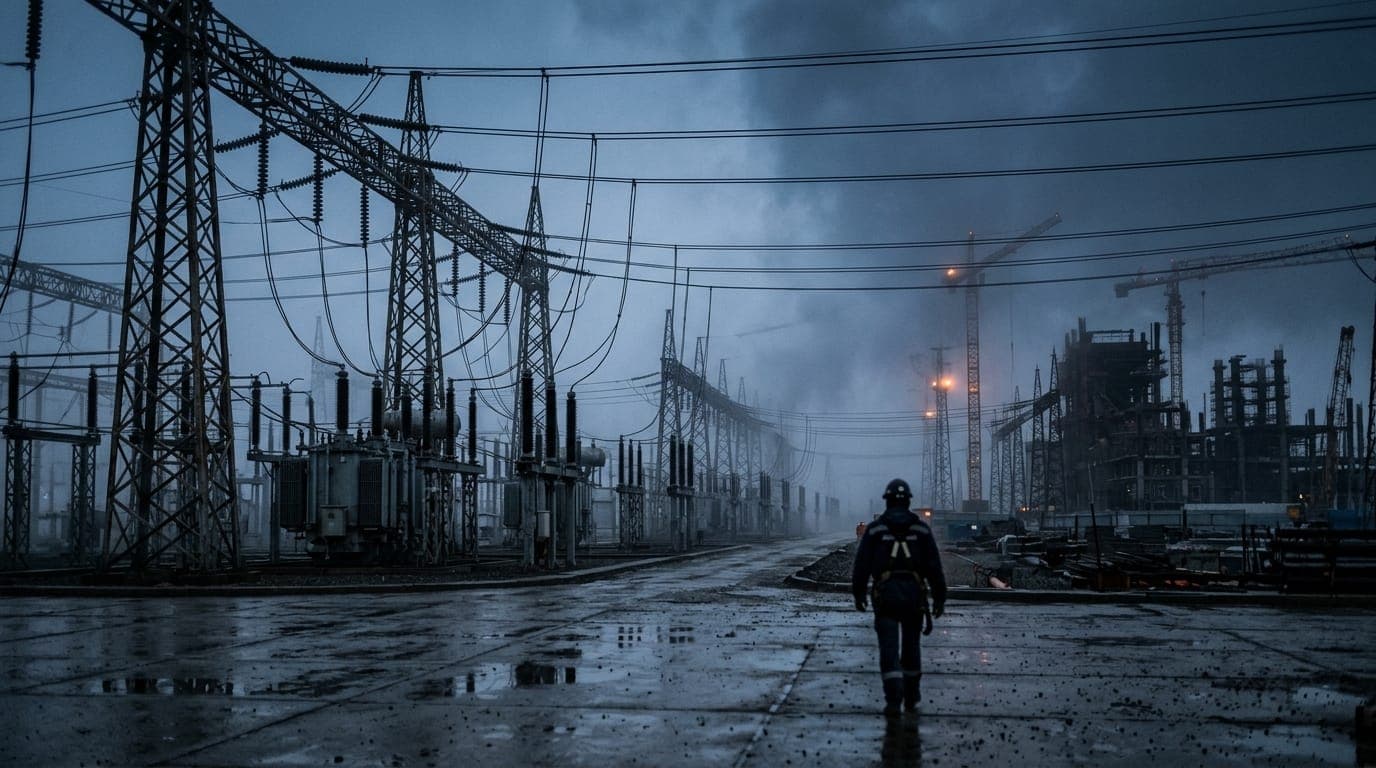
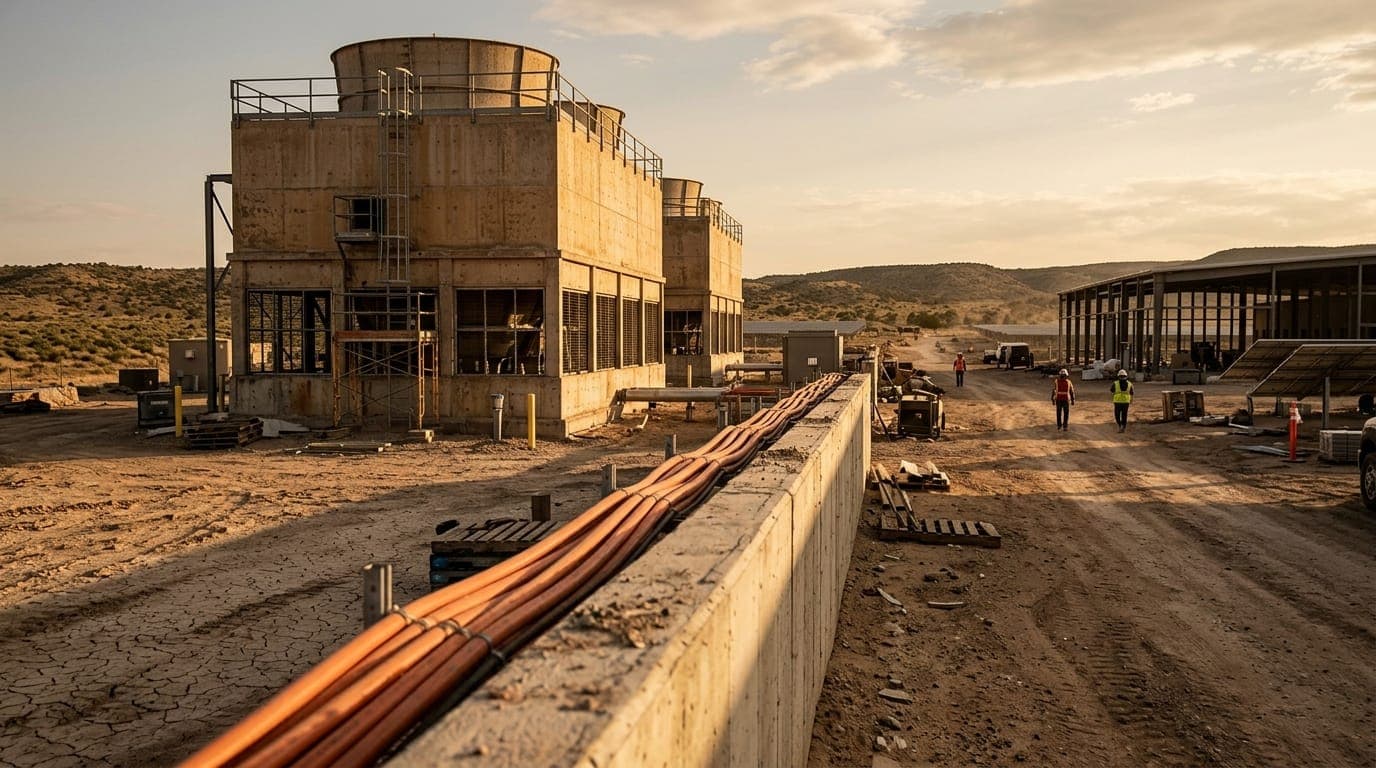
Riot Platforms announced a 20-year, $9.1 billion data center lease with an unnamed frontier AI lab for 191 MW at its Rockdale, Texas campus, bringing total AI capacity under contract to 241 MW while Bitcoin mining fell below 65% of Q2 revenue.
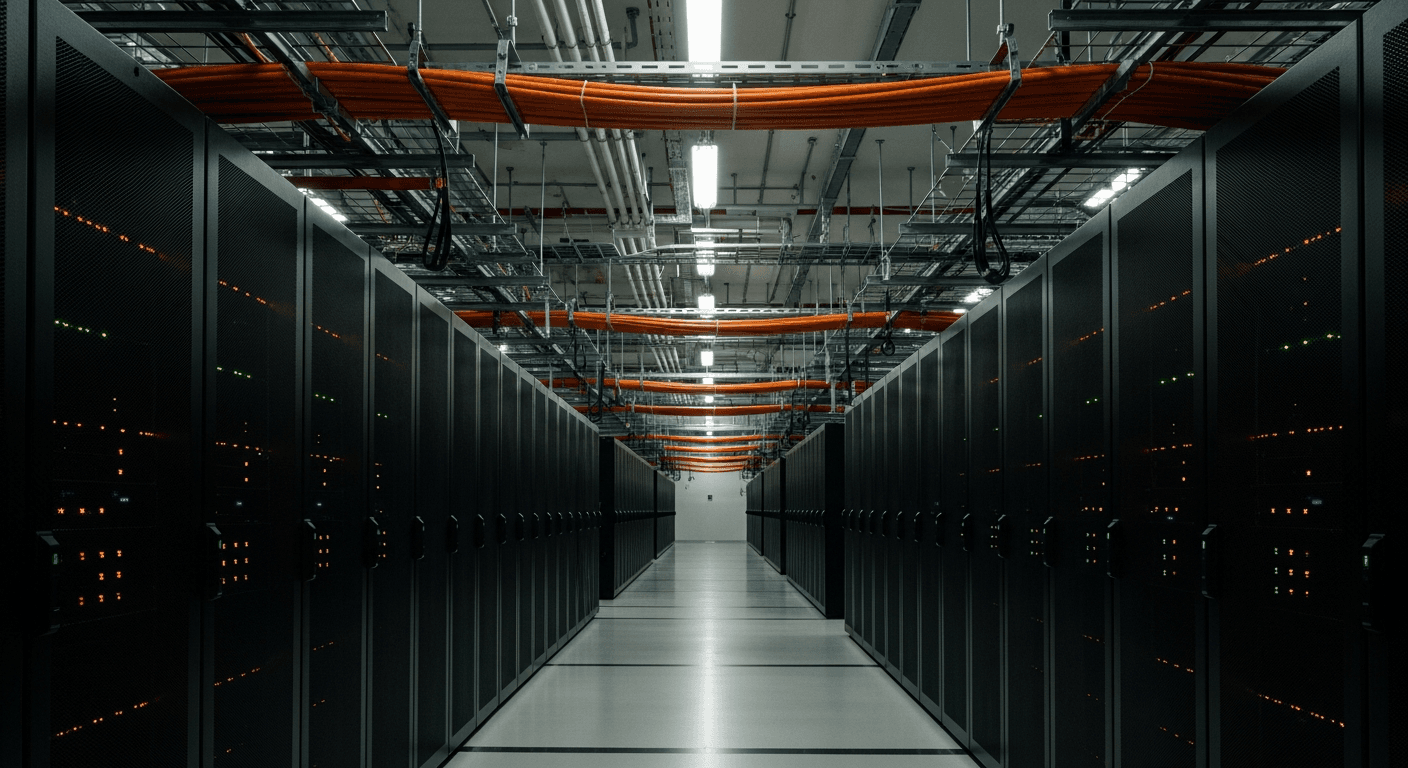
Riot's largest AI deal yet locks 191 MW at Rockdale into a 20-year contract, and mining revenue is now less than 65% of the business.
Key takeaways
- Riot Platforms announced a 20-year, $9.1 billion data center lease with an unnamed frontier AI lab for 191 MW of critical IT capacity at its Rockdale, Texas campus.
- Combined with the existing AMD lease, Riot now has 241 MW of AI computing capacity under contract, while Bitcoin mining revenue in Q2 2026 fell to $113.7 million, less than 65% of total revenue.
- Every megawatt contractually committed to a 20-year AI lease is power that cannot be redirected to Bitcoin mining if hashprice recovers. RIOT is increasingly a power-infrastructure landlord, not a Bitcoin miner.
Riot Platforms (NASDAQ: RIOT) announced on August 10, 2026, alongside its Q2 2026 earnings, a 20-year data center lease with an unnamed frontier AI lab for 191 MW of critical IT computing capacity at its Rockdale, Texas campus, per the company's Q2 earnings release. The deal is expected to generate approximately $9.1 billion in revenue over its initial term, making it by far Riot's largest AI infrastructure commitment to date. A primary source URL for this announcement was not available at publish time; readers should check Riot's investor relations page at riotplatforms.com and SEC EDGAR for the August 10, 2026 8-K.
This is not a hedge. A 20-year lease is a capital allocation verdict.
What the Numbers Say
Riot reported Q2 2026 total revenue of $174.2 million, up 14% year-over-year. Bitcoin mining contributed $113.7 million of that, below 65% of total revenue. Data center hosting brought in $23.2 million. These figures are drawn from the company's Q2 2026 earnings release; confirm against the primary 8-K filing on SEC EDGAR.
A year ago, mining was the overwhelming majority of Riot's top line. The trajectory is unambiguous and accelerating.
The Rockdale AI deal is Riot's second major data center lease. The first, signed with AMD in January 2026 for an initial 25 MW and expanded to 50 MW in April 2026, carries a 10-year term and is expected to generate approximately $636 million in contract revenue, per the January 2026 8-K. The new AI lab lease doubles the term length and is worth more than 14 times the AMD deal. Combined, Riot now has 241 MW of AI computing capacity under contract at Rockdale.
For context on Riot's mining trajectory: Q1 2026 mining revenue was $111.9 million, down from $142.9 million in Q1 2025. Bitcoin production fell to 1,473 BTC from 1,530 the prior year. Riot also sold 3,778 BTC ($289.5 million) in Q1 2026 to fund data center buildout, per its Q1 2026 10-Q. The mining operation is funding its own displacement.
RIOT shares gained approximately 4% after hours on August 10, partially recovering from a 5.6% decline during the regular session.
Power Committed Is Power Gone
The real consequence falls on the Texas power grid and the Bitcoin mining ecosystem, not on Riot's income statement.
Riot controls some of the largest permitted power sites in the state, including the Rockdale campus. As of January 2026, CEO Jason Les confirmed the company's fully approved data center power portfolio stood at 1.7 gigawatts; whether that figure was updated in the Q2 release has not been confirmed at publish time. Every megawatt now locked into a 20-year AI lease is a megawatt that cannot be retooled for Bitcoin mining even if hashprice surges.
The AI tenant has committed to a structural reallocation of permitted Texas power capacity away from Bitcoin, at scale, for two decades, not a month-to-month arrangement.
This dynamic is playing out across the sector. The broader miner-to-AI transition reflects the same post-halving economics: long-duration data center lease revenue is structurally more attractive than marginal mining revenue at current hashprice. Riot is not the only one pulling power toward AI, but it is one of the largest.
The second-order read for Bitcoiners: as Tier-1 public miners convert permitted power to AI tenants under long-term leases, new hashrate has to come from smaller, private, off-grid, or stranded-energy operators. That is actually constructive for mining decentralization. It is not constructive for anyone who bought RIOT as a Bitcoin mining proxy. They own a data center REIT with a mining operation attached.
The Thesis and What Would Break It
The falsifiable read: Riot is not diversifying Bitcoin mining, it is rationing it. Post-halving economics made marginal mining revenue structurally weaker than long-duration lease NOI, and the $9.1 billion, 20-year commitment is the proof. No company locks in 20-year obligations as a temporary hedge while keeping its core business intact.
The trigger that disproves this: Riot materially increases its ASIC fleet purchases and restores mining revenue above its Q1 2025 peak of $142.9 million while simultaneously scaling AI capacity. That would confirm genuine diversification. If hashrate investment and mining revenue continue to shrink relative to data center capex, this is a managed exit from Bitcoin mining by the company that was once one of its largest players.
What to Watch
The identity of the unnamed frontier AI lab will matter when Riot files the lease as a material contract with the SEC. Watch for an 8-K exhibit. Also watch Q3 mining production data: if Bitcoin production falls again year-over-year while Rockdale power flows to the AI tenant, the trajectory becomes very hard to argue against. Riot's Corsicana and Kentucky sites are the remaining question marks for dedicated mining capacity.
Update, August 11, 2026
Bloomberg identified the unnamed counterparty as Anthropic , the Claude developer, naming it as the frontier AI lab behind Riot's $9.1 billion Rockdale deal. Neither company publicly confirmed the identity when Bloomberg contacted them -- Riot declined to comment and Anthropic did not respond. The identity rests on Bloomberg's sourcing, not a public filing from either party.
Beyond the name, Bloomberg's report surfaced terms the initial earnings release did not include. Two five-year extension options could raise the total contract value to $16.1 billion, and Riot plans to bring capacity online in stages -- 96 MW by December 2027 and the full 191 MW by June 2028.
To fund the project's early construction phase, Riot arranged a $573 million interim financing facility through Morgan Stanley as it works toward putting a permanent credit backstop in place.
Riot estimates cumulative net operating income of $7.3 billion to $8.2 billion during the base term, though these figures remain forward-looking projections dependent on construction and operational performance. The Morgan Stanley bridge facility and the phased delivery schedule mean Riot is carrying real construction execution risk on top of the identity risk still unconfirmed by either principal -- something RIOT shareholders should price before reading the after-hours pop as a settled outcome.
Sources
- Riot Platforms Q1 2026 10-Q, SEC EDGAR
- Riot Platforms January 2026 AMD Lease 8-K, SEC EDGAR
- Riot Platforms Q2 2026 earnings release and $9.1B lease announcement, August 10, 2026: primary 8-K not yet confirmed at publish time; check SEC EDGAR (CIK 0001167419) and riotplatforms.com investor relations for the filing.
Frequently Asked Questions
Who is the unnamed frontier AI lab signing the $9.1 billion lease with Riot?
Riot has not disclosed the tenant's identity. The company described it only as "an unnamed frontier AI lab." When Riot files the lease agreement as a material contract with the SEC, the counterparty will likely become public. Until then, any speculation is unsupported.
Does this deal mean Riot is abandoning Bitcoin mining?
Not formally, but the capital allocation tells a clear story. Mining revenue has fallen from above $142 million per quarter to below $114 million while data center commitments have grown from zero to approximately $9.7 billion in contracted revenue across two AI leases, $9.1 billion for the unnamed AI lab deal and $636 million for the AMD deal. Note that Riot has not publicly stated this combined figure; it is a sum of the two individually reported deal values. The 20-year term of this deal is not the structure of a company treating AI as a side bet. Whether it becomes a full exit depends on whether Riot's ASIC investment and mining output recover in parallel.
What happens to Riot's Bitcoin mining capacity with 241 MW locked into AI leases at Rockdale?
The 241 MW now under AI contract at Rockdale cannot be redirected to mining during the lease terms without breaching contracts. Riot's remaining mining capacity would need to come from its other sites, primarily Corsicana, Texas, and any Kentucky operations. The company has not publicly confirmed how much of its approved power portfolio remains dedicated to Bitcoin mining following this lease.