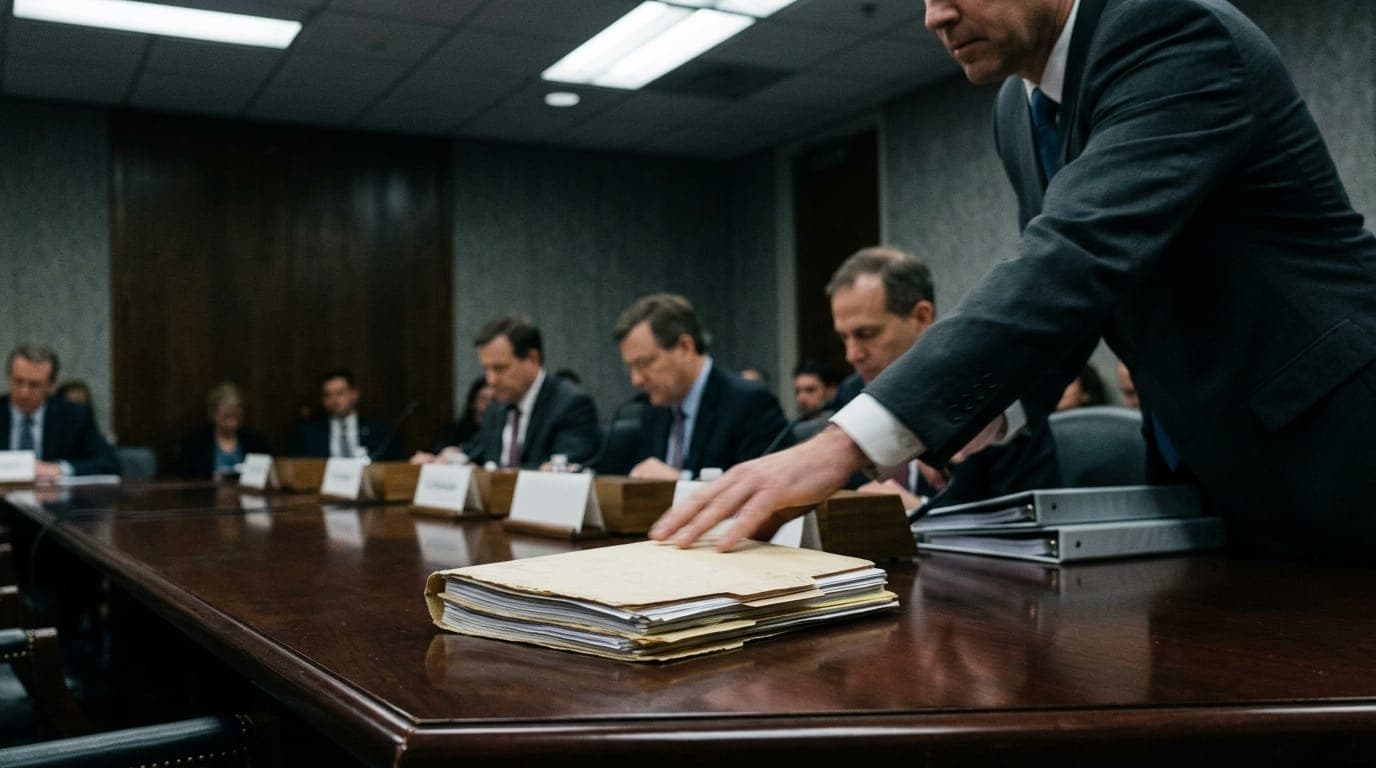
Texas PUCT Orders Full 525 MW AI Campus to Cut Within 30 Minutes in SB 6 First Test
The PUCT approved a 525.5 MW AI campus co-located with a 265.5 MW wind farm in Docket 59220, but the order requires full-campus curtailment within 30 minutes during ERCOT emergencies, with no demand-response compensation. SB 6's first binding test case.
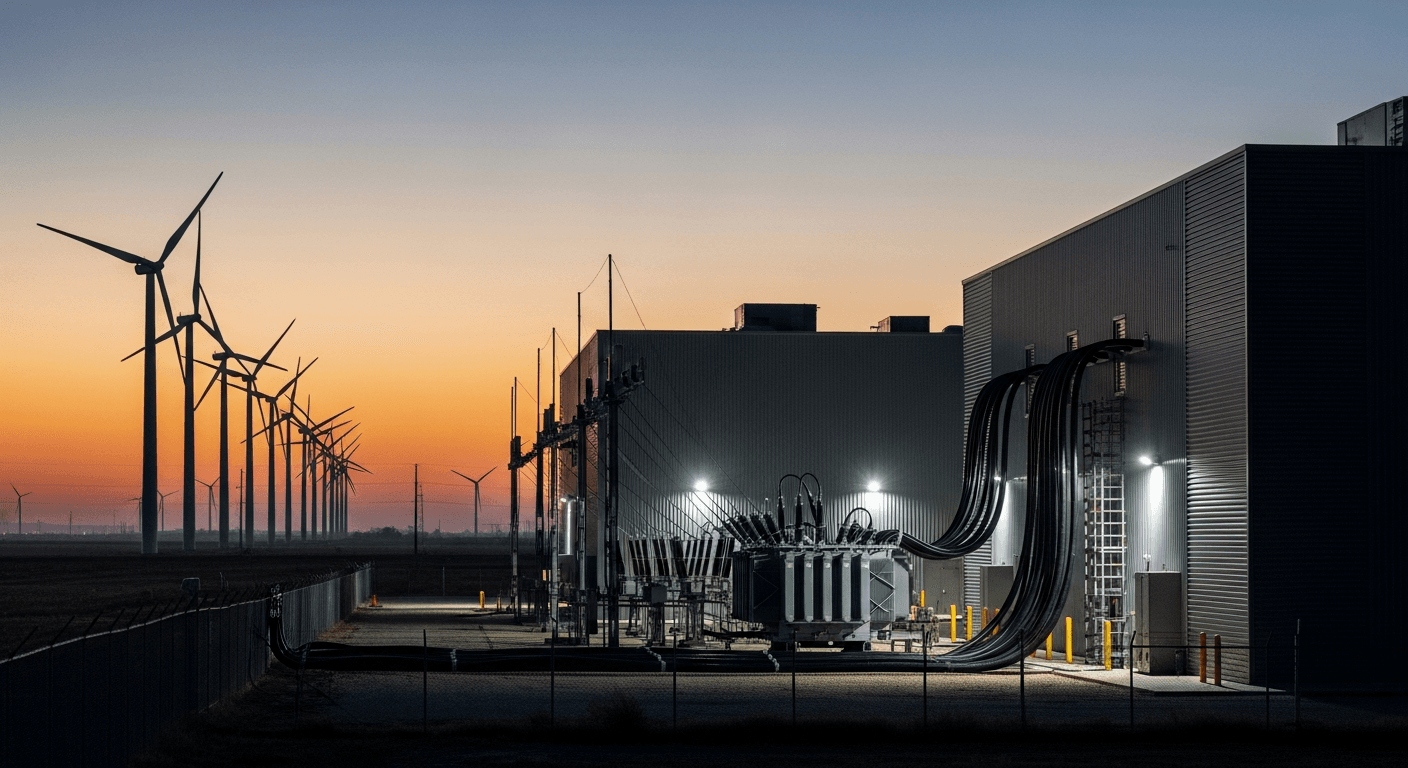
The first binding curtailment ruling under Texas Senate Bill 6 sets a precedent that could reprice every wind-paired AI data center deal in ERCOT.
Key takeaways
- The PUCT approved Ensign Infrastructure's 525.5 MW AI campus co-located with a 265.5 MW Goodnight wind farm in Armstrong County, Texas, but required the entire campus to curtail within 30 minutes during ERCOT emergencies, per Docket No. 59220 (July 23-24, 2026).
- The ruling creates a 2:1 load-to-generation ratio where ERCOT can force curtailment of twice the capacity the paired generator provides, and bars the project from paid demand-response programs entirely.
- This is SB 6's first major test case; a pending Amazon/Vistra application at Comanche Peak (nuclear) is next, and how PUCT treats dispatchable generation there will determine whether a two-tier grid emerges in Texas.
The Public Utility Commission of Texas issued its order in Docket No. 59220 on July 23, 2026, approving a net metering arrangement for a 525.5 MW AI data center campus co-located behind the 265.5 MW Goodnight 1 wind farm in Armstrong County, Texas. The catch: the full campus must be capable of curtailing within 30 minutes during ERCOT grid emergencies, breaker disconnection included, and cannot collect compensation from paid demand-response programs. The order, revised by PUCT Chairman Thomas Gleeson from the administrative law judge's original recommendation, is the first binding precedent under Texas SB 6 for behind-the-meter co-location at scale.
The Structure and the Math
The Goodnight campus is a layered arrangement. Crusoe Energy Systems developed the original project and previously had Crusoe Load 1 (265.5 MW) approved under a prior PUCT order in Docket No. 58881 (April 2026), which already required that load to curtail on 30-minute notice. In mid-March 2026, Crusoe sold the second tranche, Crusoe Load 2 (260 MW), to Ensign Infrastructure LLC. The broader campus was developed in partnership with Google, which holds a confirmed wind energy contract under the Ensign arrangement, per Utility Dive reporting.
The combined 525.5 MW campus shares a single ERCOT point of interconnection with a 265.5 MW wind resource. That is a 2:1 load-to-generation ratio. ERCOT retains authority to curtail the full load despite the paired generator covering only half of it. Texas Competitive Power Advocates and natural gas producer BKV filed opposition to the framework, arguing it could discourage future co-location investment. PUCT approved it anyway.
The ruling means the campus absorbs the full reliability obligation of ERCOT's curtailment authority without any compensatory mechanism. No paid demand-response participation is permitted under the co-location arrangement. The project gets grid access; the grid gets an unconditional off switch.
What This Means for the BTM Co-Location Model
The mainstream energy press is reading this as an AI data center story. It is also a Bitcoin mining story.
Bitcoin miners were the original behind-the-meter interruptible loads in ERCOT. They built the playbook: pair with curtailed wind or flared gas, act as flexible demand, and participate in demand-response programs as a compensable service. The PUCT just codified the inverse logic for AI. Mandatory curtailment is a reliability obligation. Compensation is off the table. Those two conditions together materially change the investment math on wind-paired BTM co-location, and every project currently in the ~438-gigawatt ERCOT large-load queue, more than 438,000 MW of proposed demand as of mid-2026, nearly 90% from data centers, is now looking at this order.
The asymmetry matters. If AI data centers get slotted into the same "mandatory curtailment, no compensation" bucket that miners already occupy, it erodes one of the structural advantages that made Texas attractive for AI buildout over the last two years. That is a relative improvement in positioning for miners already operating under those terms, particularly those paired with dispatchable gas or behind flared wellhead power, who absorb curtailment risk that AI hyperscalers are only now discovering is real.
The Google-Crusoe-Ensign SPV structure is also worth watching carefully. Google holds a wind energy contract, technically keeping its compute "carbon-free." The broader campus includes fossil gas turbines under construction, for which Google has confirmed no contract. That accounting separation, where the clean electrons are contractually yours and the dispatchable backup is someone else's problem, is a preview of the ESG positioning games hyperscalers will run as they scale behind-the-meter compute. Bitcoiners have seen this film before. The industry that spent years attacking proof-of-work's energy footprint is now structuring its own power arrangements to keep the dirty generation off-balance-sheet.
What to Watch Next
The falsifiable test for this precedent is a pending co-location application involving Amazon and Vistra at Comanche Peak nuclear plant, first reported by Utility Dive. If PUCT treats nuclear-backed BTM co-location differently, granting proportional rather than full-campus curtailment requirements or allowing demand-response participation, the two-tier grid thesis firms up fast. Dispatchable nuclear and gas-backed large loads would occupy a structurally different regulatory category than wind-paired operations. That would accelerate AI capex toward dispatchable generation and away from the renewable BTM model Goodnight represents.
If instead PUCT applies the same 30-minute full-campus curtailment template to Comanche Peak, the economics of behind-the-meter co-location tighten across the board regardless of generation source. Either outcome reshapes where capital flows in Texas grid buildout. Ensign could also challenge the curtailment condition under PURA § 39.169; a successful legal challenge would break the precedent entirely and reopen the wind-paired BTM model. Watch the docket.
Sources
- PUCT Docket No. 59220
- PUCT Docket No. 58881
- White & Case client alert, PUCT curtailment authority analysis
- First reported by Utility Dive
Frequently Asked Questions
Behind-the-meter co-location means a large power consumer (a data center, a Bitcoin miner) connects directly behind a generation source at a shared interconnection point, rather than drawing power through the public grid. The appeal is access to power that would otherwise be curtailed or wasted, often at lower effective cost. The PUCT ruling matters because it establishes that co-location does not insulate a load from ERCOT's emergency curtailment authority, even when the load is larger than the paired generator, and that the obligation comes without compensation.
SB 6, which became law in June 2025, applies to large loads co-located with generation in ERCOT broadly, not only AI data centers. Bitcoin miners operating under behind-the-meter co-location arrangements face the same framework. The difference is that miners already operate as interruptible loads by design and have historically participated in demand-response programs as a compensable service. The Docket 59220 order bars demand-response compensation specifically for this co-location structure, which could affect how future mining co-location projects are structured in Texas.
Yes. The governing statute, PURA § 39.169, provides the legal basis under which the curtailment authority was affirmed. Ensign could challenge the order through the courts arguing the full-campus curtailment requirement exceeds PUCT's authority under that section. If a court grants relief, or if a future PUCT order in a subsequent docket grants a proportional curtailment carve-out, the Docket 59220 precedent weakens. The White & Case legal analysis of the order is the closest public guide to the appeal pathway available.