Bessent and He Lifeng Open Pre-Summit Trade Talks With November Cliff in View
Treasury Secretary Scott Bessent and Chinese Vice Premier He Lifeng opened all-day ministerial talks at JPMorgan's Manhattan headquarters on Sunday, four days before President Trump hosts Xi Jinping at the White House in the first Chinese state visit in 11 years. The agenda: rare earths, AI

A managed-stability exercise four days before Trump hosts Xi, and the Busan truce clock is ticking.
Key takeaways
- Treasury Secretary Scott Bessent and USTR Jamieson Greer opened all-day talks with Chinese Vice Premier He Lifeng in Manhattan on Sunday, September 20, first reported by Reuters, ahead of a Trump-Xi state visit beginning September 24.
- The three confirmed agenda items are the status of the Busan trade truce expiring November 10, 2026, China's underdelivery on rare-earth export commitments, and bilateral AI guardrails.
- The most likely outcome is a short-term truce extension and cosmetic wins on rare earths, not a structural deal. The underlying decoupling architecture stays intact, and every deferred resolution tightens the spring on a dollar-centric trade order Bitcoin sits entirely outside of.
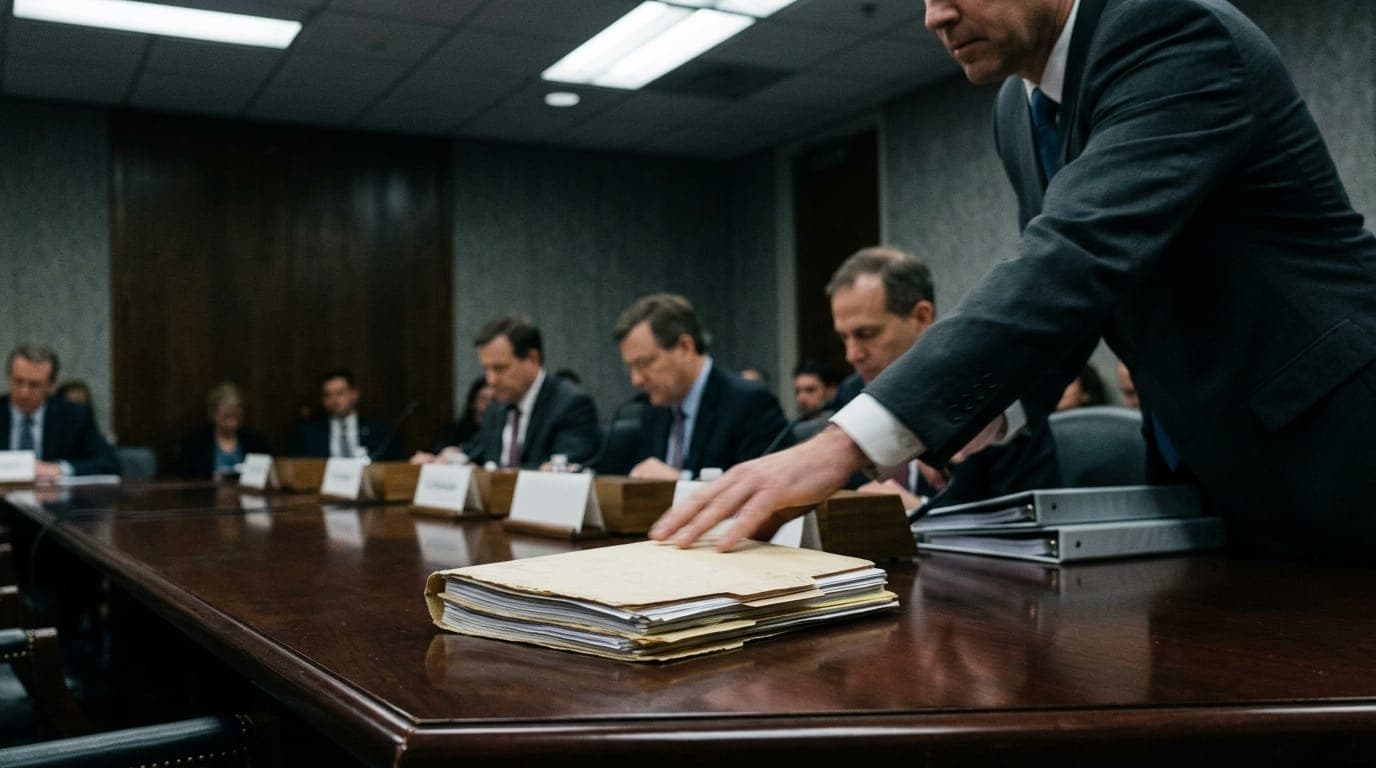
Treasury Secretary Scott Bessent and U.S. Trade Representative Jamieson Greer met Chinese Vice Premier He Lifeng at JPMorgan Chase's Manhattan headquarters Sunday for an all-day ministerial session, first reported by Reuters, four days before President Trump hosts President Xi Jinping at the White House on September 24. It will be Xi's first White House visit in 11 years. Beijing has not made an equivalent official announcement confirming the September 24 date. JPMorgan is not a party to the negotiations. The building was made available during UN General Assembly week, when UNGA high-level meetings from September 22 through 28 create security constraints that make most government facilities in Midtown impractical.
The talks are operating under a hard deadline. The Busan Summit framework, reached October 30, 2025 in Busan, South Korea, suspended heightened reciprocal tariffs and China's rare-earth export controls for one year, with a confirmed expiry date of November 10, 2026, per the White House fact sheet. If no extension or replacement is in place by that date, tariffs snap back and the framework collapses.
Three Agenda Items, Zero Structural Fixes
Reuters confirmed three core issues dominating the session.
First, rare earths. Beijing committed at Busan to restore critical mineral and magnet export volumes, including materials that feed U.S. defense manufacturing, EV supply chains, and semiconductor production. U.S. officials have said China's performance has fallen short. Beijing retains the option to issue more export licenses but has not restored pre-restriction volumes. That gap is the primary U.S. grievance going into Sunday's talks.
Second, AI guardrails. Low-cost Chinese open-weight AI models are increasingly adopted by U.S. developers. Washington wants bilateral terms governing misuse by non-state actors without forcing a complete bifurcation of the two tech ecosystems. Given reported breach incidents involving AI models, this item carries more urgency than it did at Busan.
Third, the Busan truce itself. Negotiators are reviewing unresolved items from Trump's May 2026 Beijing visit, including tariff reductions on non-sensitive goods and agricultural purchase commitments from China. The November 10 deadline makes every agenda item subsidiary to this one.
Iran's role as China's top oil customer has also emerged as an unexpected pressure point. Via Operation Economic Outcast, launched August 24, Bessent has signaled secondary sanctions on Iran's enablers without naming China directly in his opening remarks, telling reporters "no one is above the reach of U.S. sanctions" when asked whether Chinese banks could be targeted. That pressure is present in the room even without appearing on the formal agenda.
The Dollar-Order Stress Test Bessent's Presence Signals
USTR Greer handles goods. When Treasury leads a trade delegation, currency dynamics, capital flows, and reserve management are implicitly on the table, even if not named publicly. That distinction matters. A deteriorating Busan framework creates pressure on exchange rate management and reserve allocation decisions at both the PBOC and the Fed.
Both are inflationary at the margin for dollar holders.
The rare-earth shortfall compounds this. Continued underdelivery forces U.S. manufacturers to absorb a tariff-plus-scarcity premium or accelerate nearshoring. Both paths are inflationary. Supply-shock inflation is the kind the Fed cannot fight with rate hikes without cracking credit markets, and a cracked credit market is historically one of Bitcoin's most effective recruiting environments.
Bessent called China's $1.2 trillion surplus unsustainable at the G20 Asheville meeting earlier this year. The September 20 talks are where that rhetorical position meets a 51-day countdown. At Asheville, Bessent also invited JPMorgan CEO Jamie Dimon to address finance leaders on private-sector growth. Dimon is separately reported to be on the guest list for the White House state dinner for Xi.
The thesis: Bessent and He will extend the November 10 date and announce cosmetic progress on rare earths and AI framing. The underlying decoupling architecture, export controls, alternative tariff statutes, China's rare-earth chokehold, remains intact and is quietly hardening. Every extension without resolving the structural controls is a deferred detonation.
Bitcoin is the only asset that sits outside both the dollar system and the renminbi system simultaneously. Each managed kick of the can reprices that property slightly higher in the minds of sovereign allocators who cannot say so publicly.
The trigger that disproves this: if Bessent and He produce a binding, multi-year framework with verified rare-earth restoration to pre-restriction volumes, enforceable AI governance terms, and a tariff path that does not depend on annual extension cliff-hangers, then this is structural stabilization, not managed decay, and the November detonation thesis is wrong for this cycle.
There is also a live contingency that could cancel the summit entirely. China has warned, per Kyodo News, that it would pull out of the September 24 visit if Trump approves a pending $14 billion Taiwan arms package before Xi arrives. As of Sunday, no final decision has been announced.
What to Watch Before November 10
The immediate signals are three: whether any post-session readout confirms a formal extension of the November 10 date, whether Beijing issues a verifiable increase in rare-earth magnet export permits, and whether any AI guardrails carry binding terms or are left as a framework for future negotiation. A short-term extension without binding terms on any of the three is the baseline. Markets will price November uncertainty regardless. China's record naval activity around Taiwan adds a dimension to the Trump-Xi dynamic that no trade readout will fully capture.
Sources
Frequently Asked Questions
The truce suspension lapses and heightened reciprocal tariffs revert toward pre-Busan levels. China's rare-earth export controls, currently suspended under the Busan framework, could also be reimposed. The White House fact sheet governing the truce terms is the authoritative reference for what snaps back. Markets would likely price renewed escalation risk before any formal announcement, not after.
JPMorgan is not a party to the negotiations. The building was made available because UNGA high-level meetings run September 22 through 28, and the associated security footprint across Midtown Manhattan makes government facilities logistically impractical for a full-day ministerial session.
The materials most cited in the U.S.-China export control dispute include permanent magnets, gallium, germanium, and antimony. These are inputs for defense systems, electric vehicle motors, AI inference chips, and semiconductor manufacturing. China controls a dominant share of global refining capacity for most of them. Underdelivery on Busan's export-restoration commitments is a supply-chain constraint on U.S. defense and technology production with no near-term domestic substitute.