Ofgem Charges Data Centres Up to £712,500/MW to Hold Grid Queue Spot
Ofgem launched a consultation July 29 on a commitment fee of £237,500 to £712,500 per megawatt for data centre projects holding UK grid connection queue spots. The queue has tripled in under a year. Grid access is now being priced like the scarce resource it always was.
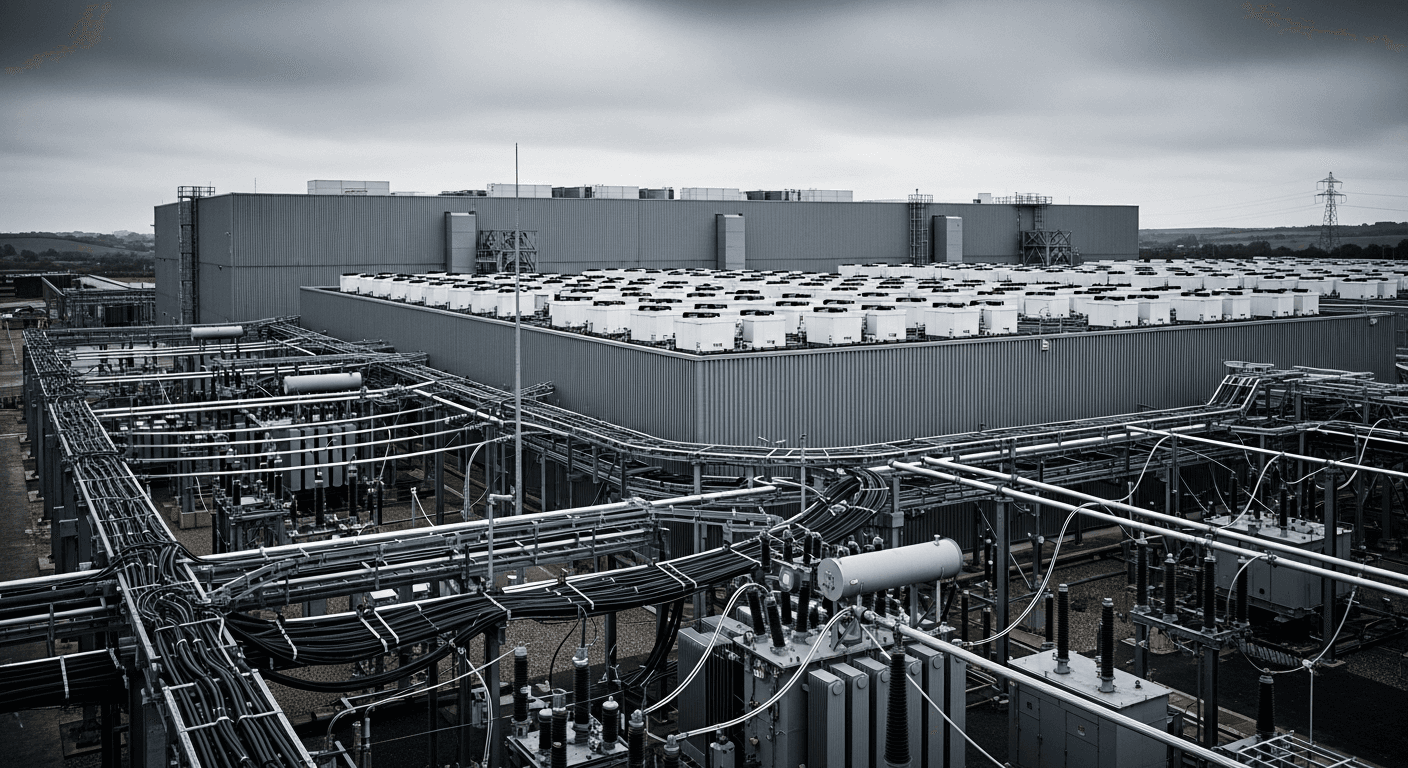
Grid access in Britain is now a priced commodity, not a free option.
Key takeaways
- Ofgem launched a consultation on July 29, 2026 proposing a commitment fee of £237,500 to £712,500 per megawatt for large data centre projects accepting a UK grid connection offer, with the fee forfeited if projects exit the queue early.
- The UK grid connection queue has tripled in under a year, from 41 GW to 125 GW, with data centres claiming roughly 73 GW of that capacity against Britain's entire peak electricity demand of approximately 45 GW.
- The fee is a scarcity-pricing mechanism designed to flush speculative paper demand out of the queue. Energy, not capital or compute, is the AI buildout's binding constraint, and regulators are starting to act like it.
Britain's energy regulator, Ofgem, on July 29 launched a public consultation on a proposed Data Centre Commitment Fee that would charge large data centre projects between £237,500 and £712,500 per megawatt when accepting a grid connection offer, per the Ofgem press release. The fee is refunded only upon full energisation and forfeited outright if a project exits the queue early. At 2.5% to 7.5% of average project costs, it is sized to hurt.
The consultation closes September 16, 2026.
The Queue Math Is the Story
The numbers behind this proposal are the real headline. Contracted demand offers in the UK grid connection queue surged from 41 GW in November 2024 to 125 GW by June 2025. Data centres account for roughly 73 GW of active pipeline capacity in the queue, with demand applications totaling at least 80 GW per the Ofgem press release. Britain's recorded peak electricity demand has reached approximately 45 GW.
"Britain's electricity demand connections queue has more than tripled in size in less than a year, and consumers should not bear the risks created by speculative projects taking up space in the system," said Eleanor Warburton, Ofgem's Director for Energy System Design and Development. "Where speculative projects take up space in the queue, they can delay other schemes and create uncertainty about future network needs."
Ofgem has been explicit that a significant share of queued projects may never connect, creating false signals for network investment planning. Prior supply-side queue reforms accelerated approximately 7.8 GW of generation projects by an average of six years. The demand-side problem has grown faster than the supply-side fix.
What the Fee Actually Does
The commitment fee is a truth-forcing mechanism. When grid access is free to claim, speculative developers have every incentive to apply early and hold a spot regardless of project viability. The cost is zero. The option value is enormous.
A forfeitable fee changes that calculus. Projects without firm financing, signed offtake, or realistic construction timelines will have to decide whether the grid spot is worth paying for. Projects that cannot justify the cost will exit, shrinking the queue toward honest demand and giving network planners numbers they can build around.
This fits directly into Ofgem's wider Demand Connections Reform programme, structured around three pillars: Curate, Plan, and Connect, developed jointly with the Department for Energy Security and Net Zero (DESNZ) and the National Energy System Operator (NESO). The commitment fee sits within the "Curate" pillar: identifying which projects deserve queue priority before capacity is allocated.
Ofgem is separately considering requiring data centres to curtail power during grid stress periods, a proposal from an earlier consultation not part of this July 29 announcement. Together, the two consultations frame a regulatory posture that treats data centres as large, manageable loads rather than passive grid consumers.
The Signal for Anyone Competing for Electrons
The AI buildout's energy appetite has been the dominant power-market story for two years. What this Ofgem action confirms is that the publicly stated demand numbers are inflated by speculative paper capacity. If the commitment fee shakes loose even half the queue's ghost projects, the AI energy crisis narrative shifts from "we need to build ten times more grid" to "we need to build a lot more grid, but less than the queue implied."
That distinction matters for energy investment theses and for anyone modeling where AI capex energy actually lands.
For Bitcoin miners operating in the UK or watching regulatory patterns globally, the structural read is sharper. The commitment fee penalizes fixed-load, take-or-pay connectors. A Bitcoin mining operation that can curtail on demand, participate in demand response, and function as a dispatchable load is exactly the type of connector Ofgem's reform framework accommodates. A speculative AI data centre holding 200 MW of queue capacity with no equity committed is exactly what the fee is designed to price out.
The UK move is a preview. Grid queues in the US are already under political pressure. Regulators worldwide will reach for this tool when queues become embarrassing. Bitcoin miners and industrial operators in those jurisdictions need to understand the commitment-fee playbook before it lands on them.
What to Watch
The falsifiable thesis here: the fee is a genuine scarcity signal only if Ofgem finalizes it at a level that actually stings. If the post-consultation policy drops the rate below 1% of project cost, carves out hyperscaler exemptions, or allows fees to be transferred freely with queue position, the mechanism becomes a rounding error and the paper demand stays. Watch what Ofgem publishes after September 16, not what it proposed on July 29.
Sources
Frequently Asked Questions
The fee is forfeited, not refunded, if the project exits the grid connection queue before reaching energisation. It is only returned upon full grid connection. This creates a real financial penalty for applications filed without firm project intent.
Ofgem's current consultation is focused on data centre projects specifically. It sits inside a broader Demand Connections Reform programme, and the commitment-fee framework could be extended to other large-load categories after the consultation closes on September 16, 2026. UK-based miners should track the final policy decision.
Britain's recorded peak electricity demand has reached approximately 45 GW. The data centre pipeline currently in the active queue totals roughly 73 GW, with demand applications reaching at least 80 GW per Ofgem's own figures. The claimed pipeline is roughly 1.6 times the entire country's peak load.


