Saudi Aramco Pre-Positions Crude in Singapore as Hormuz Bypass Strategy Hardens
Saudi Aramco signed an MOU on October 26 to store crude at Singapore's Jurong Rock Caverns starting H2 2027. Combined with a push to expand the East-West pipeline to 10 million bpd, it marks the clearest admission yet that the Strait of Hormuz is no longer a reliable artery.
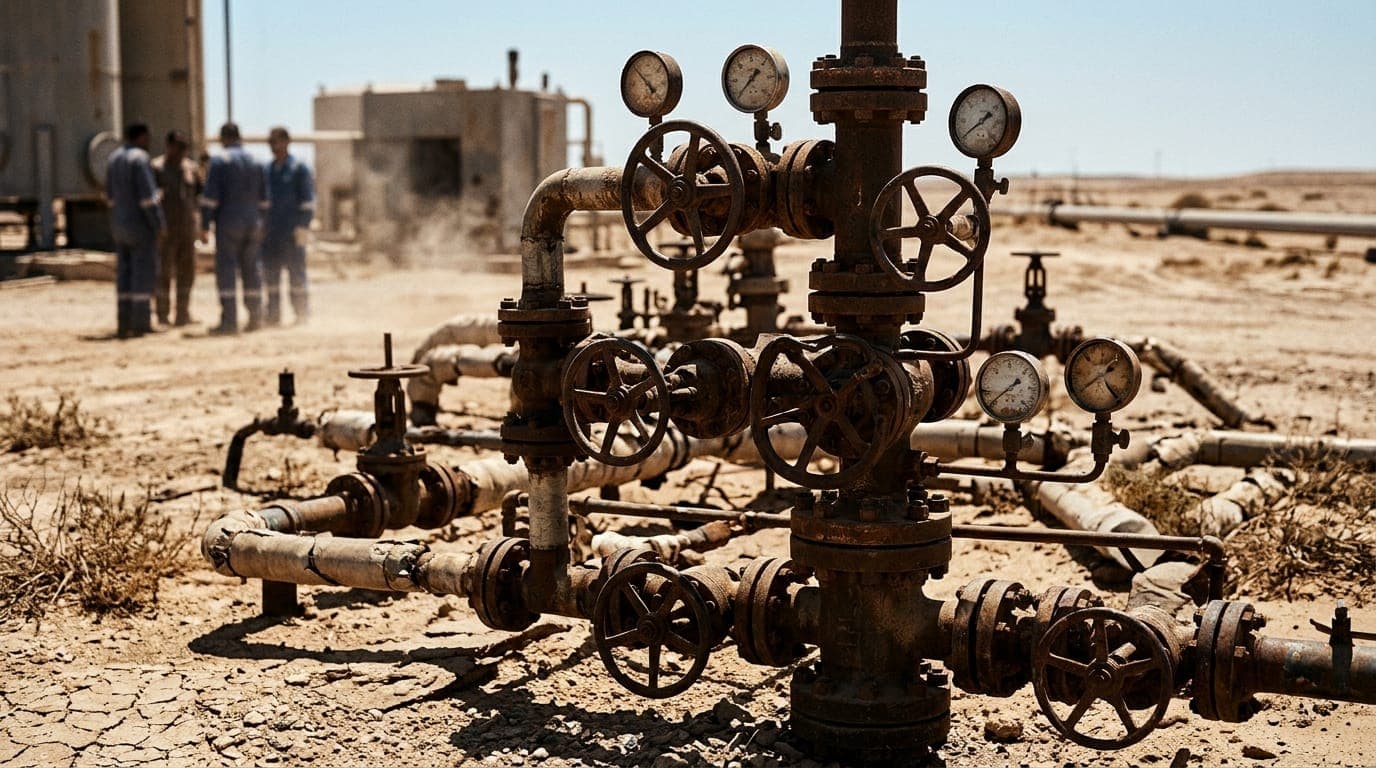
Saudi Arabia is moving oil out of the Gulf and into Asian storage before the next crisis hits, not after.
Key takeaways
- Saudi Arabia's Energy Market Authority, JTC Corporation, and Saudi Aramco signed an MOU on October 26 to store Saudi crude at Singapore's Jurong Rock Caverns starting in the second half of 2027, the first major overseas pre-positioning deal since Operation Epic Fury disrupted the Strait of Hormuz in February 2026.
- Saudi Arabia is simultaneously targeting a Petroline capacity expansion from a current 5.8 million bpd to 10 million bpd within two to three years, a structural rerouting of export infrastructure away from the Hormuz chokepoint.
- The combination of Hormuz disruption, Houthi pressure on the Red Sea, and this overseas storage pivot creates a sustained energy-cost floor that boxes in Fed policy and strengthens the macro case for Bitcoin as monetary insurance.
Saudi Aramco, Saudi Arabia's Energy Market Authority (EMA), and Singapore's JTC Corporation signed a Memorandum of Understanding at the Singapore International Energy Week on October 26, establishing joint intent to store Saudi crude at Singapore's Jurong Rock Caverns beginning in the second half of 2027. Singapore's Minister for Energy, Trade and Industry, Tan See Leng, announced the agreement publicly at the Singapore Energy Lecture 2026. The specific volume and financial terms were not disclosed in the MOU.
"Today, Saudi Arabia and Singapore are announcing our joint intent to establish an arrangement for Saudi crude oil to be stored at the Jurong Rock Caverns from the second half of 2027," Tan See Leng said at the event.
The Jurong Rock Caverns, operated by JTC Corporation, can hold up to 1.47 million cubic metres of liquid hydrocarbon, equivalent to approximately 9 million barrels per JTC Corporation. The facility is government-owned and purpose-built for strategic reserves. Singapore's Ministry of Energy, Trade and Industry jointly announced the MOU on its official channels.
The Doctrine Shift Behind the Deal
This is not a routine logistics arrangement. Historically, Saudi Arabia covered demand spikes by pumping more from domestic fields, drawing down domestic storage, or sourcing barrels on the spot market. The Singapore MOU signals the Kingdom has abandoned that model.
Saudi Energy Minister Prince Abdulaziz bin Salman put it plainly at the World Petroleum Congress Energy Congress in Riyadh earlier this month: "Energy resilience must also be measured by the ability to maintain, repair, reroute, substitute, and recover." Aramco CEO Amin Nasser added at the same event that the company is "studying additional crude export routes, and working on expanding overseas storage."
The parallel infrastructure move reinforces the point. The East-West Pipeline (Petroline), a 1,200-kilometer route connecting Saudi Arabia's eastern oil fields at Abqaiq to the Red Sea port of Yanbu, is currently running at approximately 5.8 million bpd after returning to service following a two-week drone-attack shutdown in September 2026. It hit 7 million bpd, its current maximum capacity, in March 2026 when the Strait of Hormuz closed. Prince Abdulaziz announced plans to expand that ceiling to 10 million bpd within two to three years.
The math exposes what the pipeline alone cannot cover. Before Operation Epic Fury launched on February 28, 2026, more than 20 million barrels per day transited the Strait of Hormuz, representing more than 20 percent of global oil supply, per industry estimates cited by Al Jazeera. Even at a fully expanded 10 million bpd, the Petroline covers roughly half of that pre-war flow. Pre-positioning crude in Singapore's caverns fills part of the remaining gap by getting barrels into the hands of Asian buyers before a disruption occurs, rather than scrambling to reroute after one.
Prince Abdulaziz addressed the strategy directly at the Singapore event: "Bringing supply closer to key Asian markets would strengthen the flexibility of our supply network and support Singapore's security of supply and preparedness."
What This Means for Energy Prices and Monetary Policy
The Kingdom is telling the market, in plain operational terms, that it cannot guarantee delivery through its own backyard. That admission has a price.
When the world's swing producer builds overseas storage and expands bypass pipelines simultaneously, it is pricing in persistent instability as the baseline operating environment. Distributed pre-positioning across Asian storage nodes costs money, adds logistical complexity, and creates a structurally higher cost floor for every barrel that moves through the system. That floor does not go away when a ceasefire is signed.
Persistent energy inflation is the scenario the Federal Reserve cannot handle cleanly. It cannot hike into a war-driven supply disruption without breaking credit markets. It cannot cut without feeding price levels it is already failing to control. That trap, already visible in the Fed's supply-shock bind, gets tighter every time a producer restructures logistics around instability rather than expecting stability to return.
There is a secondary effect worth tracking. China is the primary destination for Saudi crude pre-positioned in Asian storage. Every barrel moved closer to Beijing's supply chain deepens Saudi Arabia's commercial entanglement with China and adds pressure to the dollar-denominated energy order.
The petrodollar architecture was built on the assumption that Gulf oil would flow west and be priced in dollars. Pre-positioning in Singapore, with China as the end buyer, is not a direct challenge to that system, but it is a slow structural leak.
The falsifiable thesis: This buildout represents a permanent structural shift, not crisis-period improvisation. If the Strait of Hormuz fully reopens under a durable Iran peace framework within six months, and Saudi Arabia halts or downgrades the Singapore MOU and walks back the 10-million-bpd Petroline target, the thesis breaks. Watch for Aramco canceling or reducing the Singapore negotiations, or Prince Abdulaziz revising the pipeline expansion timeline downward.
What to Watch
The Singapore MOU moves to definitive agreement negotiations next. No volume or pricing terms have been disclosed. Watch for JTC Corporation or EMA to publish the formal storage agreement terms, and watch whether Aramco announces similar pre-positioning deals with South Korea (it signed a 5.3-million-barrel storage agreement with Korea National Oil Corp at the port of Ulsan in 2023, per Aramco's Korea newsroom), Japan, or India. The Petroline expansion timeline, two to three years per Prince Abdulaziz, is the other key signal: a contract award for the capacity expansion would confirm the Kingdom is committing capital, not just signaling intent.
Houthi pressure on the Bab el-Mandeb, the Red Sea chokepoint that Saudi Red Sea exports depend on, remains active. Houthis have vowed to halt Saudi shipments through that strait and have continued attacks on Saudi infrastructure, per Anadolu Agency reporting on October 26. The bypass strategy only works if Yanbu and the Red Sea lanes stay operational.
Sources
Frequently Asked Questions
What are the Jurong Rock Caverns and how much oil can they hold?
The Jurong Rock Caverns are a government-owned underground storage complex in Singapore operated by JTC Corporation, carved into granite bedrock beneath Jurong Island. The facility can store up to 1.47 million cubic metres of liquid hydrocarbon, which JTC Corporation confirms as equivalent to approximately 9 million barrels. The caverns already serve as a regional hub for petroleum product storage; adding Saudi crude would mark the first time a Gulf national oil company has pre-positioned upstream crude there at scale.
Can Saudi Arabia fully replace Strait of Hormuz exports using the East-West pipeline?
Not at current capacity, and not fully even at the expansion target. The Petroline currently runs at approximately 5.8 million bpd with a hard ceiling of 7 million bpd.
Even the planned expansion to 10 million bpd falls well short of the 20-plus million bpd that transited Hormuz before the conflict. Yanbu port's sustained loading capacity adds another practical constraint. The pipeline is a meaningful bypass for Saudi-origin crude, but it cannot substitute for the full Hormuz corridor that serves Kuwait, Iraq, the UAE, and other Gulf producers.
What does Saudi Arabia's oil storage deal have to do with inflation or the Federal Reserve?
Energy is the input cost underneath every other cost in the economy. When the world's largest swing producer shifts from reactive pumping to geographic pre-positioning, it is signaling that energy supply chains will be more complex and more expensive to operate going forward.
That complexity does not vanish with a ceasefire. A structurally higher energy cost floor feeds into inflation that the Fed cannot cure with interest rate policy, because the source is supply fragmentation, not demand excess. That is precisely the supply-shock bind that central banks have no clean answer for.