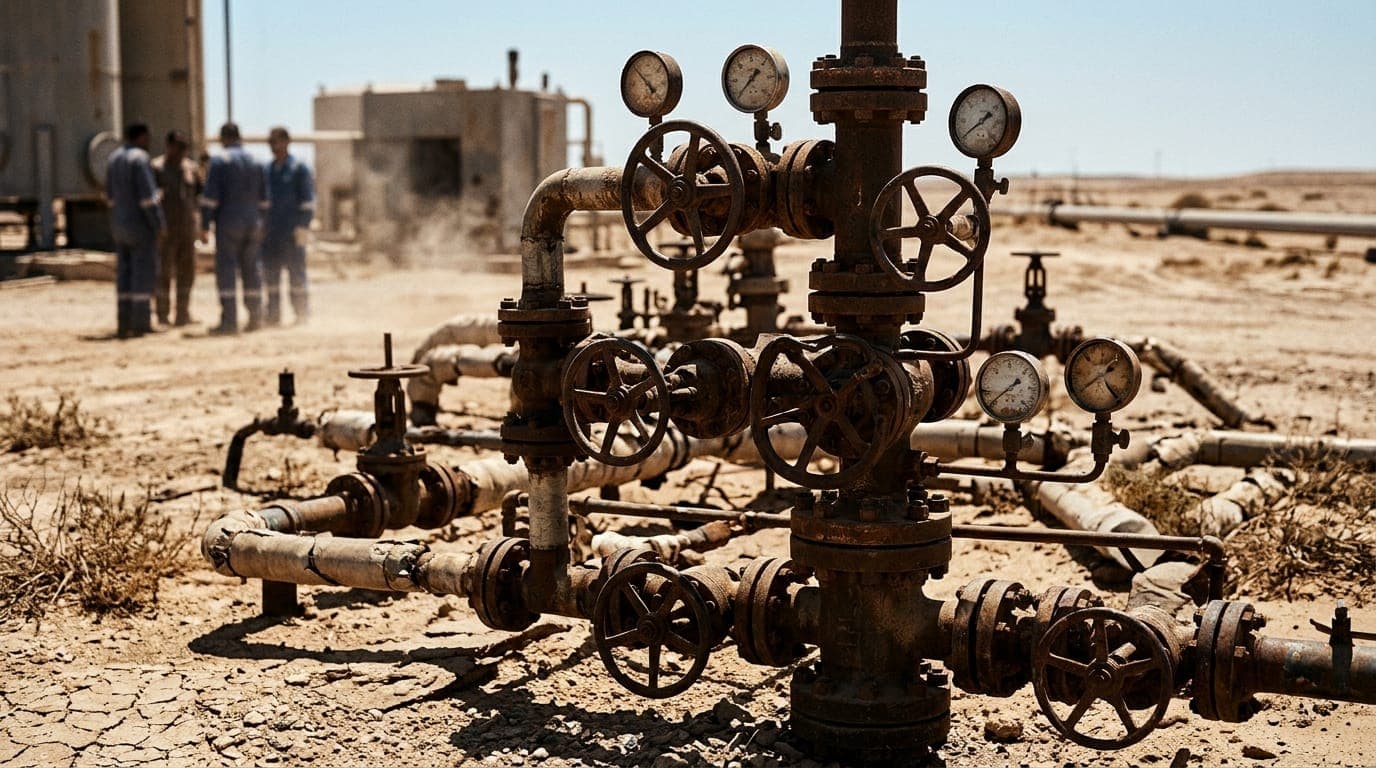
UBS: Russian Crude Near Pre-War Volumes as Trump Sanctions Waiver Breaks Western Consensus
UBS chief economist Arend Kapteyn's new data shows Western sanctions redistributed Russian oil rather than cut it, while Trump's Treasury Department issued a sanctions waiver to import the same Russian diesel Washington banned two years ago.
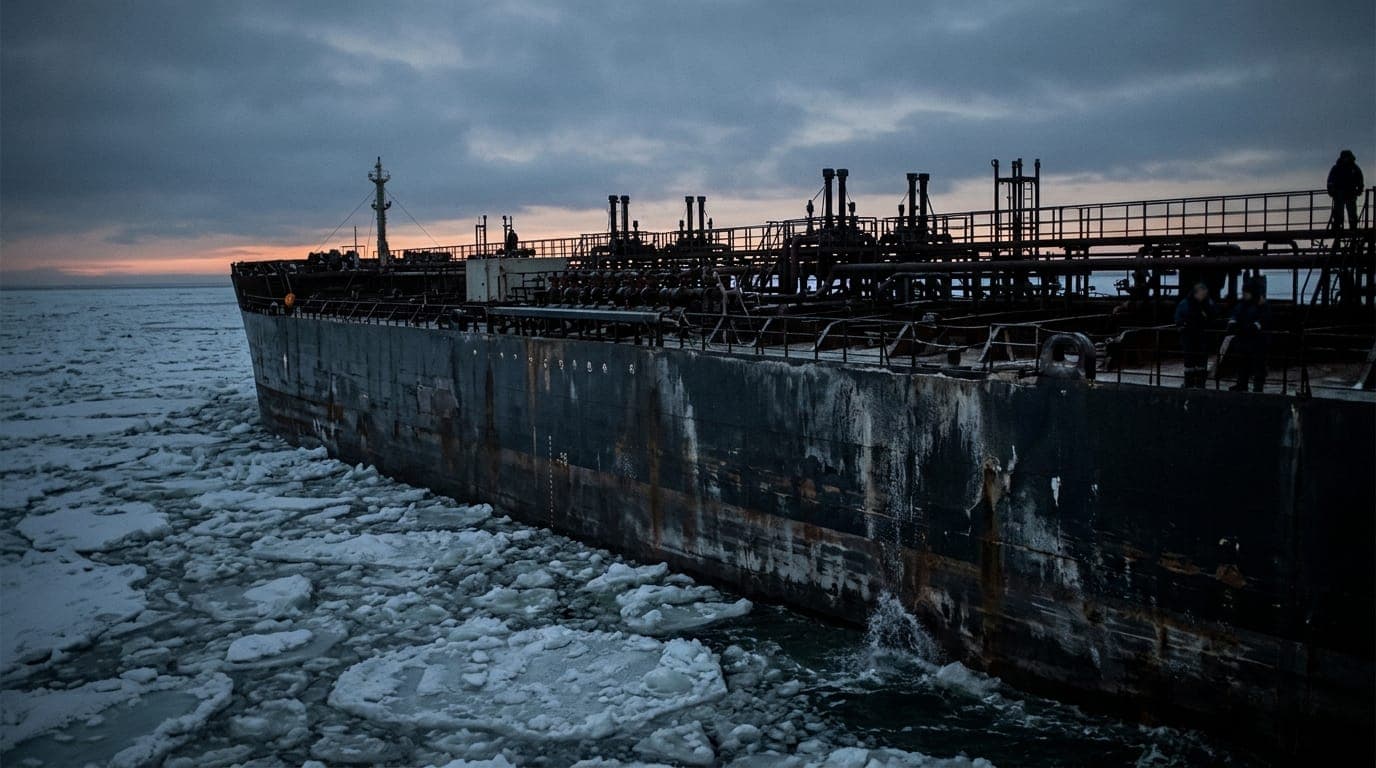
UBS data confirms sanctions rerouted Russian oil, not reduced it. Trump's diesel deal made Washington the buyer.
Key takeaways
- UBS Global Head of Economics and Strategy Research Arend Kapteyn's data shows Russian crude exports are only ~10% below pre-war levels; China, India, and Turkey now absorb 77% of Russian crude (up from 29%), while the EU's share collapsed from 48% to 4%.
- The Treasury Department issued a sanctions waiver on Russian diesel imports through April 2027 on October 9, reversing the administration's own Russia sanctions law signed just a month prior.
- 61% of Russian crude now moves via the shadow fleet, outside Western financing and insurance systems, meaning the non-dollar energy economy is already operating at scale.
On October 9, President Trump announced via Truth Social that he had struck a deal with Putin to supply Russian diesel to U.S. and global markets, with the Treasury Department issuing a sanctions waiver on the same day authorizing Russian diesel deliveries through April 2027. Now, UBS Global Head of Economics and Strategy Research Arend Kapteyn has published a data note quantifying exactly what that deal confirms: four years of Western sanctions didn't squeeze Russian crude exports, they just rerouted them through a non-dollar system Washington no longer controls.
The Numbers Western Policymakers Ignored
Kapteyn's note, "Who Is Buying Russia's Oil?" (first surfaced by ZeroHedge), draws on trade-partner import data since Russia stopped publishing its own export figures in 2022.
The headline finding: Russian crude export volumes remain only around 10% below pre-war levels despite the EU embargo and the G7 price cap regime. The destination map, however, has been completely redrawn. The EU's share of Russian crude imports collapsed from 48% pre-war to just 4%. China, India, and Turkey collectively went from 29% to 77%.
In China, Russia's share of mineral fuel imports rose from ~18% before the war to 27%. In India, it jumped from just over 1% to 24%.
Kapteyn's summary is direct: "The most visible effect of the restrictions on Russia's oil exports seems to have been to redistribute the global supply of oil."
The mechanism is the shadow fleet: per Kapteyn, an estimated 61% of Russian crude now leaves on tankers operating outside Western financing and insurance systems. At that share, it is the primary channel, already operating at near-full pre-war volume.
Russian refining capacity tells the other half of the story. Ukrainian drone strikes have damaged domestic refineries to the point where Russia, one of the world's largest diesel and fuel oil exporters, has begun importing significant volumes of refined petroleum products. That supply disruption is one factor keeping global gasoline prices elevated, which is the political pressure that produced Trump's diesel deal in the first place.
As for the deal's actual price impact: Goldman Sachs estimated the initial shipment would reduce wholesale diesel prices by $1-$2 per barrel. The total deal (roughly 4+ million metric tons, or ~36 million barrels) equals approximately 10 days of U.S. domestic diesel demand. The U.S. is a net diesel exporter. The math does not support an energy-necessity framing.
Petrodollar Enforcement, in Practice
The Trump-Putin diesel deal is where the data becomes a structural story rather than a supply story.
Trump signed sweeping Russia sanctions legislation in September 2026. One month later, Treasury issued a general license waiving those sanctions on Russian diesel through April 2027. By October 26, Russian Deputy PM Novak confirmed three tankers already dispatched to the U.S. under the deal, with Russian output ramped from 160,000 to 180,000 tons per day. A bipartisan group of senators (Collins, Tillis, Curtis, Murkowski, Shaheen, Blumenthal, and Wyden) argued in a statement on October 12 that the deal violates the 2022 law banning Russian energy imports.
CFR Senior Fellow Matthias Matthijs put it plainly: "The diesel deal shows that Washington's Russia policy is now driven by high prices at the pump before the November 3 midterm elections, rather than by any shared transatlantic strategy."
The petrodollar system's coercive authority rests on a credible U.S. threat: trade outside dollar-denominated systems and face exclusion from global finance. The Russia sanctions reversal breaks that threat in a specific and visible way. When the enforcer becomes the buyer of the sanctioned commodity, the threat loses its credibility at the margin.
China and India have been building non-dollar oil settlement infrastructure (yuan pricing, rupee-ruble settlement) throughout this period. The U.S. blinking on Russian diesel enforcement removes the last credible deterrent to doing more of it openly.
The second-order chain for dollar holders: weakened petrodollar enforcement posture means central banks at the margin have less reason to hold dollar reserves. Less dollar demand against a supply that hasn't contracted means structurally higher U.S. inflation. That's a longer-duration pressure, not a quarterly print, and the global energy realignment now underway is compressing the dollar's role as the settlement currency of last resort.
The falsifiable version of this thesis: if Treasury's April 2027 waiver expires and is not renewed, sanctions enforcement returns to full strength, coordinated third-country pressure dismantles the shadow fleet, and China and India begin settling Russian oil in dollars at above-cap prices, this reads as a temporary political fix. That scenario requires the U.S. to reimpose financial costs that it just demonstrated it won't bear when pump prices are politically inconvenient.
What to Watch
The structural tell is China and India's behavior in the first half of 2027. If yuan and rupee-based oil settlement volumes accelerate in response to the U.S. sanctions reversal, the deal will mark the moment Washington removed the last credible threat behind petrodollar enforcement. Watch the OFAC general license expiration date (April 2027), the shadow fleet's tanker count, and whether India's PPAC data shows continued share gains for Russian crude at above-cap prices.
Sources
- Trump Truth Social announcement, October 9, 2026 (per multiple attributed reports; specific post URL not publicly retrievable)
- CNBC: Trump-Putin Russian Diesel Deal Reporting, October 9, 2026
- CFR: Trump's Russian Diesel Deal Explained, updated October 19, 2026
- UBS note by Arend Kapteyn, "Who Is Buying Russia's Oil?", first surfaced by ZeroHedge
- Energy and Clean Air Research Centre, Russian export data
- KSE Institute Russian Oil Tracker
- U.S. Treasury Department / OFAC general license on Russian diesel, issued October 9, 2026 (verify exact document number at ofac.treasury.gov)
Frequently Asked Questions
Does the U.S. actually need Russian diesel?
No. The U.S. is a net diesel exporter, per Lipow Oil Associates. Goldman Sachs estimated the initial shipment would cut wholesale prices by $1-$2 per barrel on a total deal equivalent to roughly 10 days of domestic demand. This is political cover ahead of midterms, not an energy necessity.
What is the shadow fleet and why does it matter for the dollar?
The shadow fleet is a network of aging tankers operating outside Western insurance and financing systems, allowing Russian crude to move and settle without touching dollar-denominated intermediaries. At 61% of Russian crude exports (per Kapteyn), it is the primary export channel, already operating at near-full pre-war volume.
Does this deal permanently weaken the petrodollar, or is it a one-time political move?
That is the falsifiable question. The structural test is whether China and India accelerate non-dollar oil settlement in 2027 in response to the U.S. backing down on enforcement. If they do, the April 2027 waiver expiration date will not matter. The precedent will already be set.