Nvidia as Guarantor: OpenAI's Ohio Bet Exposes AI Capex's Debt Problem
Nvidia is reportedly in talks to act as financial guarantor for OpenAI's lease on a proposed 10 GW Ohio data center campus that could cost $500 billion to build, first reported by The Information. When a chipmaker must backstop its customer's ability to pay for the chipmaker's own hardware, AI
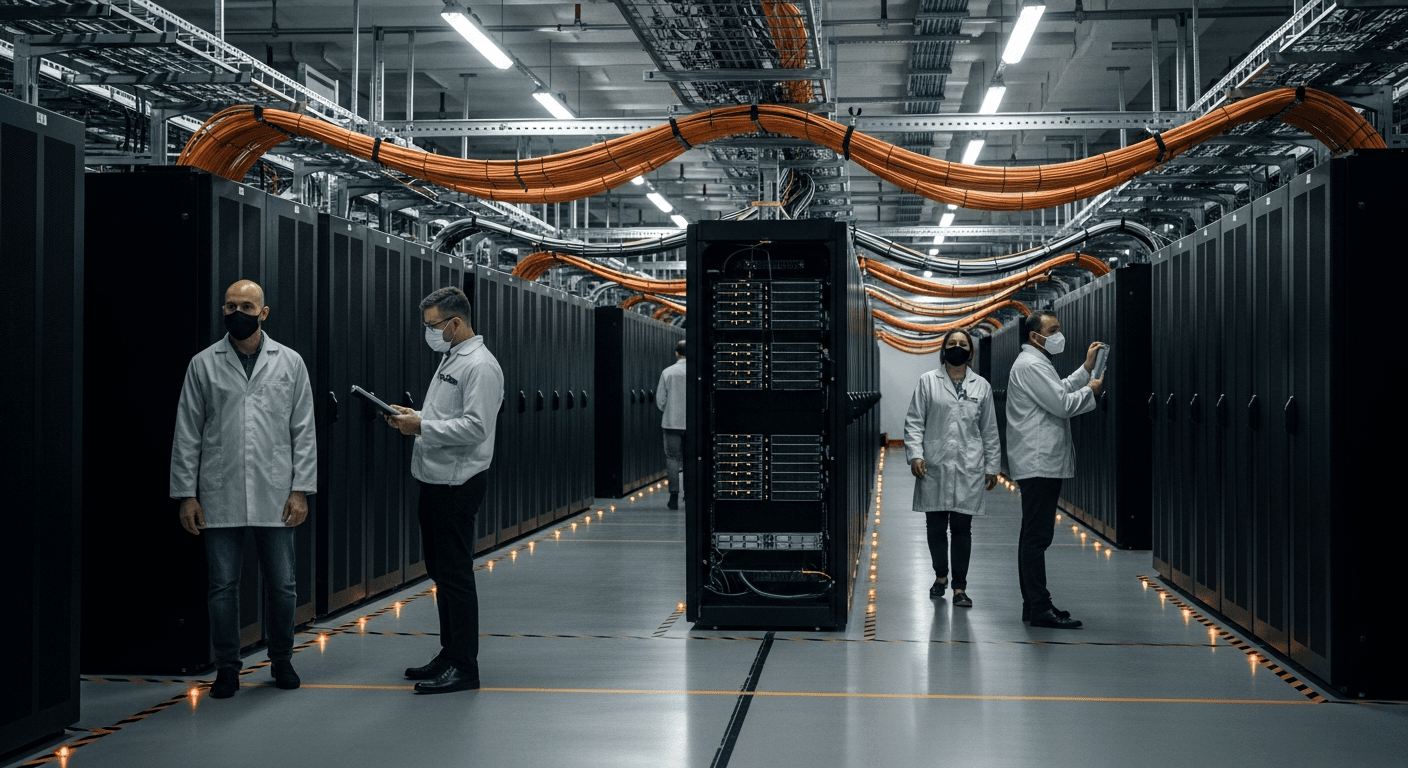
Nvidia is reportedly in talks to guarantee OpenAI's lease obligations on a proposed 10 GW Ohio campus, not just supply the chips, and that distinction matters.
Key takeaways
- Nvidia is in talks to act as financial guarantor for both OpenAI's lease and developer SB Energy's project financing on a proposed 10 GW Ohio data center campus that could cost $500 billion to build, first reported by The Information on June 9, 2026.
- The structure is circular: Nvidia guarantees OpenAI's ability to pay for Nvidia's own hardware, exposing a financing gap that conventional debt markets have not filled on their own.
- A 10 GW campus powered by 9.2 GW of new natural gas generation is a direct competitor for the dispatchable power supply Bitcoin miners have occupied, and the debt mechanics underwriting it rhyme with every fiat-financed bubble that came before.
Nvidia is in talks to serve as financial guarantor for OpenAI's lease obligations and developer SB Energy's project financing on a proposed 10-gigawatt data center campus on federal land in southern Ohio, according to The Information. The campus, to be built on the former Portsmouth Gaseous Diffusion Plant site in Pike County, could cost at least $500 billion at current prices for chips, labor, power, and construction. No final deal has been signed.
SB Energy, a SoftBank unit, would develop the facility. OpenAI would control computing equipment under a 20-year lease, with payments beginning once operations start. The first phase is expected online in 2028. The Department of Energy announced the public-private partnership to redevelop the Pike County site in March 2026, with AEP Ohio named as the utility partner. SB Energy has committed to building at least 9.2 GW of natural gas-powered generation to supply the campus.
A Chipmaker Becomes the Lender of Last Resort
Nvidia's role here goes well beyond selling GPUs. As guarantor, Nvidia is on the hook if OpenAI defaults on lease payments or if SB Energy cannot service its project financing. That is contingent balance-sheet liability, not a chip sale or an equity stake.
This is Nvidia's second attempt at a major financial commitment to OpenAI. In September 2025, the two companies announced a letter of intent for Nvidia to deploy 10 GW of systems and invest up to $100 billion in OpenAI. By February 2026, Jensen Huang was calling that deal "never a commitment." Nvidia ultimately invested in OpenAI's $122 billion funding round at an $852 billion valuation, but the equity slice was $30 billion, not $100 billion. The guarantee structure is the third iteration, and it is structurally different from either of the prior two: it is debt support, not equity.
The circularity is the tell. OpenAI CFO Sarah Friar has acknowledged that "most of the money will go back to Nvidia" in GPU purchases. Now Nvidia is guaranteeing OpenAI's capacity to make those very payments. That is vendor financing dressed as infrastructure investment. When a chipmaker must backstop its customer's debt to keep its own revenue flywheel turning, the demand for compute has outrun the supply of creditworthy buyers.
Separately, Apollo and Blackstone are financing a $35 billion AI capacity expansion for Anthropic using Broadcom chips, per Reuters. The pattern is the same: hardware suppliers and private credit filling gaps that traditional lenders will not.
What This Means for Energy and Sound Money
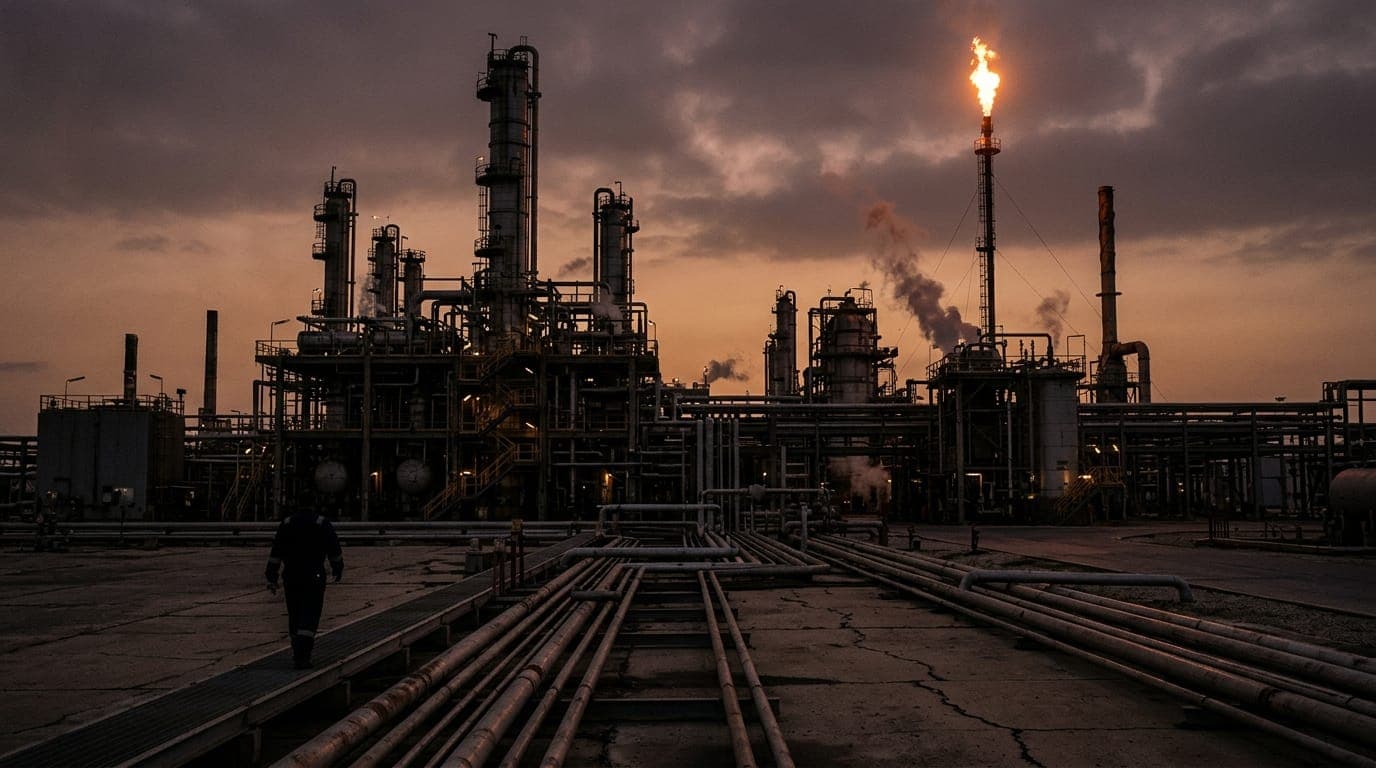
A 10 GW campus is not an abstraction. Ten gigawatts is roughly the peak electricity demand of New York City. Powered by 9.2 GW of new dedicated natural gas generation, this facility would represent one of the largest single power loads ever brought online in the United States. TFTC has covered the hard ceiling communities and regulators are already pushing back against AI buildout, and OpenAI's own separate 3.2 GW gas contract in Georgia shows this Ohio campus is part of a pattern, not an isolated bet.
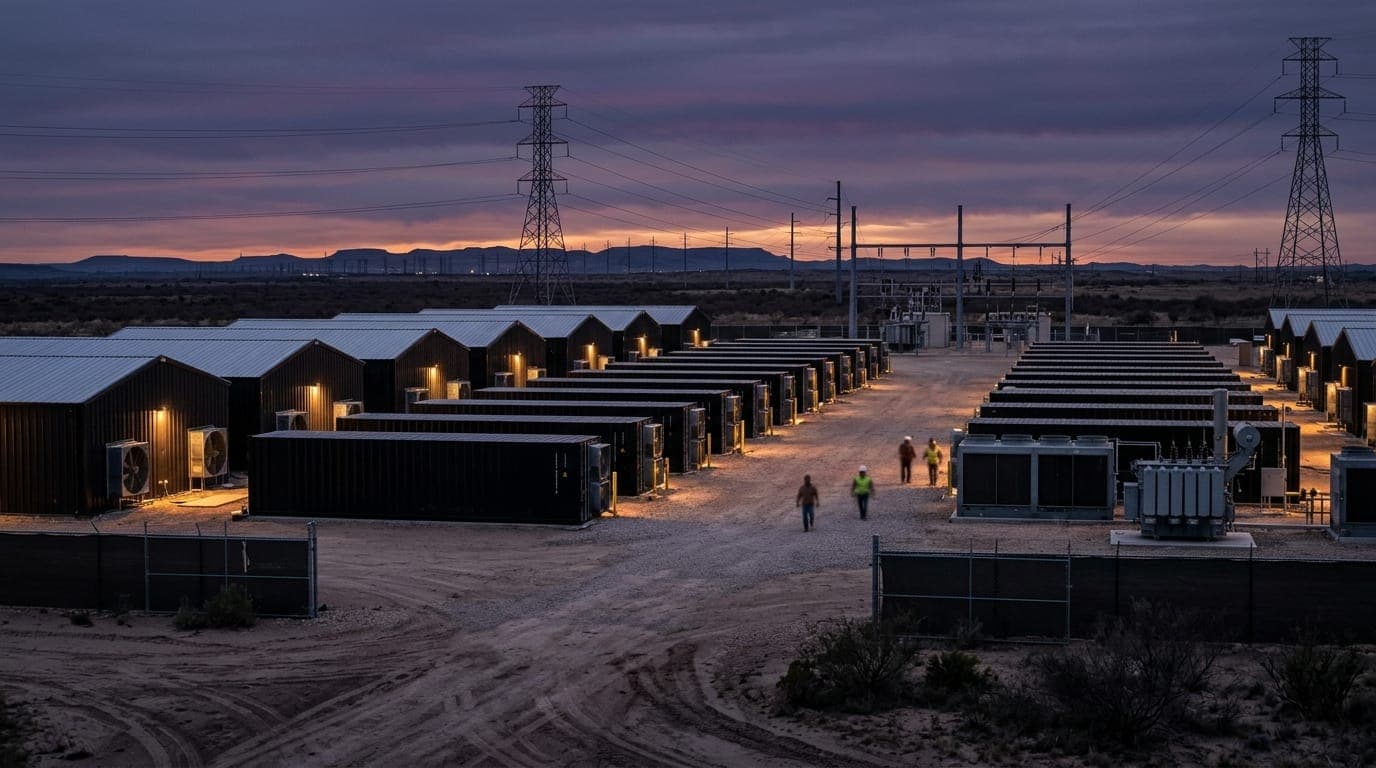
For Bitcoin miners, the implications are direct. Miners have spent years as the buyer of first resort for stranded, curtailable, or otherwise unmonetizable power. AI data centers locking up firm power contracts with Nvidia's balance sheet behind them are competing for the same dispatchable generation. The Pike County campus coming online in 2028 will not squeeze miners overnight, but it narrows the geography of cheap, reliable power and raises the floor on what "stranded" means.
The macro overlay is harder to ignore. The financing required for a single AI campus at this scale exceeds what conventional high-yield credit markets can absorb in any single issuance cycle. Numbers at that scale do not get funded through conventional credit markets.
They get funded through vendor backstops, sovereign guarantees, or they do not get funded at all. Every path that is not orderly private credit is, in some form, inflationary. Inflationary outcomes are constructive for hard assets.
What to Watch
The thesis breaks if Nvidia walks away from the guarantor role as cleanly as it walked back the $100 billion equity commitment, or if OpenAI secures conventional project financing from institutional lenders without needing Nvidia's backstop at all. A clean third-party debt raise on market terms would be evidence the economics are self-sustaining.
Until that happens, watch whether SB Energy can close construction financing independently and whether any public DOE loan guarantee appears behind this deal. If a federal backstop materializes, the circular structure gets bigger, not smaller. OpenAI and Nvidia did not respond to requests for comment on the guarantee arrangement.
Update, July 27, 2026
The Wall Street Journal reported July 26 that the guarantee structure is now split into two distinct instruments. The $250 billion backstop covers the data center lease and construction debt financing, but explicitly does not cover the Nvidia chips that would go inside the facility. Nvidia is separately discussing financing OpenAI's chip purchases for the project, a deal that could total as much as $350 billion. That brings Nvidia's total discussed financial exposure on a single customer campus to $600 billion.
A financing guarantee on the Ohio campus carries no ownership protection and no upside. Nvidia would not own the campus. Nvidia would not participate in any upside if OpenAI's revenues grow. Nvidia would sit as a contingent creditor: liable if OpenAI defaults, with no equity return if it doesn't.
OpenAI has yet to turn a profit and remains privately held, leaving it without an investment-grade credit rating. Nvidia's involvement would let the data center developer borrow on stronger terms than OpenAI's standing alone would support.
A $250 billion guarantee works out at roughly 71 times the guarantee book Nvidia has already disclosed, more than a year of revenue, and about four times its cash. The site also has a new political dimension: OpenAI has spent several weeks in advanced discussions over the lease and ranks among the most interested parties, but Anthropic, Microsoft, and Google have each approached Commerce Secretary Howard Lutnick about the site recently. Power allocation at a federal site is now a government-controlled variable in the largest private financing arrangement ever discussed.
Update, August 14, 2026
The guarantee is getting smaller and closer to done at the same time. The Wall Street Journal reported that Nvidia had cut its proposed financial backstop from $250 billion to less than $120 billion in response to direct shareholder pressure over the scale of the contingent liability. That reduction of more than half in under three weeks was the market speaking plainly. Now The Information reports that Nvidia is close to an agreement to provide around $100 billion in credit support for OpenAI to lease the Ohio campus, citing four people with knowledge of the talks, which puts a near-final number on what had been a moving target.
The compression from $250 billion to roughly $100 billion does not solve the structural problem; it just redraws the lines of who fills the gap. The original $250 billion figure was already an admission that conventional lenders would not extend credit to OpenAI on its own name. A $100 billion guarantee still dwarfs the roughly $3.5 billion in partner facility lease guarantees Nvidia had disclosed on its most recent 10-Q, meaning this would be a step-change in contingent liability even at the reduced figure. The chip financing tranche, reported separately at up to $350 billion, remains its own open question.
For the Pike County campus and the 2028 Phase 1 timeline, a near-deal at $100 billion is more actionable than an aspirational $250 billion that shareholders were never going to accept. But it also means the total backstop now covers a smaller share of a project whose full build cost was always quoted north of $500 billion. Either additional guarantors step in behind Nvidia, the project phases back further, or lenders price the remaining gap into the debt terms themselves.
For Bitcoin miners watching the power competition, the picture is less certain than the original headlines implied. The boundless-capex assumption that AI would sweep up all available dispatchable generation was always contingent on financing actually closing at scale. A $100 billion guarantee getting Nvidia to near-deal is real progress, but it is roughly 40 cents on the dollar relative to the $250 billion figure that drove the most alarming projections. The 9.2 GW of dedicated natural gas generation planned for the site remains the hinge point, and how much of that gets built, and when, now depends on a capital stack that is still being assembled.
Update, August 15, 2026
The Wall Street Journal reported Friday that a deal between Nvidia and OpenAI on the Ohio campus guarantee could be signed as early as this weekend, with Nvidia providing a financial backstop covering only the first phase of the project. That timing detail is new, but the dollar figure and the shareholder-pressure rationale were already established.
What reframes the whole picture is what Nvidia did five days before the WSJ story dropped. On August 10, Nvidia announced MOUs with Apollo, BlackRock, Blackstone, Brookfield, Goldman Sachs, and KKR to establish independent compute financing platforms targeting over $500 billion in third-party capital for AI infrastructure buildout. Jensen Huang separately stated that Nvidia retains the option to backstop up to $125 billion, or 25%, of potential deals across those platforms. Read together, Nvidia is not simply cutting its Ohio exposure because shareholders complained. It is restructuring who holds the contingent liability, handing the guarantee function to institutional capital pools while keeping a defined slice for itself.
That is the tell. The compression of the Ohio guarantee from $250 billion to roughly $100 billion and the simultaneous construction of a $500 billion third-party financing apparatus are the same move. Nvidia recognized it cannot be the lender of last resort for the entire AI capex stack on its own balance sheet, so it is building the market infrastructure to distribute that role across Wall Street. Whether Apollo, BlackRock, and KKR have better insight into OpenAI's creditworthiness than Nvidia does is a question worth sitting with. The MOUs are not final agreements, the Ohio deal is not signed, and the 9.2 GW of dedicated natural gas generation at Pike County still depends on a capital stack that is being assembled in real time across multiple institutions and instruments simultaneously.
Update, August 17, 2026
One new wrinkle emerged over the weekend alongside the near-deal headlines. The Information reported that Nvidia is in separate talks to invest as much as $3 billion directly in SB Energy, the SoftBank subsidiary developing the Pike County campus. That is equity exposure in the developer itself, not just contingent liability on a lease. Nvidia has discussed investing half of the $3 billion when the Ohio project deal is signed and the other half as part of SB Energy's planned initial public offering.
SB Energy is aiming to go public as soon as next month and could raise at least $5 billion in the IPO. That timing matters because it means Nvidia's second tranche of the developer equity bet is tied to a public market event, not just a deal closing. If the IPO slips or prices poorly, the structure changes again.
The SB Energy equity talks reframe what Nvidia is actually building here. The credit guarantee covers Nvidia's exposure if OpenAI cannot pay. An equity stake in the developer gives Nvidia a seat in the project's capital structure on a different basis entirely, with ownership exposure if the campus underperforms and upside if it does not. That is a more complex position than a straight guarantee, and it is one more layer on a capital stack that, as of this weekend, still had no signed agreement attached to it.
Sources
Frequently Asked Questions
What does it mean for Nvidia to "guarantee" OpenAI's lease?
A lease guarantee means that if OpenAI cannot make its payment obligations under the 20-year lease, Nvidia is contractually obligated to cover them. It is contingent liability sitting on Nvidia's balance sheet. Unlike an equity investment, where the downside is limited to the amount invested, a guarantee can require the guarantor to fund the full outstanding obligation if the primary party defaults. At Nvidia's current scale the absolute dollar exposure may be manageable, but the precedent matters: chipmakers are being asked to function as infrastructure banks.
How does this Ohio campus relate to the Stargate project announced in early 2025?
Stargate was a $500 billion joint venture announced in January 2025 with Oracle, SoftBank, and OpenAI that made "little progress," per The Information. The Ohio campus repositions SoftBank's involvement through its SB Energy subsidiary and substitutes Nvidia as the key financial principal in place of Oracle. The site, the former Portsmouth Gaseous Diffusion Plant, is DOE-owned land, which is what made the March 2026 public-private partnership announcement possible.
What happens if OpenAI cannot cover lease payments when the first phase goes live in 2028?
If OpenAI's revenue does not scale fast enough to service the lease, the guarantee triggers and Nvidia absorbs the shortfall. That scenario would put a chipmaker in the position of owning or operating stranded AI infrastructure it built its own revenue model around. The incentive to avoid that outcome is strong, which is partly why the circular structure persists: unwinding it is more painful than extending it.