OFAC Sanctions 36 Iranian Aviation Targets Under Operation Economic Outcast
Treasury's OFAC sanctioned 36 targets on September 8-27 Iranian airlines plus foreign intermediaries in Turkey, Malaysia, and Kazakhstan, completing the U.S. campaign to blacklist every active Iranian carrier. Mahan Air is adding routes anyway.
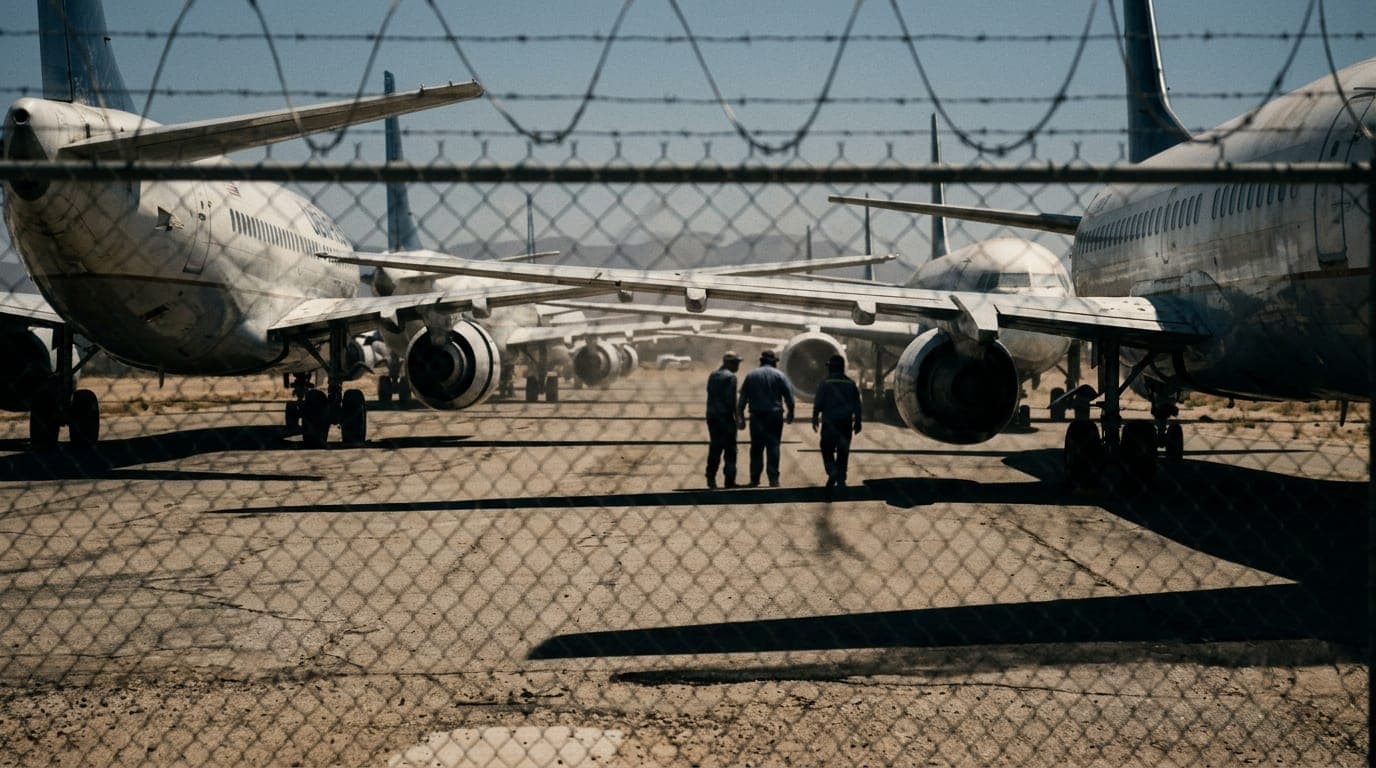
Treasury's aviation crackdown is complete on paper. Iran's flagship carrier is still flying, and growing.
Key takeaways
- The U.S. Treasury's OFAC designated 36 targets on September 8-27 Iranian airlines plus 9 foreign entities in Turkey, Malaysia, and Kazakhstan, completing Operation Economic Outcast's blacklist of every active Iranian commercial carrier.
- Treasury Secretary Bessent warned any business partner of Iran's airlines they risk being "cut off from the global financial system," while simultaneously FinCEN issued an alert to U.S. financial institutions to flag Iranian aviation procurement networks.
- Mahan Air, first sanctioned in 2011 and the flagship target of the entire campaign, is defying the pressure: per WSJ reporting, it is adding new passenger and cargo destinations even as it operates aging, secondhand aircraft with cash-only ticketing.
The U.S. Treasury's Office of Foreign Assets Control sanctioned 36 entities and individuals on September 8, 2026, completing what the administration has called Operation Economic Outcast: a campaign to deny Iran's government the ability to move "weapons, personnel, and illicit cargo" through its commercial aviation sector. The action designates 27 Iranian air carriers, including Ava Airlines, Fly Persia, and Mehr Airways, plus nine non-airline entities under Executive Order 13902's aviation sector determination.
The State Department confirmed the action simultaneously. FinCEN issued a parallel alert to U.S. financial institutions, directing them to report any procurement networks supporting Iran's aviation industry.
The Sanctions Architecture
Secondary sanctions landed on top of the direct airline designations. Treasury sanctioned Turkey-based firms that coordinated shipments, including drone components and industrial equipment, on behalf of Mahan Air, as well as a Turkey-based general sales agent for the carrier. Additional sanctioned entities with Mahan ties are based in Malaysia and Kazakhstan.
Three Boeing 777 aircraft were cited as procured through UAE and Turkey-based front companies. Three aviation authorizations, covering overflight permissions and non-U.S. carriers using U.S.-origin aircraft in Iran, were also suspended.
Bessent's warning, pulled directly from the OFAC release, was blunt: "Let this be a warning to anyone doing business with Iran's remaining airlines, all of which we sanctioned today: You are at risk of being cut off from the global financial system."
The operation launched August 24, 2026, when Bessent framed the broader campaign as "economic asphyxiation of this regime." September 8 is the aviation-specific escalation.
Iranian Foreign Minister Abbas Araghchi's response on X was dismissive:
"After failing to achieve its aims through sanctions or war, Washington's 'novel' solution is…more sanctions. Seriously?" Araghchi wrote. In the same post, he framed the pressure as the latest chapter in what he called 47 years of U.S. sanctions on Iran dating to 1979, his characterization, not a neutral accounting.
The Vice Isn't Closing
The blunt fact that undercuts Bessent's confidence: Mahan Air, first sanctioned in 2011 and carrying a counterterrorism designation tied to IRGC links, is not shrinking. Per WSJ reporting, it has been adding new passenger and cargo destinations through the war period. Its fleet runs on aging, secondhand Boeing and Airbus aircraft, some in service for as long as 35 years, with no onboard entertainment and cash-only ticketing. Mahan Air has already adapted to dollar-system exclusion and is routing around it.
This is the compounding problem with financial sanctions as a primary instrument. Every entity named in the September 8 action, Turkey, Malaysia, Kazakhstan, is being told: transact with Iran and lose dollar access. That threat carries real force.
But the mounting evidence is that affected parties are building bilateral settlement rails rather than abandoning Tehran. Treasury's own sanctions against IRGC-linked crypto networks have demonstrated the same dynamic: cut off one channel and the next one opens faster.
The DeepSeek/Huawei situation is structurally identical: U.S. export controls accelerated Chinese chip self-sufficiency. Dollar-rail exclusion is doing the same for Iranian and allied-state settlement infrastructure.
Iran's central bank has already eased foreign-exchange controls to allow USDT and Bitcoin trade settlement through domestic crypto exchanges. That didn't happen despite sanctions. It happened because of them. Every secondary designation landing on a Turkish or Kazakh intermediary is a sales pitch for neutral, apolitical settlement that the dollar system cannot censor.
Analyst Esfandyar Batmanghelidj argued on September 8 that U.S. officials are being too triumphant: in his view, Iran's leaders are using the inflation imposed by sanctions as a financial repression tool, transferring real wealth to the state even as the population bears the cost. If that analysis holds, the sanctions are strengthening the Iranian state's fiscal grip, not loosening it. That's a second-order most of the coverage skips entirely.
What to Watch
The falsifiable question is whether Iran and its trading partners meaningfully capitulate in the next 90 days: reduced oil export volumes (tracked via Kpler or Vortexa secondary data), Mahan Air route contractions, or cuts to bilateral settlement infrastructure. If none of those materialize, the thesis that dollar-rail weaponization accelerates alternative financial architecture rather than forcing submission gets stronger. Watch for any Q4 2026 BRICS payment-rail announcements and Iran's reported export volumes through year-end.
Sources
Frequently Asked Questions
What is Operation Economic Outcast and how does it differ from earlier Iran sanctions?
Operation Economic Outcast launched August 24, 2026, as a multi-sector maximum pressure campaign. The aviation sector determination under E.O. 13902 gave OFAC authority to sanction entire industries rather than individual bad actors. The September 8 action is the culmination of that aviation track: every active Iranian commercial carrier is now on the SDN list.
Prior actions targeted specific entities like Mahan Air (2011) or IRGC-linked financial networks. This action sweeps up every remaining carrier in one designation.
How can Iranian airlines keep flying despite comprehensive U.S. sanctions?
Mahan and others have adapted over years of exclusion. Aircraft are acquired through front companies in jurisdictions with looser oversight. Tickets are sold in cash, bypassing international card networks. Bilateral credit arrangements with non-dollar trading partners replace SWIFT-based settlement.
The result is a carrier that is degraded, aging fleet, no amenities, cash only, but still operational and, per WSJ reporting, still expanding routes.
Why do U.S. aviation sanctions on Iran matter for Bitcoin?
The nations and intermediaries being coerced off dollar rails need a neutral settlement layer. Bitcoin's fixed supply, permissionless settlement, and censorship-resistant properties are exactly what that demand eventually reaches for. Iran's central bank has already eased controls to allow Bitcoin and USDT as trade settlement channels. Each round of secondary sanctions widens the constituency for sovereign alternatives to SWIFT and the dollar system.