House Panel Advances Six Nuclear Bills With Zero Opposing Votes
The House Energy and Commerce Committee advanced six nuclear regulatory reform bills on September 2 with a combined zero 'no' votes across all six roll calls, targeting licensing friction, domestic uranium enrichment, and NRC staffing.
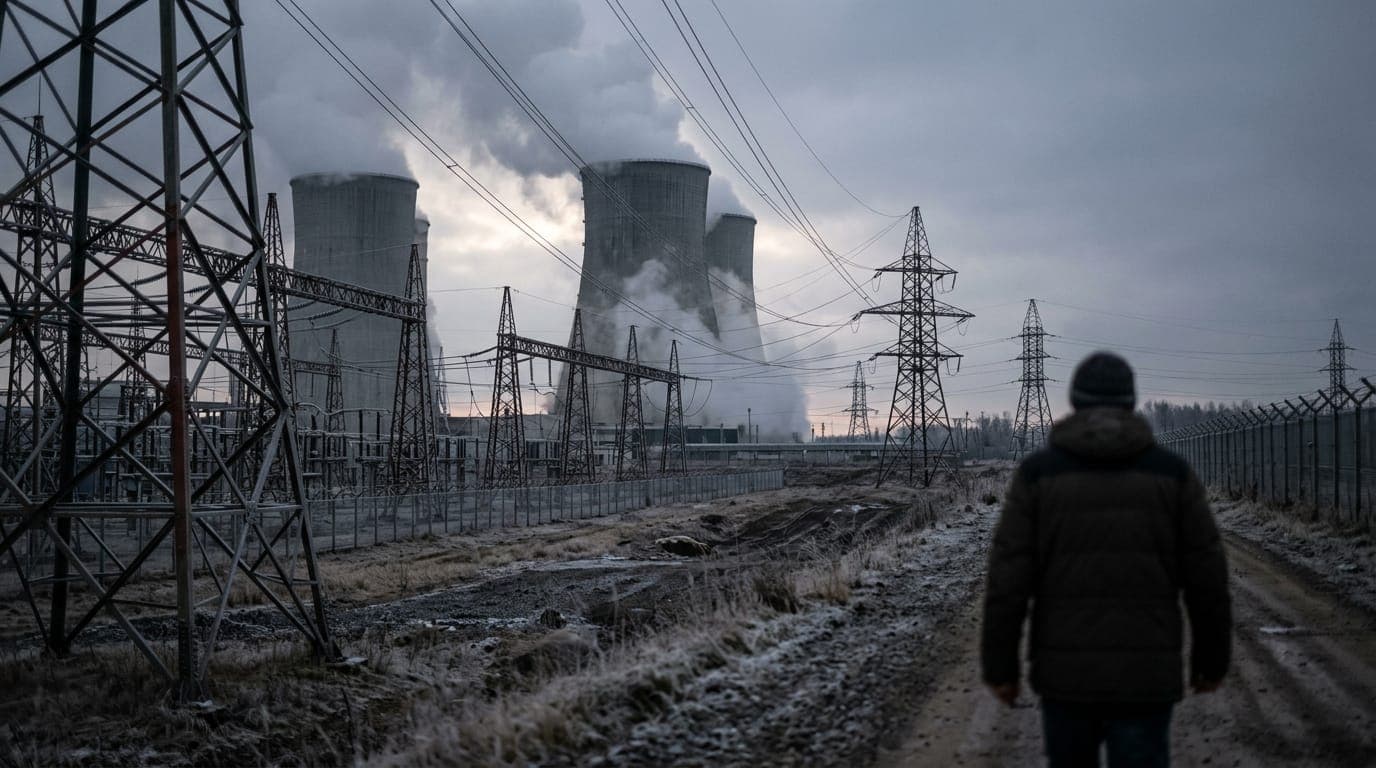
Six regulatory reform measures targeting licensing delays, uranium enrichment, and NRC staffing cleared committee without a single dissent.
Key takeaways
- The House Energy and Commerce Committee passed six nuclear industry bills on September 2, 2026, with combined zero "no" votes across roll calls ranging from 41-0 to 44-0, per the official E&C press release.
- The bills attack the two structural barriers that have kept nuclear permitting slow for decades: licensing friction and domestic fuel-supply choke points, building on the 2024 ADVANCE Act.
- Senate passage and NRC rulemaking remain the gates before any of this translates into faster construction starts or additional dispatchable megawatts on the grid.
The House Energy and Commerce Committee advanced six nuclear regulatory reform bills on September 2, 2026, with not a single recorded "no" vote across any of the six roll calls, according to the committee. The margin is notable: unanimous passage out of a committee that includes members who raised pointed concerns at the subcommittee stage in July.
What the Six Bills Actually Do
The bills divide cleanly into three problem sets. Fuel supply: H.R. 3978 (Nuclear REFUEL Act, 44-0) streamlines licensing for spent-fuel recycling facilities that don't isolate plutonium, letting qualifying projects use a single-step fuel-cycle route instead of separate construction and operating approvals. H.R. 9612 (American Enrichment Deployment Act, 43-0) aligns enrichment facility licensing with other fuel-cycle facilities and allows developers to break ground at their own financial risk before NRC license issuance, with NRC approval still required.
Licensing speed: H.R. 5549 (Efficient Nuclear Licensing Hearings Act, 44-0) eliminates mandatory NRC hearings when no affected party requests one. Public participation rights stay intact; the change removes the bureaucratic formality of holding a hearing that nobody asked for. H.R. 9613 (Nuclear Advisory Committee Reform Act, 41-0) refocuses the NRC's Advisory Committee on Reactor Safeguards on novel and significant safety issues, updating membership and term rules to reduce repetitive reviews.
Regulatory capacity: H.R. 9614 (NRC Staff Pay Alignment Act, 42-0) lets the NRC chairman pay career senior executives up to 110% of the applicable Senior Executive Service pay ceiling, giving the agency room to compete for experienced nuclear engineers, per the bill text. H.R. 9084 (DOE Nuclear Transparency Act, 41-0) requires DOE to announce covered nuclear facility authorizations and publish safety analyses within 24 hours, per the bill text.
Rep. Brett Guthrie (R-KY), E&C Committee Chairman, put the stakes plainly: "Success for the nuclear industry will be essential for long term American technological leadership globally and for reliable and abundant energy here at home." Ranking Member Frank Pallone (D-NJ) and Rep. Alexandria Ocasio-Cortez raised safety concerns about the advisory committee overhaul at the July subcommittee stage. Those concerns did not produce a single recorded "no" vote at full committee markup.
The shift in public opinion tracks the legislative momentum. A Gallup poll conducted March 2-18, 2026 found nuclear "more emphasis" support at 46%, up 7 points since 2021 and the highest level recorded in the series. Nuclear was the only one of six energy sources tested whose support increased over that period.
The Binding Constraint for Baseload Power Buyers
None of the six bills name Bitcoin mining or datacenters. The connection is second-order, and it's real.
Energy is the binding constraint on Bitcoin's hash rate growth. Every serious mining operation lives and dies by its power purchase agreement and the cost per megawatt-hour. Nuclear runs at capacity factors above 90% regardless of weather, season, or time of day. That load profile is exactly what industrial Bitcoin mining demands. Wind and solar are intermittent; gas carries fuel-price and political exposure; hydro is geographically locked.
The AI datacenter buildout is competing for the same pool of dispatchable electrons. Hyperscalers have already signed nuclear power purchase agreement letters of intent (the Three Mile Island restart being the headline case). Faster permitting expands total supply. More supply eases the bidding war between AI capex and mining operations over always-on baseload.
The fuel-supply angle deserves more attention than it typically gets. The REFUEL Act and the American Enrichment Deployment Act target the domestic fuel cycle directly, and the U.S. currently relies heavily on foreign enrichment capacity after Russian supply was cut. A domestic enrichment ramp is a supply-chain resilience story for the entire nuclear build-out. The uranium market has already been pricing in structural tightening.
The quietly most consequential near-term bill may be the pay alignment measure. The regulatory backlog at NRC isn't purely a rules problem, it's a reviewer throughput problem. Experienced nuclear engineers are expensive. Private-sector salaries for that expertise have outpaced what NRC can offer. The pay alignment bill gives the agency room to retain the reviewers who actually process license applications. Faster reviewer capacity means faster license issuance, which is the step before faster construction starts.
What Has to Happen Next
Committee passage sends the bills to the full House floor. If the House passes them, they go to the Senate, where the Energy and Natural Resources Committee weighs in before any floor vote. Bipartisan House momentum does not guarantee Senate speed, and Senate floor time is contested.
Even after enactment, the thesis depends on NRC rulemaking. The agency has discretion in how it implements updated statutes, and bureaucratic inertia has a long track record of absorbing legislative intent without accelerating timelines. The operational unlock, measured in actual construction starts and megawatts coming online faster, doesn't happen at the committee vote. It happens when projects actually break ground under a materially faster licensing process.
The signal from September 2 is real. Unanimous, bipartisan passage of six reform bills, including measures that drew pointed objections just weeks earlier, reflects a genuine political consensus that nuclear permitting reform is overdue. Whether that consensus survives the Senate and translates into NRC operational change is what to watch.
Update, September 22, 2026
The NEI's 2026 Future of Nuclear Power survey puts hard numbers behind the legislative momentum the six bills are meant to unlock. The survey captured American nuclear energy ambitions across 21 utility companies covering 95 commercial reactors, with owners planning new capacity specifically to meet AI-driven electricity demand, alongside increased domestic manufacturing and electrification load.
More than 97% of the units surveyed are considering or pursuing approval to operate for at least 80 years, with some owners now planning for operations out to 100 years from initial construction. On the new-build side, the 21 surveyed companies identified planning for 23.4 GWe in new nuclear generation over the next 15 years, a 50% increase over the 2024 survey.
That 23.4 GW pipeline sits upstream of every power buyer chasing firm, around-the-clock electrons. AI hyperscalers and Bitcoin miners are competing for the same dispatchable capacity. The regulatory gates the six House bills target, licensing friction and fuel-supply bottlenecks, are the exact chokepoints standing between that planned capacity and electrons on the wire.
Sources
- House Energy and Commerce Committee press release, September 2, 2026
- E&C Energy Subcommittee markup page, July 2026
- H.R. 9612, American Enrichment Deployment Act, bill text (Congress.gov)
- H.R. 9614, NRC Staff Pay Alignment Act, bill text (docs.house.gov)
- H.R. 9084, Department of Energy Nuclear Transparency Act, bill text (govinfo.gov)
- Gallup, "Less Support for Solar, Wind Energy; Nuclear," April 2026
Frequently Asked Questions
What does the Nuclear REFUEL Act do for spent nuclear fuel?
H.R. 3978 lets facilities that reprocess spent fuel without isolating plutonium use the faster single-step fuel-cycle licensing route, rather than requiring a separate construction permit and a separate operating license. The result is a clearer domestic pathway to extract more energy from material that would otherwise sit in storage.
Do these bills change anything for Bitcoin miners specifically?
Not directly. None of the six bills reference mining or datacenters. The connection is that miners and AI datacenters both require dispatchable 24/7 baseload power. Nuclear is the only weather-independent, high-capacity-factor option that fits that profile at scale. Faster permitting and a stronger domestic fuel supply expands the pool of nuclear electrons available to industrial power buyers over the next decade.
What still has to happen before these bills become law?
Full House floor passage comes first. From there, the bills go to the Senate, where the Energy and Natural Resources Committee would need to advance them before a floor vote. Senate scheduling and potential amendments are the next gate. Committee passage is necessary, not sufficient.