SpaceX Can't Source Nvidia, Google, or Amazon Chips Despite Billions in Capital
Elon Musk disclosed on SpaceX's Q3 2026 earnings call that the company could not source Nvidia GB300/GB200/H100 GPUs, Google TPUs, or Amazon Trainium chips when attempting to offload inference workloads. Musk said the shortage will persist for years.
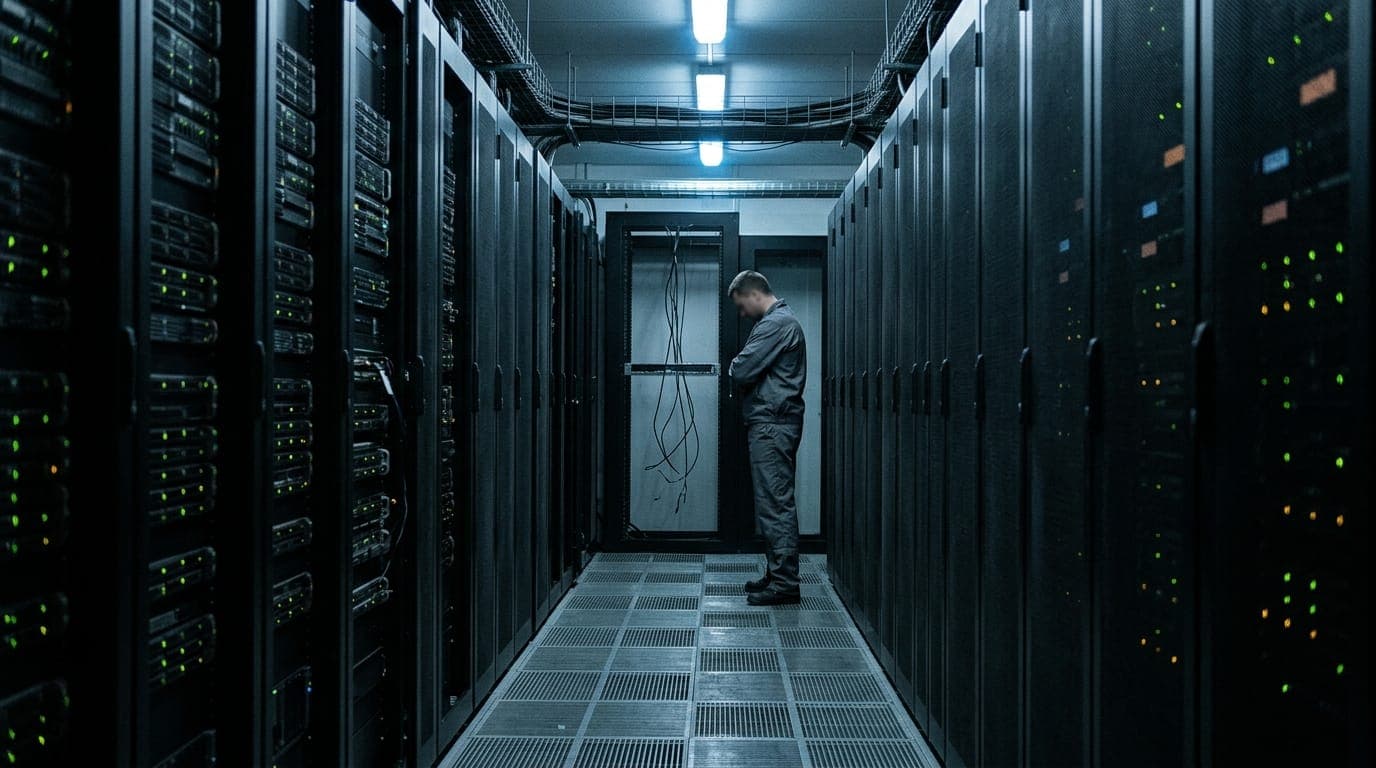
Capital is no longer the binding constraint on AI infrastructure. Chip supply is.
Key takeaways
- Elon Musk disclosed on SpaceX's Q3 2026 earnings call that the company could not find available Nvidia GB300, GB200, or H100 GPUs, Google TPUs, or Amazon Trainium chips when attempting to offload inference workloads to third-party providers.
- Musk expects the superintelligence compute shortage to persist for years, with short-term contracts already repricing higher, and said SpaceX "could rent out our compute several times over" given demand from hyperscalers and dozens of smaller companies.
- For Bitcoin miners competing for the same grid capacity, this confirms the AI-versus-energy collision thesis: a multi-year chip and power scramble by the world's best-capitalized players will tighten energy markets and raise opportunity costs for every operator drawing from the same electrons.
SpaceX reported Q3 2026 revenue of $14.58 billion, beating analyst estimates of $12.74 billion, on Q3 capex of $19.6 billion driven primarily by AI and superintelligence computing infrastructure. Buried inside those numbers is a supply-chain disclosure that reframes the entire AI capex debate: the company tried to offload inference workloads to third-party cloud providers to free capacity for training runs, and found nothing available across any major chip architecture.
Elon Musk made the disclosure on the Q3 2026 earnings call on October 20, 2026. The specific chip families SpaceX could not source: Nvidia GB300, GB200, and H100 GPUs; Google TPUs; and Amazon Trainium. Musk also confirmed that SpaceX's short-term compute contracts are renewing at higher prices, and that demand from potential compute renters is overwhelming supply.
The Quote That Changes the Framing
Musk put the demand picture plainly on the call:
"We are also frankly hounded relentlessly by every hyperscaler and by dozens of smaller companies to rent more of our compute. So we could rent out our compute several times over if we said yes to everyone."
On the question of returns, he floated a scenario without committing to it:
"It's not impossible, I'm not saying this will happen, it's not impossible that we will have a six month payback period for compute next year."
Shay Boloor, Chief Market Strategist at Futurum Equities, posted on X (@StockSavvyShay) that the disclosure was "pretty insane coming from one of world's largest AI infrastructure builders because the shortage extends across nearly every major chip architecture," and that "if SpaceX can't find spare capacity despite its scale and willingness to pay then it's getting much harder to argue we're already in a broad AI compute glut."
That last point deserves attention. The compute-glut narrative has been circulating for months. SpaceX's experience across five separate chip architectures is direct evidence against it.
The capital-availability angle reinforces this. SpaceX is seeking roughly $40 billion in financing, reportedly Apollo-led, combining bank loans and investment-grade debt, specifically to buy Nvidia chips. SpaceX's own S-1 SEC filing from May 20, 2026 disclosed chip supply as a formal risk factor, noting the company needs "significantly more than are currently available" and procures all GPUs on a purchase-order basis with no long-term supplier contracts. The company has billions to spend and no queue position to spend it from.
What the Energy Grid Absorbs Next
Every GPU cluster is a multi-megawatt power draw. Musk's "years" timeline on the shortage is an energy story, not just a chip story.
SpaceX's disclosure that compute contracts are repricing upward is a leading indicator for grid stress. AI capex hit cash-flow negative across hyperscalers in 2026, meaning the buildout is consuming capital faster than it generates returns, and the players building anyway are the ones with the deepest pockets and longest time horizons.
As data center construction accelerates and consumes power contracts across Texas, the Southeast, and the Mountain West, Bitcoin miners will face tighter energy markets and higher power prices. The AI Energy Management Alliance formation earlier this year was a direct acknowledgment that the grid cannot absorb this buildout without active management. It has not solved the underlying demand pressure.
SpaceX, with Elon Musk's supplier relationships and billions of committed capital, cannot source compute on demand from a three-vendor oligopoly. Concentrating critical compute infrastructure inside Nvidia, Google, and Amazon architectures with no long-term contract protection produces exactly that outcome. Bitcoin mining, by contrast, can operate on stranded gas, curtailed wind, or any marginal energy source using commodity hardware. The comparison is not abstract: it reflects genuinely different capital-allocation structures under conditions of infrastructure scarcity.
What to Watch
The falsifiable version of this thesis: if GPU spot-market pricing falls materially in the next two quarters and lead times compress below 90 days, it indicates speculative hoarding rather than structural scarcity, and the "years" timeline weakens. Likewise, if SpaceX publicly confirms it successfully offloaded inference workloads to a third-party provider at scale, the supply-constraint framing softens. Track TSMC CoWoS packaging capacity and HBM memory allocation as the earliest-moving indicators. Watch whether SpaceX's $40 billion financing round closes on the reported terms, and whether it translates into confirmed chip deliveries or sits in a queue.
Sources
Frequently Asked Questions
Why can't SpaceX simply buy more chips directly from Nvidia given its capital position?
SpaceX's S-1 disclosed it purchases all GPUs on a purchase-order basis with no long-term supply contracts, leaving it exposed to allocation queues. Nvidia holds forward supply commitments with its largest customers. Capital is not the bottleneck. Queue position and TSMC manufacturing capacity are. SpaceX is attempting to solve this through the reported $40 billion financing raise, but financing does not accelerate wafer starts.
Does SpaceX's experience disprove the AI compute glut narrative?
Boloor's argument is that a company of SpaceX's scale and capital failing to source across five separate chip architectures (Nvidia GB300, GB200, H100, Google TPUs, and Amazon Trainium simultaneously) makes a broad surplus very difficult to defend. A glut would show up as available spot capacity and flat or falling contract prices. SpaceX is seeing the opposite: no available capacity and contracts repricing upward.
What does a multi-year chip shortage mean for Bitcoin miners on the same power grid?
Data centers drawing power in key mining regions increase baseload demand and can displace miners on energy contracts, particularly during peak AI training runs. If the shortage persists for years as Musk expects, AI infrastructure buildout will continue consuming power contracts in Texas, Wyoming, and Tennessee at a pace that raises the marginal cost of power for every operator competing for the same electrons. Miners with long-term fixed-rate power agreements are insulated. Those on floating-rate or short-duration contracts face direct repricing pressure.