768 GW of AI Data Center Power Demand Is Fiction
Wood Mackenzie projects US grid operators will commit to just 28% of the 1,066 GW in data center power requests on file, leaving an estimated 768 GW of 'phantom load' that will never draw a watt from the grid.
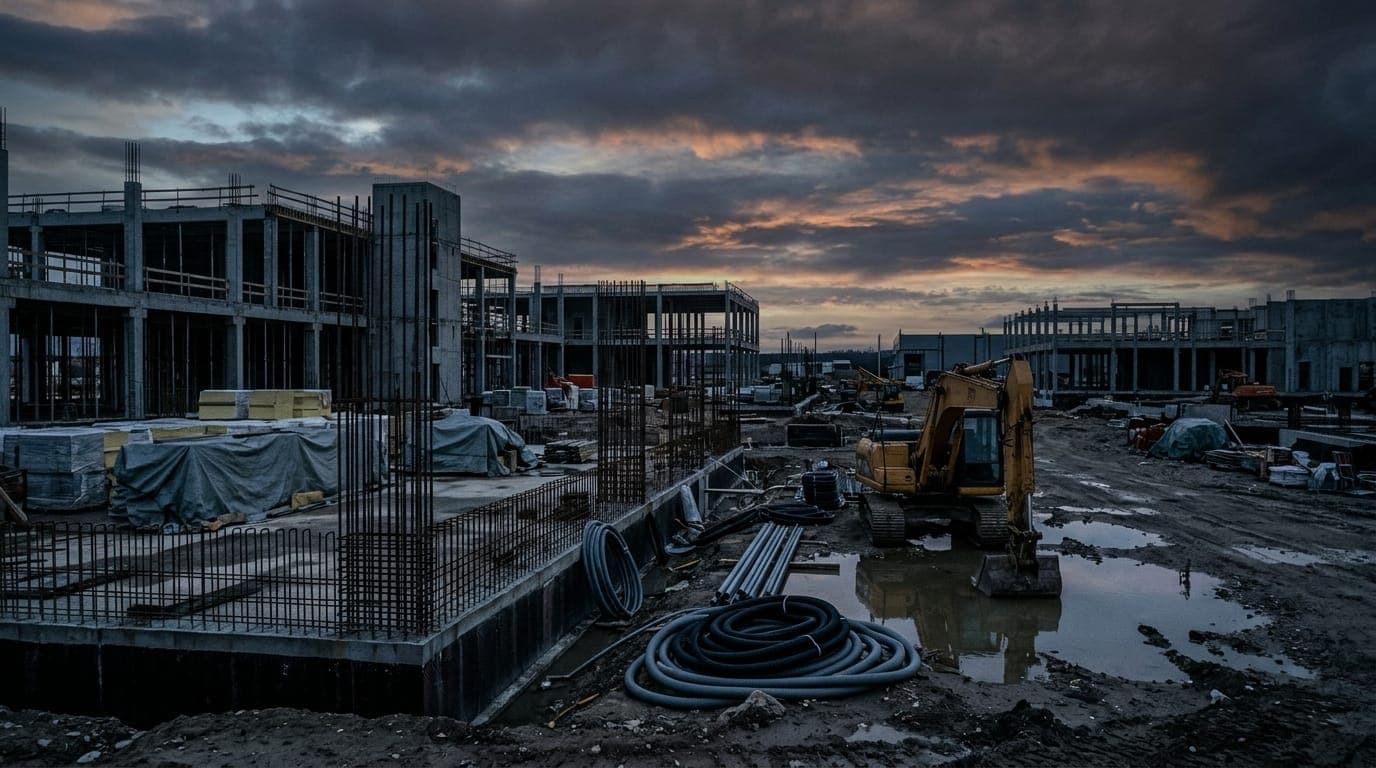
Wood Mackenzie projects US grid operators will honor just 28% of requests, exposing "bragawatts" as the capex cycle's defining accounting fiction.
Key takeaways
- Wood Mackenzie's Q2 2026 pipeline analysis finds 1,066 GW of data center power has been requested from US grid operators; only roughly 298 GW has a realistic path to construction.
- Developers inflated interconnection queues by submitting the same speculative projects to multiple utilities simultaneously, a practice now called "bragawatts," with no meaningful upfront financial obligation required.
- The 768 GW gap between requested and deliverable power punctures the AI-capex-as-productivity-miracle narrative underpinning late-cycle credit underwriting across data center REITs, infrastructure bonds, and hyperscaler equity.
US grid operators are sitting on 1,066 GW of power connection requests from data center developers, and Wood Mackenzie projects they will commit to roughly 28% of it, approximately 298 GW, per the firm's Q2 2026 US Data Center Pipeline report. The remaining 768 GW is phantom load: speculative, duplicative bids that will never draw a watt, first reported by Bloomberg on August 12, 2026.
The mechanism is straightforward. Developers submit the same project to multiple utilities simultaneously while shopping for the best interconnection terms. Each submission registers as a real demand signal in the queue. None required meaningful upfront financial commitment to file.
Wood Mackenzie's own breakdown shows roughly 12% of projects have secured firm service commitments, with a further 17% likely to proceed. That is where the 28% figure comes from. Everything else is paper.
Glenn Schwartz, Director of Energy Policy at Rapidan Energy Group, independently estimates only 20 to 30% of power being sought will go toward projects that actually get built. His characterization of the problem is precise: "Grid operators don't know which ones are real and which ones aren't."
The Anatomy of a Queue Bubble
The industry term for this phenomenon is "bragawatts," announced megawatts that carry no real obligation to build. ERCOT alone is tracking 474 GW of connection requests against a grid that has seen record peak demand well into the tens of gigawatts, more than five times over. Ian Nieboer, managing director and head of energy transition research at Enverus, put it plainly: "You see these massive gigawatt-scale data centre announcements, but many of them will never get built. The reality is, we'll end up with a fraction of what's being proposed."
The construction data backs that up. Sightline Climate's April 2026 outlook reported that only a fraction of announced US data center capacity for 2026 was under active construction, with the bulk sitting in "announced" status despite typical build times of 12 to 18 months, and projected that a significant share of large data centers scheduled to open in 2026 would be delayed or cancelled.
Grid connection timelines make the math worse. Connecting a new data center currently takes 5 to 7 years, per BVP Atlas 2026 data. Transformer delivery lead times run 3 to 5 years.
The physical constraints are not financial problems that capital can solve quickly. They are supply-chain and permitting realities that will not compress on an AI hype schedule.
TFTC covered the phantom load problem when Bloomberg first broke the Wood Mackenzie findings in August. The "bragawatt" framing makes explicit what was then implicit: the overstatement is a structural feature of how interconnection queues work when there is no financial penalty for filing a speculative request.
What the Credit Market Is Pricing Wrong
The AI capex supercycle has been doing double duty in credit markets. It has been simultaneously a growth narrative and a productivity justification, the argument that this round of debt-funded buildout is different because it generates real deflationary capacity. That argument requires the gigawatts to be real.
Data center REITs, infrastructure bonds, and hyperscaler equity have all been underwritten against demand forecasts that count the phantom gigawatts. AI capex was already hitting cash-flow-negative territory in 2026. Now the demand side of the equation faces a structural write-down.
When 768 GW of "demand" resolves as fiction, the credit written against it reprices. That repricing is a deflationary shock to a pillar of the late-cycle bull case.
The Oracle force majeure filing on Project Jupiter already showed how fast AI infrastructure contracts can unwind when physical delivery fails. The bragawatt disclosure is the systemic version of that single-contract fracture.
Bitcoin mining sits in a categorically different position. Every megawatt a miner consumes is anchored to a real, on-chain economic signal. Hash committed to the network is a committed, verifiable claim on power. There is no mining equivalent of a bragawatt.
Miners have been crowded out of interconnection queues and political goodwill by AI data center announcements that are now being revealed as largely speculative. The phantom-load disclosure deflates the political argument that was used to restrict miner access to grid capacity.
What to Watch
The falsifiable version of this thesis: if US utilities begin honoring significantly more than 28% of interconnection requests, either through accelerated permitting and new transmission or through large-scale behind-the-meter power that bypasses the queue entirely, the phantom-load problem clears and the capex cycle can deliver. Watch Wood Mackenzie's quarterly pipeline updates and FERC interconnection queue data. Until those numbers move materially, the gap between announced and buildable gigawatts is not closing.
CoreWeave founders dumping stock as their bonds cratered was an early signal that AI infrastructure insiders were pricing something the public market had not. The bragawatt accounting is the broader structural explanation for what those insiders knew.
Sources
- Wood Mackenzie US Data Center Pipeline: Q2 2026
- Wood Mackenzie press release: "Data centre metals demand is a grid story, not an asset story."
- First reported by Bloomberg, August 12, 2026
Frequently Asked Questions
What is a "bragawatt" and how did it inflate AI data center demand forecasts?
A bragawatt is a megawatt of power that a developer has requested from a utility or grid operator but has no firm obligation to actually consume. Because interconnection queue filings historically required little or no upfront financial commitment, developers submitted the same speculative projects to multiple utilities simultaneously while negotiating terms. Each filing counted as a real demand signal. The result is a queue that overstates true demand by a factor of roughly three to four, per Wood Mackenzie's Q2 2026 analysis.
Will the AI data center power shortfall hurt Bitcoin miners or help them?
It is more likely to help than hurt. Bitcoin miners were politically disadvantaged during the AI buildout boom, with grid operators and regulators deprioritizing mining interconnections in favor of data center projects that were presented as representing larger, more certain demand. As the speculative nature of that demand becomes public, the political and regulatory case for restricting miner access to grid capacity weakens. Miners who secured real interconnection commitments are now in a structurally stronger position relative to AI developers who are still in queue.
Which US grid regions carry the most phantom data center load?
ERCOT in Texas is the sharpest example, with 474 GW of connection requests against a grid that has seen record peak demand well into the tens of gigawatts. Wood Mackenzie's pipeline analysis places the concentration of speculative, large-scale projects in the South and Southwest. Texas Governor Greg Abbott ordered an audit of data center projects in direct response to the queue distortion.