Oracle Leases 100,000 Nvidia Chips to Tencent, Routing Around US Export Controls
Tencent signed a five-year, ~$7 billion deal to lease roughly 100,000 advanced Nvidia chips from Oracle data centers in Southeast Asia, chips it cannot legally import into China. The arrangement is legal under current US export-control rules, and that gap is the story.
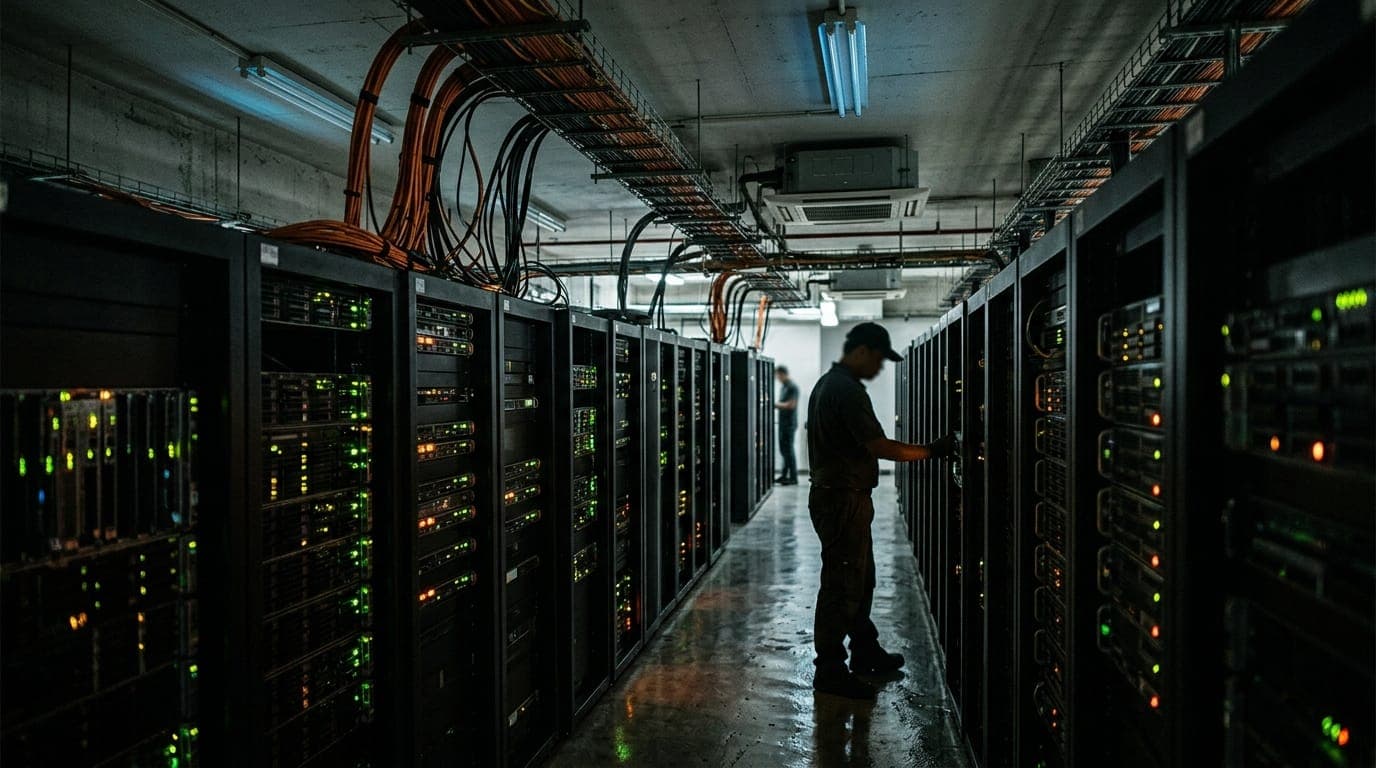
Washington's semiconductor containment strategy hits a structural wall at the cloud session layer.
Key takeaways
- Tencent committed roughly $7 billion over five years to lease approximately 100,000 advanced Nvidia chips from Oracle data centers in Southeast Asia, chips it is barred from importing into China under US export controls, per a Financial Times report.
- The arrangement is legal under current US rules because the Export Administration Regulations govern physical hardware crossing borders, not remote compute sessions run from a third-country data center.
- Neither Oracle nor Tencent has publicly confirmed the deal, and no regulatory authority has announced action to close the cloud-compute loophole.
Tencent signed a five-year lease for roughly 100,000 advanced AI chips housed in Oracle data centers across Southeast Asia, with the deal valued at approximately $7 billion and an upfront payment of around $2.1 billion, first reported by the Financial Times on October 1, 2026. The chips never cross into China. They don't need to.
Under current US Export Administration Regulations, the legal trigger is physical transfer across a border. Remote access to compute capacity sitting in a third-country data center falls outside that definition, leaving a gap wide enough for a $7 billion deal to drive through.
The Numbers Behind the Commitment
The scale of Tencent's bet on external compute capacity shows up in its own financial filings. Tencent's Q2 capital expenditure jumped 176% year-over-year to RMB 52.8 billion, and the company's free cash flow turned negative at RMB 13.8 billion, per Tencent's investor relations disclosures. That capex surge predates any confirmed signing, but the direction is unambiguous.
Oracle's own September 10 earnings release and its Form 10-Q filed September 11 make no mention of Tencent. The silence is notable: a $7 billion counterparty relationship of this structure has not appeared in any public filing. Neither company has confirmed the deal on the record, and Reuters could not independently verify it. The FT report relies on people familiar with the matter.
The specific chip generation involved has not been confirmed in the FT report or subsequent primary coverage. Some outlets have speculated Blackwell; that remains unverified and should not be treated as established fact. The advanced Nvidia chip export-control angle has been building for months across multiple deal structures.
The Containment Regime Has a Session-Layer Problem
This is where the story stops being a trade dispute and starts being a properties-of-networks problem.
Washington built its semiconductor chokepoint at the physical layer: restrict which chips can cross which borders. The market responded at the session layer: run the inference in Singapore, bill it to a Southeast Asian entity, and the border never becomes relevant. Export controls written for physical goods cannot reach a compute session. The architecture of the regulation is mismatched to the architecture of the technology.
Commerce Department officials have reportedly been drafting rules to address cloud-compute access, but no public document or agency release has confirmed this, and export-control lawyers cited in secondary coverage doubt Commerce holds the statutory authority to extend the rules to cloud sessions without Congressional action. That makes this a legislative problem as much as a regulatory one, and Congress has not passed anything yet.
The AI capex arms race is not slowing regardless of that legislative lag. Oracle's structural exposure to large sovereign compute contracts is already a documented risk factor. Becoming the conduit through which a Chinese internet giant accesses restricted compute adds a political dimension that no earnings call has addressed.
The second-order point is sharper. Every time a US-listed company becomes the mechanism by which an actor on the Pentagon's Chinese Military Companies list routes around a state chokepoint, the case for permissioned, centralized intermediaries as reliable gatekeepers weakens. Centralized infrastructure obeys whoever controls the contract. It does not enforce policy that was never written into the contract.
The falsifiable thesis: the US semiconductor containment regime is broken at the software layer and stays broken until Congress passes legislation explicitly prohibiting US cloud providers from leasing restricted compute capacity to Chinese-entity customers in third-country jurisdictions, and that legislation survives legal challenge and actually closes the Oracle/Tencent-style structure without Chinese firms routing through non-US intermediaries. If that sequence completes, the thesis is wrong. Until then, the gap is structural, not accidental.
What to Watch
The immediate pressure point is Commerce. If a rule surfaces with a real statutory hook, the legal fight begins immediately, and Oracle would be a named stakeholder. Congressional appetite for the Remote Access Security Act (RASA), which would extend export-control authority to cloud compute, is the legislative trigger to watch. Tencent's Q3 earnings will also show whether the capex trajectory continues or whether the upfront payment has already compressed the near-term numbers. Oracle's next earnings call, where analysts can ask directly, is the clearest forum for a company response that has not yet come.
Sources
Frequently Asked Questions
Is it legal for a Chinese company to rent Nvidia chips through a US cloud provider overseas?
Under current rules, yes. The Export Administration Regulations govern the physical transfer of controlled hardware across borders. Accessing compute capacity remotely through a cloud session in a third-country data center is not covered by those rules. Commerce has reportedly been working on regulations to address this gap, but no rule has been published and legal experts cited in secondary reporting doubt the agency has clear statutory authority to act without Congress.
Which specific Nvidia chips are involved in this Oracle deal?
The Financial Times report and subsequent primary coverage do not identify the chip model or generation. Some outlets have described them as Blackwell-generation hardware; that is unconfirmed. The accurate description, matching the primary reporting, is advanced AI chips.
Could the US government force Oracle to terminate or restrict this lease?
Under current law, probably not without new statutory authority. Export-control lawyers cited in secondary coverage are skeptical that Commerce can reach cloud compute sessions under existing rules. That puts the question in Congress's hands, where no legislation has passed yet.