IVCM Sues for 260 Million Gallons of Colorado River Water It Pledged to Never Touch
Imperial Valley Computer Manufacturing publicly pledged its proposed $10 billion AI data center campus would run on recycled wastewater, not Colorado River water. Those talks collapsed. Now the company is in court demanding 260 million gallons a year from the Imperial Irrigation District.
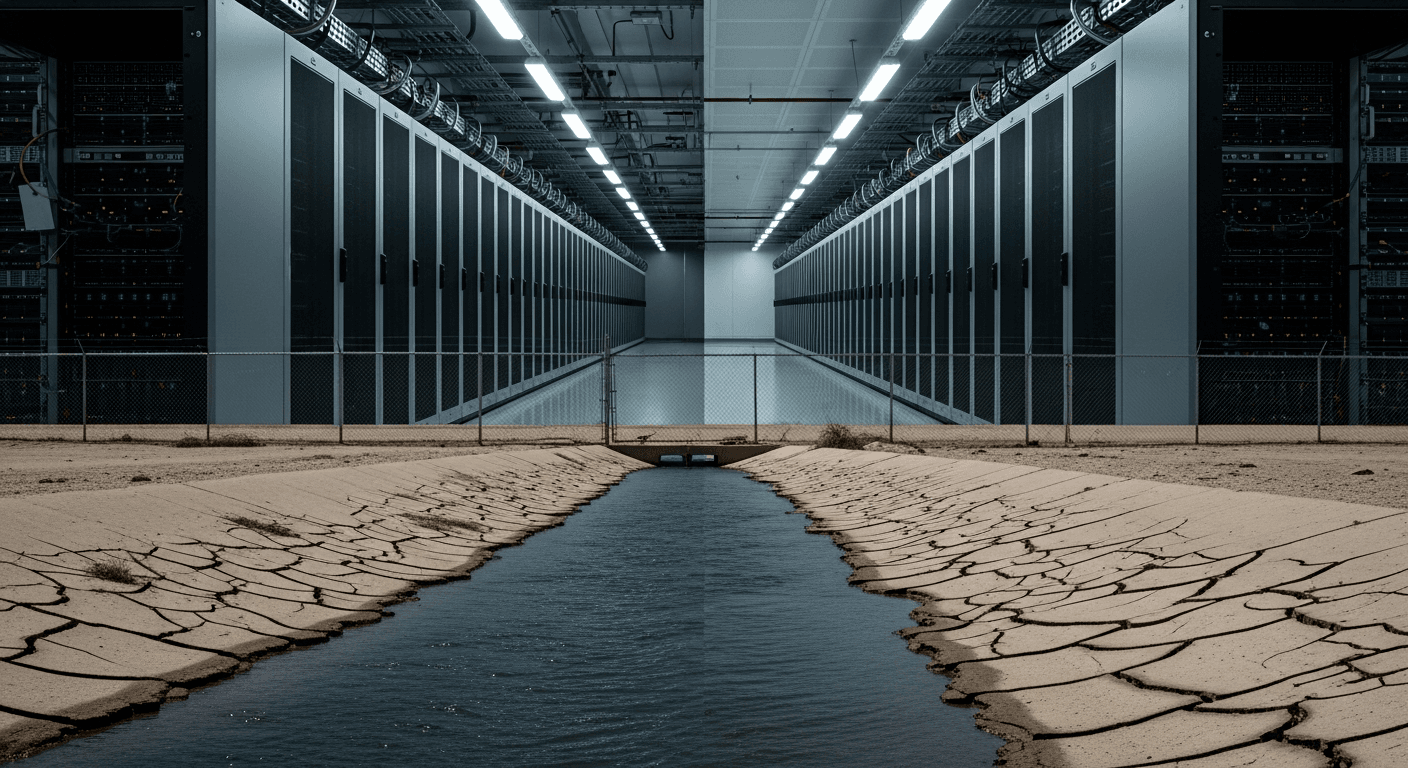
A $10 billion AI data center campus promised Imperial Valley it wouldn't draw a drop of Colorado River water. That promise is now a court exhibit.
Key takeaways
- Imperial Valley Computer Manufacturing (IVCM) filed suit against the Imperial Irrigation District (IID) seeking 260 million gallons of Colorado River water per year, directly reversing its public pledge since December 2025 to rely only on recycled wastewater.
- The IID rejected IVCM's water application in early May 2026. Days after IVCM's hand-picked IID board candidate lost in the June primary, the company filed the lawsuit.
- Imperial County supervisors who fast-tracked the project in April reversed course and imposed a moratorium; a 19-member committee must now rewrite data center development rules by 2027.
Imperial Valley Computer Manufacturing, LLC (IVCM) filed a lawsuit in Imperial County Superior Court against the Imperial Irrigation District seeking access to 260 million gallons of Colorado River water per year for its proposed AI data center campus near the City of Imperial, California, first reported by KPBS. That figure equals roughly 750,000 gallons per day and represents the annual water consumption of approximately 7,300 Imperial County residents, per KPBS. The ask directly contradicts the company's own marketing: a February 2026 post on IVCM's website, per KPBS, stated the project "does not touch a single drop of the Colorado River."
The Reversal
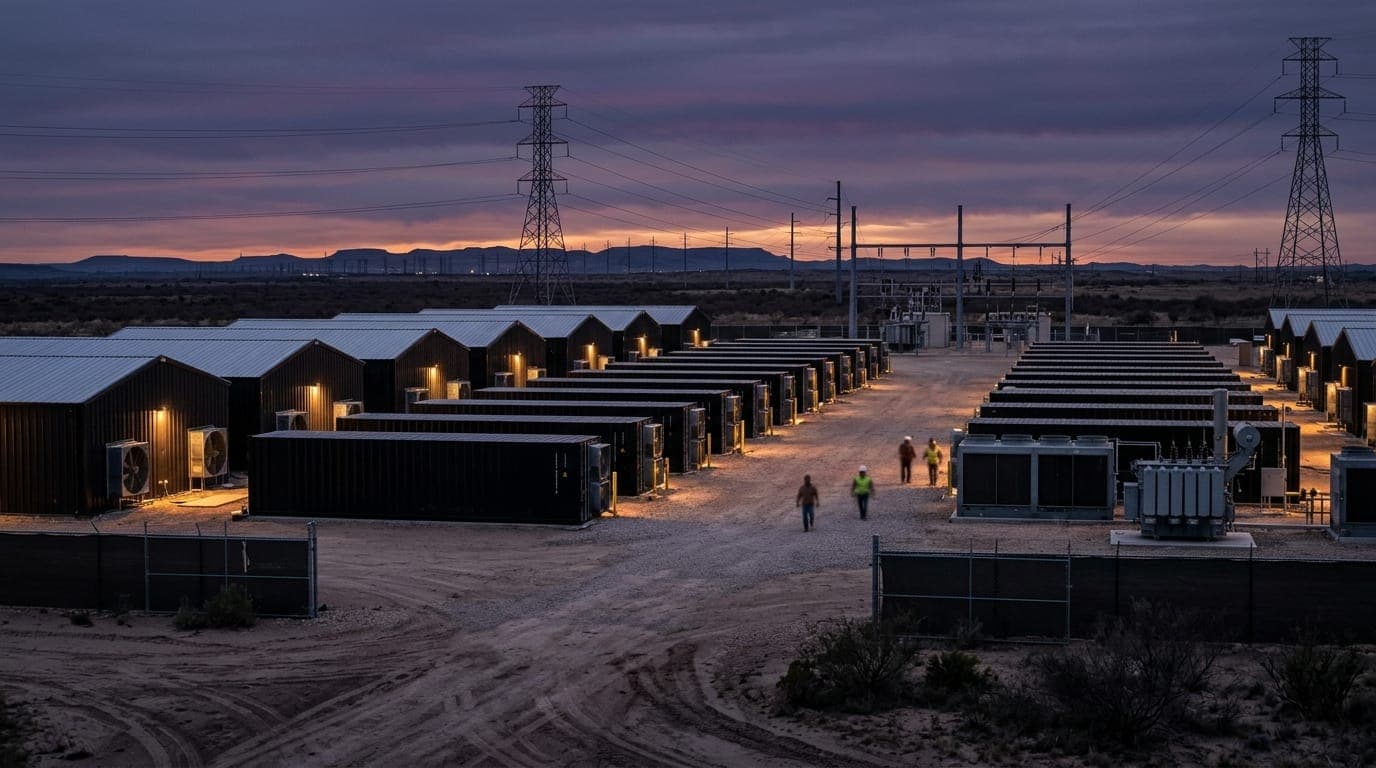
IVCM, led by Huntington Beach attorney and developer Sebastian Rucci, has pitched a nearly one-million-square-foot, 330 MW campus valued at the company's stated $10 billion. Since at least December 2025, the project's public case rested on a clean environmental claim: cooling would come from recycled wastewater sourced from the cities of Imperial and El Centro, water "that would otherwise be discarded," per IVCM's own site.
Those negotiations collapsed. According to the court filing cited by KPBS, IVCM described the Colorado River water request as a "last resort." The company leased 160 acres of farmland south of the proposed site and argues that fallowing that land frees an equivalent water allocation for the data center. The IID rejected the application in early May 2026, per reporting citing IID records. IVCM is now litigating that rejection.
The lawsuit's own language is candid about the economics. Per 8 News Now, citing the filing: "The cost of moving an acre-foot of water through a concrete-lined canal does not vary based on whether the water cools data-center servers or irrigates alfalfa." IVCM also noted in the filing that IID charges new industrial users $1,109 per acre-foot, 55 times the rate charged to farmers.
Rucci framed local opposition in the filing: "Trying to stop data center construction while expecting economic growth is like trying to stop oil production while expecting affordable gas."
Regulatory Capture, Two Ways
The sequencing here matters. The Imperial County Board of Supervisors voted 4-1 in April 2026 to fast-track the project, then reversed course and imposed a 45-day moratorium. A 19-member advisory committee must now rewrite county data center development rules by 2027. The City of Brawley voted 3-2 for its own local moratorium, per Gadget Review.
Before filing the lawsuit, IVCM backed a challenger for a seat on the IID's Board of Directors in the June primary. That candidate lost by a wide margin. The lawsuit followed days later.
That sequence is a clear playbook: when you can't install a friendly board, you sue the existing one. The 142 protests across 42 states that have accompanied more than $286 billion in blocked or delayed AI infrastructure share the same underlying dynamic. Local governments are discovering that the permitting approvals they granted didn't come with full disclosure of resource demands, and they're reaching for whatever tools are available: moratoria, advisory committees, primary elections, and now defending federal water rights in court.
This is also the eminent domain pattern in a different form. When voluntary negotiation fails to deliver the resource, litigation becomes the extraction mechanism. The IID and Imperial Valley residents are now the named defendants in a case that will set precedent for whether agricultural water rights can be transferred to industrial AI cooling across every water-scarce county in the American West.
The comparison to Bitcoin mining is direct. A Bitcoin mining operation states its power draw, negotiates its offtake agreement, and gets regulated accordingly. There is no promise of "we won't touch the grid" that quietly disappears after permits clear. The AI data center model at scale is structurally dependent on promising to use resources developers know they may eventually need to claim. The public pledge is the permitting tool. The lawsuit is what comes after. Florida regulators have already flagged similar credibility problems with AI data center rate plans, and AI load forecasts across the country have consistently proven optimistic as grid managers scramble to keep pace with demand growth.
What to Watch
The court discovery record will be the key variable. IVCM's "bait-and-switch" framing only holds if the cities of Imperial and El Centro can show their recycled-water negotiations were conducted in good faith and that reasonable offers were refused. If documentary evidence from the cities supports that version, the broken pledge is partially explained by external obstruction. If it doesn't, the original thesis stands as written. Watch what the cities file in response. Watch whether the IID's water rights withstand the fallowing argument under California water law. The precedent, either way, will travel far beyond Imperial County.
Sources
Frequently Asked Questions
Can IVCM legally claim agricultural water rights for a data center by fallowing farmland?
That is the central legal question the case will turn on. IVCM leased 160 acres of farmland whose water allocation roughly matches what the data center needs, and argues fallowing frees that water for industrial use. California water law and IID's governing structure may not recognize that transfer. If the court sides with IVCM, the ruling creates a template for data center developers across the arid West to acquire farm leases as a water-acquisition strategy, bypassing traditional utility applications entirely.
How does AI data center water use compare to Bitcoin mining?
Most Bitcoin mining cooling is air-cooled or uses immersion systems that do not consume water the way large-scale evaporative cooling towers do. High-density AI GPU clusters running sustained workloads require aggressive liquid cooling, making water consumption a structural feature of the AI compute model at scale. The comparison is not identical across all configurations, but the directional difference is significant: water demand is a known constraint for large AI campuses in ways it is not for most Bitcoin mining operations.
What is the Imperial Irrigation District and why does it control this water?
The IID is the public utility managing both water and electricity for the Imperial and Coachella Valleys. It holds generations-old Colorado River water rights for the region's agricultural users and serves over 160,000 electricity customers. Imperial County is one of California's most productive agricultural regions and is exclusively dependent on the Colorado River for fresh water. The IID is not one option among many; it is the only game in town.