Is Bitcoin Mining Worth It in 2026? Home vs. Hosted, Honestly
At residential power rates, no ASIC mines Bitcoin at a profit in 2026. The honest guide to mining at home, hosting it, or skipping it.

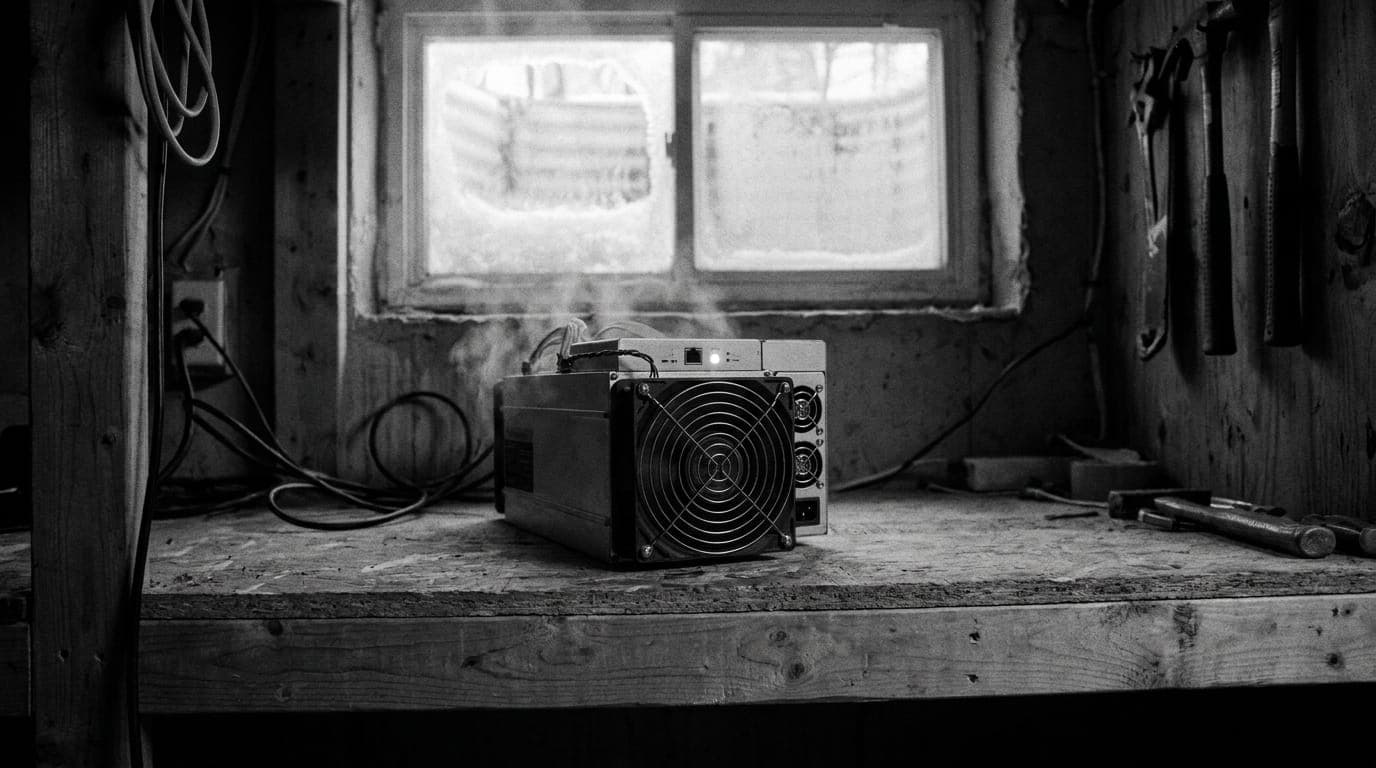
Is Bitcoin mining profitable? At the electricity rate a normal person pays at home in 2026, the honest answer is no. There is no current-generation ASIC that turns a profit mining Bitcoin in a house, not the flagship Antminer S21, not a used S19 you grabbed for the price of a nice dinner. The same machine that helps secure a trillion-dollar network will lose money every single day plugged into your wall.
And yet people are buying miners and plugging them in on purpose, more of them than at any point in years. They are not stupid, and they are not all wrong. They have stopped asking whether mining is profitable and started asking a better question: what do I actually want out of this?
That question has three honest answers, and each one points to a different path. Mine it yourself, pay someone else to run your machine, or do not mine at all. This guide walks all three with the real numbers, so you can find the one that fits you.
First, the math the people selling miners skip
The math is worth doing once, in full, so we can stop pretending.
Mining revenue is governed by hashprice, which is what the network pays per unit of computing power. As of mid-July 2026, with Bitcoin around $63,000 and network difficulty near 127 trillion, Hashrate Index put hashprice at roughly $31 per PH/s per day, about $0.031 per TH/s per day, and described it as at or below breakeven for many miners.
Now put that against what you pay for power. The U.S. residential average is 18.8 cents per kilowatt-hour, up 25% in four years. Even the cheapest states, like North Dakota, Idaho, and Wyoming, sit around 12 cents. Hawaii runs over 46 cents.
Run the flagship machine at those rates:
- An Antminer S21 (200 TH/s, 3,550 W) earns about $6.20 a day and burns 85 kWh. At 15-cent power that is negative $6.60 a day, before you have touched the roughly $2,000 the machine cost. It needs about 7.4 cents per kilowatt-hour just to break even on electricity.
- A used S19, the $50-to-$165 machines flooding secondary markets, breaks even near 4 to 6 cents. At residential rates it loses money faster than the electricity it burns is worth, so it goes negative before you count the hardware at all.
- Only the most efficient hydro units, like the S21 XP Hydro at roughly 12 J/TH, touch breakeven, and only at the 10-cent floor almost no household has.
This is not a temporary dip you can wait out. It is structural. Profitable mining requires sub-7-cent power, and sub-7-cent power lives inside industrial contracts and behind-the-meter deals, not in your house. That single fact is why fleets, not families, own the network's hashrate.
So if the numbers are this brutal, why does anyone plug one in?
The real question: what do you actually want?
Strip away the profit fantasy and three honest motives remain. Be clear about which one is yours, because they lead to completely different places.
- You want the heat, the sovereignty, or the hobby. You would be paying to heat your home anyway, you like the idea of stacking sats no one can stop, and you want to actually understand how mining works. Mine at home.
- You genuinely want to own hashrate as exposure, meaning real machines producing real Bitcoin, but you do not want a jet-engine ASIC in your garage. Host it somewhere else.
- You just want more Bitcoin. Do not mine at all. Mining is the hard, expensive way to get there.
Path A: Mine it yourself at home
The reframe: your miner competes with your propane bill, not with Riot
Here is the mental shift that makes home mining make sense. A home miner is not competing with Riot Platforms or CleanSpark. It is competing with your heating bill.
Every watt of electricity you put into a Bitcoin miner comes out as heat, a 100% conversion, the same physics as a space heater. So during heating season the electricity is not a mining cost. You were going to spend it on heat anyway, and the Bitcoin the machine earns becomes a rebate on a bill you would have paid regardless. That is the whole game, and it is the thesis running through TFTC's home mining and heat playbook with Exergy.
Run that math and it inverts:
- Against propane, at roughly 9 cents per kilowatt-hour equivalent, a miner at 10-cent power minus a 3-to-5-cent Bitcoin rebate nets out to a 40-to-50% reduction in effective heating cost.
- Against electric-resistance heat, it wins outright, since you get identical heat and capture sats on top.
- Against cheap natural gas, it usually loses. Gas heat is hard to beat, and honesty means saying so.
- As a bonus, routing surplus solar through a miner instead of selling it back to the grid at "airline-miles" net-metering rates has been cited at a roughly 3.3x value multiplier.
Home mining in 2026 is a heater that pays you back, not a profit engine, and only where your alternative heat is expensive.
The hardware ladder
- A Bitaxe, around $150 to $200, at roughly 1.2 TH/s and 17 watts, is not an economic miner and is not sold as one. It is a decentralization lottery ticket. A single Bitaxe is a rounding error against 880 EH/s of network, so solo-mining a block is a multi-thousand-year expected wait. People do hit it, it distributes hashrate away from the mega-pools, and it is the best $200 education in how mining actually works.
- Used S19s, at $50 to $165, are the heat play. Two of them give you about 6,000 watts of heat for under $200, versus roughly $3,000 for a new purpose-built heater-miner. They are terrible for profit and excellent as a furnace supplement you point at Ocean for non-KYC payouts to your own wallet.
- A new Antminer S21, around $2,000 at 200 TH/s, is the baseload option if you are plumbing a miner into a real heating system and want efficiency. See the math above on what it does at residential power.
Size the miner for your average heating load, not the coldest night of the year, and let your existing furnace cover the single-digit snaps. Oversizing is how the economics punish you.
Who home mining is actually for
A cold climate with a long heating season, expensive heating fuel like propane or electric resistance rather than cheap gas, a tolerance for noise and heat and tinkering, and a motive that is really about sovereignty and usefulness rather than a spreadsheet. If that is you, start with the Exergy home-mining playbook.
Path B: Host it somewhere else
If you want real hashrate but not a data center in your basement, hosting is the other door. You buy an ASIC, ship it to a facility, and pay a per-kilowatt-hour rate for them to power, cool, and maintain it. All-in retail rates land in a rough band of 6.5 to 8 cents per kilowatt-hour, which I would treat as directional since most published figures come from the hosts themselves.
At 7 cents instead of your 18.8 cents at home, the same machine's net revenue roughly doubles or triples. That is the entire economic case, and it is real.
Own a machine, not a receipt
The word "hosting" gets stretched across three very different products, and the difference is everything:
- Pure hosting. You own the ASIC, it lives in their building, you point it at your pool and keep the coin. You own an asset.
- Mining-as-a-service. You buy the machine through the provider and they run it. You still own a physical machine.
- Cloud mining. You buy a contract for hashrate and own no hardware at all. When the term ends you are left with nothing, and this corner has the worst fraud record in Bitcoin. If your goal is to own hashrate, it is not the tool.
The rule is simple. Own a machine, or you are renting a receipt.
The catch: the counterparty is the risk
Cheap power is not the hard part of hosting. Trust is. Your machine physically sits inside someone else's building, on someone else's power contract, subject to someone else's mistakes, and the history is not reassuring.
In April 2022, the U.S. Treasury sanctioned a Russian data center called BitRiver. Overnight, roughly 2,000 Compass Mining customers had about $30 million of hardware stranded in Siberia with no way to get it back. The machines were theirs on paper, and it did not matter. That same year, host Compute North filed for bankruptcy owing up to $500 million, taking customer deployments down with it.
Treat any "100% uptime" claim as a red flag rather than a feature. A mining facility earns its cheap rate precisely by being a flexible load that shuts off in seconds when the grid needs power back, so downtime is built into the business model. The honest operators tell you the machines will sometimes be off and credit you for the hours they were. One host even got sued over a "100% uptime" claim while a facility sat curtailed for about 50 days.
So what does clearing that bar look like in practice? An operator with no litigation or sanctions in its history, repairs handled in-house, and billing tied to your machine's actual hashing time so you never pay for hours it sat idle. In a category with the track record above, Simple Mining's Iowa operation is the cleanest example of that standard, and it runs a 7-day trial so you can watch real hashrate before committing a dollar. How it stacks up against Compass, Blockware, Sazmining and the rest, fairly and criteria by criteria, is the whole point of our companion guide on the best Bitcoin mining hosting companies, and who to trust with your miner.
Who hosting is for
You want real hashrate exposure, you are comfortable underwriting a counterparty, you do not have cheap power or a cold house to justify mining at home, and you would rather someone else deal with the fans. Start with the hosting comparison, and whatever you decide, keep the coin in your own custody.
The third door: maybe don't mine at all
Here is the advice most mining guides skip, because they are selling miners. If your only goal is more Bitcoin, mining is the hard way to get it. Between hardware, power, downtime, and counterparty risk, the simplest path to Bitcoin exposure is to buy Bitcoin and self-custody it. Full stop.
Mining is for people who want something mining uniquely provides: the heat, the sovereignty, the decentralization, the genuine hashrate exposure. If none of those is really your motive, the honest move is to skip the machines and just stack.
Where to start, based on your situation
| If you… | Then |
|---|---|
| Have a cold climate and expensive heat (propane or electric), and want sovereignty and sats | Mine at home, starting with the Exergy playbook |
| Want to learn how mining works and help decentralize hashrate for around $200 | Buy a Bitaxe |
| Want real hashrate exposure without hardware in your house, eyes open on counterparty risk | Host it, and compare hosting companies |
| Heat with cheap natural gas, or just want more Bitcoin | Do not mine. Buy and self-custody |
Whatever path you pick, the principle is the same one running through all of it. Own the machine, keep the keys, and do not let anyone else hold your sats.
Sources
Frequently Asked Questions
Is Bitcoin mining profitable at home in 2026?
On pure economics, no. At the U.S. residential electricity average near 18.8 cents per kilowatt-hour, every current ASIC loses money. A new S21 needs roughly 7.4 cents just to break even on power, and a used S19 is underwater before you count the hardware. Profitable mining requires sub-7-cent industrial power, so home mining only pencils out when the miner is also doing a second job, like heating your house.
Is it worth mining Bitcoin at home then?
It can be, if profit is not the point. If a miner offsets expensive heating, meaning propane or electric resistance, or monetizes surplus solar, the Bitcoin becomes a rebate on a cost you would pay anyway, and the effective heating cost can drop 40 to 50% versus propane. It is also worth it if you value the sovereignty of non-KYC sats or want to help decentralize hashrate. It is not worth it purely as a way to accumulate Bitcoin.
Should I mine at home or use a hosting company?
Mine at home if you have cheap heat demand, a cold climate, and want control and sovereignty. Host it if you want real hashrate exposure without the noise, heat, and maintenance, and you are comfortable trusting an operator with your machine. If you want neither the heat nor the hashrate and just want Bitcoin, buy and self-custody instead.
How much does it cost to start mining at home?
As little as $150 to $200 for a Bitaxe, which is a decentralization lottery ticket rather than an income source, under $200 for a pair of used S19s to run as heat, or around $2,000 for a new S21. Add electrical work and a control setup for a serious heating integration.
Can you mine Bitcoin profitably on a Bitaxe?
No. A Bitaxe produces on the order of a trillionth of network hashrate, so its expected earnings are effectively zero and a solo block win is a multi-thousand-year expectation. It is sold as an educational tool and a lottery ticket that decentralizes hashrate, not as an income device.
What does Bitcoin mining hosting cost?
All-in retail rates generally run about 6.5 to 8 cents per kilowatt-hour in the US and Canada, bundling power, cooling, rack space, and support. It is very hard to find a genuinely all-in rate below 6.5 cents. Compare total cost rather than the headline number, and read the actual contract, since a low base rate can hide pass-through charges. See the hosting companies guide.