The Bitaxe, Explained: The Open-Source Bitcoin Miner Anyone Can Run
What a Bitaxe is, the 2026 models, what it costs, the real solo-mining odds, and how a $150 open-source miner just won a full Bitcoin block.

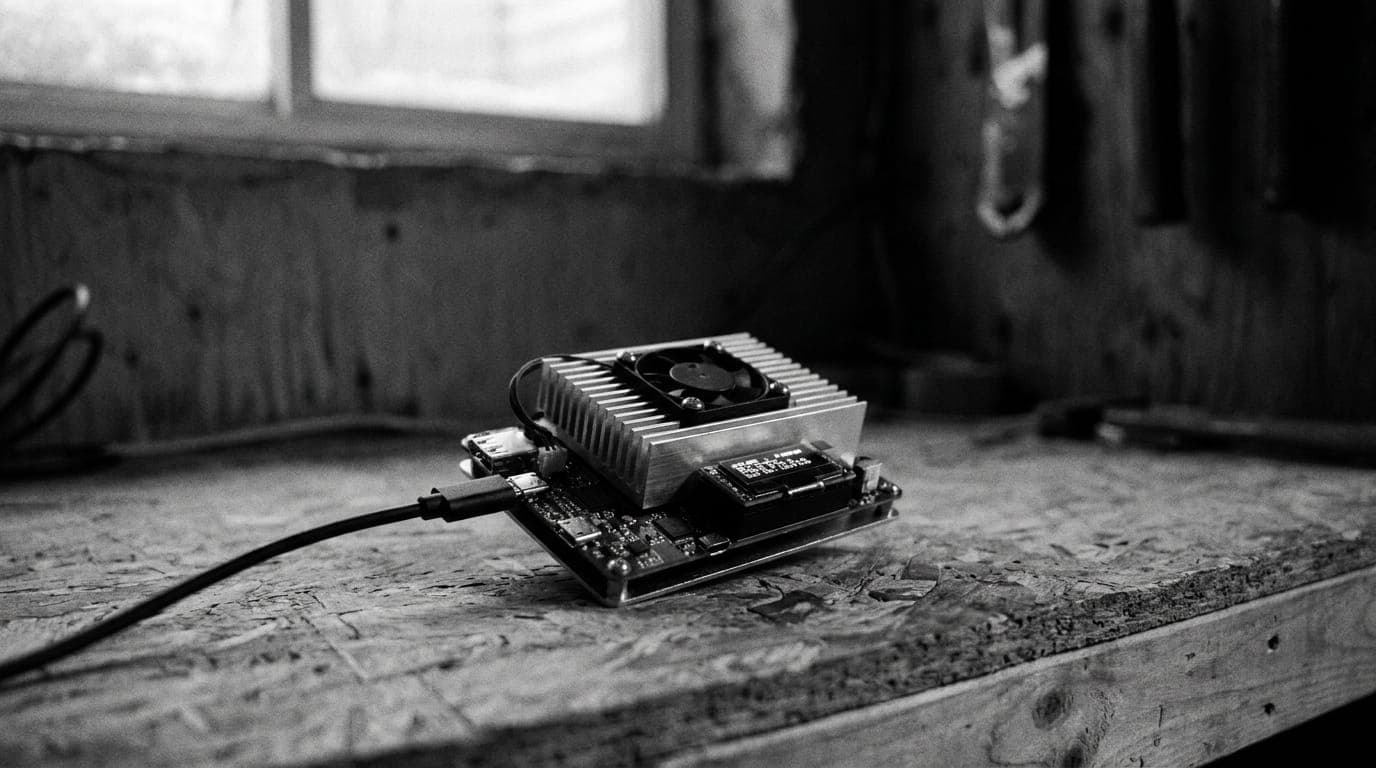
On July 9, 2026, a Bitcoin miner the size of a paperback book solved block #957,382 and collected 3.14 BTC, about $200,000. It runs on a chip you can buy for less than a nice dinner out. It was a Bitaxe, hashing at roughly 1 TH/s against a network doing nearly 900 exahashes, and by any rational measure it never should have won. On any given day the odds were about one in 6.5 million.
That jackpot is a terrible reason to buy one. Betting on it is buying a Powerball ticket and calling it a retirement plan. But the fact that it can happen, that a hobbyist at a desk can validate a block and keep the whole reward with no pool taking a cut, points at what actually matters. Mining has quietly become one of the most centralized layers of Bitcoin, and the Bitaxe is the sharp end of a movement to put a piece of it back in ordinary hands.
Here is what a Bitaxe is, what the 2026 models do, what one costs, the honest math on solo mining, and how to get one running.
What is a Bitaxe?
A Bitaxe is the first fully open-source Bitcoin ASIC miner, with open hardware, open firmware, and an open design. It is a single Bitmain mining chip on a small board, driven by an inexpensive ESP32 microcontroller, built to sip power and run quietly on a desk rather than scream in a warehouse. Solo Satoshi has a good primer on how the pieces fit together.
The project was created in early 2023 by Skot, who publishes under the handle @skot9000. He reverse-engineered Bitmain's ASICs and published a complete open reference design that anyone can build, modify, or manufacture. The firmware, called ESP-Miner, with its browser dashboard AxeOS, is GPL-3.0 licensed and maintained by dozens of contributors. Around it has grown a real community: the Open Source Miners United builders' collective, and the 256 Foundation, a nonprofit that funds open-source mining and treats the Bitaxe as its flagship example of breaking Bitmain's grip on the hardware.
The key word is open. Every other miner you can buy is a closed box running proprietary firmware from a Chinese manufacturer. With a Bitaxe you can read every line, run it against your own node, and build one yourself if you want to.
Why an open-source home miner matters
I have said this before and it bears repeating. The mining-pool and ASIC layers are the largest centralizing forces in Bitcoin right now. A handful of pools, Antpool and Foundry chief among them, direct a majority of the network's hashrate, and several nominally independent pools have been caught taking block templates directly from Antpool. That is not the decentralized, censorship-resistant mining most people assume is humming along in the background.
Miners can always redirect their hashrate when a pool misbehaves, but reacting after the fact is not good enough. The better answer is to make the network more distributed before a crisis, and that is what the Bitaxe does. Rather than leaning on mega-mines that spend hundreds of millions on infrastructure, you get affordable, self-contained miners into the hands of millions of people who collectively hash and, increasingly, construct their own block templates.
A thousand homes each running a Bitaxe make for a more resilient network than one more warehouse. That is the real product. The lottery is the hook.
The lottery ticket: solo mining and the real odds
Point a Bitaxe at the network on its own, which the space calls solo mining, and you are not earning a steady stream of sats. You are buying a chance. If your machine finds the winning hash for a block, you keep the entire reward, currently 3.125 BTC plus fees. If it does not, you earn essentially nothing that day and try again tomorrow.
Be clear-eyed about the odds. One Bitaxe Gamma at roughly 1 TH/s is about 1.1 billionth of a network running near 890 EH/s. Do the arithmetic and the average time to find a block on your own is roughly 17,000 years. On any given day the odds land near 1 in 6.5 million.
People keep winning anyway, because millions of daily draws across thousands of devices means someone hits. Solo home miners have found around two dozen blocks in the trailing 12 months, up roughly 41% year over year. A sample of the small-miner wins, from D-Central's block-wins tracker:
| Date | Device | Reward |
|---|---|---|
| Jul 2024 | Bitaxe Ultra (~500 GH/s) | ~3.15 BTC |
| Mar 2025 | Bitaxe Gamma (~1.2 TH/s) | ~3.15 BTC |
| Oct 2025 | NerdQAxe++ (~4 TH/s) | ~3.14 BTC |
| Jul 2026 | Bitaxe Gamma (~1 TH/s) | 3.14 BTC (~$200K) |
You solo mine through a zero-fee solo pool that coordinates the work but takes no cut of a win. The two standard choices are Public Pool, which is open-source and was built by a Bitaxe contributor, and solo.ckpool.org. Running your own Bitcoin node is optional, since the pool maintains the block templates, but for fully sovereign mining you can self-host Public Pool on a node and point the Bitaxe at your own machine.
The Bitaxe models in 2026
Every model runs AxeOS, has WiFi and a small display, and uses a Bitmain chip pulled from a specific generation of industrial Antminer. Here is the current lineup, per D-Central's model comparison:
| Model | Chip (from) | Hashrate | Power | Efficiency |
|---|---|---|---|---|
| Ultra | BM1366 (S19 XP) | ~400 to 500 GH/s | ~12 W | ~24 J/TH |
| Supra | BM1368 (S21) | ~625 to 775 GH/s | ~12 W | ~17 J/TH |
| Gamma | BM1370 (S21 Pro) | ~1.0 to 1.2 TH/s | ~15 to 21 W | ~15 J/TH |
| Gamma Turbo (GT) | 2x BM1370 | ~2.0 to 2.15 TH/s | ~35 to 43 W | ~18 J/TH |
| Hex | 6x BM1366 | ~3.0 to 3.3 TH/s | ~90 W | ~28 J/TH |
| Touch | BM1370 | ~1.6 TH/s | ~22 W | touchscreen |
For most people the answer is the Gamma. It runs the same BM1370 silicon as Bitmain's flagship S21 Pro, so it is the most efficient single-chip option, it is the best-selling model, and it hits the sweet spot on price and hashrate.
Step up to the dual-chip Gamma Turbo or the six-chip Hex if you want more raw hashrate, meaning more lottery tickets, and do not mind the extra power and heat. Drop to the Supra or Ultra if you want the cheapest way in. The Touch is a Gamma with a big LCD if you like watching the numbers.
What a Bitaxe costs, and what it earns
Buying one runs roughly $100 to $270 for an assembled unit depending on model, with a Gamma typically landing around $150 to $200. DIY kits run cheaper if you are handy. Prices swing a lot by vendor, revision, and the Bitcoin price, so shop around.
Running one costs almost nothing. At 15 to 25 watts, a Bitaxe going 24/7 costs about $1 to $2 a month in electricity, less than a lightbulb.
On expectation, it earns effectively zero. Do not buy a Bitaxe as an income device. The honest 2026 math on mining profitability is brutal even for industrial machines, and a 1 TH/s miner is not competing on economics. What you are actually buying is three things: a lottery ticket with a life-changing but astronomically unlikely payout, a contribution to decentralizing the network's hashrate, and the best hands-on education in how Bitcoin mining really works that $150 can buy.
For contrast, the even-smaller NerdMiner hashes in software on an ESP32 at about 2 kH/s and draws under a watt. Its odds are millions of times worse, so it works as a learning gadget and little else. A Bitaxe gives you the same desk-sized experience with a genuine ASIC and real hashpower behind the ticket.
How to set up a Bitaxe
Setup is close to plug-and-play, with no software to install and no account to create, as Solo Satoshi's AxeOS guide walks through:
- Power it on. A new Bitaxe broadcasts its own WiFi network named
Bitaxe_XXXX. - Connect and join your WiFi. From your phone or laptop, join that network, open
http://192.168.4.1, and enter your home WiFi credentials. - Open the dashboard. The little screen shows the device's new IP address. Open that IP in a browser and you get AxeOS, with live hashrate, temperature, watts, and efficiency refreshing every few seconds.
- Point it at a pool. In Settings, set the Stratum host, port, and user. For solo mining on Public Pool, the host is
public-pool.io. Set the user to your own Bitcoin address, since that is where a winning block pays out, so replace the default before you run. - Update firmware. New AxeOS releases install over the air from the Settings tab in about a minute, and your settings persist. Built-in thermal protection shuts the chip down if it overheats.
Where to buy a Bitaxe
Because the design is open, several vendors build and sell them. Start at bitaxe.org for the canonical project and a list of sellers. The main assembled-unit vendors are Solo Satoshi, which assembles in the USA and includes a warranty, D-Central in Canada, which also sells a DIY kit, and Altair Technology. If you want to build one from a kit and learn the hardware, that path is open too.
Is a Bitaxe worth it?
Measured in dollars per day, no, and no honest source will tell you otherwise. But that is the wrong yardstick, the same way it is the wrong question for home mining generally. A Bitaxe is worth it if you want to actually participate in securing Bitcoin instead of only holding it, if you want to help pull hashrate away from a handful of dominant pools, if you want the best cheap education in how mining works, and if you want a lottery ticket where the jackpot pays out in the hardest money there is. For $150 and a couple of dollars a month, that is a lot of ticket.
If what you actually want is real hashrate as an investment rather than a hobby, that is a different machine and a different plan, covered in the honest breakdown of mining at home versus hosting it. But to put a piece of the network back in your own hands, plug in a Bitaxe and start hashing. Stack sats.
Sources
- Solo Bitaxe miner wins a $200K block reward
- Bitaxe, the official project site
- Skot's Bitaxe hardware on GitHub
- ESP-Miner and AxeOS firmware on GitHub
- Solo Satoshi on what a Bitaxe is, plus the AxeOS setup guide
- D-Central's Bitaxe model comparison and block-wins tracker
- Public Pool, zero-fee solo mining
- Hashrate Index on network hashrate and difficulty
- 256 Foundation on open-source mining
Frequently Asked Questions
Is a Bitaxe profitable?
Not in the sense of earning a steady return. A single Bitaxe at roughly 1 TH/s has an average time-to-block of about 17,000 years, so its expected daily earnings are effectively zero. It costs only about $1 to $2 a month in power to run, and the payoff is a lottery: if it ever solves a block you keep the entire reward of 3.125 BTC plus fees, but on any given day the odds sit around 1 in 6.5 million. Buy one as a decentralization contribution, an education, and a lottery ticket, not as income.
What is the best Bitaxe to buy?
For most people, the Bitaxe Gamma. It uses the same BM1370 chip as Bitmain's flagship S21 Pro, making it the most efficient single-chip model at roughly 1 to 1.2 TH/s for 15 to 21 watts, and it is the best-selling option. Choose the dual-chip Gamma Turbo or six-chip Hex for more hashrate, or the cheaper Supra or Ultra for a lower entry price.
How much does a Bitaxe cost?
Assembled units generally run about $100 to $270 depending on the model, with a Gamma typically around $150 to $200. DIY kits are cheaper if you are comfortable with light soldering. Prices vary widely by vendor and revision, so compare a few sellers.
Can a Bitaxe actually win a Bitcoin block?
Yes, though it is extremely rare. In July 2026 a single Bitaxe Gamma solved block #957,382 and earned about $200,000 through Public Pool's zero-fee solo mining. Solo home miners have found roughly two dozen blocks over the trailing year. The odds for any one device are tiny, around 1 in 6.5 million per day, but they are not zero.
Do I need my own Bitcoin node to run a Bitaxe?
No. Solo pools like Public Pool and solo.ckpool.org maintain the block templates, so you can mine without running a node. For fully sovereign, trustless mining you can run your own node, easily via Umbrel or Start9, and point the Bitaxe at it so you are building your own blocks.
What is the difference between a Bitaxe and a NerdMiner?
A Bitaxe uses a real Bitmain ASIC chip and hashes at hundreds of GH/s to a few TH/s. A NerdMiner hashes in software on a cheap ESP32 board at only about 2 kH/s and draws under a watt, so its odds of winning are millions of times worse. A NerdMiner is a pure learning toy, while a Bitaxe is a genuine, if tiny, miner.