Chapter House: Why the Western Canon Belongs to Your Child
Joshua and Hannah Centers of Chapter House on why the credential economy fails children, how living books form virtue where lessons can't, and what any parent can do tonight to route around fiat education.

↓ Jump to the video and timestamps
I went to a private Catholic high school. Four years of Latin, three years of Spanish, seven total. The entire curriculum was organized around one question: can you read something, comprehend it, and write about it competently? That was it. No standardized test to teach to, no credential factory running on bell schedules. Just reading, thinking, and writing. I've said before that everything I've built since, the newsletter, the podcast, the whole career, traces back to that foundation. So I don't come into this conversation as a neutral party platforming a niche homeschool product.
Joshua and Hannah Centers founded Chapter House because they couldn't find the books they needed to educate their children the way they believed children should be educated. Beautiful, durable hardcover editions of the great texts of Western civilization, designed to be read aloud at the kitchen table, not assigned as homework or flattened into a worksheet. They homeschool their three children using the Charlotte Mason method, and they've been running the Virtue and Wonder Substack alongside building the press.
What they're doing maps directly onto something I've been thinking about for a long time. The public school system as it exists today is fiat education. The credential it produces has no intrinsic value. It's signed off by an institution that has outsourced genuine human formation to a standardized test, the same way the Federal Reserve outsourced the value of money to a printing press. Chapter House is the same impulse that drives Bitcoin: route around the broken system, hold the real thing, and pass it to your children.
Key takeaways
- Fiat education produces fiat graduates. A diploma ranked by whether each subject carries a standardized test produces adults who can decode sentences but can't think through them. Same structural rot as fiat currency: the credential has no intrinsic value, just the value the institution says it has.
- The Prussian model was built for a world that's gone. The Centers argue American public school was designed to produce factory workers for an industrial economy. LLMs are replacing the STEM jobs it retrained for, and the skills that actually matter, reading, reasoning, communication, are the ones it abandoned decades ago.
- Virtue is better caught than taught. A child who absorbs Beowulf and asks "Is Beowulf a saint?" has learned more about courage than one who completed a worksheet labeled "Today's lesson: courage." The story does the work. The parent's job is not to explain the ending.
- Wonder without virtue is a bank-robbing surfer. Virtue without wonder is a drill sergeant. Both halves matter. The goal is a child who reaches for the unknown because they have the courage and work ethic to actually get there.
- The Western canon is not a preference. It's an inheritance. It is the gold standard of civilization, studied from Beijing to Berlin. Burying it would be, in Joshua's word, apocalyptic, not just for the United States, but for the world.
- Twenty minutes a night changes the culture of a home. Start with Aesop. Let the boys do karate kicks while you read. Don't wait for the perfect curriculum. The only failure is not starting.
Fiat Education: Credentials with No Intrinsic Value
Joshua put it plainly, and I agreed with him completely. A standardized test is not knowledge. It is a selective representation of knowledge, the same way a $20 bill is not value. It's just the value the Federal Reserve says it has. You can have students graduate with perfect grades and great test scores and they come out into the world and they're, in his words, "kind of morons in a lot of fundamental ways."
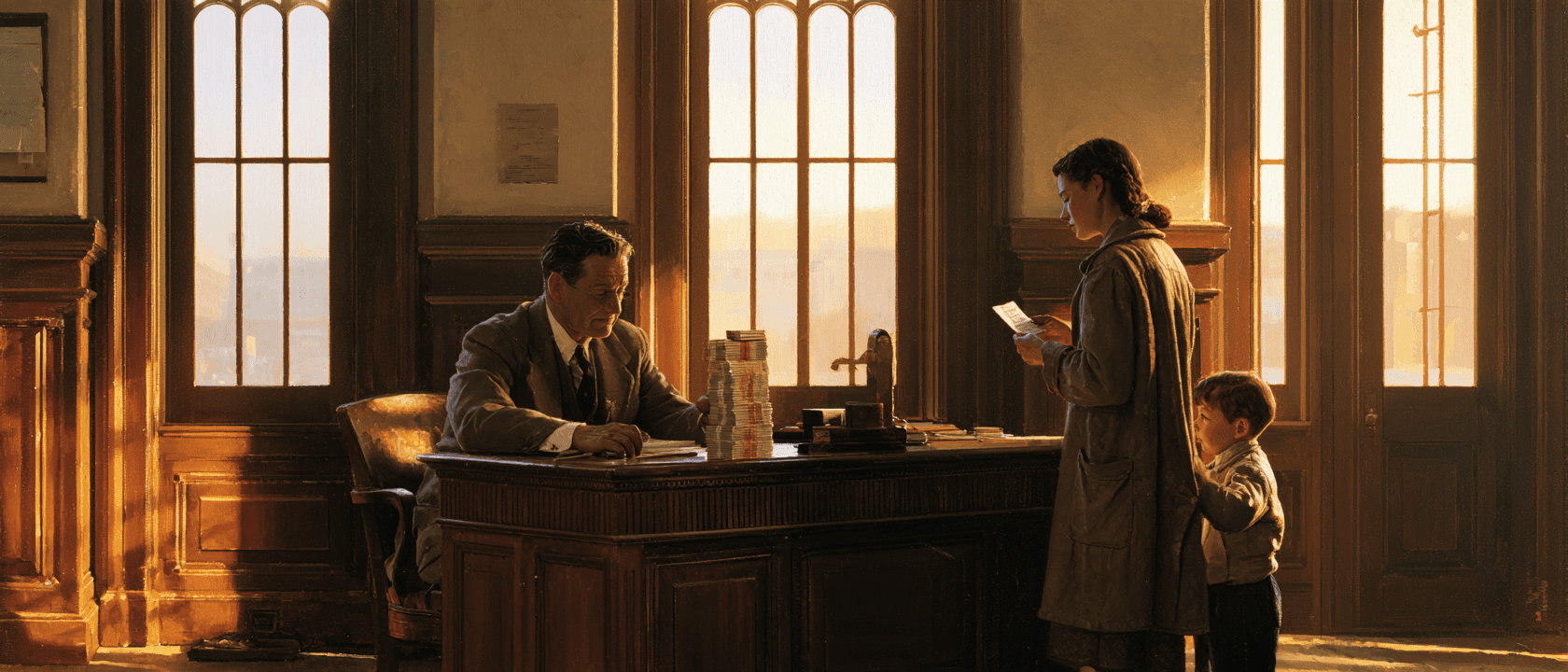
Hannah taught high school Spanish for 13 years. She described the moment she knew something was broken: students who were college-bound, capable kids, telling her they didn't care as much about Spanish as their math or English classes because Spanish didn't carry a standardized test at the end. They had learned, correctly, that the system valued tests and not subjects. They had been taught to rank their own education by its credential yield.
That is fiat education. And the downstream effects are exactly what you'd expect. Hannah also described something she wrote about on their Substack at virtueandwonder.com: college students who can decode a sentence, understand the syntax, read every word, and still not understand what was said. Sarcasm goes over their heads. Similes read as literal claims. There's no thinking happening, just processing. Spreadsheet brain, as she put it.
The system that produced this was not an accident. I've been saying for a while that American public education is based on the Prussian model, which the Centers and I both read as a system built to produce compliant workers for an industrial economy. That model has been running on inertia for over a century. It was already inhumane. It treated children as cogs to be shaped for a machine. Now it's also obsolete, because the machine doesn't exist anymore. And for the past two decades, the system's answer to obsolescence was to double down on STEM. Learn to code. Program the computer. That bet is looking catastrophically wrong right now. Companies are laying off software engineers because LLMs can do that work. The skills that actually matter are the humanities skills the system abandoned: the ability to read, think, communicate, and recognize when a machine is lying to you.
What Education Is Actually For
Joshua and Hannah's about page asks: what is education for? Their answer is that it exists to form good human beings capable of virtue, judgment, and courage, rather than merely employable or credentialed ones.
That is not a novel position. Plato held it. Aristotle held it. St. John Chrysostom held it. They all agreed that the primary purpose of education was forming character, with facts and reasoning as secondary to that. Charlotte Mason, the 19th-century educator whose method Hannah uses, put the same idea differently: the measure of an education is not how much a child knows, but how much he cares about, and how many kinds of things he cares about.
The motto Joshua and Hannah chose for Chapter House is virtus et miraculum, virtue and wonder. They need each other. Virtue without wonder produces a drill sergeant. You get a child who follows the rules but reaches for nothing. Wonder without virtue produces a dreamer at best and something worse at worst. Joshua mentioned the movie Point Break to illustrate the point, surfers who rob banks to fund their thrill-seeking. All that capacity for wonder, all that drive, with no guiding principles to channel it. That is not a caricature. It's a real failure mode.
The example he gave of the two working together was his seven-year-old son. A tree fell behind their house in an ice storm and left a crater in the ground. The boy has been exploring it for months. One day he hauled a rock that weighed at least 50 pounds, loaded it into a cart, and rolled it 100 yards back to the house because he was amazed by it. That took bravery, problem-solving, persistence. Nobody assigned it. Nobody graded it. The wonder pulled the virtue out of him.
I watch the same dynamic with my own boys. My oldest is six. This summer we let him and his cousins walk to the ice cream parlor by themselves. People I know in town mentioned seeing them. First thing I asked: were they being jerks? They weren't. That small moment of independence, extended because they'd earned it, that's the whole game. The more virtuously you behave, the more freedom you get. That's true for a six-year-old at an ice cream shop, and it's true for a civilization. A society that abandons virtue doesn't stay free. It gets tyranny, because what choice does any responsible government have when the people aren't governing themselves?
Living Books vs. Dead Texts
There's a distinction Joshua drew that I want to stay on for a minute, because it explains the whole publishing project.
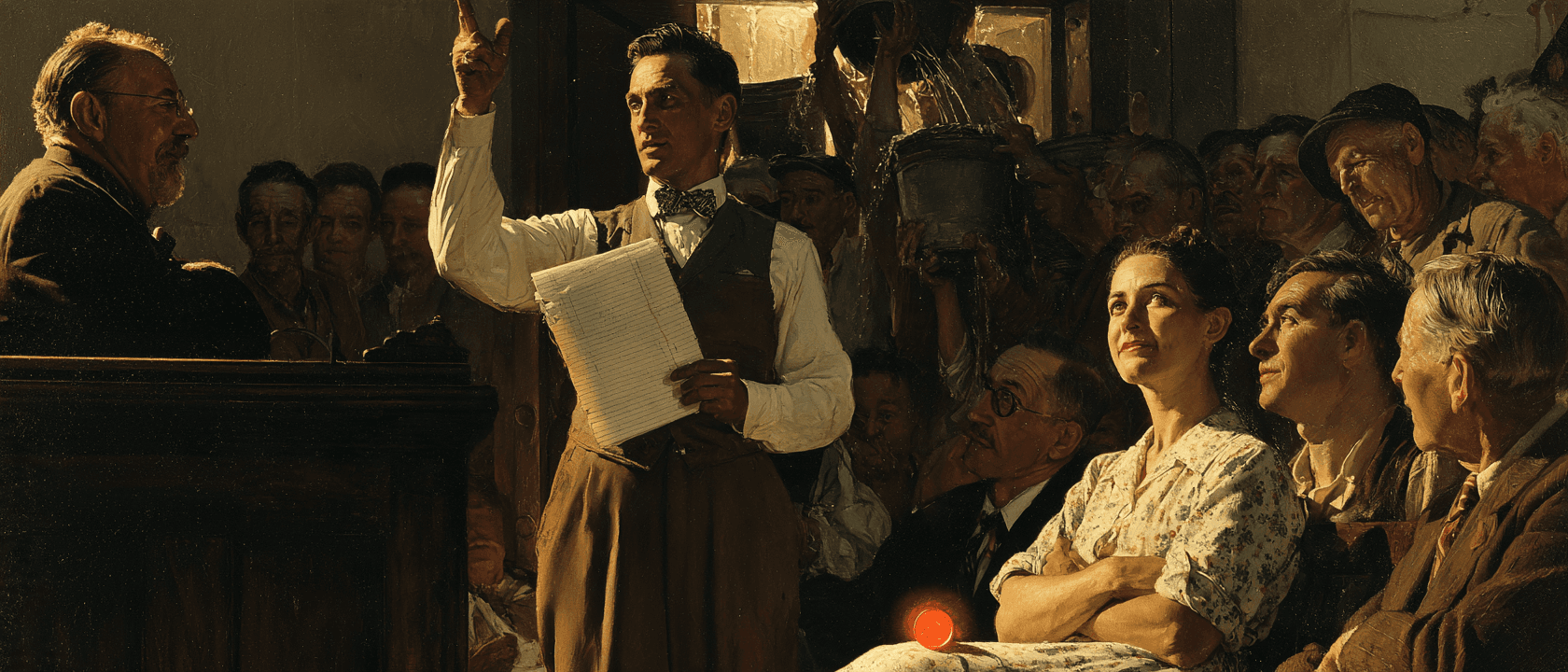
A dead text tells you the lesson. A worksheet at the top says "Today's Lesson: Courage." You fill out the boxes, you hand it in, you forget it. A living book shows you courage in action and trusts you to figure out what it means. Beowulf shows up, says he'll handle the monster, pulls Grendel's arm off, and nails it to the wall. You don't need a heading. A few days after Hannah read that section to her children, her middle son came to her and asked: "Mom, is Beowulf a saint?" He'd made the connection himself, between the saints' lives he'd heard and this warrior who did great deeds. Nobody told him to make that connection.
That is what Charlotte Mason called narration. You read to a child, you ask them to tell the story back to you, and then you leave it there. You let them tell you what they got out of it. Hannah gave me a perfect example. She read her oldest the Aesop fable about the crow dropping pebbles into a jug to raise the water level. If the moral had been printed at the bottom, it would have said something about resourcefulness or ingenuity. Her son told her what he got from it: you need to stay calm in a dangerous situation. That's not the printed moral. It's the moral he needed at that moment. When you spell out the lesson, you box them in. You stop them from using the part of the brain that actually does the work.
The connections compound over time. Hannah's oldest was reading Harry Potter for fun and Oliver Twist for school at the same time. He came to her while she was making dinner, kids always pick the worst moment, and told her that Harry Potter and Oliver Twist were both orphans, and then walked her through all the parallels he'd identified. She said she had to sit down and take notes. That is a mind that is actually reading, not decoding. That's the difference.
The books have to be worth it, though. That's part of why Chapter House exists as a publishing company and not just a reading list. The print-on-demand copies of these texts fall apart. The PDFs are read off screens, which is precisely the habit they're trying not to cultivate. Joshua and Hannah both grew up with cloth-bound and leather-bound editions of the Harvard Classics and Reader's Digest collections. Those books looked important. They felt important in your hands. That's not a superficial point. A book that feels like it matters invites you to rise up to it. A flimsy paperback doesn't.
One of their first-set books, A Child's Book of Myths and Enchantment Tales, is, by their account, the only edition on the market that preserves all the original color art and the full introductions, which were written by Katharine Lee Bates, the same woman who wrote "America the Beautiful."
The Western Canon Is Not an Apology
I want to be direct about this because Joshua was direct about it, and I completely agree.
Western civilization is the gold standard. That's not triumphalism and it's not exclusion. It's a fact. The canon has been studied seriously well beyond the countries that produced it, by people with their own deep traditions who still found it worth the time. That says something.
KFC operates a location where you can sit and look directly at the Egyptian pyramids. When the Berlin Wall fell, one of the things Soviet citizens were most excited about was blue jeans and Coca-Cola. Western culture is everywhere. It arrived because it was compelling, not because it was forced.
There are people who would like to bury the canon entirely. Joshua used the word apocalyptic for what that would mean, and I don't think he was exaggerating, and not only for the United States or Europe but for the whole world. The canon is the inheritance of every child born into Western civilization, and it belongs to them. The job of a company like Chapter House is to make sure they can actually receive it.
That doesn't mean sanitizing it. The Greek myths are, as Hannah pointed out, mostly really sad. Icarus doesn't make it. Warnings get ignored, and terrible things follow. Those consequences are part of the education. G.K. Chesterton, in Tremendous Trifles, argued that a child doesn't need to be told about the monster. He needs to hear that the monster can be slain. The child already knows the world is frightening. What he needs is the evidence that frightening things can be faced.
Flawed Heroes and Why They Matter More Than Perfect Ones
There is no such thing as a perfect hero other than Jesus. I said that on tape, and I meant it, and it's one of the things I think modern culture most badly needs to hear.
Moses had a temper. Abraham kept trying to sell out his wife because he was afraid. The disciples fled when Jesus was arrested because, as Joshua pointed out, in that moment they weren't completely certain. They were doubting. Peter denied Christ three times. And Peter became one of the greatest saints in history. Judas couldn't accept forgiveness. That was the difference. Not the sin. The response to it.
Achilles sulked on a beach because his honor had been violated. He had real flaws. But when the moment came, he was bold and brave. Beowulf has real flaws of his own, and he still showed up when there was a monster and said he would handle it. These are three-dimensional characters. They fail, they doubt, they make terrible choices, and then they do something that matters. That arc is the most instructive thing in literature, and you cannot replicate it with a Mary Sue character who never struggles.
Hannah's favorite example of this is Saint Mary of Egypt, who she called a saint for this age. Saint Mary of Egypt lived a deeply sinful life. She went on a pilgrimage almost as a joke, found herself unable to enter a church, cried out to an icon of the Virgin Mary, and was told to go to the desert and repent. She spent the rest of her life there. She walked on water before she died. She is counted among the saints because she made one decision: to turn. Her story matters precisely because she was not a saint before that moment. It shows that the path to holiness is real, and that it is available from wherever you are.
The modern habit of canceling Washington or Lincoln because of their flaws misses the entire point. The point is that these were human beings who rose above their default state and did something greater than themselves. That's why we remember them. You can catalog the flaws of anyone in history. Joshua made that point directly. The question is what they did in spite of those flaws, not whether they had them.
The George Washington cherry tree story is almost certainly invented, by Mason Locke Weems, a traveling book peddler and ordained Anglican clergyman who wrote Washington's biography after his death. But there are truths in it: a boy doing exactly what a boy would do with a hatchet and a tree, and then telling his father the truth when asked. Whether it happened or not, that story reached Abraham Lincoln as a young man and, by Lincoln's own account in a speech after his election, helped shape his aspiration to the presidency. The effect of the story was real. That is what it means for a myth to be true.
Dr. John Senior, the Integrated Humanities Program, and Tilling the Soil
One of the more fascinating threads in this conversation was Joshua walking me through Dr. John Senior and the Integrated Humanities Program at the University of Kansas.
Joshua is not Catholic, but Senior has been one of his primary influences, and once he explained why, I understood. Senior and two colleagues ran the program from 1970 to roughly 1980. They read the classics. They learned a little Latin and Greek. They sang folk songs and went outside at night to look at stars and learned square dancing. Things that every educated person once knew and that most of their students had never experienced.
Strange things started happening. Students began converting to Catholicism, and not nominally. Rosary beads, Latin Mass. Committed, serious converts. The program was eventually shut down. The fruits of it, students entering religious life in significant numbers, were too disruptive to the university environment.
Senior's philosophy was what he called tilling the soil. Not planting seeds. Just getting the ground ready to receive them. He connected the entire Western canon, all of it, back to a single point: Christ. For Senior, as a Catholic, that meant the Church. Joshua takes the same intellectual framework to a somewhat different theological conclusion, but the respect is genuine and the influence is direct.
St. Basil the Great wrote a homily specifically recommending that students read pagan literature before Scripture, because it prepares the mind. Joshua said reading the Greek and Norse myths with his children, seriously, has only deepened his Christian faith, because the capriciousness of those pagan gods, the way they take vacations, change sides, assault people on a whim, makes the consistency and faithfulness of Christ all the more striking by contrast. That is not the answer most people expect from a Christian publisher putting out books about Zeus and Odin. It's the honest one.
How to Start Tonight
The practical advice Hannah and Joshua gave is simple enough that there's no excuse for not doing it.
Set aside 20 minutes a night. That's it. If your children have been watching a lot of screens and everyone's attention span is fried, start with Aesop's Fables. Two minutes per story. No buildup required. If you want something with pictures and short stories, A Child's Book of Myths and Enchantment Tales is a natural starting point.
Chapter House organizes their box sets roughly by age, but the more useful filter is story length. The green set, Chapter I: Heroes and Wonders, has shorter stories for younger or shorter attention spans. As the sets progress, the books get longer and more complex. They don't have box sets 3 and 4 in print yet, but Joshua mentioned the proofs: one of the Chapter 4 books is nearly 700 pages. That's not where you start.
If you have boys who won't sit still, keep reading. Hannah and Joshua both said this clearly: boys who get up and start doing karate kicks while you're reading are still listening. Don't demand stillness. The public school model of rapt, motionless attention is not how boys are built, and trying to enforce it is part of why so many of them end up medicated. Let them move. Let them build with Legos or Magna tiles while you read. It works.
If something doesn't click the first time, pause it and come back in six months. Not every book lands at every age. That's not failure. The only failure is stopping entirely.
The habit compounds. An hour of reading a day produces more books per year than most adults read in a decade. Even 20 minutes a night with your children, consistently, over years, produces a reader who makes connections between stories, between characters, between ideas, the way Hannah's son connected Harry Potter to Oliver Twist, the way her other son asked if Beowulf was a saint.
You don't have to homeschool. You don't need to overhaul anything. You just have to start.
About Chapter House
Joshua and Hannah Centers are the founders of Chapter House, a classical publishing company producing hardcover editions of Western literary classics for home reading. Hannah taught high school history and Spanish for 13 years before homeschooling their three children full-time using the Charlotte Mason method. Joshua leads the publishing side of the company. They write twice weekly at Virtue and Wonder, where they cover classical education, literature, and the formation of children.
Sources mentioned
- Virtue and Wonder (Substack): Joshua and Hannah Centers' publication on classical education; source of the post on college students reading everything literally
- Chapter House: the publisher's home page, including the Chapter I: Heroes and Wonders set
- The Restoration of Christian Culture by John Senior: Senior's central text on classical education and the tilling-the-soil philosophy; the primary source for the Integrated Humanities Program context
- "Address to Young Men on the Right Use of Greek Literature" by St. Basil the Great: the homily recommending pagan literature before Scripture, cited by Joshua as a foundation for including Greek and Norse mythology in a Christian curriculum
- The life of Saint Mary of Egypt: the hagiography of the saint Joshua cited as a model of redemption from a sinful life, including her encounter with the priest Zosimas
Watch the conversation
Timestamps
- 0:36 - Intro
- 2:15 - Why Chapter House exists
- 5:13 - What Hannah had to unlearn from public school
- 9:45 - Fiat education and the standardized test problem
- 10:46 - Marty's classical education and what it built
- 18:30 - Virtue and wonder: the virtus et miraculum motto
- 30:00 - Living books vs. dead texts: Beowulf and the narration method
- 42:00 - The Western canon is not an apology
- 50:00 - Flawed heroes, Saint Mary of Egypt, and the cherry tree
- 1:02:00 - Dr. John Senior and the Integrated Humanities Program
- 1:12:00 - How to start reading aloud tonight
Sponsors
- Bitkey: Bitcoin self-custody hardware from Block, part of the same ecosystem as Cash App and Square, built to make Bitcoin easier to buy, hold, and use. bitkey.world
- Aven: a Bitcoin-backed Visa card and line of credit, custodied by BitGo, with no rehypothecation of your Bitcoin. aven.com/bitcoin
- Unchained: collaborative multisig custody. You hold two keys, they hold one. Code TFTC10 for 10% off a new vault. unchained.com/tftc
- CrowdHealth: a crowdfunded alternative to health insurance. My family has been on it for five years, two babies and multiple health events, and we're not going back. Code TFTC for $99 a month for your first three months. joincrowdhealth.com/tftc
Frequently Asked Questions
What is the Charlotte Mason method and why do homeschoolers use it?
Charlotte Mason was a 19th-century British educator who believed children should be treated as full persons from the start. Her method centers on living books rather than textbooks, narration rather than comprehension tests, and direct engagement with nature, art, and music. Homeschoolers use it because it produces children who love learning, not children who have learned to perform for a test.
What are living books vs. dead texts in classical education?
A living book is written by someone who genuinely cares about the subject and communicates that care to the reader. A dead text is produced to convey information efficiently. The distinction matters because living books produce engagement, connection, and retention that dead texts, including most textbooks, do not. Beowulf is a living book. A worksheet summarizing what Beowulf did is a dead text.
Who was Dr. John Senior and what did he teach?
Dr. John Senior was a Catholic educator and writer who co-founded the Integrated Humanities Program at the University of Kansas, which ran from approximately 1970 to 1980. He believed the purpose of classical education was to till the soil of the soul, preparing students to receive deeper truths by immersing them first in the great works of Western civilization. His books include The Restoration of Christian Culture and The Death of Christian Culture.
What is the Integrated Humanities Program at the University of Kansas?
The Integrated Humanities Program was a humanities course run by Dr. John Senior and two colleagues at the University of Kansas from roughly 1970 to 1980. It combined classic texts with folk songs, stargazing, Latin, Greek, and traditional arts. It became notable, and was eventually shut down, because an unusual number of students converted seriously to Catholicism. It is documented in Catholic education literature as one of the most striking examples of the power of classical formation.
How do I start reading aloud to my children if we have no established routine?
Start with 20 minutes before bed. Use Aesop's Fables if attention spans are short; each fable takes about two minutes. Don't require stillness, especially for boys. Let them build with blocks or Legos while you read. If a book isn't landing, put it down and try it again in six months. The only goal at the beginning is to make it a habit.
Why should children encounter myths with monsters and real consequences instead of sanitized stories?
Because children already know the world is frightening. What they need is evidence that frightening things can be faced. A child who hears about someone defeating a terrifying dragon gains something a sanitized story cannot give: the knowledge that monsters can be beaten. Encountering tragedy in myth also prepares children for the reality that bad outcomes happen, and that people go on anyway.
What does Chapter House publish and where can I find their books?
Chapter House publishes hardcover editions of Western classics curated for family read-alouds, organized in box sets of three books each. Their first two sets are available now; sets three and four are at the printer. You can find the books at chapter.house, follow them on X at @CHHouseBooks, and read their writing at virtueandwonder.com.