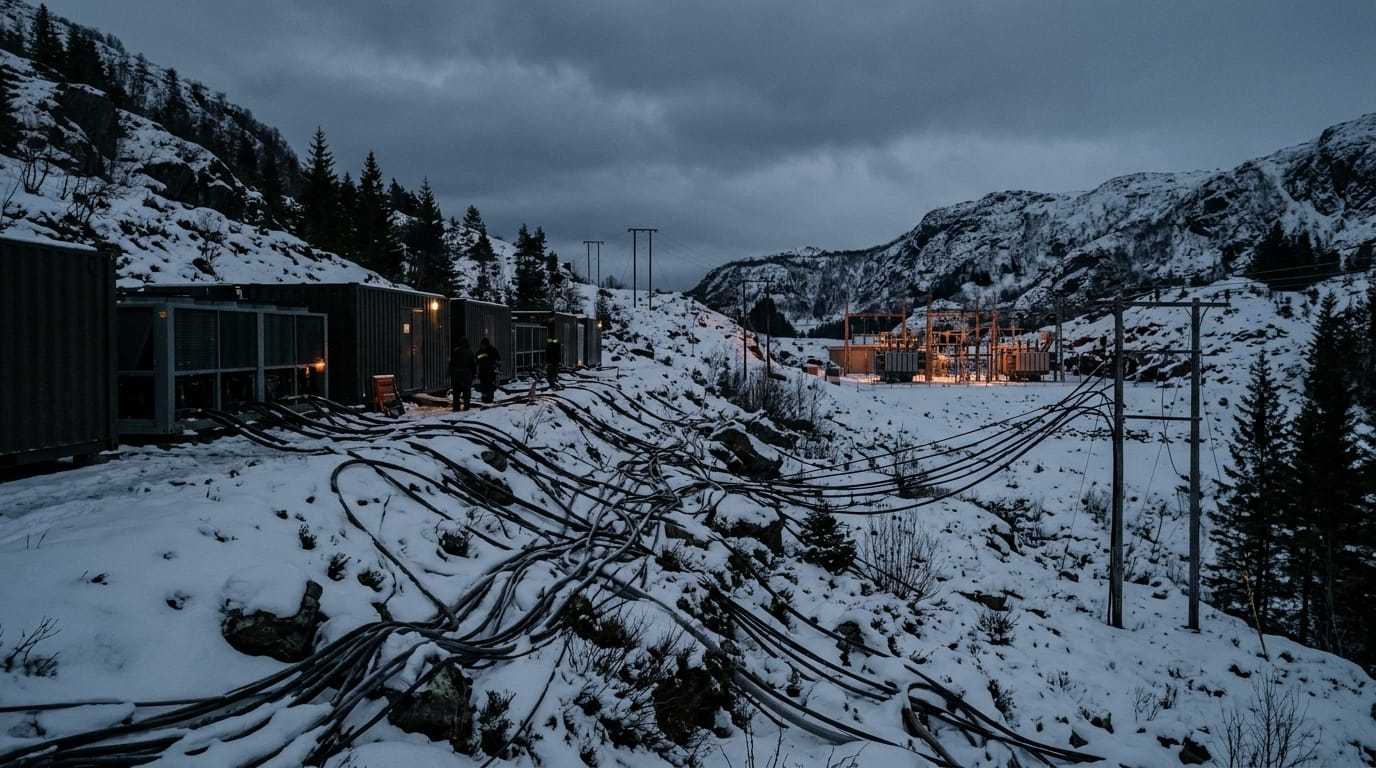
IRGC Claims Bahrain Radar Strike; CENTCOM Says Both Drones Shot Down
Iran's IRGC publicly claimed Friday it destroyed a U.S. early-warning radar installation in Bahrain. CENTCOM says it intercepted both one-way attack drones before any damage occurred. The fog of war is total, and the Hormuz corridor is getting hotter.
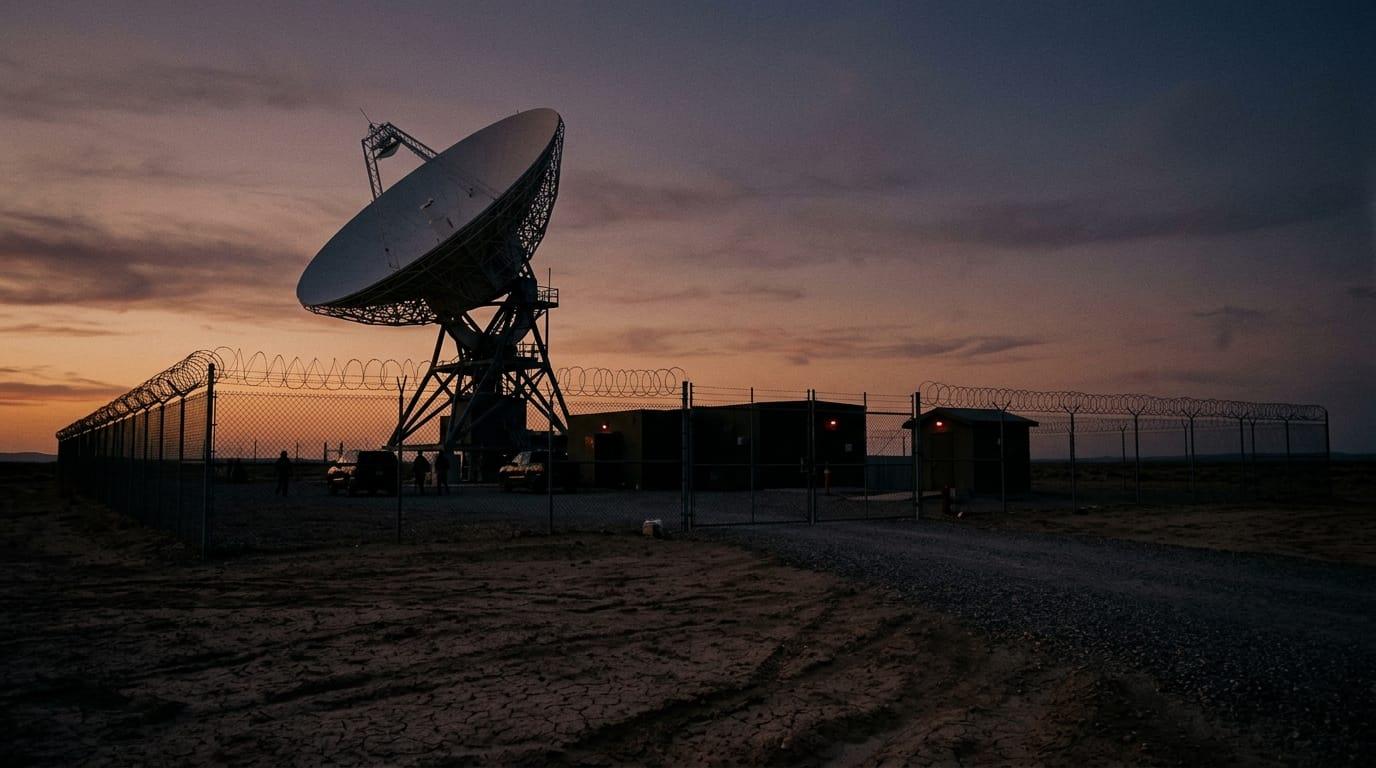
Iran's claim may be false, but the Hormuz corridor is undeniably hotter, and the chokepoint that moves roughly 20% of the world's oil is now a live battlefield.
Key takeaways
- Iran's IRGC publicly claimed Friday it "targeted and destroyed" a U.S. early-warning radar in Bahrain; CENTCOM says two one-way attack drones were intercepted and no damage or injuries occurred.
- Neither Bahrain's government nor any independent source has confirmed or denied damage, leaving the central fact of the story unresolved.
- The exchange follows a confirmed IRGC strike on Oman's Didamar Island navigation infrastructure earlier this week, a pattern of attacks targeting the Strait of Hormuz's physical plumbing.
Iran's Islamic Revolutionary Guard Corps claimed Friday morning that its Aerospace Force "targeted and destroyed the American aggressors' early-warning radar on the island of Bahrain," framing the operation as retaliation for a U.S. airstrike on a telecommunications tower in Sirik, Hormozgan Province, in southern Iran, according to Iranian state media. The U.S. has not confirmed any strike on Sirik. CENTCOM responded the same day, flatly denying any damage: "The IRGC launched two one-way attack drones toward Bahrain and both were shot down by US forces. There were no injuries or damage." Bahrain's government and military have offered nothing.
The IRGC statement was carried by Iran's official IRNA news agency and IRGC-linked Fars and Tasnim news agencies. CENTCOM posted its denial on X. The two accounts are not automatically mutually exclusive, a drone could have gotten through before being neutralized, or the IRGC claim is a fabrication. No independent open-source intelligence has resolved it as of publish.
What Is Actually Confirmed
The Bahrain strike claim sits in unverified territory. What is confirmed: earlier this week, the IRGC struck navigation, radar, and radio equipment on Oman's Didamar Island, which guides tankers through the Strait of Hormuz's southern shipping lane. Per Reuters, three independent sources confirmed the attack, and video of smoke rising from the island was verified. Iranian state television said the personnel and equipment there were "helping the flow of oil smuggling by the enemy."
That framing matters. Iran is systematically targeting the physical infrastructure that keeps oil moving through Hormuz, not just military assets. Didamar Island's navigation systems, radar, and radio equipment are the target.
The broader context: joint U.S.-Israeli strikes on Iran began February 28, 2026. Since then, Iran has launched repeated missile and drone attacks on U.S. bases in Gulf states and attacked Hormuz shipping infrastructure. Washington has imposed a naval blockade on Iranian ports. This is not a skirmish; it is a sustained, low-intensity war being fought over the world's most critical oil chokepoint.
The Fog of War Is Itself the Weapon
The IRGC does not need to actually destroy a radar for Friday's claim to matter. The public announcement, amplified through state media and wire services, moves oil futures, stresses Gulf shipping insurers, and forces institutional capital to price tail risk. Iran has figured out that uncertainty is a force multiplier.
The claim costs nothing if false. The disruption it causes is real regardless.
The IRGC paired the strike claim with a direct threat: "Should these violations and acts of aggression recur, the IRGC Aerospace Force stands in full readiness to engage without limits." That phrasing, "without limits," is the tell. It signals willingness to strike beyond the immediate theater, including infrastructure nodes that sit well outside the Persian Gulf.
Bahrain is home to the headquarters of the U.S. Navy's Fifth Fleet, the operational nerve center coordinating naval operations across the Persian Gulf, Red Sea, and Arabian Sea, including enforcement of the blockade on Iranian ports. A credible strike on Fifth Fleet infrastructure, or even a credible claim of one, is a different category of provocation than hitting a navigation buoy on a remote Omani island.
For a Bitcoiner tracking second-order effects: the Hormuz tanker attacks story was already stress-testing energy markets before Friday's claim. The Strait handles roughly 20% of globally traded oil and a substantial share of global LNG. Any sustained disruption, or a credible threat of one sustained long enough, spikes energy prices globally. That feeds directly into CPI. It forces central banks into an impossible position: hike into a weakening economy to fight inflation, or let purchasing power erode.
The Hormuz chokepoint has been contested before, but attacks on the navigation and radar infrastructure that physically routes tankers through the strait are a different degree of threat than missile salvos that miss.
Countries most exposed to Hormuz disruption, primarily in Asia and Europe, are already thinking harder about dollar-denominated settlement risk, making the petrodollar's stress test live, not hypothetical. That slow-moving monetary-order realignment is the story beneath the daily drone tally.
What to Watch
The key question is whether independent open-source intelligence, allied governments, or Bahrain's own military confirm or deny radar damage in the coming days. If CENTCOM's account is fully corroborated and the conflict cools with a credible ceasefire framework, this reads as a contained deterrence signaling moment.
If Bahrain stays silent, the IRGC claim circulates unchallenged, and attacks on Hormuz infrastructure continue on the current tempo, the floor on this conflict has risen. The Hormuz shipping lane is not an abstraction, it is the artery. Permissionless, seizure-resistant, geographically unbound money becomes a cleaner proposition the longer state actors demonstrate they cannot de-escalate around it.
Sources
Frequently Asked Questions
Why does Bahrain matter to U.S. military operations in the Gulf?
Bahrain hosts the headquarters of the U.S. Navy's Fifth Fleet, which coordinates naval operations across the Persian Gulf, Red Sea, Arabian Sea, and surrounding waters. It is the operational center for enforcing the naval blockade on Iran and protecting commercial transit through the Strait of Hormuz. A credible attack on infrastructure there is not a peripheral provocation.
What is a one-way attack drone and why does CENTCOM's framing matter?
A one-way attack drone (sometimes called a loitering munition or kamikaze drone) is designed to crash into its target and detonate with no return flight. CENTCOM confirmed the drones were launched and intercepted. That confirmation is an implicit acknowledgment the attack occurred; the dispute is solely whether any drone got through. That distinction is what makes the IRGC's damage claim neither obviously true nor obviously false.
How does sustained Hormuz disruption connect to Bitcoin?
The Strait of Hormuz is the transit point for roughly 20% of globally traded oil. Sustained or credible disruption historically drives energy price spikes that feed inflation and stress fiat monetary policy. Bitcoin's short-term price correlation to oil shocks is noisy. The structural signal is the fixed-supply asset outside any state's geographic control becomes a more legible proposition every time the world's most critical chokepoint becomes a contested battlefield.