Safepal Breach Turns Physical: 39,798 Customer Addresses Become a Target List
An August order-system breach exposed 39,798 Safepal customers' home addresses. Attackers are now mailing personalized phishing letters with QR codes to Italian users. The wallets were never cracked. The customer list was.
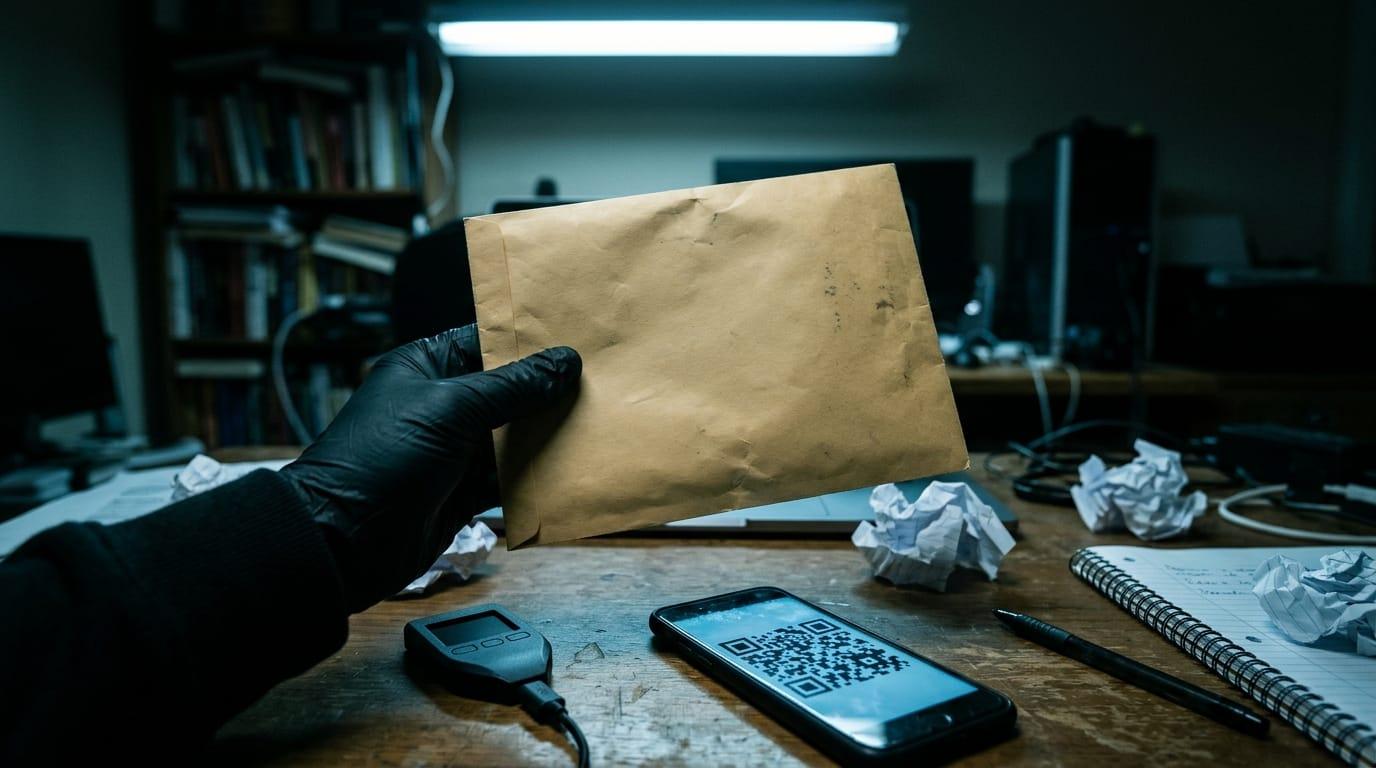
Attackers armed with names, home addresses, and order details from an August data breach are mailing personalized QR-code phishing letters to Safepal customers in Italy.
Key takeaways
- Safepal's August 2026 data breach exposed names, shipping addresses, phone numbers, and order details for 39,798 customers; attackers are now using that data to send fraudulent physical letters warning of a fake firmware vulnerability.
- The hardware wallets themselves were never compromised. No seed phrases or private keys were exposed. The attack vector is the manufacturer's centralized order database, not the device.
- Any hardware wallet company that retains your name and home address is maintaining a target list. Anonymous, non-KYC purchase is not paranoia; it's the correct opsec.
Safepal confirmed on its official security blog that it is aware of "a wave" of physical phishing letters targeting customers affected by the breach it disclosed on August 16, 2026. The letters, reported by Italian outlet Criptovaluta.it and corroborated by Safepal's own acknowledgment, contain recipients' full names, home addresses, specific order details, and personalized QR codes that route to a counterfeit Safepal website falsely claiming a critical firmware vulnerability.
The company's statement was unambiguous: "These letters are NOT from SafePal, and wallet infrastructure remains secure. SafePal will never send physical letters or ask for seed phrases."
What the Breach Actually Exposed
The root cause was an authorization flaw in an order-tracking plug-in. The vulnerability exposed data for orders placed between March 2, 2025, and April 11, 2026, touching 39,798 customers. Exposed data included names, email addresses, physical shipping addresses, phone numbers, and purchase details.
What was not exposed: seed phrases, private keys, wallet passwords, or any payment card, bank, or government ID data. Safepal completed an independent Cure53 security audit on October 30, 2026, and the audit found no vulnerabilities in the reviewed system.
Since the breach, Safepal has taken down more than 30 fraudulent websites and phishing links. Per local reports, the QR codes in the physical letters route victims through Arweave, a decentralized storage network, to a fake Safepal site that displays recipients' real order details to appear credible. That Arweave layer makes takedown substantially harder than pulling a conventional phishing domain.
The Real Attack Surface Was Always the Database
The wallets were cryptographically intact. The customer list was not. That distinction is the entire story.
Safepal's order system held exactly the data an attacker needs to run a highly convincing physical threat campaign: who bought a hardware wallet, what they ordered, and where they live. That combination goes beyond phishing risk. A name plus a home address plus "this person owns a hardware wallet" is a usable input for in-person coercion. The 39,798-person list is a live target directory.
This is not a novel attack. Ledger's 2020 customer database breach produced the same playbook: personalized physical letters, real order data, escalating threats. Safepal is running the same script against its own customers years later because the underlying model, a manufacturer holding persistent PII to fulfill orders, was never fixed industry-wide. The crypto hack losses that get tallied on-chain are only part of the picture; the off-chain liability of a customer database is harder to audit and apparently harder to remember.
The falsifiable thesis here: centralized order databases at hardware wallet manufacturers are a more dangerous attack surface than the wallet hardware itself. That thesis weakens only if manufacturers move to a model where shipping data is processed by a third-party fulfillment intermediary and no persistent PII ever touches a manufacturer-controlled database.
Cash-or-Lightning-paid, conference-purchased, PO-box-delivered hardware with no registered account would have produced zero usable data for this campaign. That is the correct default for anyone serious about self-custody security.
What Affected Users Should Do Now
Do not scan any QR code in a letter claiming to be from Safepal. Discard the letter. Safepal has published a verification tool at safepal.com/scam-protection where users can check by order ID and shipping country whether their data was part of the breach. Report any letter received to local law enforcement and to Safepal's scam-protection team to assist in domain takedowns.
Wallet migration is not necessary. The devices are secure against the actual threat here, which is social engineering rather than a firmware compromise.
Sources
Frequently Asked Questions
Does receiving one of these letters mean my Safepal wallet is compromised?
No. The phishing letters exploit data from Safepal's order system, not the wallet hardware. Your seed phrase, private keys, and wallet credentials were not exposed. The letters are fraudulent. Do not scan the QR code, do not visit any linked site, and do not enter any wallet credentials anywhere prompted by the letter.
How can I check if my data was included in the Safepal breach?
Safepal published a verification tool at safepal.com/scam-protection. Enter your order ID and shipping country to confirm whether your data was part of the exposed set covering orders from March 2, 2025, through April 11, 2026.
What is the safest way to buy a hardware wallet without exposing your identity?
Pay with cash or Lightning at a Bitcoin conference or through a reseller with no registered account. Use a PO box or a forwarding address. Never register the purchase with the manufacturer if avoidable. This breach demonstrates exactly why that opsec matters: there is no phishing letter to send if the manufacturer has no name and no address on file.