Transcript: Nick Nemeth: Insurance Is the Next Contagion
Full speaker-labelled transcript of TFTC episode #792 with Nick Nemeth.

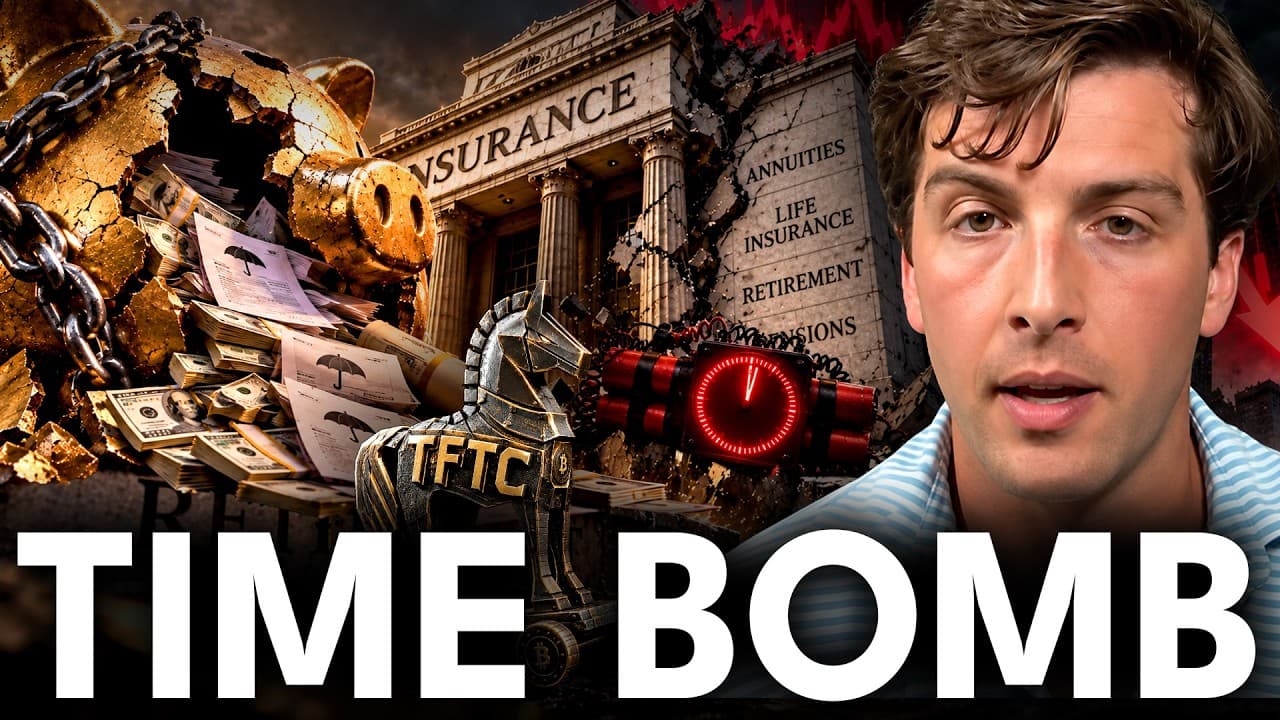
Full speaker-labelled transcript of TFTC episode #792 with Nick Nemeth. Read the written article: Nick Nemeth: Insurance Is the Next Contagion. Click any timestamp to watch that moment on YouTube. Machine transcription, lightly cleaned, may contain errors.
Nick Nemeth [0:07] You've had a dynamic where money's become freer than free.
Marty Bent [0:09] Let me talk about a Fed just gone nuts, all, all the central banks going nuts.
Nick Nemeth [0:15] So it's all acting like safe haven. I believe that in a world where central bankers are tripping over themselves to devalue their currency, Bitcoin wins.
Marty Bent [0:25] In the world of fiat currencies, Bitcoin is the victor.
Nick Nemeth [0:29] I mean, that's part of the bull case for Bitcoin. If you're not paying attention, you probably should be. Probably should be. Probably should be.
Marty Bent [0:36] Nick, welcome back to the show. Sorry.
Nick Nemeth [0:39] Good to be back, Marty.
Marty Bent [0:41] This is the third recording in five months, and this is the third different place that I've been in. We met in person last, but in the new studio now. and excited to catch up because a lot has happened since we met in June at PubKey, particularly around Mark Walter and the fiasco he's found himself in. And I think we'll get into it. You wrote a piece called The Guggenheim Universe that really dives deep into that and the related parties. But before we get into that, I think just setting the stage for any of the audience who may not be familiar with our previous work together, I think really starting with the end user of a lot of these products. So let's put ourselves in the shoes of someone who bought an annuity because they were done taking risk, just buying a premium life insurance policy. What is actually standing between them, that retirement check, and a loss right now?
Nick Nemeth [1:42] So people typically don't understand they have credit risk. at an REA, they'll say that they do, but they don't understand the risk part of that 2-word phrase. So yeah, they're looking for security. Social Security isn't enough. Cost of living is high. A lot of boomers have homes and mortgages they want to make sure is secure so they could pass them off to their kids. Typically, this is not something you can pass off. It's really just for the retirement, but it comes into an equation of retirement and ultimately security.
Marty Bent [2:18] Yeah. And so they completely misunderstand this, number one. And then number two, the people that they think they can trust are misallocating their retirement funds. And I think, again, going back to Mark Walters, what's going on, he sold the Lakers overnight to Josh Kushner and Bob Iger. There's rumors that he's got to offload the Dodgers as well. I think he's got a big stake in Chelsea across the pond. And I guess let's just walk through that story from your perspective, because I won't rehash it because I think you've done much deeper research than I have. How insane is this? And was there any smoke around Mark Walter before this became obvious?
Nick Nemeth [3:07] Yeah, I would just say that it's not their fault. There's supposed to be a system in place to make sure that people are following rules. My view is that the regulators are asleep and the rules are dumb and the framework is awful. And since we last spoke, Granado and Prenjal, 2 graduated from Yale, I think they both went different directions. I think Prenjal is still at Yale. Granado's at UT Austin. They wrote this amazing piece that just absolutely lit up the world really of insurance. And all of a sudden I'm like, I write in my own way. I think it's good. I think it travels.
Nick Nemeth [3:07] People tell me it does, but they did it in a really concise academic way, talking about how the framework, the incentives, it's all bad. It's all bad in the industry. And if you're thinking about why asset managers want to buy these insurers or make their own, It's because they get fees, right? And in this particular case of Guggenheim, they're using it as a piggy bank. When I was on last, I was critical of Athene. I'm still critical of Athene, but just to be honest, you don't see Mark Rowan using it as a personal piggy bank. Athene is Apollo's firm piggy bank and profit center, and there's a huge difference when it comes to circular transactions and ultimately the law.
Marty Bent [4:34] Well, let's get into that. How was Mark using it as a personal piggy bank?
Nick Nemeth [4:39] Well, I mean, he originally used $1 to $2 billion of policyholder funds to buy the Lakers, and the Lakers are worth apparently $10 to $13 billion now. But at the time, he bought it for $2, maybe, maybe, maybe a little bit more. So he funded the Dodgers purchase with the Lakers in large part. You're only allowed to use 30% debt according to league rules. You're only allowed to use 30% of private equity money because they don't really want that money creeping into the game. Instead, he put up $100 million, so less than you would if you were mortgaging a house, and he got the rest of the money from policyholders.
Nick Nemeth [4:39] And he's done this through F1. He's done this through the Dodgers TV deal, which he negotiated on the side of Guggenheim. And it seems like, allegedly, that it was a precondition for purchase of the team, which was in distress because their former owner went bankrupt. But that's one example. And I came out with this huge piece where I'm cross-referencing all of these Guggenheim matures. So if people don't know, Guggenheim is one of the big asset managers in the world. We're not talking a trillion-dollar asset manager, we're talking half a trillion-dollar asset manager. And they have a lot of SPVs that have single names that are just completely made up.
Nick Nemeth [4:39] And I track them over to the Delaware entity search list, and they're made 5 days, 7 days before. So they're just a pass-through entity. And these are literally on the same insurers that you'll see there. The 2 that are under Walter are Delaware Life and ClearSpring, but Equitrust and Heritage Trust It seems like Walter gave originally Magic Johnson money and then potentially their new holding company money in order to buy those. Those also invested in the Dodgers TV deal at least. And Sammons at the bottom was originally and still is a major economic shareholder of Guggenheim. So it's kind of like the reverse. But Guggenheim used to be the full asset manager.
Nick Nemeth [4:39] They said they're moving away from it, but I just modeled out their book and it's substantially similar. And these are all related parties. Delaware and ClearSpring were, are getting investigated for saying that they're, you know, not affiliated party risk. I mean, paper, affiliate paper. And so they had to, for $20 billion, say, oh, actually, all of this is affiliated. It's pretty obvious to say that's affiliated. What's very interesting at this stage is Equitrust still says they have zero affiliate paper, and they have the same paper, and it's functionally the same ownership. There's also security benefit as well, which does not— oh, it's at the top.
Nick Nemeth [4:39] It is the other Dodgers co-owner. So this is a huge sports story and it's getting extremely popular if you see Pablo Torre on it. In fact, Jeff Passan, that was the biggest defender of the Dodgers, is on it. And that's sort of ripped the COVID off of, okay, affiliate paper, Regulators need to wake up. This could be a major issue as people like myself and Granato and Prenjal are talking about the systemic possibly issues here. I think they're definitive, but I want to hedge my language a little bit.
Marty Bent [8:20] What makes something officially an affiliated party or affiliated paper?
Nick Nemeth [8:26] So there's 2 buckets for it. If Apollo is underwriting the loan and Athene is taking the paper and Apollo controls the marks, that is affiliate. But this is a different level of affiliate, and I think that should be delineated. But affiliate paper typically is manager underwritten, manager controls the marks and manages the asset.
Marty Bent [8:52] And the delineation, what's the other type of affiliation that you were describing?
Nick Nemeth [8:57] Well, if it's for personal gain. So if I securitize my Substack and put it on an insurer, that would be like Extra affiliate, and that's what we're talking about in the Delaware Life and Clear Spring examples. " And I got flavors, and it's probably because they wanted to remember what the hell they were chopping these assets up into. And one of them was Chicago Streets, and I call them all the Chicago Street style. LLCs, and they're literally the cross streets of Chicago, like circling. I have an image on there of the Guggenheim headquarters, and I went on Google Maps and made a picture of that.
Nick Nemeth [8:57] So it's undeniable. And these are across all of those different insurers that total up to be bigger than SVB, and I believe the same size as SVB and First Republic and the New York bank that went under in the regional banking crisis. So that's the scale of it. And I can, I can talk about, you know, how that's kind of the tip of the iceberg. But it's certainly a big pressing issue. And we're talking about something that, you know, people are talking about, well, did he sell the Dodgers to get out of it? Because Kushner can call his brother Kushner and he can tell his wife and wife can tell dad to drop the charges.
Nick Nemeth [8:57] And that's, that's certainly possible. in the insurance world has been extremely lethargic. And in the last meeting, all of a sudden everyone decided, hey, we got to pay attention.
Marty Bent [10:39] Well, before we get into the expansion of this and the, the, the untangling, uh, in more depth, just to really like break it down to first principles and basics of the mechanics of what people think they're buying on the insurance and annuity side, And what Mark Walter and these affiliate shell companies and Guggenheim are doing with that money and what it means when people actually need to get paid out for their annuity or, God forbid, pass away. They need to tap into that life insurance policy. How egregious is the mismanagement of these funds? What are they typically supposed to be doing? And if they're locked up in a sports team or a TV deal, How does that compare to the liquidity profile of historically the assets that you would invest in?
Nick Nemeth [11:32] So I'll take it briefly just from the policyholder side. Again, it's either take care of my wife after I pass away or my family, because if I go, they got to make sure they have money, or I'm going to take care of my wife and myself in retirement or something like that. The assumptions are these are insurance companies. Insurance companies are supposed to be safe. Typically, there's not been that many failures. of insurance companies. So they don't even think about the credit risk really. They get a 50-page document. They say, okay, typically there's a salesman that's taking up to 15%, 10% to sell them the policy and is telling them all these things who the industry has argued is not a fiduciary.
Nick Nemeth [11:32] So you can look on the internet and it's really popular on TikTok right now, selling insurance. We're talking about people that are selling a product that they don't understand, but they're not acting as a fiduciary, don't need licenses or anything like that. They might need licenses, but not security licenses. Have to double-check that. So they're getting into this like, okay, you're guaranteeing me this money.
Marty Bent [12:40] Good.
Nick Nemeth [12:41] That's what I want. They're assuming that it's— there's a reasonable framework into making sure that they get the money. They don't even think about it typically. And, you know, sophisticated wealth managers that might have, you know, 1,000 accounts, they'll put all of their clients into this because they think it's good. They've been told it's good. They know there's credit risk because they have licenses, but they don't understand the credit risk. So that's like the buyer of it and how they kind of get sold on this. Taking it to the other side, the justifications for taking excess risk are these are extremely long liabilities on duration that they know what they're going to be.
Nick Nemeth [12:41] They can ultimately make the hurdle and then take profit out in the meantime. And sort of a perverse incentive that nobody will admit is this is like the cheapest capital in the world, right? If you go to a bank, you're going to have to pay a spread on income. 5%, that is barely, probably at the time beating the 5 or 10-year. It might not even. That's your hurdle rate. So they're able to take that money and invest it, collect fees off of it in a lot of cases. But in particularly this case, it was used for personal gain. And there are examples of this and there are examples of people going to jail.
Nick Nemeth [12:41] Lindbergh is a good example. He's getting sentenced, I think it's 12 or 15 years. But the Walter story, people know the Walter name before any of this. And if they don't, they know the fact that he owns the Dodgers and the Lakers. And if you're a soccer fan, Chelsea. As an F1 fan, the Cadillac team. This guy has come out of nowhere when most He's richer than Rowan, right? Guggenheim is— I don't want to diminish, they are a big asset manager, but the vast majority of their assets are affiliate. So 40% of their revenue is tied to affiliate revenue. And basically, it's just been built out of this game plan and playbook of let's take advantage of this.
Nick Nemeth [12:41] And while the regulators are asleep, let's do our thing.
Marty Bent [15:07] Yeah. So for insurance products, something like a sports team on a duration side makes a lot of sense. Long-term asset holds its value pretty well in recent decades, has been going up over a long enough time horizon, but the liquidity profile is such where it doesn't make sense, where it's like, hey, somebody's claiming, it's like you can't clip off chunks of the Lakers or the Dodgers to pay out People have bought these insurance plans. So that doesn't make sense. But let's dig into the personal gain too, because obviously Walter had to sell his stake in the Lakers. There's rumors he's trying to offload the Dodgers as quickly as possible.
Marty Bent [15:07] That's where I'm trying to— it's obvious now that he's caught and he's got to get the money back. But he he's been personally gaining from taking the pool of liquidity in these insurance policies and buying the Lakers in his name. But at the end of the day, he's got creditors in the form of these people who bought these insurance policies. It's pretty insane when you break it down like that.
Nick Nemeth [16:20] Yeah. I mean, the Dodgers are probably his best investment of all time. Carvana's also done well for him. The Lakers was a good quick clip. Those are probably the best investments he's made. If you look at Eldridge, which is Todd Boehly's asset manager, as well as TWG, which is another important part of this, it's Walter's asset manager outside of Guggenheim as he's the CEO. They got a lot of money and grew assets in '20 and '21 into super high multiples, and some of it's been a win, just like everyone, he probably owns Anthropic and SpaceX, but there's a lot of losers in there. And one thing I hear is like, okay, well, if he used policyholder money to buy the Dodgers, what's the problem?
Nick Nemeth [16:20] And it's the question of all of the opaque fabricated entities that they're legitimized in Delaware, but there's no business. It's a pass-through entity. We can't see what the other side is. That's where the the question to me lies. And then also Sam Bankman-Fried invested in Anthropic and he borrowed money and made these investments and he went to jail on, I think it's 25 years or something. Functionally, it's the same thing in my mind.
Marty Bent [17:42] Yeah, actually that's a great analog. It is. I mean, he was taking FTX depositor Bitcoin, investing in Anthropic and trading with it. That's Mark Walter doing. The same thing with the insurance side of things. Now let's dig into untangling the mess and the potential domino effect that could fall, because I think a few weeks ago, or over a month ago now, when he sold the Lakers, people were like, oh, that was weird. I remember waking up one day and I was like, oh, Bob Iger and Josh Kushner are a big part of the Lakers now. That's interesting. And then a couple days passed, it's like, oh, Mark Walters— Mark Walter did this in a fire sale. And then the numbers came out. What was it, a $40 billion hole or a $20 billion hole that he needs to fill?
Nick Nemeth [18:25] So he has to move $20 billion of affiliate paper that's probably mismarked, right? If you're thinking about it, there's TWG that is with approval, will take $5 or $6 billion. Regulator has to approve it, but then there's a lot more. And then there's what Walter is personally already encumbered. I believe that the Lakers were the most unencumbered, meaning it wasn't borrowed against to buy something else. So you sell the one unencumbered thing, it might free something else up in order to help this liquidity picture as he's got to move money. And he doesn't have that many friends. I mean, sure, every billionaire has a lot of friends, but if you asked around in New York, these particular Guggenheim guys are not well thought of as businessmen.
Nick Nemeth [18:25] They're respected in some ways, but definitely have a lot of enemies. So it's the equation of like, who's going to bail them out? Because we are talking about moving a massive amount of assets. And just to fill in the duration picture, durations are long, Unless there's runoffs, and I talked about this last time and the surrenders. Meaning, if you have an annuity, you might pay a fee, but you can typically get your money back, and the fee is only maybe five five percent in year two. They already paid out the first year to a salesman, so they're losing money when you do that. And also, it's basically a potential run.
Nick Nemeth [18:25] What I'm seeing talking to insurers and particularly asset manager-backed insurers that do not. like what is happening in the industry is everyone is like, we're not making as much money as those guys, but they're taking ridiculous risk. And we just like to bring the competitive dynamic back to reason. They're saying that surrenders are higher than they expected, even without the reputational risk of like, what is Mark Walter doing with my annuity? 5%, now that the 5-year or 10-year— 10-year's approaching 5%. So obviously you're going to want that money back. 5%, is trading down more today. In the past, there was a lot of lethargy and there was a lot of inertia there, but today you can just take the agreement, put it into check, and be like, should I get out of this?
Nick Nemeth [18:25] And ChatGPT will be like, well, I can't give you financial advice or whatever it says, but here's the math. And the math is not favorable. These products are built for the unsophisticated unless you're avoiding taxes. Because you just got to think about it. If you're paying out 10% to a salesman, there's a lot of salesmen I talk to that are really upset about what I say, but it's just Someone doesn't need to be paid to get you into a good investment, right? Typically. So that's 10% off the top. Then each year they're clipping 40, 50 basis points. There's operational fees, and then they take money out to either dividends.
Nick Nemeth [18:25] Typically even for private equity, it's called dividends, if not balance sheet accrual. So all of that profit is coming out of somewhere. where a sophisticated person could just go and get that yield even in the credit markets. But the math gets really bad as rates go up. So as rates have gone up, people have a huge spread what they could just buy the risk-free rate on.
Marty Bent [22:18] Yeah. It's like, I mean, not that the government debt is much better, but it's pretty liquid and there's a big market for it.
Nick Nemeth [22:26] The problem is it's based in dollars. Yeah.
Marty Bent [22:29] Yeah. Well, and there's another aspect here too, particularly for Walter, bringing this back to his particular predicament, is even if he wanted to offload some of his assets, there's potential that those assets could be tied up in some sort of lawsuit. So nobody wants to buy that part. It's like a toxic part of his book. So he has limited options there as well, correct?
Nick Nemeth [22:51] Yeah. And even if he moves it, it's like, hey, I stole from you, but I returned it, you know, a week later. That's not, not really how the law works. Now, how the law works tends to do with how— with who your friends are. Um, that's, that's definitely a variable in this. And Walters tried to flirt with the Trump administration. I think once it's broken into sports— I mean, if there's one community that's more rabid than the Bitcoin community, it's probably the sports world. That's a lot of votes. And there's 29 teams that are pissed off at the Dodgers. And, you know, the owners are trying to go after the players to accept not being paid too much.
Nick Nemeth [22:51] And it's like, the reason why the balance is messed up is the Dodgers. The reason why the Dodgers have messed up the balance is not because we're in a capitalist society where some people have more money than others and there's inequality and, you know, revenue of sports franchises. It's because the money wasn't even his to a large extent. Right. When you're making decisions with other people's money, as a fiduciary, you're supposed to be even tighter. But in this case, and when it's just a piggy bank, he's using it to fund his hobby assets.
Marty Bent [24:07] Well, I mean, you think about the Ohtani contract loan. Was that $1 billion over 9 years and delayed payout on the back end as well?
Nick Nemeth [24:15] So the funny part about that is it's very annuitized, right? technically it has to be prefunded, but could it just be prefunded by the policyholders? Now, I haven't found that yet. I'm trying to find that, but the problem is that Delaware does a really good job of having entities you can't see into. And it's a major problem, I think, in our system for that. As soon as you get into the public domain, like, I don't care what you do with your trust, how you name it, I don't want to see it. But when it comes to policyholders or depositors, when that's the part of it, I want transparency, right?
Nick Nemeth [24:15] You're playing in the public domain, and the transparency on these insurance assets and broadly the world is god-awful. There's not even an EDGAR. If stock people or bond people are typically used to looking at financial statements, You don't even— you have to pay for that on the statutory filing. And again, there can be a lot of these misnamed or made-up name LLCs.
Marty Bent [25:22] Yeah. And LeBron looks like he was roped into this. So what was it, $300 million of his Lakers contract was some weird side deal?
Nick Nemeth [25:31] Yeah. So right before LeBron signed with the Lakers, he got $300 million. It's like the timing of this is just You know, it's quite interesting. And we just had the Kawhi story. I've been working with Hunter Brook and chatting with Pablo Torre in the DMs. And, you know, the salary cap, like the NBA has a salary cap, the MLB wants a salary cap. If you just allow them like to go outside the salary cap, like what's— there's no point. And credit to the NBA for cracking down on Ballmer. on that. But on the Lakers side, I think you could make an argument that there's economic value of getting a $300 million loan.
Nick Nemeth [25:31] On the devil's advocate side, LeBron bonds are probably money-good bonds, right? But that's what we can see, right? And what I encourage people to think about is what is chopped up or these small investments in things that are named after Amazonian rivers or Chicago streets? What even is that? And if you can't answer the question, you have to assign a risk probability to it, understanding that these products are— if you bought it 2 years, 3 years ago, 5, 10 years ago in a life insurance policy, you're getting a really bad deal based on what you can alternatively get outside of it today.
Marty Bent [27:02] Yeah. And I mean, that begs the question, I mean, we met in June, we were focused on Athene. Now Mark Walter, Guggenheim pulled into the mix. I'm not going to lie, the last few weeks haven't really been paying close attention, but it seems like that whole part of this saga has fallen out of the news cycle quite a bit. Where do you think things stand? Is the clock ticking for Walter, Guggenheim, these related parties? And then on top of that, it seems like the regulators regulators are trying to, in retrospect, be like, okay, let's make sure everything's being reported correctly. And there's some, I guess, revisions being made to financials that have been released in the past. What's the situation there?
Nick Nemeth [27:48] I just came out with an AI piece on where I see the opportunity, co-written by Liam Dalton, one of my good friends. rock star that I talk to on a daily basis about markets. He said something, I think it was his dad that passed this along about shark attacks and how it might nibble your calf and then it swims off and then eventually comes for your leg. And you're lucky if it's just your leg because it's coming back for all of you. That's how I see the ebbs and flows and attention in markets. I can say that I think that the attention's there. I think that people are mad and I think people are ready for every next story.
Nick Nemeth [27:48] It's sort of, you know, been festering for a long time and the regulators are awake now. So once the people are upset, then all of a sudden the people that answer to the people start actually waking up. And they've been told this before. I've been yelling it from the rooftop. Affiliate paper is an issue. A lot of illiquid assets, the allocations to private credit, commercial real estate is a disaster. All of this is a problem. All of this is on their balance sheet. There's many specific examples like permitted practices, which are waivers to not follow the rules. I could talk about the ratings agencies. Systemically, there are massive problems here, and it— but they've been there, right?
Nick Nemeth [27:48] So the question is, do the regulators wake up? We're going into a mid-cycle election. There's massive game theory. I'm super in the weeds of it. So I personally don't feel like the attention's fallen off. I've had the biggest, most busy August of my life. And this week, podcast with you, I got the earnings tomorrow morning, and then 2 back-to-back podcasts. consuming me, um, you know, because I got to do— I got to do my, you know, normal stuff. I'm not a perma-bear. I'm trying to find opportunities. But at the same time, like, I'm dedicating 60 hours a week to this insurance, uh, trade for ultimately no other reason than I believe that, um, it's systemic risk and it's going to be the story of the end of this cycle, whether that comes in the next 3 months, 6 months, or 2 years.
Nick Nemeth [27:48] Is a question. I think that I could get granular in figuring out what would break what, what the transmission mechanisms are. It's a huge process when you're talking about a complex system. But ultimately, if the takeaway of people is like, there is systemic risk, maybe they're buying more Bitcoin, maybe they're buying more gold. It kind of speaks to the mindset of what are we doing with $40 trillion of debt, right? You see Druckenmiller talk, you have Bessette going out, oh, I'm the house, don't fight me on the yen. But brother, can you focus on the other one, which is yields? Because yields just keep on going higher, right?
Nick Nemeth [27:48] So we have the Iran war, we have just massive amounts of risk that I've never seen in my life, right? Never. Maybe when I was 12 in 2007, 2008, but even COVID, it just happened so fast and then the solution was the solution. I think that the solution here is really hard because the system is malformed and leveraged to an extent that is really hard to unwind and also for macro people, hard to jawbone if you're the Federal Reserve. We have rotting at the core of what's going on, in my view.
Marty Bent [31:43] What's up, freaks? This Rip was brought to you by the motherfucking Cash App. They're back. I've been using Cash App for years. Makes it easy to buy, sell, send, receive, top up to stack Bitcoin, top up payments to stack Bitcoin, automatically DCA. You can get paid in Bitcoin on Cash App very easily. They've integrated the Lightning Network to make payments extremely fast and cheap. They're the all-encompassing Bitcoin app. I've been using Cash App for almost 10 years now, almost 10 years, the better part of a decade. I've had my weekly DCA on for many years. You set it and forget it, and when you do that, you don't pay any fees on the buys.
Marty Bent [31:43] Speaking of no fees on buys, if you purchase more than $2,000 on Cash App, you're going to pay zero fees on that buy as well. Another really important aspect of Cash App is when you buy Bitcoin, it's held 1 to 1. You can withdraw on-chain or over Lightning anytime, 24/7, straight to your own node, your hardware wallet, or your BitKey. An on-ramp is only as good as its off-ramp, and this one actually lets you leave. So for a limited time, new customers can get $21 added to their balance.
Nick Nemeth [32:35] Just use the code TFTCT when you sign up.
Marty Bent [32:37] And don't forget this part, send at least $5 to a friend in the first 2 weeks. What's up, freaks? This episode is brought to you by Simple Mining. I'm sure many of you listening to this right now own Bitcoin and own it the same way. You go on an exchange, you buy it, sweep it to the cold storage, maybe keep it on the exchange, and you pay full price. But there's a smaller group of business owners, family offices, and investors with sharp CPAs that are quietly getting theirs a different way. They own the machines that make it. Here's how it works. You buy the miners at Simple Mining.
Marty Bent [32:37] Simple Mining hosts them, Runs them at their facilities in Iowa on industrial power rates you can never get on your own. The Bitcoin they mine goes straight from your machine to your wallet. 2 reasons I find this interesting right now. The second one is the one that nobody's talking about. One is the economics, cheap power. This lets you convert your electricity into Bitcoin at a discount to spot. You're acquiring the asset below the sticker price everyone else pays. 2, and listen closely, if you've had a big income year, making a lot of money out there, I know a lot of you freaks are making a lot of money.
Marty Bent [32:37] Miners are classified as computer equipment, with a big beautiful bill. Equipment means depreciation. Qualifying buyers can write off the entire purchase in year one. It's the same playbook real estate investors have run for decades pointed at Bitcoin. Your CPA will want to see this before the end of the year. And with attractive financing available, you can deploy without selling assets to do it. This is not a garage operation. Simple Mining runs over 40,000 machines and was just ranked the fastest growing company in Iowa on the Inc. 5000 chart. They put together a valuable resource called the 2026 Bitcoin Mining Blueprint. It covers the 5 mistakes investors make when allocating to mining and how to avoid them before deploying capital.
Marty Bent [34:02] You can access it for free at simplemining.io/tftc. That's simplemining.io/tftc. Just pulling up a chart to really highlight what you were just saying there. I had a good friend of mine send me this chart, which is global bonds priced in commodities. And if you just look at this, and I I, uh, I'm bringing it up because you said COVID, like, and his— my buddy's comment to me in our text thread today was, um, '08 started the crisis, COVID completely killed bond yields. And so if you look at this, it's just like falling, falling off a ledge right now.
Nick Nemeth [34:49] I think it's important to recognize that Anyone that's investing today besides maybe my grandfather who's still investing at 95 years old has only experienced a secular bull market in bonds unless you recognize, I believe correctly, that a new regime shifted in 2020. I guess that is based in commodities and we had huge inflation in '21. But if you look at bonds they started selling off when the Fed raised rates in 2022. And people think that's just a retracement. They're always going to go back lower. Inevitably inflation's going to drop off because it has, right? That's just been the story. And the one phrase that I'm stuck on is when we were 5 years old in kindergarten or preschool, we played a game where we sat around in a circle and we were crisscross applesauce, and they said duck, duck, duck, and then it was goose, and all of a sudden things changed.
Nick Nemeth [34:49] Today in the investor's mindset, they're only focused on the duck, right? And they want to point back to the past 2 times that we were bailed out or the past 5 times that we were bailed out and it worked. The whole name of the game is figuring out the goose. And my investment thesis is it's okay to be right with the crowd. It is not okay to be wrong with the crowd. And going against that takes like a significant amount of intellectual disagreeableness in my view. And sometimes it turns into personal disagreeableness in my case, and I can work on that, but it's really hard to go against the grain because otherwise you're a gold bug kook.
Nick Nemeth [34:49] Or some Bitcoiners might feel that, right?
Marty Bent [36:41] Yeah. I know what the feeling's like.
Nick Nemeth [36:42] You go away for 10 years and you're saying, this is crazy. Well, it's a bull market. Bitcoin did well, but imagine being a gold bug from 2010 to 2020. That's a pretty cranky existence, right? But it doesn't mean that they're wrong. So figuring out, okay, what name of the game are we in? Is it be right with the crowd or get off the boat? That is kind of the question that I think investors should be asking. And I said this on the last episode we did, cash is the best hedge. I know we hate the dollar. Bitcoin could potentially be a great— it's not a security, so I can say I think it's a good allocation, but these liabilities, these credit cards, these mortgages.
Nick Nemeth [36:42] I think people should be delevering their personal balance sheets and ideally stacking up 6 months at least of expenses, and you could put it in a high-yield account or something like that. Having a Bitcoin allocation, gold allocation, although gold, maybe you tread water. If you put a 5% allocation to gold, You might think when gold goes up 30% per year, you're winning, but it's really just supposed to maintain wealth, right? That's the idea of gold over millennia. And not everyone can own gold. Not everyone can own Bitcoin. If everyone had $1,000 in Bitcoin, what would the price of Bitcoin be, right?
Marty Bent [38:16] Be much higher. And to correct myself earlier, my buddy said COVID stimulus broke the bond bubble, the YBRN the Iran War sealed its fate, but not completely agree.
Nick Nemeth [38:26] It's, uh, yeah, the, the Iran War is like the worst decision any administration has ever made because there was like an, an opportunity I saw where I was like, maybe the administration's right, maybe we can grow our way out of this. But you jack up commodities, you're crushing over time. It's not like immediate, but you're crushing over time Look at mortgages, the household budget, the real economy, and how are oil prices going to go back down? I don't see it happening. Yeah.
Marty Bent [39:03] And then, I mean, talk about grow your way out. I think a lot of that is hinging on the AI buildout in that landing the plane. And this was a bit disconcerting from Ramp. They've been doing these. This is the second in their AI State of the Market report, but This chart right here on the far left, the top 1% of enterprise AI spend has fallen for the first time in quite a few quarters, I think. So since December of '25, who knows if that's seasonal, summer doldrums, but—
Nick Nemeth [39:40] Probably a little bit having to do with the fact that it was August.
Marty Bent [39:44] Yeah. But I mean, if that trend continues, I think that's what a lot of people have been saying. As long as these AI spends and gains in intelligence are up to the right, the party's still on. So this is something I'm watching closely to see if there is some turbulence there.
Nick Nemeth [40:04] I'm not bearish on the technology, but what we have to understand is there's so much debt associated with this buildup. And a lot of it's ending up on the insurers, right? And we're talking about the same thing, right? Where's the easiest money? Oh, well, insurers, oftentimes a lot is off balance sheet. If you look at Meta's balance sheet, the economics is tough because you have memory prices going so high. You have 90% gross margins on memory, nearly HBM. Nvidia's still at 75%. To beat that hurdle, the technology has to be better than amazing.
Marty Bent [40:41] Right.
Nick Nemeth [40:42] Has to be better than maybe Millennium Prize solving. It has to be— we need nuclear energy and probably fusion to come within the next 2 years. And we also need this to permeate every economy in the world fast, because ultimately I see the ability in the American economy That is $35 trillion of GDP per year, approximately. Maybe it's $33 or whatever. 2/3 of that is services. Services broadly is where you want to look for, okay, well, what kind of economic activity could be captured and optimized and productivity increased through AI? Like a trillion dollars of revenue, $2 trillion of revenue seems feasible and seems possible.
Nick Nemeth [40:42] But based on the cost and the depreciation schedules and the fact that you have not just Nvidia that's trying to justify that revenue, you have Amazon, you have Google, you have Meta, you have Anthropic, you have OpenAI. Apple seemed to mostly stay out of it, but you have Microsoft, you have a lot of market cap going for the same opportunity. The risk reward doesn't seem like we're talking about better than Amaze. Could it work? I'm undecided on the ROI, right? Even on the credit side, I'm not the most pessimistic on the credit side. I'd rather own the equity because if it works, you're only clipping a coupon when it comes to credit.
Nick Nemeth [40:42] I want to own the equity if it works. But in that grand picture, understanding that we have a 5% cost of capital nearly for the government that's compounding at $40 trillion every year. You know, a lot of that's rolling off and being refinanced higher from, you know, lower levels before. You have the corporate sector, same thing's happening there. This AI build is compound interest. You have emerging markets as well. You have Europe, that's a total disaster. You have Japan and South Korea that are, you know, the low— some of the lowest birth rates in the world. South Korea and Japan South Korea on the memory side, but Japan has a lot of industrial companies and they're more productive than Europe, that's for sure.
Nick Nemeth [40:42] But if nobody is being born and hasn't been born for the past 20 years, the economic picture on the macro side gets really ugly. And then the hopium is like you have robots and robots come in and do all the work and we're all old and fat and the robots take care of us. That doesn't seem super fun to me. It seems like sort of a dystopian world. The economy that I focus on is the human economy, and that is in almost any outcome going to experience massive amounts of pain. And I think better to address it sooner than later, especially as you're looking at the capital being distributed over the past, since 2008, the Wealth inequality, to use a socialist term.
Nick Nemeth [40:42] It's legit and it's real. When it comes to AI, it's like the same thing on steroids. Do you redistribute that through a socialist policy to the masses? I mean, that might be what gets elected. That's totally an outcome. Does that go well? Probably not. There's bad studies on UBI, and I think UBI would be the best way. That we would do it.
Marty Bent [44:11] All right, freaks, you know I don't take sponsor money from products I wouldn't use myself, so listen up. The Aven Bitcoin Visa card is one of the most interesting things I've seen in the Bitcoin lending space in a long time. Here's the deal: you can get a line of credit up to $1 million backed by your Bitcoin without selling a single sat. No games, no annual fees, no minimum draws, and your Bitcoin is custodied by BitGo, one of the most trusted names in digital asset security. Aven never lends it out. There's no rehypothecation. You stay in control. You can lock in a fixed rate for up to 10 years.
Marty Bent [44:11] 10 years. That's 10 times longer than most lenders out there, or go interest only for up to 5 years. 99% APR for a product that lets you keep your stack and still access liquidity. It's hard to beat. On top of this, guess what? You also get 2% unlimited cash back every time you use the card. Spend fiat, keep your Bitcoin. That's the whole game. If you've been stacking for years and you need liquidity without triggering a taxable event, This is worth a serious look. com/bitcoin. com/bitcoin. Check it out.
Marty Bent [45:13] Freaks, look at me. I'm glowing. I've got like an angel's halo going around me. You know why that is? Is I feel good. I feel taken care of. I feel blessed, healthy, happy. And that is because I'm a CrowdHealth member. My family and I have been CrowdHealth members for 5 years now. Literally this month, 5 years ago, we joined CrowdHealth. We've had 2 babies, we've had multiple health events, and we're never going back to health insurance. CrowdHealth is crowdfunded healthcare. So you, you sign up for CrowdHealth, you pay a monthly fee, you help out with other people's bills, uh, and it's significantly cheaper than health insurance.
Marty Bent [45:13] We were on COBRA as a family of 3 when I, when I left my last job before I went full-time with TFTC, went on CrowdHealth. Now as a family of 5, we pay, uh, I, I believe $700 a month. It's significantly cheaper. They're going to negotiate prices lower for you. They've consistently negotiated healthcare prices as much as 50, 60, 80% in many cases. They help out with babies.
Marty Bent [46:06] If you have a pregnancy, you pay the first $3,000 and the crowd covers the rest. If you have a regular health event, you pay $500 and the crowd pays the rest. Go to joincrowdhealth.com, sign up today, use the code TFTC, opt out of health insurance. I'm uninsured, baby, and I love it. Use the code TFTC at joincrowdhealth.com and you'll get $99 a month for the first 3 months that you're on the CrowdHealth platform in the community. Bitcoiners, you found sovereign money, now find sovereign health.
Nick Nemeth [46:34] Yeah.
Marty Bent [46:35] I mean, we're getting— this is not straight-up UBI, but it has been encouraging to see those, particularly on the data center build-out side of the AI expansion, become privy to this social dynamic that you just described and begin to promise municipalities like, hey, we're going to pay a ton in property taxes and income tax, whatever it may be, sales tax, and then we'll also reinvest in these communities. So there's one, I think it was in Western Pennsylvania, that came out and announced that they're going to give $10,000 to every citizen.
Nick Nemeth [47:11] Great. The poorest state in the world. Yeah. I mean, in the United States. Oh, maybe beat by Mississippi. I'm glad that if a data center goes into West Virginia, the data center can afford to balance out the state. We're talking about a whole country and we're talking about a whole world, right?
Marty Bent [47:29] Yeah.
Nick Nemeth [47:29] There's not— that's not how economics work. If did, we should all be communists, right? You need to have economic activity that's natural and spurs more economic activity. And the idea that it's all going to come from AI and all jobs are going to be solved except maybe entertainment, that's not a good picture in my view.
Marty Bent [47:54] No, it's interesting. I had a conversation with Michael Ebury from Rabobank last week. We talked a lot about yields and what is happening right now. He made a very good point. It was like financialization at this particular inflection point is way less important than physical stuff. You need to get the commodities. And so I think the market is realizing, going back to the yields priced in commodities chart that I brought up earlier, I think that's expressing that very acutely, which is people saying, hey, US Treasuries, you've been good to us for— you were good to us for 4 decades, but now we're in this sort of fourth turning inflection point, whatever the hell you want to call it, and we need the stuff to build out new economies to be productive in the 21st century.
Marty Bent [47:54] And I think that chart perfectly expresses that. And like, to play devil's advocate too, on the job front, I had a discussion with John Arnold, who's a partner of mine at 1031. We do a weekly show, On Mondays, and we were just talking about, if you look at blue-collar wages are beginning to creep up, and so there is a bit of lag effect to a lot of the economic policies that the Trump administration has set forth over the last 2 years. And then on top of, just putting the devil's advocate, can they thread the needle immigration too? 9 million immigrants over the first 18 months of of the Trump administration.
Marty Bent [47:54] It's like, okay, maybe housing and rents can come down and that opens up jobs for blue-collar Americans who were competing with those immigrants who have since left the country. The question is, yes, directionally correct, but is the impact enough to land the plane and create this productivity growth boom?
Nick Nemeth [49:42] Yeah. I mean, economists talk in long runs. the blue wage is creeping up in this, the long view of where home prices have gone and where real wages have gone over a long period of time. Like if they go up half a percentage point, like what are we talking about?
Marty Bent [50:02] Right.
Nick Nemeth [50:03] And then the question is how long, like blue, if I were telling somebody that wants to start a family, doesn't have massive doesn't want to own a 100-foot yacht, go towards that. That's going to last the longest. But I think the real bull case is that robotics ultimately brings the efficiency, physical AI that gets us out of this hole on growth that Dwarkesh, your peer, says is going to double GDP every year or 50% every year. You could talk to Cathie Wood on her estimates. That doesn't happen while blue-collar jobs are still around. So you can't have it all. That's one outcome. One thing I would think about on the physical side is what's happened with Iran and the Strait of Hormuz.
Nick Nemeth [50:03] And then again, trying to expand this, crushing the Iranian economy for over a decade, probably 5 decades, They're left so far behind. They do have resources and access to a choke point. They're going to experience pain if they choke the point, but they're willing to do that because they're used to being poor. If you were to apply that to Brazil, like let's say Brazil decides we're not going to sell copper anymore, or whatever grain facility, whatever the price is now, the price of the brick is going up, to use The Wire terms. All of a sudden, they're not price takers anymore. That's how you see sort of an inflection in commodity prices.
Nick Nemeth [50:03] At the same time, it could happen where people are selling treasuries and don't really want to do with the dollar anymore. All of a sudden, blue collar's going to need a 20% plus yearly increase in their wages in order to just tread water.
Marty Bent [52:01] Yeah.
Nick Nemeth [52:02] And that's a scary equation. Now, the alternative. Now, let's talk about the alternative. There's a massive deleveraging, right? Home prices crash, stock prices crash, bond prices probably crash initially. Then there's this huge flight to quality in terms of treasuries and super high-quality corporates. That's extremely painful. You know, every— everyone thinks that's the worst thing in the world, but there's only 2 ways to get out of an overleveraged system. Either the equity goes up or the, the debt goes down, right? And the debt can go down by defaults and by, you know, deval— devaluation is another way, but you know, that's kind of just like inflation.
Nick Nemeth [52:02] So if we're talking about inflation, it's either inflating out. That's one outcome. It happened in World War II, high inflation mixed. It's going to crush the bond market. Honestly, yields are going to go up 12%. You can build the equity in the system that takes earnings based on real economic activity that has to be widely distributed for society to take it. Or you just have a deleveraging of the system and bonds just go down. So I guess 3 outcomes. I would pick the deleveraging based on the odds that I see today.
Marty Bent [53:27] Wise man once said we need to end boomer communism.
Nick Nemeth [53:31] Yeah, I forgot it's midterm season. I got to start campaigning more. Yeah.
Marty Bent [53:40] Well, I mean, I really like the track that we've we've gone down over the last 20 minutes, but bringing it back to the insurance world and again, focus on the regulators and what they're doing. I wanted to bring it up earlier, but forgot to. Again, regulator and leagues being asleep at the wheel. I mean, we had another example of egregious bending of the rules with Matt Ishbia and the Phoenix Suns, where he used basically his stock portfolio of United— what is it? Wholesale Mortgage. Wholesale Mortgage. to basically get a margin loan to buy the Phoenix Suns and the women's team. And then the price of the stock fell like 90% over the last 3 years. And so he is getting margin called. And so like, you're not supposed to be able to buy these teams with that much debt.
Nick Nemeth [54:30] No, but what he did was he ended up gambling on rates going down because he was like, rates are going to go down.
Marty Bent [54:38] Well, the mortgage company did. The whole company did, not just him personally.
Nick Nemeth [54:42] Yeah, but he was using that as collateral. JP Morgan, I think, had the lean to that to lend towards. But yeah, you're supposed to only have 30%. There's also Ubiquiti. Both of these are Hunter Brooks stories, to give credit where it's due. And Ubiquiti sending drones, or not drones, but some communication stuff to Moscow. The NBA teams are quite Quite, quite the picture. Josh Harris at the 76ers. I mean, the finance— like, finance— I'm a finance guy. The financialization of an economy is supposed to just grease the skids. If it is financial engineering, there's really no value add, right? You're supposed to make interchange lower, transactions easier, access to capital markets higher.
Nick Nemeth [54:42] essentially more efficiency to connecting buyer to seller, lender to lender, to the debtor, I mean, to borrower. It's gotten so far past that. And if that was a good thing, Europe would be doing amazing, but it's not. That doesn't lead to growth. And that is the problem. It leads to more leverage. And over the course of a really long bull market, This is piling into a bunch of different pockets. The federal balance sheets, one, the corporate world, the private credit and shadow banking sphere, it just, it fills pockets. It's like when the Titanic's going down, the water goes into every room.
Marty Bent [56:18] Right.
Nick Nemeth [56:19] The one that I'm looking at very specifically is insurance because I think if incentives determine the outcomes, that's where the incentives are the worst out of any industry, including banking.
Marty Bent [56:35] Well, I'm going to bring up this chart and piggybacking on that. I mean, you have this here, the contagion path of Delaware Life and ClearSpring fall or fail. You said the shark bit the calf out there, making its turn, coming back for the body. Is this One of those situations in your mind?
Nick Nemeth [56:56] So this is just a small little contagion, right? This is a contagion amongst one group, and this is just the Guggenheim insurers. They don't all have Guggenheim labeled on it, but that's what they are. And it's Delaware Life and Clearspring, the Walter entities, that with Gainbridge go down, and what the effect is on other insurers. Salmon's group, not so bad, but Equitrust, and Heritage, which are under Amistad Group, formerly owned by Magic Johnson, who, you know, Magic Johnson didn't make that much money in the NBA, right? How does he, you know, become an owner of the Dodgers or, or the Lakers? Well, it's through insurance.
Nick Nemeth [56:56] And those 2 entities go down as well. If you're looking at the total amount of assets in the high-risk component you're talking about, like Silicon Valley. Now, did Silicon Valley take down the system? No. But what I'm saying is that this is just the tip of the iceberg. And you, you have, you don't have the FDIC, you know, it's, it's, it's not as bad too as Silicon Valley Bank just owning, you know, low-yielding, long-duration treasuries that are hard that are easy, super easy to offload. You're talking about illiquid assets. You're talking about private credit. You're talking about commercial real estate as TWG, and I'm using a lot of entities and I hate when people do this to me, but the Walter Asset Manager and the Boley Asset Manager, Eldridge, they've gotten into everything.
Nick Nemeth [56:56] Commercial real estate is huge on the Eldridge balance sheet, and I've been tracking that onto the banks and I see it on the banks. And all of a sudden I'm looking at the values of the properties and trying to do comps on it. And the banks take the first lien in real estate these days. Their capital charge is lower for that. That's just typically where they lend to real estate now. And they get the mezzanine from insurers or from asset managers. real estate firms. Even the first lien's value, like the total debt out on the first lien, the properties, and cases I've found is way below that.
Nick Nemeth [56:56] You're looking at stories of Brookfield and KKR, and they are selling for pennies on the dollar, commercial real estate, office buildings, and cities that were supposed to do well. And quite frankly, nobody wants to work in the office still to this day. And we don't really have the population growth.
Marty Bent [59:43] Yeah. So what should people be looking at as we round up Q3 heading into Q4 here?
Nick Nemeth [59:50] I think that the AI trade is kind of like holding this entire economy together. If that doesn't do well, I think that there's very little chance that anything else— there's not enough animal spirits to hold that in. I would look where rates are going higher or even same level for longer, oil, all of the macro stuff. And then follow me on insurance. I'll be on it. As if the insurance companies start to go, like, have a game plan for that. I don't mean like sell everything right now. If I'm not giving financial advice, asset classes I would avoid, would be real estate. It would be broadly high-risk credit.
Nick Nemeth [59:50] If you want to have treasuries, do you. You're just taking dollar risk there really, and duration if you get out further. But duration is what it is. It's a problem when you have a liquidity problem. And then if you're going to take risks, I still think the best answer is equity. I think Bitcoin has its allocation, but be very strategic because if you're buying the S&P, I don't know, I like just 500 companies, then I don't feel great about a lot of them.
Marty Bent [1:01:18] No, it goes back to like, did somebody just call goose? I was thinking about like Besent earlier today, raised the buyback to $6 billion. It was previously previously doubled from 2 to 4 only a couple of weeks ago. You had that whole back and forth, maybe not the back and forth, but you had Druckenmiller come out and call him out and say, hey, it's the fiscal side. Unless you fix that, it really doesn't matter what you do on the margins with yields. But to your point, it should—
Nick Nemeth [1:01:47] 100%. But if you fix the fiscal side, the economy goes into a recession.
Marty Bent [1:01:51] Yeah. Well, that's, I mean, that's like damned if you're damned. Damn it if you don't. And then going back to the big question, has goose just been called? And even if yields explode even higher than they have already, if the market begins to turn and the Treasury and the Fed step in and say, we're going to do whatever it takes at all costs, does that even matter? I think, is everybody just called bullshit?
Nick Nemeth [1:02:10] Druckenmiller is the GOAT at being right when, you know, with the crowd and not being wrong with the crowd.
Marty Bent [1:02:21] He's right. Right.
Nick Nemeth [1:02:23] Something, there is going to be push comes to shove, even if we haven't felt it in our investing lifetimes, there's going to be a time where you actually have to choose between the bond and the dollar, the bonds and the dollar, the Treasury, the yields and the dollar. When the fiscal equation will be reset, if it's not chosen, it will happen. The entitlements that we have on a present value basis, Druckenmiller's stat is it's $140 trillion or $240 trillion. What we've promised is not happening, right? So at some point we need to experience pain. I'm on the same side as him for, I think, a different way to the problem, but it's much better to deal with these pains.
Nick Nemeth [1:02:23] Take, you know, I think I said this on the first episode, a recession's not the worst thing in the world. Right. What is the worst thing in the world is, is, is a collapsing system. And until then, you know, for the boomer communism point, you know, we're servicing the old and jeopardization of the young.
Marty Bent [1:03:32] Yeah. I mean, yeah, we discussed this, I think, in New York when we were in person. Like, these, these things are cleansing mechanisms, recessions. Like, they're necessary. We need— that's free market. That's risk. You're going to take risks. Some people taking risks are going to fail. You need to let them fail. And we've lived in an economy that has structurally not allowed a lot of waste and zombie companies to fail. And yeah, it's going to be painful, particularly in the short to medium term, but in the long term, it's completely necessary. And to the point about entitlements and tying it back to the demographic issues that you were alluding to earlier, yeah, I think off-balance sheet debt, on the federal government side is like $220, probably like $240 trillion now. It was $220 this time last year. I bet that balloons faster than the Treasury debt, uh, if I were to, if I were to guess without knowing for certain. Um, that is an unfathomable number.
Nick Nemeth [1:04:32] Every year our politicians vote to increase the, uh, the, the entitlements. And, you know, Republican or Democrats, you know, at least the Democrats say they're going to do it.
Marty Bent [1:04:40] Well, the demographics don't support it, whether or not, like, You want to squint and say we can grow our way out of this with growth and bringing yields down. It's like, I don't see it. You're not going to have enough young people to pay into it to pay back because the money's not there in the first place.
Nick Nemeth [1:05:00] Yeah. Imagine that. This is the percent. I was happy about percent. I'm so pissed off He, he wants yields to go down while growth goes up. So how does that happen? Inflation goes down. What's happening to commodity prices? Well, they're not helping because they got into a war with Iran, right? And you also have an aging demographic that is inflationary as you have people leave the supply side and go strictly to the demand side in retirement and demand the labor of young people. Young people to take care of them at nursing homes or whatever. That is taking it out of what the, you know, the supply is going to taking care of old people.
Nick Nemeth [1:05:00] You know, you might have a college girl, she graduates, she becomes a nurse. Alternatively, it could be more productive for something that you, you, you're doing an economic activity that's servicing somebody that's also producing in the economy versus just, you know, spending down their last tendies It's not yet. Demographics are certainly not good. And it's really funny because you see the Anthropic commentary over the past couple of days.
Marty Bent [1:06:14] About the engineer who's saying it's going to kill us all.
Nick Nemeth [1:06:19] It's going to kill us all. You want to know what the easiest— he's like, oh, but we can't slow down because then OpenAI will win.
Marty Bent [1:06:28] The prisoner's dilemma. I mean, he didn't say this, but basically he's saying there's a limit as such. We all have to keep going forward.
Nick Nemeth [1:06:33] Okay. But want to know what would slow everyone down? A recession.
Marty Bent [1:06:40] Yeah, a recession.
Nick Nemeth [1:06:41] And AI is not going away. It's here. But you want to slow things down. You think it's getting too hot and heavy. Well, what's the answer? Your IPO fails, funding dries up. All of a sudden that affects everyone. And then we slow down. the development of AI will naturally slow down. The fact that we're avoiding these economic cycles, which people give a lot of pain to, to John Maynard Keynes, you know, the original economist of, you know, intervention during down cycles.
Marty Bent [1:07:14] He discussed this before. You've got, you got some hot Keynes takes in there. Yeah.
Nick Nemeth [1:07:20] He didn't say you avoid cycles.
Marty Bent [1:07:23] That's—
Nick Nemeth [1:07:24] he would have never said that if he was alive today. He would be like, You guys are ridiculous. What are you doing? I, you know, he's, he's the most undervalued economist and he's also witty as hell if you read his writing. But yeah, I mean, like, we've just gotten so far into this, like, it's almost like, you know, we all think we're special. The economy is a special forces operator that wakes up and takes modafinil and, you know, is on like all these performance-enhancing drugs to do 48-hour missions without sleep. That's what we're trying to do economically. And ultimately, maybe they can do that for a 10-year period and then they retire.
Nick Nemeth [1:07:24] We literally are trying to do this broadly as not the most insane people, the crème de la crème of people that push themselves to the limits. We're trying to do that to the entire economy. globally, every economy, whether France wants to work in August or not, we're all leveraging up and trying to avoid economic cycles. And what do you see? You see over time, the people that have ration and reason typically get crowded out. And you were talking about the patient capital last time, right?
Marty Bent [1:08:40] Mm-hmm.
Nick Nemeth [1:08:42] Patient capital dies. And there is a There's a significant need for clearing out and deleveraging that we haven't gotten since 2008. 2020 was a flash in the pan.
Marty Bent [1:08:57] Yeah. Keynes believed in cycles, but the Austrian view would be that he exacerbates them at both ends with this policy, right?
Nick Nemeth [1:09:09] I agree with that.
Marty Bent [1:09:10] But yeah, to your point, he would say there's cycles and he would acknowledge that what's happening right now is a an attempt to prevent cycles from happening.
Nick Nemeth [1:09:21] He would've vehemently said that you cannot avoid economic cycles. He would've said that you can make them easier through fiscal response, right? You can pick up government spending during a down cycle. Austrians would say that's unnatural. You shouldn't do that. Like, that's where the debate is, right? Instead, we're like, what if we just never sleep? What if, what if we just try that? Like, why? We get more hours. We like, if you live 90 years but you never sleep, that's like having 30 years more life. Just why don't we just do that?
Marty Bent [1:09:59] Yeah, I mean, we haven't even touched on China either. If you talk about demographic problems, uh, in their never-sleep race with the US right now, it's, uh, it is very interesting.
Nick Nemeth [1:10:13] It is. Sorry. I think China doesn't want to play the AI game.
Marty Bent [1:10:18] Why do you say that?
Nick Nemeth [1:10:20] Because I think they would be happy just operating their factories and keeping power. And, you know, like, they're good at that. The fact that they have to play AI is only because we're playing AI, right? So yes, if they see the advantage to kind of cut ahead of us, In AI because they know it's inevitable. But if Xi Jinping had had a button where he was like, AI is gone forever, I think he would press it.
Marty Bent [1:10:51] That actually wouldn't shock me either.
Nick Nemeth [1:10:59] Yeah.
Marty Bent [1:10:59] AGI is here though. We won the race.
Nick Nemeth [1:11:01] The models are getting great.
Marty Bent [1:11:03] Jensen said so. Jensen said AGI is here. I believe him.
Nick Nemeth [1:11:06] Jensen said so. He didn't wake up a loser. He wears a leather jacket.
Marty Bent [1:11:13] Nick, it is always a pleasure, sir. I mean, I feel like we just gave some final thoughts, but anything we didn't touch on, any parting thoughts for the audience here?
Nick Nemeth [1:11:26] No, I'm excited to see how crypto does. I would love a nasty couple months so that it bottoms out when everyone knows about it bottoms out. It's probably not going to happen that way. Um, but, but I'm definitely getting more constructive on Bitcoin.
Marty Bent [1:11:44] Looking good right now. $77,000, down a little bit today. It's doing that thing. It's doing that thing that it does. It's where it lulls you, uh, lulls you to sleep. It'll, it'll go sideways for a couple months, then either we're up or one of those.
Nick Nemeth [1:12:01] We just need a flash crash. Saylor gets liquidated. Then we can rebuild.
Marty Bent [1:12:07] He's not going to get liquidated. That's the—
Nick Nemeth [1:12:09] No, maybe, maybe an ex-cycle. Maybe, maybe he brings his liquidation price up to $50 grand and thinks there's no way it can break the lows of this one.
Marty Bent [1:12:21] I don't know.
Nick Nemeth [1:12:21] I do think, you know, our conversations on that, people saying, you know, oh well, you know, they're nitpicking. Our last podcast, the end of the last podcast, And my criticism of Saylor and this sort of digital credit strategy and the leveraging of Bitcoin in a way that's engineering and bullshit made by ChatGPT, they think I'm bearish on Bitcoin. And we were talking about the game theory and I like having conversations where it's like I learned something and you're talking about the ASICs and the difference between GPUs and what China's got and what they don't I was just learning there. I don't pretend to know everything about everything. I think that it's a bad force over the next cycle. As I said, I would love to see the torch be taken from Bitcoin engineering to meme coin, Trump coin, whatever. Did you buy a laptop?
Marty Bent [1:13:24] Did you buy a laptop?
Nick Nemeth [1:13:25] No, I didn't. Went to $200 billion. I'm like, 300 grand of liquidity. What are we doing? Okay. Thank you, Hunter Ryder. Another good lesson in what not to do. The next cycle I would like to see cleaner. The last one was successful.
Marty Bent [1:13:40] Well, I think we've talked about this before. This is what I'm investing behind at the fund. There's a lot of what we're talking about is leverage, right? But bad collateral, bad results. Bitcoin introduced the collateral. packages, dual collateralizing credit with Bitcoin. And I know you, I think actually now I'm recalling, I think the first time I brought this up, you were a bit bearish on the concept, but I do think pairing Bitcoin with traditional credit structures, creating these uncorrelated assets with different idiosyncratic risk profiles makes a lot of sense, particularly if it's longer duration. So anything from 5 to 10 to 15 years. I think if we begin recapping the terrible debt that exists, particularly in the private markets, I don't think it's going to come to government anytime soon with Bitcoin and long duration. I think that is how you can do— I mean, I don't want to say manufacture a soft landing, but that is how you begin to get better structures in place.
Nick Nemeth [1:14:47] You can't invent value. You can only maintain value through Bitcoin unless you're building off of it and developing on the Lightning Network, That's my view. But I do think that if you just took a 10-year and offered a pocket of gold, that functionally acts as a TIPS, which follows inflation as long as Bitcoin is an inflation hedge, which over the past cycle it's not been based on just the way it's traded. It's more responsive to liquidity right now. I do think that changes. That's why I'm bullish. amongst other reasons. But making new financial products and instruments and new ways of doing things is not inherently bad.
Nick Nemeth [1:14:47] I just think that it needs to be assessed. And also, we were talking about Tether offline last time, and would love to have another conversation another time about that, but The idea of this, the stablecoin stuff, potentially attaching some Bitcoin to real estate, which is real estate debt maybe, that's— real estate's also technically supposed to be an inflation hedge, so maybe that's not the right pair. But I think that there's novel solutions and it makes sense. And just as if you're considering a personal balance sheet and saying Bitcoin's a good allocation, that could also apply to financial products. but I don't think that's the solution.
Nick Nemeth [1:14:47] And ultimately, I think people like Michael Saylor are going to take advantage of that 100 out of 100 times. And really, I would like to see more building in the blockchain and creating a system that is better than the status quo, not just better on a risk-reward ratio to current allocations, but functionally the financial system I would like to see it actually permeate corporate balance sheets and not just MicroStrategy.
Marty Bent [1:16:49] Let's plan to do this. Let's flip the, flip the, uh, flip the, um, the relationship here. I come on your show and you ask me all the questions about Bitcoin and these different structures. And let's do it.
Nick Nemeth [1:17:03] Okay.
Marty Bent [1:17:03] I got many thoughts on this.
Nick Nemeth [1:17:05] So your audience has to go to my YouTube and you'll be episode 4 because I got episode 3 lined up.
Marty Bent [1:17:12] The second one, where's that guy from? Bank of America or who?
Nick Nemeth [1:17:17] I don't know. Yeah, he was at a bank before, but he's dead serious on Substack and he has a differing view on software and private credit. And I love having conversations that aren't us teaming up on the same idea. It's not very intellectually stimulating.
Marty Bent [1:17:33] No, I agree. I caught like 20 minutes of that when I had some time the other day. It was a really good conversation. The guy with the glasses.
Nick Nemeth [1:17:39] Yeah, uh, Asnar. His name's Asnar, but he goes by Dead Serious.
Marty Bent [1:17:44] Yeah, that was great. Well, we'll do this again. Keep, uh, keep crushing on the front lines, sir, and, uh, I'm sure we'll talk between now and then.
Nick Nemeth [1:17:52] Sounds good, Marty. Always good to be on.
Marty Bent [1:17:55] All right, peace and love, freaks. Thank you for listening to this episode of TFTC. If you've made it this far, I imagine you got some value out of the episode. If so, please share it far and wide with your friends and family. We're looking to get the word out there. Also, wherever you're listening, whether that's YouTube, Apple, Spotify, make sure you like and subscribe to the show. And if you can leave a rating on the podcasting platforms, that goes a long way. Last but not least, if you want to get these episodes a day early and ad-free, make sure you download the Fountain podcasting app. You can go to fountain.fm to find that. $5 a month gets you every episode a day early, ad-free.
Marty Bent [1:18:39] Helps the show, gives you incredible value. So please consider subscribing via Fountain as well. Thank you for your time, and until next time.