UK Black Sky Plan Puts BBC on State Scripts When the Grid Goes Dark
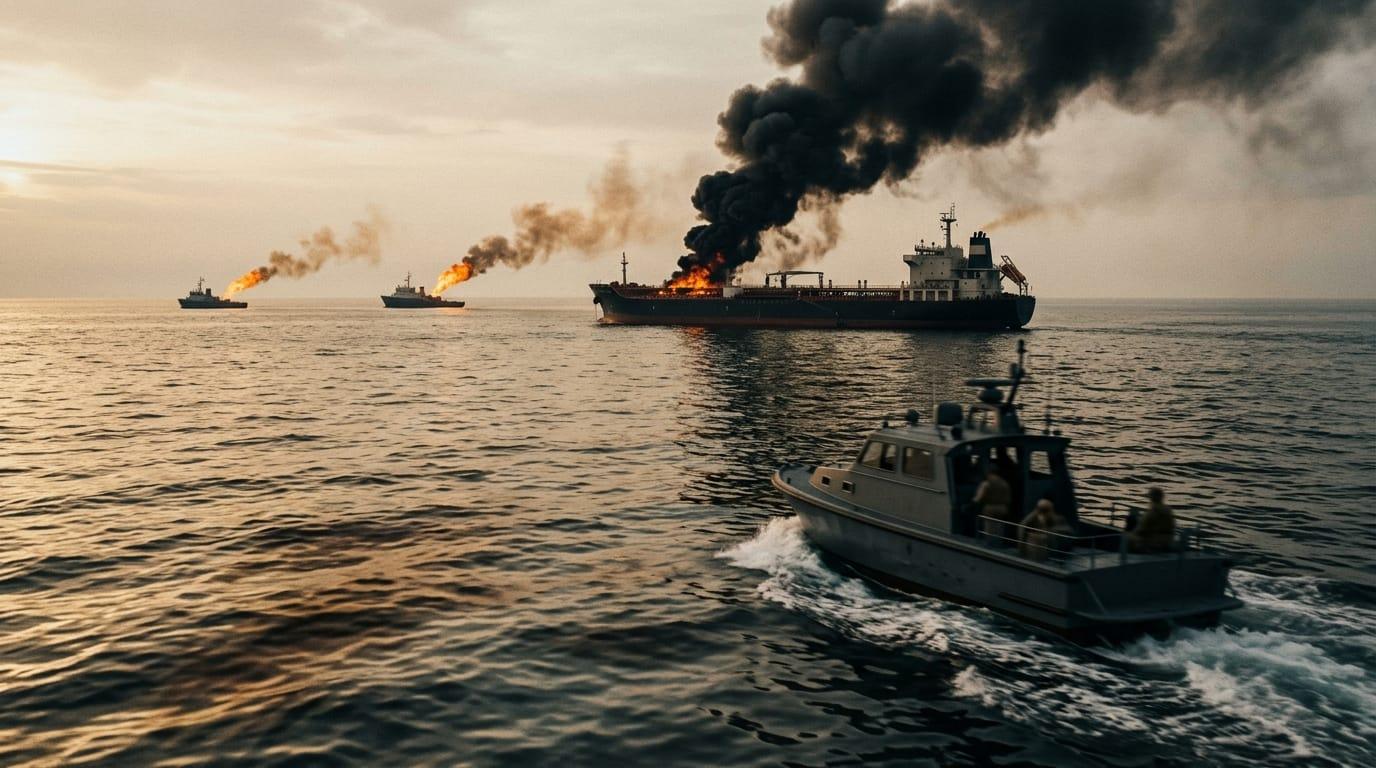
Britain's Black Sky contingency formalizes what a grid-down scenario actually looks like: one state broadcaster, pre-approved government scripts, and diesel generators keeping the signal alive for 72 hours. The architecture is a chokepoint, not a safety net.
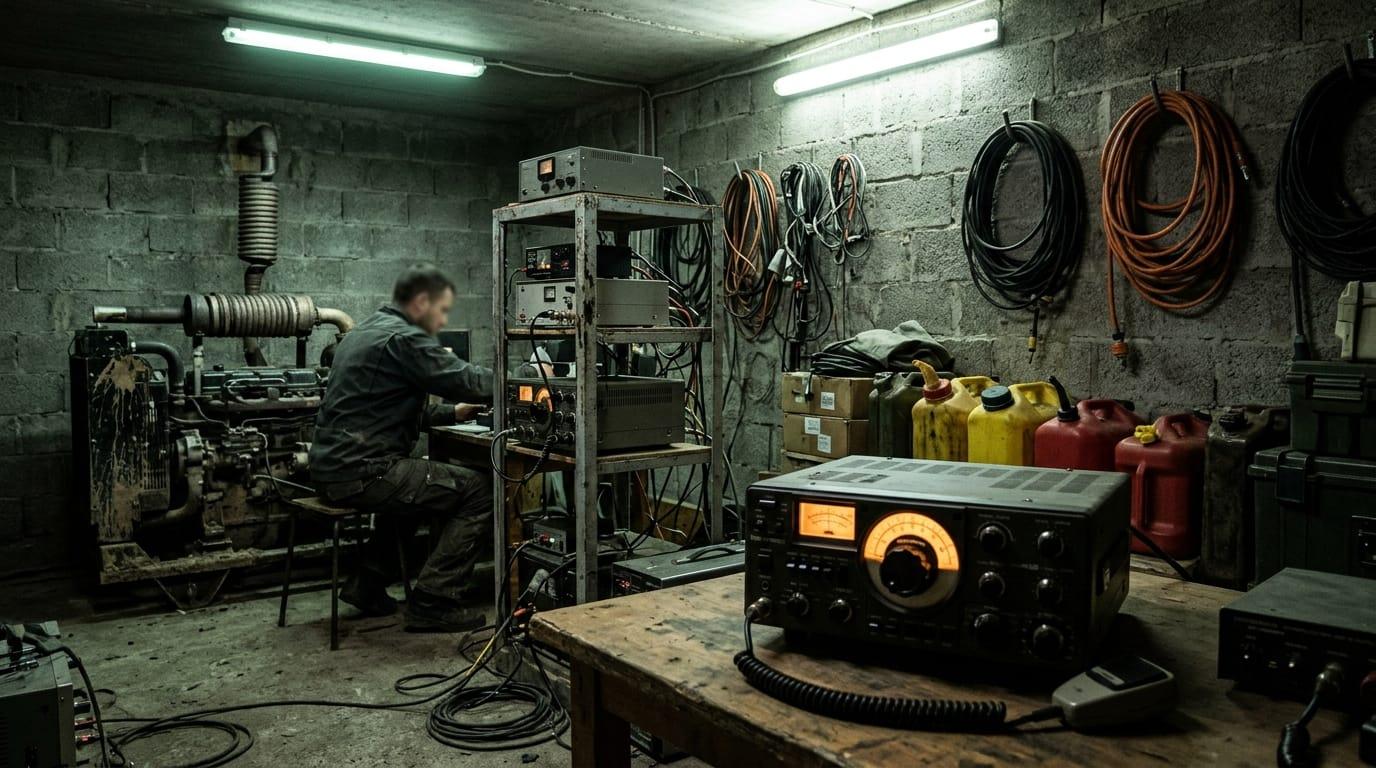
Britain's emergency fallback routes all crisis information through one state-funded broadcaster using pre-approved government scripts and diesel generators. That is a chokepoint, not resilience.
Key takeaways
- The UK's Black Sky contingency deploys roughly 100 BBC staff to a hardened FM radio studio stocked with 72 hours of fuel, food, and water, broadcasting pre-scripted government messages if the grid, internet, and mobile networks fail simultaneously.
- The plan was made public on 7 November 2026, following the government's "Be Ready" campaign launched 22 October, which asks every household to build three days of supplies including cash and a battery or wind-up FM radio.
- The entire architecture routes crisis-era information through a single state-controlled channel. When the official stack collapses, the government's answer is to own the only channel left standing.
Britain formally disclosed its Black Sky emergency plan on 7 November 2026, first reported by BBC News correspondent David Sillito. The contingency places roughly 100 BBC staff in a hardened studio operating on secure, non-internet communications, with enough fuel, food, and water to run for at least 72 hours, broadcasting what the BBC's own reporting describes as "pre-arranged government messaging" over FM radio.
The plan lands 16 days after the government's Be Ready campaign, launched 22 October 2026, which asks every household to store three days of bottled water (three liters per person per day), non-perishable food, cash, a torch, and a battery or wind-up FM radio.
What the Black Sky Plan Actually Specifies
The FM transmission infrastructure is designed to operate entirely off-grid. Towers hold between 5,000 and 40,000 liters of diesel to run generators for three days without electricity. BBC teams would use satellite phones and pre-agreed meeting points as backup if those phones fail. Satellite-equipped BBC vehicles would report from emergency centers across the country.
Emergency scripts covering water rationing and toilet disposal without flushing already exist online, prepared by the UK's four Chief Medical Officers. These are not newly issued documents. The Black Sky plan formalizes the delivery mechanism.
Lord Toby Harris of Haringey, chair of the National Preparedness Commission, has described the cascading logic: a power cut is "likely to stop the water supply because unless you happen to be located neatly downstream of a reservoir, that requires electricity." The government is separately investing £70 million through ARIA, the government's Advanced Research and Invention Agency, in high-altitude aircraft to restore emergency mobile and internet connectivity, acknowledging that re-centralizing communications infrastructure after an outage is the goal, not distributing it.
The Cabinet Office notes there has never been a complete nationwide outage in the grid's approximately 75-year history. The 28 April 2025 Spain-Portugal blackout, which knocked out power across two countries simultaneously, appears to be the proximate catalyst for making these preparations public.
A Confession Dressed as Contingency
The Black Sky architecture is a single point of failure in both directions. For infrastructure resilience, it means every other information channel is assumed dead. For information control, it means the state pre-writes the scripts that reach a blacked-out population, with no independent channel to check them against.
The Be Ready checklist is telling in its own right. Cash made the list. The same government that has spent years pushing contactless payments and Open Banking is now telling citizens that physical banknotes are part of a survival kit. That is an admission that the payment rails sitting on top of internet and grid infrastructure cannot be counted on when it matters most.
Bitcoin's permissionless rails exist precisely for this scenario. A hardware wallet requires no internet connection to hold value. Blockstream Satellite pushes block data without requiring any grid-dependent infrastructure on the broadcast side. Local Lightning or ecash can settle small transactions between nodes that never touched the public internet.
The BBC's FM fallback is proof of concept that low-infrastructure broadcast works in a crisis. The question is whether money has an equivalent. For those who have taken self-custody, the answer is yes. For everyone else, the answer is whatever the government decides to let through its single open channel.
States reaching for centralized control of both information and money when systems get stressed is a pattern visible from multiple directions. The UK's Black Sky plan is one data point. The specific mechanism differs by jurisdiction. The reflex is identical.
The falsifiable version of this thesis: if Britain's Black Sky scenario ever materializes and multiple independent information channels survive without state pre-approval, and payment rails remain functional without centralized authorization, the chokepoint critique doesn't hold. Watch for whether the £70 million aircraft program produces genuinely distributed connectivity or just faster re-centralization.
What Comes Next
The Be Ready campaign and the Black Sky disclosure are both live and public. The practical question for anyone paying attention is whether their own stack, financial and informational, requires permission from an authority that may itself be offline.
The government has answered that question for its own infrastructure. The answer is FM radio and pre-written scripts.
Sources
Frequently Asked Questions
What is a Black Sky event and has the UK ever experienced one?
A Black Sky event refers to a simultaneous failure of the electricity grid, internet, mobile networks, and dependent services like running water. The Cabinet Office states there has never been a complete nationwide outage in the grid's approximately 75-year history. The 28 April 2025 blackout across Spain and Portugal, which disrupted two countries simultaneously, is the most recent comparable event and the stated backdrop for Britain's public disclosure of its emergency plan.
What should a Bitcoiner actually do to keep funds accessible during a multi-day grid outage?
The core answer is self-custody before the event, not during. A hardware wallet stores bitcoin offline with no internet required to hold it. Blockstream Satellite delivers Bitcoin block data via satellite signal, bypassing internet infrastructure entirely.
Printed or stamped seed phrase backups stored physically give access without any powered device at the verification step. For spending during an outage, local Lightning or ecash nodes that have pre-synced channels can settle small payments peer-to-peer without touching the public internet. The government's own Be Ready checklist recommends cash for the same reason: value that works when the network doesn't.
Does the Black Sky plan mean the government controls all information during a crisis?
Formally, the BBC operates under a Royal Charter that permits ministerial broadcast requests under specific conditions. The Black Sky plan goes further by pre-scripting the messages in advance, meaning the content of emergency broadcasts is determined before the event, not in response to it.
Independent channels, including Nostr relays running on battery-backed nodes, shortwave radio, and mesh networks, are not part of the state plan and require no authorization to operate. Whether any of those survive a simultaneous grid and internet failure at scale is an open question the plan does not address.