Transcript: E.J. Antoni: Why Republicans Lost Texas
Full speaker-labelled transcript of TFTC episode #808 with E.J. Antoni.

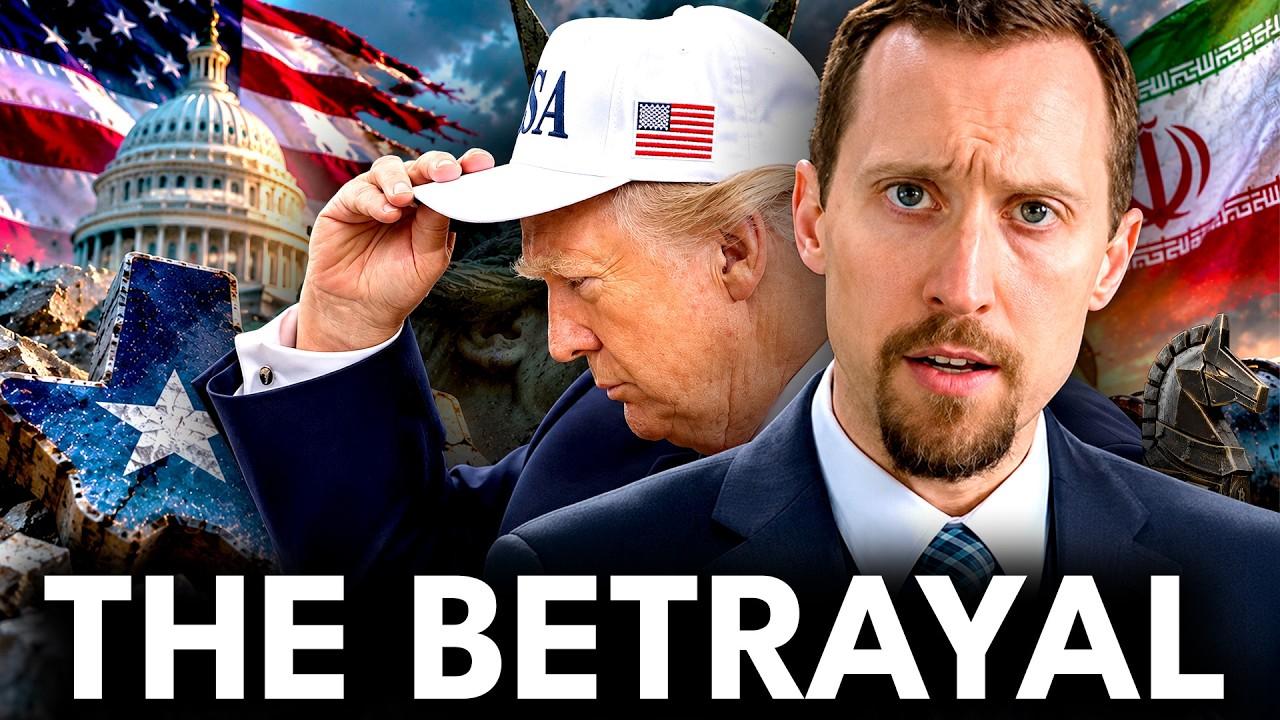
Full speaker-labelled transcript of TFTC episode #808 with E.J. Antoni. Read the written article: E.J. Antoni: Why Republicans Lost Texas. Click any timestamp to watch that moment on YouTube. Machine transcription, lightly cleaned, may contain errors.
Marty Bent [0:35] DJ Antoni, welcome back to the show, sir.
E.J. Antoni [0:39] Hey, thanks for having me again.
Marty Bent [0:41] Well, it's been a while, and I think it's a good time to catch up considering what happened a couple of days ago with the blue wave. And as we were discussing before we hit record, it seems pretty clear that what happened with this shift towards the Democrats was essentially like referendum vote of no confidence in the Trump administration's ability to follow up on promises. And I think a lot of those promises were economic, some were foreign policy related, and I think the two really clash together when you consider what's going on with the war in Iran. And I think just starting there, leaning into the reality of the K-shaped economy, and despite the fact that GDP looks to be pretty healthy, that wage growth seems to be up and to the right compared to the Biden administration, real Americans, everyday common man Americans aren't feeling that. And we saw them react to those feelings in the polls this week.
E.J. Antoni [1:40] Yeah, Marty, I think that's absolutely right. There was, I think, a couple of different repudiations. There was a repudiation of the Trump administration for taking us to war with Iran, but there was also a repudiation of Congress for failing to cooperate with the good things that the administration was doing. I mean, look at DOJ, right? We were promised $2 trillion in spending cuts. Well, DOJ, for its part, identified hundreds of billions of dollars in potential savings, abuse, corruption, fraud, waste, et cetera. And what does Congress do? They enact less than 1% of it. DOJ hands them a win on a silver platter, and these so-called conservatives in Congress say, nah, you know what?
E.J. Antoni We'd rather still continue funding all this nonsense. Which taxpayers gave us a mandate to axe out of the federal budget. So, you know what? These Republicans, I think, have nobody to blame but themselves because of that. We were promised the SAVE Act. I mean, let alone the SAVE Act, we couldn't even get basic voter ID. It's just, it's absolutely astonishing the lack of wins here that this do-nothing Congress was able to put on the board. And it wasn't, again, it wasn't just a matter, I think, You know, as we were saying, uh, you know, before the cameras were rolling, this wasn't just simply a matter of a party failing to deliver on promises, but also breaking certain promises.
E.J. Antoni You know, it's almost, uh, Trump taking us to war in Iran is almost like when people, uh, had that saying only Nixon could go to China, right? Because it was so ironic, the guy who was such a China hawk then turns around and goes to China. And so same thing with Trump. This is a guy who for years said the wars in the Middle East were a mistake, right? In fact, he made it his shtick, his political start, coming down that golden escalator and everything, talking about how the Iraq War was a mistake and berating everybody who pushed it. And rightly so. You know, he rightly pointed out we wasted a trillion dollars in Iraq and a lot of American lives.
E.J. Antoni And, you know, We expended a lot of political capital, et cetera. And so it's so ironic that the man who, who literally made it his rallying cry that Iraq was a mistake then turns around and makes the even bigger mistake with Iran. And, you know, it's just— it's kind of funny how so few people, I guess, want to acknowledge the elephant in the room, which is, yes, the Republicans lost this. because of Iran. And even if it wasn't folks were directly mad about Iran, I don't know how many folks were really genuinely upset about that part specifically. But what I can tell you from looking at the exit polling is folks were genuinely upset about the effects of the Iran war, which were economic in nature, right?
E.J. Antoni Caused oil prices to go to the moon, caused prices at the pump to go to the moon. And exactly as was predicted back in March, not just by myself, but by plenty of other people who are much smarter than me, They looked at the data and said, this is going to spill over. In other words, these, these higher energy prices are going to start spilling over into countless other prices throughout the economy come September or October. And that's exactly what happened, like clockwork, because energy affects the price of everything we do and everything we buy. So of course, higher energy prices are going to have that trickle-down effect.
E.J. Antoni It's precisely why when energy prices came down, consumers were feeling a lot better and it helped put downward pressure on prices throughout the economy. And look, again, energy prices going up, exact opposite effect. And it's exactly what we saw. And folks were really mad about it. And it plays directly into the fact that if you look at during the Biden years what the average American's weekly paycheck could actually buy— so in other words, adjusted for inflation— average weekly earnings declined over the course of his presidency about 4%. And that's a lot. Right. Even so, even though you had something like 17%, roughly, average earnings growth in terms of weekly earnings, that's a lot over the course of 4 years.
E.J. Antoni But again, prices rose so much faster, you had a decline in what those paychecks could actually buy, as you know, Marty. What happened under Trump? Trump gets back into office and it starts improving. And right before the Iran war, again, what the average American's weekly paycheck can actually buy— so not just the paycheck itself, but what it can buy inflation adjusted it's up about 2%. In other words, Trump has clawed back half of the cumulative losses under Biden in only like 12 or 13 months. That's a pretty good record. And then after that, what happens? Down they go because of energy prices spiking. And more recently now, it's not even just energy prices like we were saying, it's prices everywhere.
E.J. Antoni And you know that because, you know, we have a few different ways to, to remove these outliers, one of which is core. In terms of these inflation indexes, which you're very familiar with, right? So you have core CPI, you have core PCE, but then there are other ways to treat the index. You can do trimmed mean CPI or PCE, you can do median as well. And again, these are all just basically ways to try to remove outliers, things that are going up or down quickly, because you're trying to look at what's the underlying trend here. You're trying to look at what's the portion in the middle, so to speak.
E.J. Antoni And in all of those instances, you can see that things were actually— despite the spike in energy prices, the other measures were actually still trending down until September, October. And now they're off to the races again because now we're at the point again where those higher energy prices are hitting everything else. So yeah, to your point, I mean, look, people were promised affordability, right? They were promised things would get better. And they haven't. And it's, again, it's because of the Iran War. And I think the way the vice president articulated it was something along the lines of, you know, you may say the Iran War was worth it if you believe all the stuff about them getting a nuclear bomb, but you can't say that the Iran War didn't cause all of these negative effects.
E.J. Antoni You can say, look, I've done the cost-benefit analysis and the Iran War was worth it. What you can't say is, oh no, this repudiation had nothing to do with the Iran War and the Iran War has not imposed any additional cost. That's just baloney. And the facts prove it, right? And that goes far beyond, again, just simply energy prices. That's obviously the big thing, but it goes far beyond that. You can see that just if you look at something like homeownership affordability. The Federal Reserve Bank of Atlanta has a cool tool. It's the Homeownership Affordability Monitor, if I remember correctly, is what they call it.
E.J. Antoni And what it shows is that Homeownership affordability was actually improving. It was on the upswing until February of this year. Now, it wasn't great. I'm not trying to say it was all sunshine and roses and, you know, right before the Iran War. No, no, we were digging ourselves out of a deep hole, but we were digging, right? We were heading in the right direction. And sure enough, that measure, although it was still below what would be considered affordable, it still was at its highest level in 3 years. So again, that's saying something. That's a mark of improvement. And it has fallen every month since then, in large part because of interest rates going in the wrong direction.
E.J. Antoni Why did interest rates go up? Because inflation expectations went up. Why did that happen? Because energy was up. Obviously, once again, Iran war, right? It all goes back to that. But I bring that up as an example, Marty, to try to illustrate the fact that this is not simply people had pain at the pump and they overreacted to that. No, this is pain Very, very broadly speaking. And again, you did not go into this war after 4 years of a rip-roaring economy, right? You had 4 years, really 5 years if you throw in COVID, where the economy was not that great. So from 2020 throughout 2024, people are upset.
E.J. Antoni Consumer sentiment is down. That's the UMich one, obviously. But you also have consumer expectations from the New York Federal Reserve branch. You have consumer confidence from the Conference Bureau, and all of those have— they give the economy pretty low marks. So when you look at what some people like to call the soft data versus the hard data, things like, you know, GDP, the soft data have been painting a pretty bleak picture for a while now. And I think it's genuine. In other words, I don't want to do what the Biden folks did, for example, and actually what some of the so-called conservatives are doing this go-around.
E.J. Antoni where they're saying, you know, voters are somehow wrong to feel the way that they do about the economy. No, people feel the way they do for very good reason. And it's because, you know, they don't anticipate they'll be able to have what their parents had. Young people have moved back in. This was a crazy stat I saw. Young people have moved back in with their parents or I think other relatives at the fastest rate since the 1930s. Well, for those playing along at home, that was the Great Depression. That's not a good sign, right? When all these young people think, I'm never going to be able to own a home until a parent or another loved one dies and leaves me with that asset, that points to a pretty sad state of affairs, right?
E.J. Antoni Now, I don't want to try to be all doom and gloom here. Poverty rates are incredibly low. They're at a record low right now. And median income, even adjusted for inflation, median household income is up. Now, there's some reasons for that, right? Households change over time. And you have different numbers of people in the household, different numbers of people working in the household. That's also really important. But I think the way you square the circle on a lot of these things is poverty rates are down because more people than ever are able to afford renting, let's say, but fewer people than just a few years ago are able to afford to own a home.
E.J. Antoni And so there's this dissatisfaction, not because people are getting lifted out of poverty and are now able to rent, it's because there's so many people who would've been homeowners who are now relegated to renting for the foreseeable future. That's the source of the discontent, right? It's not that people are out there starving. I don't mean to— I don't want to paint that kind of a picture because that wouldn't be true. It's not as if the Iran War has caused mass poverty everywhere and starvation. Has it driven up food prices? Yes, absolutely. To the point where people are starving? No, that's hyperbolic and nonsensical. So yes, people are hurting.
E.J. Antoni And I think because so many people see the Iran War as a war of choice and not something that was necessary, I think they draw the conclusion from that that this isn't World War II where Japan bombed Pearl Harbor and people were willing to sacrifice throughout the war and actually have a lower standard of living than they did in 1939, right? What consumers were actually spending in terms of what was going to be used for the household didn't go up, it went down. GDP exploded, 'Cause the government was buying more and we were sending it to Europe and the Pacific to get blown up. But in terms of what the economy was actually producing that households could consume, that didn't go up during the Depression, that went down.
E.J. Antoni People were willing to sacrifice even more than they had been sacrificing for the Depression because they thought they had this common goal. And I don't think people see that right now. I don't think people are looking at the Iran War and seeing it as being in the best interest of the United States. So in other words, they're being asked to sacrifice Whether you want to say it's a lot or a little doesn't matter. They're being asked to sacrifice for something that they don't think they're— they're looking at pain and no gain, right? Yeah. They're being asked to sacrifice for something that they don't see any, any benefit to be received on, on their end.
E.J. Antoni Um, you know, meanwhile, what's, what's happening with the stock market? Going— it's going like gangbusters. I know we've hit some bumps along the way, absolutely. But asset owners, again, just like under Biden, asset owners have done very, very well. They've seen home price appreciation. They've seen equity price appreciation. There's no complaints there. They are spending a much smaller portion of their income on the necessities that have gone up so much in price. So they are getting actually a lot of the benefits of the inflation and not a lot of the negatives of it. They're not feeling the pain as much. So of course those folks I think are— excuse me— I think are going to be happier with this state of affairs.
E.J. Antoni And again, I don't want to be too hyperbolic here. This is not the Weimar Republic where, you know, the handful of factory owners became the effective ruling class of Germany and everyone else was completely impoverished and they have wheelbarrows of money to go buy a loaf of bread. It's not that bad. I'm not trying to say it is. But voters were promised one thing. They were promised a solution to all of the problems that we saw under Biden. And they've got almost none of it. Right. Again, Congress, where are the spending cuts that you promised us? Didn't happen. Where are— you know, we were promised much bigger tax cuts than we got.
E.J. Antoni Now, again, I was a big fan of things like full expensing, the big beautiful bill that has caused an explosion of investment in this country. You know, we are actually on track this year to do 10% growth, 10% plus for fixed domestic private investment. And that's, that's the most important part of GDP in my mind, because that's where you get the factories, that's where you get the software, that's where you get all of the things that cause productivity increases. We just got productivity numbers out again, great growth there. Productivity increases are what's driving wage growth. That's what's going to make people better off in the long run, and it's what drives economic growth in the long run.
E.J. Antoni So that's incredibly important. And a key reason why you're having it It's not because of tariffs. It's because of those tax cuts. It's because people have been incentivized to make that investment. It's what's allowing the AI buildout to even happen in the first place, quite frankly. None of that would have been possible without the good work done on that tax bill. Now, was the tax bill perfect? No, but at least it was something they did. What else have they done? My goodness, that's a very short list, isn't it? Yeah. So again, I think— sorry, this is a bit long-winded here, but I think I think this was just a total rebuke of a do-nothing Congress, of a Republican Party that has in general, number one, failed to keep a lot of promises that were made, and number two, actually betrayed certain promises by doing exactly the opposite of what was promised.
E.J. Antoni So it's both, it's both sins of omission, but also sins of commission.
Marty Bent [15:59] Yes. And do not apologize for were going. I thought that was an incredible monologue. And I think just building on that, if you look at the shifts of voting tendencies in midterms, I think the 18 to 29-year-old demographic shifted 40 points to the left as a repudiation of not following up on these promises. And that's what's so frustrating about the situation we find ourselves in, because it's right there if you want to go grab it. We have the ability, we had the potential and the ability having both the House and the Senate to get things done. And all the while, over the last 2 years on the fraud, waste, and abuse side, it's been glaringly obvious that there is rampant fraud throughout the federal government, Medicare, Medicaid, all of the layering centers and hospice centers throughout the country that are literally, in many cases, immigrants setting up LLCs and taking money and sending it back to their home countries without actually delivering the product and service that they are supposed to be in those systems.
Marty Bent And that's the other thing I worry about is it's becoming a generational battle. I think the 18 to 29 shift is glaringly obvious, frustration of Gen Z saying, hey, we are not getting anything out of this. There's no potential for us. And obviously, with the cost of housing, um, wage— like real wage growth going negative because of inflation, uh, they're put in a position where they're saying, okay, we gave you the chance to do this, now we're gonna give the socialists the chance. And that is the scary specter that, uh, that exists right now is, okay, we gave this a try. Democrats have the House and the Senate, and it seems like the Democratic Socialist, Communist in our midst are very emboldened right now.
Marty Bent Um, we had Governor Shapiro here in Pennsylvania yesterday announce he's going to raise the minimum wage. And so you have an overconfident left about to double down on incompetent economic policies is what I'm reading right now.
E.J. Antoni [18:14] Yeah, Marty, I think there's a lot of truth to that. Now, one thing I do think is very interesting and worth pointing out here is that— and it goes back to the, the first part of our conversation— the fact that this was voters rejecting something as opposed to— in other words, voters were running away from something, not running to something else. I don't think this is an embrace by voters of the DSA. And the reason I say that is because in many instances when, at least on the economic side, maybe not the social side, but on the economic side, in many instances when the DSA's actual policies were put on the ballot were put to the voters, they rejected them.
E.J. Antoni And it wasn't just red states. So you can point to Florida, for example, where voters chose to reduce property taxes, right? I think it was via homestead exemption, if I remember correctly, which, look, that's not my ideal way to reduce a wealth tax, but hey, it's a step in the right direction, right? It's going to cause some distortionary effects is what I mean by that, but I still like a tax cut, trust me. But that's a— you can say, well, that's a red state. What about a blue state? California? Does it get more blue than that? Prop 40 got shot down. Not only that, but voters went and went for— I think it was Prop 41 and 42, which basically would have had like nullifying effects on 40, more or less.
E.J. Antoni And so in one instance, voters said we don't want a wealth tax increase. And in another state, voters said we do want a wealth tax decrease. Okay, that's the same thing. Right distinction without a difference to some extent because the the mag the you know the direction there is is exactly the same. So my point is that whether it was in red states or blue states, voters were saying we don't want these DSA policies, right? But you know what they don't want even more, I guess, is Republicans anymore. And and you brought up a really interesting point with the the kind of this. the generational divide here where— and it's, it's most pronounced now with, with young people, especially young men, especially young white men.
E.J. Antoni And I've seen some really interesting statistics about how much this has swung so violently. The one was, if I remember correctly, it's young voters, which I think are defined as 18 to 29. So any voter under 30. If you, if you go back to 2024 and I forget what the '22 baseline was, in other words, what the split was, this percent going red, this percent going blue. But it increased in terms of going red by 13 points in '24. In '26, what happened? It went 35 points shifted to the left. So again, I'm not sure where we start from. It wasn't 50-50, obviously, but I don't know if it was 60-40, 70-30.
E.J. Antoni But it shifts 13 points when Trump won in '24. It shifts 35 points the other way to the left in '26. And then you look at Ohio, and I think the breakdown on this one, Marty, was white male young voters. And there it was, they went 11 points, uh, to Trump. In other words, it was 11, 11 points more, right? So whatever that breakdown was, I forget exactly because it doesn't add to 100, so I can't do the math. Um, but because I, I forget, it was like 1 or 2% maybe didn't go for Trump or Kamala. Whatever it was, 11, 11 percentage points more went for Trump than for Kamala.
E.J. Antoni This go-around, 44 percentage points in Amy Acton's favor compared to Vivek. A 35-point swing in 2 years? Are you kidding me? I mean, can, can you give me a bigger rejection of, of the establishment than that? I, I don't, I don't know. I mean, look, I'm not a historian. I'm sure if I paged through American history, I could find you examples. But off the top of my head, I— I I'm not sure I know of any. And actually, speaking of historical examples, this whole episode really kind of reminds me of Grover Cleveland. And I actually made this comparison to Trump back in, I think, December of '24, right after he won.
E.J. Antoni So this had nothing to do with midterms, right? But it's amazing how Trump is continuing to parallel Cleveland, because Cleveland was previously the only president elected to non-consecutive terms. So Trump has now done that as well. And what was interesting, and I— the point I had made back then was the fact that Cleveland was the last Democrat, like old-school Democrat, that believed in limited government, right? The progressives didn't even exist at this point in time. But what happens after Cleveland is the whole Democrat Party just basically falls apart. The Republican Party doesn't quite fall apart, but it goes through a radical realignment. So both parties have to figure out, what do we actually stand for anymore?
E.J. Antoni Right. And this was something that the Democrat Party had struggled with actually ever since the Civil War and the amendments that followed the Civil War, because the Democrats were no longer at that point the party of slavery. Slavery was a decided issue. It was gone from the whole political system in terms of, like, if a candidate gets up there and says, well, I'm the slavery candidate and I'm the abolitionist candidate, everyone's going to look around and be like, well, so what? It doesn't matter. It's a non-issue. It'd be like somebody getting up there today and talking about, I'm for the direct election of senators. opponent, you know, is against that.
E.J. Antoni Who cares? It's an amendment to the Constitution. It's a long-since decided issue from 100 years ago, right? Um, okay, so all that to say, Cleveland presided over a radical realignment of American politics. And one of the things that happened as a result of that was the fact that the Democrat Party got wiped out in the midterms during his second term. It actually remains to this day the biggest midterm loss in American history. In fact, there was a Republican who I think was the Speaker of the House previously and then would be again after the wipeout. And he said it as a prediction. The Democrat losses this year are going to be so great that their dead will be thrown in a mass grave marked unknown.
E.J. Antoni And by the time November rolled around, it turned out he was less hyperbolic and more prophetic, as one author said. And that was true. And so after that, the Democrat Party basically becomes a Southern rump party. They had, I think, something like over 200 seats in the Congress before the election, and after the election they had less than 100. They only had 90-something. So more than half get wiped out there. I think there were like 20-something seats that had zero Democrat representatives in them at all. And there were a handful of other states who only had one. It was a complete and total wipeout. And so the party from there had to completely rebuild.
E.J. Antoni And that's kind of where the Republicans are today, but it's not anywhere near as dramatic, right? The losses weren't that steep, but they were obviously really bad. I mean, Texas just went blue. Are you kidding me?
Marty Bent [25:16] Right.
E.J. Antoni So, you know, again, sorry, this is long-winded. To make a long story endless here, what happened after that, though, was all the folks like Cleveland got marginalized. Cleveland believed in sound money. He believed in limited government. He believed that, you know, essentially he was— his nickname was actually Grover the Good. He eschewed the whole spoils system, which, you know, today we view it as much more corrupt, whereas back then a lot of folks just saw it as, well, this is the way we do business. And he was one of the first voices to say, no, I'm not going to participate in that because it's wrong.
E.J. Antoni It doesn't serve the American people. And that's why I was— that's why I was sent back to Washington. What happens because voices like him are no longer listened to? The party becomes the Progressive Party. The next Democrat that gets elected, Woodrow Wilson. Right. And in fact, really, the only reason— the only— and even the progressives weren't that popular. But why does Wilson end up getting elected? 'Cause the Republican Party got split between Roosevelt, Teddy obviously, who took on a lot of these progressive leanings, and then the traditional Republicans in the form of Taft, who was running for reelection. So if you don't get that split, you basically never get a Woodrow Wilson presidency.
E.J. Antoni Which is a whole great counterfactual, 'cause then you never have a Fed, you never have World War I probably. I mean, a whole host of different things. We don't have to go down that route, but my point is just that This is a very, uh, it's a very tenuous time, I think, for the Republican Party. Look, I'm a monetary scientist, not a political scientist, so take this all with a grain of salt. But it does seem to me like there's, there's going to be a battle now for the heart and soul of the Republican Party. Are they going to go the way of the neocons, or are they going to go what I would consider to be the right way instead?
E.J. Antoni Um, just like the Democrat Party had that choice— are they going to go the way of the progressives, or are they going to go the right way? They didn't choose the right way. they chose the progressives, and the Democrat Party has been the progressive party ever since. It has been the party of socialist ideals, right?
Marty Bent [27:28] Yeah. No, I think I agree with you. I hope the neocons have been sufficiently decimated morally and hopefully from a legitimacy perspective too, because I mean, it's very obvious that again, JD, I think his admission yesterday was admirable though, probably a couple months too late. And I guess that's the big question. How does the GOP rebuild? What is the message that they should be running with? And obviously the message they ran with in 2024 was very aligned with what people wanted. They didn't follow up. How do you follow up? And I guess leaning on your monetary policy sort of expertise, Is there a variable where the debt and the spending are in such a state that they literally don't think that they can make the cuts necessary because it would decimate the economy? Is that what their thinking is? And do you think if that's the assumption that it is a correct assumption?
E.J. Antoni [28:35] No, I don't think it's anything along the lines of You know, these politicians are sitting there saying, oh my gosh, if we cut all the spending, it's going to crash the economy. I mean, what did all the spending do to benefit the economy? Right. We kept hearing in the Biden years, we'd get these GDP reports and there was the— these outsized contributions from government purchases. And that was just government purchases, right? Not overall government spending. Sorry, this is a pet peeve of mine. We, we so often when we get these GDP reports and sometimes I slip into it too, I'll admit. We get these GDP reports, you see the government number, and everyone says, oh, government spending grew by X percent, or government spending contributed X percentage points to overall GDP growth.
E.J. Antoni That is not government spending, that is government purchases. So the government goes out and they buy asphalt or concrete to pave a road, right? That's a government purchase. When government takes a dollar from me and gives it to you and you go out and spend it, we don't count that as government spending. Even though that wealth transfer, that welfare payment, whatever you want to call it, that was done under the auspices of government. But we actually end up counting that however it gets spent, which is almost always in consumer spending or PC, personal consumption expenditures. So if you look at a lot of these GDP reports under Biden, what happened?
E.J. Antoni You had an explosion in government purchases, but then also in transfer payments. So once you consider that, you realize, oh my gosh, so much of this, this so-called growth is just facilitated by government. In other words, it's— you're not actually adding anything productive to the economy. You're consuming productive resources. You're eating your seed corn in many instances, but you're not increasing the amount of the seed corn in silos, so to speak. I don't see a problem with, with some of our official metrics. Having to take it on the chin if it's happening for the right reason. You know, look at what happened with, with the jobs numbers under Trump when you axed 300,000 federal workers.
E.J. Antoni And that's just a start. We should have done a lot more. But if you get rid of that many people out of the federal workforce, you shrink the federal workforce to its smallest size in 6 decades. What do you think that's going to do to your headline nonfarm payrolls numbers? going to bring it down, right? Which it did. That wasn't a bad thing though, because you didn't actually take anything away from the productive private sector. So, you know, again, under Biden, you'd have blowout numbers, and then people would still say, I feel lousy about the economy, because their lives hadn't actually improved. The bureaucracy got bigger.
E.J. Antoni There was more red tape. C. But did things actually get better for the average American? And the answer there was no. , right? So I don't think any of the— I don't think any of these Republicans are sitting around saying, oh gosh, I think if we cut too much off of government spending, GDP is going to crater. No, the fact of the matter is a lot of these people like what this stuff is getting spent on. Everybody's got their, their pet projects, right? Everyone's got their goodies they want to bring home to their constituents. And in this kind of horse trading system of, I'm going to let you do this for your constituents if you let me do this for mine, then it allows all these politicians to go home and to say, look at all the goodies I brought you.
E.J. Antoni But what they don't tell you is my concession was I had to give all these other goodies to other folks, which now you, my voters, have to pay for in higher taxes or higher inflation, which is another tax. I repeat myself. So yeah, I just, I don't buy that explanation of there were these kind of selfless motives there, I suppose. I do think though, sticking with monetary policy for a moment, I do think we're actually making improvements there. I think Warsh is the right man at the right time. He's got a very, very good head on his shoulders. And I think he is not willing to go along with what we had under Powell, which was basically just, we're going to cover all these government deficits.
E.J. Antoni And if the government increases the demand for loanable funds sufficiently, then we're just going to flood the system with more reserves. In other words, we're going to basically buy up off-the-run debt to free up banks to buy more on-the-run debt. That's not what we've seen, and I don't think we're going to see that out of him. I think that's a welcomed relief. Look, sound money is one of the fundamental foundations of good economic growth. And if you don't have that, it's very, very difficult to have the other positive outcomes that you want. So I think it's good that we at least have that. Is it problematic that Powell is staying on and kind of being a shadow Fed chair?
E.J. Antoni Yeah, it is. We need to get those board seats filled up. Although at this point, having lost the Senate for the foreseeable future, I mean, forget judges or heaven forbid a Supreme Court justice. How are you going to get the person you want on the Fed? Democrats aren't going to let that by.
Marty Bent [33:50] What's up, freaks? This was brought to you by the motherfucking Cash App. We all know the fees quietly eat into a Bitcoin stack. We've been there before. We've been DCAing for years. You're sending to cold storage, you're buying on a set cadence. You know that fees can eat into the sats that you're purchasing a little on every buy, a little more every time you move it. And over the years, that's Bitcoin you never get to keep. Cash App takes that out of the question. Guess what? Recurring buys, fee-free. Standard on-chain withdrawals, fee-free. Buying Bitcoin for your BitKey can be fee-free too. BitKey is self-custody cold storage.
Marty Bent So your Bitcoin is actually yours, held by you. Getting it there is easy and it doesn't cost you a thing. You can set up an auto sweep to BitKey via the connected apps. Cash App and BitKey were built for the people who take their Bitcoin seriously. So go download Cash App and download BitKey today. When you download BitKey, use my promo code TFTC10 to get 10% off the second generation BitKey. It's right here. This episode was sponsored by our good friends at BitKey. What's
Marty Bent [34:53] up, freaks? This episode was brought to you by Simple Mining. I'm sure many of you listening to this right now own Bitcoin and own it the same way. You go on an exchange, you buy it, sweep it to the cold storage, maybe you keep it on the exchange and you pay full price. There's a smaller group of business owners, family offices, and investors with sharp CPAs that are quietly getting theirs a different way. They own the machines that make it. Here's how it works. You buy the miners at Simple Mining. Simple Mining hosts them, runs them at their facilities in Iowa on industrial power rates you could never get on your own.
Marty Bent Bitcoin they mine goes straight from your machine to your wallet. 2 reasons I find this interesting right now. The second one is the one that nobody's talking about. One is the economics, cheap power. This lets you convert your electricity into Bitcoin at a discount to spot. You're acquiring the asset below the sticker price everyone else pays. 2, and listen closely, if you've had a big income year, making a lot of money out there, I know a lot of you freaks are making a lot of money. Miners are classified as computer equipment with a big, beautiful bill. Equipment means depreciation. Qualifying buyers can write off the entire purchase in year one, It's the same playbook real estate investors have run for decades pointed at Bitcoin.
Marty Bent Your CPA will want to see this before the end of the year. And with attractive financing available, you can deploy without selling assets to do it. This is not a garage operation. Simple Mining runs over 40,000 machines, which just ranked the fastest growing company in Iowa on the Inc. 5000 chart. We put together a valuable resource called the 2026 Bitcoin Mining Blueprint. Covers the 5 mistakes investors make when allocating to mining and how to avoid them before deploying capital. io/tftc. io/tftc. Yeah. That's why it's, again, so disappointing that they weren't able to follow up on the promises of the 2024 campaign because, again, I think the stakes are extremely high right now.
Marty Bent We needed radical change. It didn't come. And I guess from an economic perspective, where do you see things going from here? Especially if 2028 goes the way of the Democrats and the executive. What do they have planned and how's that going to affect the economy?
E.J. Antoni [36:52] Well, it's certainly not going to be good in the short run. It'll be a repeat of the Biden years, most, most likely. And I'm not talking about initially when the economy was still reopening and, you know, all these people were going back to work because it was previously illegal for them to go to work. My, isn't that, isn't that a great government jobs program, right? A way for the government to create jobs, make it illegal for people to go to work and then count it as job creation. when you say, all right, you're allowed now to go back to work, serfs. But I digress. Look, it's going to be higher taxation, more regulation, looser monetary policy to fund it all.
E.J. Antoni It's going to mean more inflation. It'll mean slower growth. The productivity numbers are not going to be as good. It's going to be— it's going to mean growth, more growth in government, less growth in the productive private sector. So none of these things are good, but that's the playbook, right? that they have used before, and it's what they'll use again. You'll return to the anti-energy policies that you had under the Biden years, right? So nothing— yeah, I mean, nothing good there. But in terms of before '28, because look, 2 years is, as we just saw, is an eternity in politics, right? Who knows what the heck could happen in 2 years?
E.J. Antoni So, you know, if so many people, you know, going back to like the very end of '24 would never think that we'd be here right now. and towards the— as we get to the end of '26. So let's just look at what is going to happen over the next 2 years. Democrats are basically going to do nothing. It's going to be show trials. They'll push for more spending. I anticipate they'll do things like try to shut down the government unless the president agrees to defund ICE. You know, so there'll be a lot of antics like that, and Democrats may even be successful in some things because, as we've seen, government shutdowns never really last that long, right?
E.J. Antoni I don't know of— I'm not sure. I'm trying to remember if presidents have ever really been able to get everything they wanted. Maybe they get some concessions out of Congress, but I don't know the last time a president has gotten everything he wanted, at least out of a government shutdown. Um, it always tends to be pretty nasty business, I suppose. But, but whatever the case, I would anticipate things like that. I, I don't think that's going to cause much of an economic disruption, though. Look, I mean, the Again, the investment gains that we're seeing are massive. The productivity gains we're seeing are absolutely massive here.
E.J. Antoni I think actually Congress, with being all Democrat-controlled, might be able to bring a speedier end to the war in Iran, which could allow oil markets to stabilize sooner rather than later, or at least normalize. And then from that, you get— lower energy prices a little bit faster, and that trickles down, as we were saying earlier, into prices throughout the economy. So you might end up seeing a little bit of improvement there. That could be why oil futures responded the way they did. You know, the market's been really, really volatile, so it's kind of different— difficult to interpret what's going on with equity prices. And, you know, you also never know.
E.J. Antoni You have— sometimes you have these days where the market's up because people are just short covering as opposed to the markets up because they're anticipating government is going to spend, borrow, and print more money, and that's inflationary. Maybe that's a better indicator when you see things like gold also moving up. When you look at the bond market and you interpret from that inflation expectations are rising, right? So there's a lot of moving parts. And sorry, I'm covering too much here and I'm probably being more confusing than I am elucidating anything. But I think that you're going to continue over the next couple of years to see economic growth that is probably not as strong as it would've been, as it was earlier this year.
E.J. Antoni I mean, we go back to February, actually, Marty. 1% GDP growth, but I also had oil ending the year in December with a 6-handle, somewhere in the 60s. So that forecast kind of went out the window when oil went through the roof. when WTI was over $100 a barrel. So again, going forward, I anticipate you will see more government spending than the previous base forecast. Because if you thought Republicans weren't very good at cutting spending, Democrats are looking to add a lot to it. So I would anticipate more spending. That's more pressure on the loanable funds market, obviously, because every marginal dollar the government spends is by definition going to be borrowed.
E.J. Antoni That increased spending means higher interest rates because of that upward pressure on— excuse me, because of the increased demand in the loanable funds market putting that upward pressure on interest rates. That's not going to do any— that's not going to help you at all on any kind of consumer rates, whether it's the 30-year mortgage or credit cards, student loans, auto loans, etc. So it's not like we're in for any kind of economic disaster here. I don't see the writing on the wall that way. I mean, things could get really choppy if, if those higher interest rates— and we've already seen this a little bit this year— but if those higher interest rates continue to bite into the AI— into AI's capability to continue financing and to, and to get enough financing for the whole buildout with all the data centers that are required and everything, that, that could derail a lot.
E.J. Antoni And that's where I think you have the potential for significant downturn. But outside of that, I think it's just a little bit more spending, a little bit more inflation, a little less growth. Nothing catastrophic though. Yeah.
Marty Bent [42:27] Shifting gears to the reindustrialization theme, I think AI being a part of that, how has that gone in the last 2 years in your mind?
E.J. Antoni [42:36] Good overall. I think it's been a mixed bag though, mostly because of tariffs. You know, I think if the tariffs were done correctly, uh, it could have been a whole heck of a lot better. But I mean, and look, you know, we advise them, don't use AIPA. It's not going to stand up in court. Use the authorities that the president used in the first term, or even some of the ones that Biden used. There, there are plenty of examples where these, these different tariff authorities have, have been tested in court and they've held up in court because they— it was sound. There was no way AIPA was ever going to hold up at the Supreme Court.
E.J. Antoni We advised them not to. You know, you had guys like Howard Lutnick in Commerce say, go pound sand. You had guys like Peter Navarro, same thing. You know, I think their motivations might have been a little bit different, but whatever the case, at the end of the day, we told them not to do it. They did it anyway, and that cost them a whole year. in terms of actually implementing a tariff schedule. We still don't have a tariff schedule. So— And now we're into this weird situation where, because the tariffs that have been implemented, it's been done in such a slapdash way that— I can give you a couple of examples.
E.J. Antoni I can give you a lot of examples, but probably just one or two would illustrate it. You look at something like the auto industry where you have parts that have to cross borders sometimes half a dozen times before the final assembly. And with all these additional tariffs now, especially on steel and aluminum, you are hitting the same thing so many times with these tariffs that you end up with something like a Ford Bronco, which I think has the final assembly in Mexico. It gets a higher effective tariff rate even though it has a pretty high amount of North American content. And a lot of the subassemblies are made here in North America under what used to be USMCA.
E.J. Antoni is still USMCA, it's still compliant with that, but they're getting hit with all these new tariffs. That has a higher effective tariff rate than like a Range Rover made in England with almost no North American content, or some of these Japanese cars made there in Japan with zero North American content. They're getting lower effective tariff rates than the Bronco made here, made by Ford. What are we doing? Yeah, same, same thing with, um, Canned goods, that's another really good example. What they call tin— what's sometimes called tin plate, the steel they use for a lot of these cans. So much of that has to come from overseas because we just don't produce enough here in the United States.
E.J. Antoni And if you're going to have tariffs that have a kind of on-ramp to them, in other words, you say today at X date in the future, it's going to be this percent tariff and that's going to ramp up until this number of years out. and that number of years out is the time it should take you to, let's say, build a factory here, okay, that provides people an on-ramp. But hitting them right away when they have no way to source the material here, that kills a lot of these manufacturers. And so people are bringing in this tin plate from overseas, paying a huge tariff on it, and then the cans are actually getting filled here in the United States with food that's made here in America, whether it's— it doesn't matter if it's like canned chicken or canned spinach, whatever.
E.J. Antoni The food is coming from here in the United States. And then sold here, that canned good has a higher effective tariff rate than product that's coming in from Southeast Asia where the can and the food comes from a different country, not here, and it's actually canned. They're put together and labeled and packaged and everything overseas as well. And now that has a lower effective tariff rate than the canned good that's being filled with American-made food? That's insane. So instead of encouraging people to move their canning facilities here to the United States, you're actually encouraging them to do the opposite. And you know, look, we've made the administration aware of a lot of these examples.
E.J. Antoni They are, you know, USTR is is trying to fix them. Clearly, they're not moving fast enough. And I think, you know, did this factor into voters' decision in the midterms? Maybe to a small extent. But if we look at the polling data on tariffs, you know, it pretty much most people, it just aligned essentially with how they voted in the previous election. I don't think there was really much moving of the needle on that. I don't think people see the price increases that they have felt since the Iran war as being the result of tariffs. I think people are pretty easily able to see the causation there, that tariffs were not a huge cost increase, did not cause a huge cost increase before March of this year.
E.J. Antoni Right. So whatever the case. Yeah. In terms of that reindustrialization, sorry, I'm, I'm doing the weave, as the president says. Getting back to your point, though, regarding the reindustrialization, I think tariffs have been a very mixed bag. In certain instances, they have absolutely helped. In other instances, they've hurt. And that's just what the data say. Again, I'm talking about effective tariff rates. This is pure math. There is zero opinion in that, right? That is 100% math. You cannot disagree with the math. You can disagree with the conclusion I draw from it, maybe, but you can't disagree that, yes, this canned good in the United States now has a higher effective tariff rate than the one from Thailand or whatever.
E.J. Antoni So what has been helping reindustrialization? Because it's clearly happening. Again, just looking at the data. looking at the construction boom we're seeing, you know, manufacturing employment was sliding for 3 whole years there in '23, in '24, and even throughout 2025, the president's first year in office. And the rate of decline is actually very steady. So there was no, like, interruption as soon as President Trump came into office or even as soon as he was not just inaugurated, but when he was elected in previous November. Right. We, we did not see any kind of big deviation from that trend. Likewise, on, you know, Liberation Day, as they called it, infamously now known, um, we didn't see a big deviation in trend from the dropping, uh, of the employment numbers.
E.J. Antoni But this year, we actually have been on the upswing in terms of manufacturing employment. We'll see if that holds with the, uh, with the October jobs numbers, but it's been an upward trend. So to what do we credit that then? A lot of it has to do with the big beautiful bill, with the the tax cuts for businesses that were put in place there. And so by making it less expensive upfront to build these factories, you're encouraging production here in the United States. You know, if you look at things though, and this is completely bipartisan, whether it was what Biden did or what Trump did to so-called invest in these American companies to get them to build more semiconductors here, for example, hasn't worked at all.
E.J. Antoni Again, bipartisan there. Just hasn't worked. Look at the numbers. They haven't been increasing chip production. Um, we just haven't seen the effect that we wanted there. So again, what, what has actually helped? It's been the tax cuts. And maybe even more than that, it's been the deregulatory effort. You know, we forget that the, the Rust Belt was primarily a self-inflicted wound. Did China help? Yeah, absolutely. You know, when they subsidize product and it results in our manufacturers not being able to compete, yeah, I'd say that's a problem. Even more so though was the tax and regulatory policy here at home. And this president's deregulatory efforts, I mean, that is one place where they have— forget, you know, not like— forget breaking a promise.
E.J. Antoni Not only have they kept the promise, they have done even better than they did in the first administration, and they set records back then. The regulatory rollback that we have seen has been really incredible. It's taking time to have its effects though. Conversely, what did you see in the era that, you know, in the '70s and whatnot, some in the '60s and some in the '80s too, but look at the time period that caused the Rust Belt in this country. It was massive overregulation. You went from a regulatory compliance cost on a per-worker basis in manufacturing being a few hundred dollars, maybe a few thousand dollars, to being tens of thousands of dollars per worker.
E.J. Antoni So when a manufacturer here faces a regulatory compliance cost of $50,000 per worker on average, and then virtually nothing in China, what do you think they're going to do? Combine that with horrible tax policy. Ohio doesn't even have an income tax until late 1970s, I think. 5% after they first enacted it. What do you think that's going to do to investment into your state? What do you think that's going to do to the high earners, to the business owners? They're going to get the heck out of there. And that's exactly what they did. So again, by, I think, giving some semblance of stability to tax policy, by making tax cuts that would've otherwise expired, by making those permanent, and then also creating additional tax cuts via full expensing, I think that was a huge shot in the arm to the reindustrialization effort.
E.J. Antoni And then you combine that With the regulatory reform that we have seen. And it just— I mean, I think that's really why it's going like gangbusters. I think that's the most logical explanation. I think that's what the numbers speak to.
Marty Bent [51:56] Yeah. I'm thinking back to the Supreme Court ruling on the Chevron doctrine.
E.J. Antoni [52:02] Huge. Huge.
Marty Bent [52:04] Absolutely. And that's going to take time to matriculate and have the effects felt throughout the economy.
E.J. Antoni [52:08] Right, exactly. So many people, Marty, that's such a great point. I'm so glad you brought it up. So many people misinterpreted that, or the implications of that court decision, as being all of this stuff now automatically gets overturned. No, we still have to go through the process of all of these different instances of regulatory overreach need to go to the courts. But now it's more likely that the courts are going to overturn it. And in terms of regulatory action that can be initiated today, whether that's in the form of new regulation or deregulation effectively, It makes it a lot easier for that stuff to start.
Marty Bent [52:45] Sup, freaks? This was brought to you by our good friends at CrowdHealth. Guess what? It's open enrollment season yet again. Health insurance premiums and deductibles continue to go up. So you have the option of staring at a bunch of expensive options for health insurance and trying to figure out which one pisses you off the least. Or before you hit renew, you can run the math, see how expensive this is going to be compared to last year's health insurance numbers. and say, hey, maybe this isn't working for me. Maybe I need to opt out. My family and I did that over 5 years ago by joining CrowdHealth.
Marty Bent We have been happy CrowdHealth members since 2021. We've brought in multiple children into this world. We've had multiple health events, and it's all been covered by the crowd at CrowdHealth. They've helped negotiate prices lower. They've helped us through the process of finding the best doctors for the care that we needed at the time. And I cannot recommend it enough. On top of all this, we've saved more than $75,000 since we joined CrowdHealth. And I ran the numbers this morning. If I were to DCA the amount that we saved on our bill by joining CrowdHealth instead of paying health insurance, we DCA'd that into Bitcoin since June of '21 when we joined, we would've invested $78,000 around there into Bitcoin, and that Bitcoin would now be worth $143,496.
Marty Bent So we'd have around 2 Bitcoin and the unrealized profits on the Bitcoin that we DCA'd with our CrowdHealth savings would be $65,000. So when you're looking at weighing the options of going to an expensive healthcare plan, health insurance plan this year, or opting out and joining CrowdHealth, run the numbers. com/tftc. And use the code TFTC for $99 of membership fees for the first 3 months if you decide to opt out and go uninsured. Consider it. All
Marty Bent [54:40] right, freaks. You know I don't take sponsor money from products I wouldn't use myself, so listen up. The Aave and Bitcoin Visa card is one of the most interesting things I've seen in the Bitcoin lending space in a long time. Here's the deal. You can get a line of credit up to $1 million backed by your Bitcoin without selling a single sat. No games, no annual fees, no minimum draws. And your Bitcoin is custodied by BitGo, one of the most trusted names in digital asset security. Aven never lends it out. There's no rehypothecation. You stay in control. You can lock in a fixed rate for up to 10 years. 10 years. That's 10 times longer than most lenders out there. Or go interest only for up to 5 years. Rates start at 8.99% APR. For a product that lets you keep your stack and still access liquidity, it's hard to beat.
Marty Bent [55:20] On top of this, guess what? You also get 2% unlimited cash back every time you use the card. Spend fiat, keep your Bitcoin. That's the whole game. If you've been stacking for years and you need liquidity without triggering a taxable event, this is worth a serious look. Go to aven.com/bitcoin. That's aven.com/bitcoin. Check it out. What, um, what would you like to see people take that Supreme Court ruling and to take a, take a case to court for particular regulations? It would be energy-related or manufacturing. Like, what has been brought to court? I haven't been paying attention earnestly.
E.J. Antoni [55:58] So there's 2 things I would focus on, environment and finance. And we are seeing some of this already in terms of the pushback on the crazy environmental regulations. Excuse me. And I think that's really, really helpful because it doesn't matter if it's Um, manufacturing that you mentioned, or literally any other industry. It could be just somebody's trying to put up a power plant, and it doesn't even have to be like, you know, a natural gas power plant, which I love. It could be a wind farm, which I hate. But whatever the case, you know, oh look, we found a puddle in the area and now we're shutting this all down for the next 10 years as you go through an endless permitting process.
E.J. Antoni Um, that, that's been the reality ever since the, the Obama years. And so it doesn't matter if you're trying to build a housing development or if you're trying to build a factory, if you're trying to build a little strip mall or a mom-and-pop shop or a Costco or a Home Depot, whatever. I mean, so much of our construction has just been completely hamstrung by these crazy environmental regulations. And it's also made it impossible, even if projects can actually get built, it's made it impossible to do them quickly. And so a lot of projects, because of that, it makes it so they're not even worth it.
E.J. Antoni Or I should say, it creates so much uncertainty that people aren't sure if it will be worth it, so they don't go ahead and do them. Right. You know, you see this to a lesser extent. It doesn't have as much to do with regulation. It's just the dynamics of the industry. But we've seen this this year with oil, where so many market participants have basically been predicting that the war would get wrapped up, and it obviously hasn't. But they kept thinking, all right, this is wrapped up in a month, maybe 60 days, maybe 90 days, and then energy prices will come down as energy markets normalize.
E.J. Antoni Well, if that's the case, it doesn't make sense for me to start operating a well that's profitable at $100, does it? Because I'm not anticipating it's going to still be— the oil's still going to be at $100 when I get this thing running. Furthermore, it doesn't instantly pay itself off. I need to operate this for a number of years. And so if I have to run it for several years and I'm going to be running it at a loss, it's not worth it. I'm just not even going to tap that well in the first place. You see the exact same thing because of regulation in countless industries throughout the economy.
E.J. Antoni And because I can't respond quickly enough, there might be a window. Let's say I can turn that oil well on and off with a day's notice. Well, in that case, it makes it very easy to adapt to these volatile price conditions. That's kind of a rough parallel to what you see in a lot of instances throughout the economy where people look at the regulatory environment and they say, I can no longer— I can't be a nimble business anymore. I can't respond quickly to changing market conditions. And therefore, I don't want to risk running into one of those periods where I lose my shirt and I just don't have the flexibility to change.
E.J. Antoni Okay. So That's, you know, that's, um, that's the kind of energy side. The finance side is another big one. And, you know, look, the Fed has a big role to play here. I think the, I think the new Fed under, um, under Warsh, uh, is— let me put it this way. I think Mickey Bowman is free to actually do the right thing now. She's not getting strong-armed into doing all this woke nonsense. And I mean, if you look at the capital requirements that they had previously proposed, not the new ones, but the previous ones, They had all kinds of ridiculous requirements there that had nothing to do with default risk, which is what your capital requirements are supposed to be there to help protect against.
E.J. Antoni In other words, all right, you have this asset on the books, this loan, let's say, and we have all these markers attached to it that say this is an increased default risk, so you have to have a higher capital requirement. Well, if all of those markers have nothing to do with default risk, you're actually creating systemic risk in the banking system. You are allowing banks to put loans on their balance sheet or other assets that do not have the value you allege they do, and you're maybe requiring them to put others on their balance sheet that it's essentially the opposite. So what I'm getting at here is that you create artificial incentives for banks to have assets that aren't that great, and you provide artificial disincentives for them to have assets that are actually really good.
E.J. Antoni Look, it's just like subprime, basically, the whole subprime mortgage mess. You gave banks all these incentives to create these mortgages. Now, banks didn't keep a lot of it on their balance sheet, right? They sold it, hence the MBS crisis, where they were packaged into securities. But you created these bad incentives for banks to have loans on their balance sheet with insufficient capital to compensate for the risk associated with those loans. Conversely, there was no incentive to have very high-quality mortgages with top-tier FICO scores, let's say, and income verification that showed that people— you're looking at this and you're saying, why are you even taking out a loan?
E.J. Antoni You could probably just pay this off, save up for a couple of years and pay cash. There was no incentive to have good mortgages like that. And so the result was banks didn't want to make as many of those loans. They made more of the— higher profit ones where the risk was essentially being socialized. So all that to say, the old capital requirements system that they came out with, it was never enacted. This new one still is not yet enacted, but the previous proposal was horrendous. I mean, absolutely horrible. There were countless examples throughout it. The one they've come out with more recently is a lot better.
E.J. Antoni Is it perfect? No. But is it better than anything you're going to get when a bunch of liberals get back in charge, yeah, this is way better. So look, I applaud Mickey Bowman and the rest of her team over at the Fed and Marsh for what they've been able to put together on that.
Marty Bent [1:02:00] What does their capital requirement package look like?
E.J. Antoni [1:02:03] It's much more reasonable. They've removed a lot of those, again, those different markers on loans where you look at it and you say, this has nothing to do with default risk. So it's like, okay, those things are gone. In the same way, you had all these crazy threats by regulators during the Biden years to basically try to strong-arm lenders into not providing banking services. This was part of the debanking scandal, right? They were strong-arming lenders to not provide loans, or even if it's just like a checking account or other kind of banking services, to anyone doing business with fossil fuels, right? If you're going to make a loan to somebody to build a nat gas power plant or a nuclear power plant or anything other than wind or solar, basically, you get dinged according to the regulators.
E.J. Antoni They view that very negatively. And so what was the result? Financial institutions shifted away from making loans like that and shifted towards making loans that the regulators viewed more favorably. Again, that was things like for solar and wind. That's doubly, you know, devious, I guess you could say, because what's happening there is not only are you reducing a much— you're reducing the number of more productive assets and increasing the number of unproductive assets. It's a capital misallocation. misallocation. But on top of that, you are shifting banks' balance sheets away from a very reliable revenue-generating asset to an unreliable one. Sure. So you are causing bank— you're not only causing a misallocation of capital, which creates economic inefficiencies, and there's all a bunch of negatives to that, which you're well aware of.
E.J. Antoni But on top of that, you are, you are again not preventing but creating a new systemic risk. And so you look at the new capital requirements and a lot of that nonsense is just gone. Again, is it perfect? No. Is it exactly what I would have written? No. Is it a million times better? Yeah. Is it better than, again, probably anything the liberals are going to come up with when they get in charge? 100% it is. Yeah. So, so that— and look, the Fed is not the only one that regulates finance. You got FDIC. There's, there's a million others. Throw together almost any 3 or 4-letter combination, you'll come up with an agency that in some way regulates finance.
E.J. Antoni But the reason I bring up energy and finance is because those are things that touch everything else in the economy.
Marty Bent [1:04:25] No, I remember when I was in Texas, this was a big problem with the renewable energy credits. You're subsidizing wind and solar, overproducing in West Texas, driving prices negative. And if you've got a nuclear power plant or a gas power plant, you're having to stomach those costs and then unable to reinvest in the reliable baseload power that nuclear and natural gas provide. And I think there were many reasons why the sort of blackout of 2021 happened, but I think that was a contributing factor, a materially contributing factor, was this renewable energy credit capital misallocation play.
E.J. Antoni [1:05:05] Yeah, I don't think there's any other way you can see that. Absolutely. I mean, when you need power the most, it was exactly those sources, the solar and wind, that didn't deliver any. And it was so bad that tragically, as I'm sure you know, you had a lot of these natural gas power plants that are obviously being fed by a natural gas pipeline. And many, in many instances, the pumps for those pipelines were actually— the compression stations were actually on the parts of the grid powered by the wind and the solar. Yeah. And so the tragic irony is you ended up with this, this kind of cascade, this domino effect where a bunch of your reliable power plants were taken offline because they were on a grid powered by unreliable wind and solar. So wind and solar didn't just go offline, it caused other stuff to go offline as well.
Marty Bent [1:05:59] Shifting gears and ending on the Treasury. You brought up Laarsh. Seems like you're positive on how he's positioning. I think leading into this administration, the implicit projection was that the Treasury and the Fed are going to work closely together. I think 2-part question, how do you think the Treasury has been handling everything that it needs to handle since Bessent took over? And how do you see the interplay between the Fed and the Treasury moving forward?
E.J. Antoni [1:06:34] So let's take the last part first, if I may. When you have a $40-something trillion Treasury market, you need the Fed and the Treasury to work hand in glove just to ensure smooth operations. You do. Look, it's not the system I want. It's not, believe me. I don't even want centralized monetary policy at all. I want to go back to a decentralized system. I want the government to be covering weights and measures, and that's it. But look, that's not the system we have. So given the system that we have, it requires, because of the sheer size of the Treasury market, for the Fed and the Treasury to work together.
E.J. Antoni I think that's what they mean when they talk about a new Fed-Treasury accord. And Look, both Bessant and Warsh are brilliant men. They both know their stuff in their respective areas, with enough overlap of each other's areas to be able to work together very well. And just as an example of that, Bessant is the guy who broke the Bank of England, speaking of him knowing monetary policy, right? He figured out they wouldn't be able to defend the pound. I think he was only like 29 when he made that trade, by the way. Again, just to speak to the intelligence of both of these men. And so I actually, full disclosure, I worked briefly with Bessent.
E.J. Antoni This was before he became Treasury Secretary or anything. It was when he was still running his hedge fund. So I can attest to just how brilliant the man is. Now, I also have not, other than seeing him at events and saying, hello, how are you? I have not sat down and had discussions with him. since becoming Treasury Secretary. We've kept that distance there. But it definitely seems to me, again, not having spoken with the Secretary, he has not told me this, but I do get the sense that he is in an incredibly difficult spot and he knows it for 2 big reasons. Number one, he was very critical, and rightly so, of Janet Yellen for running the Treasury like a hedge fund.
E.J. Antoni Basically, what Yellen did was instead of continuing with normal operations of looking at the debt issuance and the maturity schedule, in other words, what are we going to issue in bills and then in notes and then in bonds? What they started doing under Yellen was saying, we think the Fed's going to reduce interest rates. And we think by Powell cutting the Fed funds rate, it'll put downward pressure on yields. and then we can roll over a bunch of debt. We can lock it in. In other words, when bills mature, lock them in as bonds at 20- and 30-year maturities. That was the thinking. That was a heck of a play.
E.J. Antoni Again, you're running the Treasury like a hedge fund at that point. That was the play. And sure enough, when Powell cuts rates, what happens? Well, he cuts 100 basis points at the end of 2024. Yields don't go down. Yields go up, as you know, by roughly 100 basis points, I think. And not just Treasury yields, but 30-year mortgage goes up, right? A whole bunch of things. I think the reason for that was because market participants rightly saw the Fed's move as blatantly political. And so what happened was their inflation expectations increased, which meant nominal yields had to go up in order to keep real yields the same, because you have to cover that increase in inflation with a higher nominal yield.
E.J. Antoni And so the result was she ends up handing Bessent, this loony system where they have massive T-bill issuance that they were never actually able to lock in at lower interest rates. So now what's Bessent going to do? He's basically forced to continue the system. If he starts locking in all these T-bills as they mature, if he starts locking in that debt at 20- and 30-year maturities, well, if interest rates come down over the next few years, which I think there's some, some indication they might, Increasingly less so because of Iran. But you're looking at this situation and saying it doesn't make sense to lock in at very high interest rates.
E.J. Antoni And so he's, he's essentially more or less been forced to try to continue this crazy system that, that Yellen built. She's kind of backed him into a corner and he doesn't have a good way out. I also have the very strong sense, especially given some comments actually that even the president has said, that Bessent was very much opposed to, to the war, especially the timing of the war. Maybe he would have been more inclined to do it, you know, to give the green light next year. But look, I mean, even, even President Trump has gotten up to the microphone and said, you know, the Treasury Secretary told me, oh, Mr.
E.J. Antoni President, do we have to do this? And especially, do we have to do it right now? Can't we wait? The economy is about to take off. 1% as my median GDP prediction back in February. I was in that camp of the economy's about to take off. I think, oh, irony of ironies, Marty, I think I had a piece that ran in Fox, if I remember correctly, either Fox News or Fox Business, I think. And there was something along the lines of 5 reasons why the Trump economy is about to take off. And it ran like February 27th or right before the Iran War. I mean, my timing could not have been worse.
E.J. Antoni But again, it was all predicated on Well, it was predicated in part on low energy prices. So back to Bessent, I again I have a very strong suspicion. He has not told me this. I have not spoken to him, nor nor have any of his advisors told me he said this either. So again, this is my speculation. But given what I've seen of him, given even the president's own comments, I have a very very strong suspicion. that he was not in favor of this war at all. And he's just been stuck with trying to kind of clean up the messes that have resulted from it.
E.J. Antoni I think he's done a very good job trying to fight the war from a financial perspective with— what do they call it? Operation Outcast, I think.
Marty Bent [1:12:33] Economic Outcast.
E.J. Antoni [1:12:34] Yeah. Thank you. Thank you. And, you know, they've— you know, he's trying essentially to put as much financial pressure on Iran in the ways in which we have not been able to put military pressure. on them. And I mean, look, hats off to him for that. He has done a really brilliant job. And the number of avenues of attack that he's been able to take on that, whether it's the traditional banking system or crypto exchanges, I mean, genuinely, he has done an absolutely remarkable job. And I've been more than impressed by him for that. But it's like everything he's doing, again, it's clean up aisle 6.
E.J. Antoni Mm-hmm. You know, and so no matter how good of a cleanup job he does, it's like because of where he's at, because of the mess that has been dumped in his lap, he doesn't have the ability to solve that overnight, right? So, you know, going forward, working with Warsh, what does that look like? Again, I think it requires working hand in glove, especially as some of these larger tranches of treasuries mature to ensure you have smooth funding in the market. Also, I'm really not opposed to things— when you look at the TGA, for example, it's roughly $1 trillion. It obviously is fluctuating up and down quite a bit, but on a percentage basis, the fluctuations aren't really any bigger than when the TGA was a lot smaller.
E.J. Antoni The problem is just the debt is so big, the government is so big, The daily income and outlays are so big that you do need $1 trillion in there. I think that's actually relatively reasonable. But what I'm getting at is to have that sit idle versus allowing that to participate in the repo market, I don't think that's a bad thing. Some people are— they get kind of conspiratorial on this stuff, and I think it's nonsense. Yeah. These are pretty much normal operations. Right. Even things like the— they used to call it Operation Twist when the Fed did it, but with the Treasury buying back less liquid, longer-dated, off-the-run securities and basically swapping them out for shorter maturity, on-the-run securities, that's not a big deal.
E.J. Antoni And if that's your method for yield curve control, it's not even that great of a method. And I think that's evident by the fact that we haven't seen like the long end plummet or anything. It's just the whole thing is, is kind of nonsensical. I, I, I'm very much in favor again of Fed and Treasury working together. You know, the Fed— or excuse me, the Treasury has this huge cash reserve now in the form of the TGA. And look, when you have a lot of it sitting there, um, especially if there's a big change in the day, Look, I'm sorry, let me put it this way, Marty.
E.J. Antoni You have a huge portion of the TGA go out the door into the banking system, and then it goes into the repo market. And then what happens when it goes the other way? You have these days where tax payments are due and you have a huge amount of cash go back into the TGA and get sucked out of the repo market. Well, when the Fed has this ample reserve regime and they're trying so tightly to control interest rates, not just the Fed funds rate, but SOFR and a bunch of others, including including the repo markets, that makes it very difficult to actually keep those interest rates where they are.
E.J. Antoni Again, this is not the system I would have, but it's the system we do have. And so I think it's important for the Treasury and Fed to work together. And yeah, let the Treasury participate in that repo market so that as you have those huge cash swaps of maybe $100 billion in a single day, there basically ends up being roughly no impact on the repo market. because both ends, the banks and the Treasury, get to participate in it then. So I think that's just one example of where, again, things are too big at this point for those institutions to not work together. If you're going to have a smooth functioning financial system, it unfortunately requires that.
Marty Bent [1:16:38] Yeah. And again, it's a shame we're in the Iran War because, to your point, I think Scott Bessen is extremely competent and I think he stepped up to the plate. I mean, the famous Manhattan Institute interview that he did in July '24 leading up to the election saying, hey, I think there's going to be a grand global or monetary reordering, and I want to be next to the president while this is going on. And to your point, I think the Iran war threw a wrench in that to think where we could be to protect America from this monetary reordering or set us up for success. If it is happening, it's like, what is the opportunity cost of time and capital that has been dedicated to the Iran War? And I guess the last question is, let's run through the 2 scenarios. If the war persists and if we end it rather quickly, what do you think could be accomplished in the next 2 years?
E.J. Antoni [1:17:39] Not a lot in terms of Uh, any— anything that requires congressional cooperation? No, and I— look, I think, um, I think both the president and actually some of the Democrats who won are setting the right tone when they talk about, look, we have, we have, you know, A, B, and C different areas on which we agree and we can work together on those. Um, that's great. As of right now, it's all talk, so we'll see. People like to talk that way, and— but let's see how they actually act versus how they talk. Again, promises made versus promises actually kept. So that's the congressional side. Don't expect— I would say don't expect a lot of action on anything in which Congress has to cooperate with the president.
E.J. Antoni I mean, heck, the Republican Congress couldn't even cooperate with the president. What do we expect the Democrat Congress is going to do, right? So that's that. But in terms of things the executive can do on his own, That's the deregulation primarily, is through the executive branch. It's all the executive orders, right? I think they're just going to go even harder now. Now it's just going to be balls out, right? Which for those watching at home, that has to do with stationary steam engines and automatic governors. It does not have to do with anything else. Yeah, I do think they are really going to go full throttle.
E.J. Antoni I do think they will. And I think that's really the only avenue they have left. And in terms of trying to win back any of the American people, I mean, what else? What other levers do they have still at their disposal? I think that's really it. And that's not terrible. That's still good news because even if you can't fulfill any of the other promises, again, the deregulation alone is huge. So there was the story where the president got, um, like well over 100, uh, CEOs, and some of them ranged all the way from, uh, you know, Fortune 100 companies down to people with, you know, relatively small businesses like 50 employees and under.
E.J. Antoni So it really ran the, ran the gamut here. Um, and all these different CEOs— this, look, this is a question only Trump could ask, right? He sits them all down and says, among other things in this meeting, he says, okay, Of all the great things I did for you, what did you love most about me? Was it my tax cuts or was it my deregulation? Right? Only Trump could ask a question like that. Like, enough about you. What about me? Tell me more about me. And every— what I think is very telling, Marty, is the fact that every single one of them, all those business leaders to a man, said the deregulation helped us more than the Tax Cuts and Jobs Act.
E.J. Antoni Every single one of them. And the Tax Cuts and Jobs Act was a big thing because, I mean, you saw how business investment alone took off in 2018, right? I mean, we saw a big, big uptick there. It was a huge help for the economy and it was a big reason why people felt as good as they did in 2018 and in 2019 when we polled them about the economy until COVID hit. So I'm not, um, you know, I'm not like terribly despondent here that the administration is— only has deregulation left, let's say. They have some other tools too, but that's going to be their primary one.
E.J. Antoni Deregulation is incredibly powerful and it affects people's lives in ways you can't even imagine. I mean, look at things like the start-stop feature. Oh my gosh. I use the word feature very loosely there because your reaction says it all. Everybody hates that. Literally, Everybody I talk to— in fact, not only, you know, are there on vehicles where you can shut it off, everybody I know shuts it off manually, but I'm aware of— there are actually software hacks that some people will pay to have done in cars where you can't turn it off. And sometimes that software is risky because it apparently can actually harm the vehicle.
E.J. Antoni I don't quite understand why, but probably because of some unintended consequences that you change when you change the computer code. But whatever the case, People go to great lengths to get rid of that because they hate it so much. And it doesn't actually do anything for emissions. For smears. Right, exactly. You know, one of the things—
Marty Bent [1:21:59] You destroy your engine, you're turning it on and off and exposing more methane into the atmosphere.
E.J. Antoni [1:22:05] But why do we even have that? It's because the way the EPA wrote the rule was that for every second an engine is off during the emissions testing, It basically gets bonus credits for reducing emissions. So at that point, they're not even just measuring what's coming out of the tailpipe anymore, which is what you should be measuring. Instead, you had a regulator put his thumb on the scale and say, I want this, basically. And so I'm going to actually change— literally change the formula that we're going to use to calculate your emissions. And so that the longer the engine is technically not running for, We're going to artificially reduce even further the emissions that you're producing.
E.J. Antoni So while the engine is running, it can produce more emissions, but then still get a passing score basically if it's off for long enough. So that's what has happened. And as a result of that, again, one of the ironies that you mentioned, it increases emissions, especially in colder months and in colder weather, because the engine now, any chance it can, it's shutting off. And so it takes longer to warm up. And the reason that's so important is because your catalytic converter has to get really hot in order to actually have that— the reaction where the catalyst begins working. The catalyst requires heat. And so in order to get rid of all those very harmful emissions, things like carbon monoxide, actual pollutants, not carbon dioxide, or unspent fuel that makes it out through the exhaust valves, And doesn't go back in through the EGR valve, it actually, because it takes longer for the cat to get hot, it means that your emissions get even worse, not better.
E.J. Antoni So if you're gonna maybe be running on the highway for 8 hours straight, then okay, no harm, no foul. The engine's not shutting off, the cat's already hot, right? But in a lot of local driving, which is what a lot of Americans do, including in those, again, those winter months, The regulators literally made it worse, not better, but it didn't matter to them because they weren't trying to make it better. Again, they were trying to put their thumb on the scale and force people to do what they wanted. It's no different, frankly, than when, you know, under Biden, you had the energy secretary, you had the transportation secretary laughing at people paying higher gas prices, laughing, laughing at folks who were facing financial pain.
E.J. Antoni And then they actually let the mask completely slip when they said, well, these higher fuel prices are good. Good. Not just that, well, we're not really concerned how evil they are. They're positive good because it's going to force people out of the gas and diesel-powered cars they love and into the electric cars that we love as your regulators, as your moral busybodies.
Marty Bent [1:24:50] The engine-off multiplier. Is the bane of my existence. If I forget to turn it off— I do this, I drive my boys to school every morning. We have like a stop sign at the end of the block. I have to make a left across the intersection. It's pretty busy. And if I— it actually like prevents me from making the left sometimes because the engine has to restart. You have that like half a second delay in actually getting any thrust. It's, it's the bane of my existence.
E.J. Antoni [1:25:16] I mean, that's like, that's dangerous, right? Like there, there will be instances when you need to gun it to make sure you don't get into an accident. let's say. I mean, it's, it's actually dangerous. It's the kind of thing that ends up costing lives. The regulators don't bother, you know, they don't bother calculating that. Look, one, one of the things that this administration has done that has been just extraordinary— there's a law a lot of people didn't know about. A lot of people still don't know about it, but it's finally being used. It really never was used before, and it has to do with the Small Business Administration, the SBA.
E.J. Antoni And basically what it says is, look, any regulation that's going to have a big impact on small businesses, you have to show the SBA your cost-benefit analysis you do on the small business impact. Nobody does that. Not Democrats, not Republicans. This administration is basically the first one to ever actually use that law and give it teeth. And now for the first time, they are going after regulation everywhere because what regulation doesn't affect small businesses? That has become this like huge artillery piece in their war on regulation, and, and they've done a phenomenal job with it, and they don't get enough credit, right? I, I, I don't, I don't want to be one of those people who's just like, you know, the administration's evil and can do nothing right or any— oh, hogwash.
E.J. Antoni They've done a lot of good. Trump has done a lot of good, okay? Um, the Iran War obviously was a huge mistake, but Trump has done a lot of good for this country. And again, the deregulatory efforts, which going back to what you asked, I think they're going to continue in earnest. The deregulatory efforts that they have done have been phenomenal.
Marty Bent [1:26:50] Well, here's to hoping they continue. We get some positive momentum the last 2 years while the House and the Senate are sort of gridlocked with the executive. E.J., this has been great. We need to catch up more often. We can't have too much time between interviews next time.
E.J. Antoni [1:27:12] I would love to. It's been fun. I would love to do it again.
Marty Bent [1:27:15] Awesome. Well, peace and love, freaks. Hey there. Thank you for watching the whole video. If you made it this far, I imagine you got some value out of it. If you wouldn't mind liking and subscribing and maybe sharing with friends and family, it helps us out here at TFTC immensely. And then beyond that, we have a very valuable newsletter called The Commoner. You can go to tftc.io and subscribe to that. We cover Bitcoin, AI, energy markets, macro, political, cultural discussions. We've been running it for a decade. Highly recommend you sign up for that to stay up to date with what we're covering beyond these conversations. And then you can go to tftc.io/ai as well. We have an
Marty Bent [1:27:56] MCP server with all the episode transcripts. All the newsletters we've ever written, and even some data, Bitcoin ETF flow data, treasury auction data, treasury general account, US debt. If you want to plug your agent into our MCP and get that data directly instead of having your agent burn tokens to find that data, go to tftc.io/ai, connect your agent to our MCP. And yeah, thank you for watching. Much more to come.