E.J. Antoni: Why Republicans Lost Texas
E.J. Antoni joins Marty to break down the 2026 blue wave: the Iran War's economic blast radius, a do-nothing Congress that enacted less than 1% of identified savings, a 35-point generational swing, and what deregulation can still accomplish with a hostile Congress.

↓ Jump to the video and timestamps
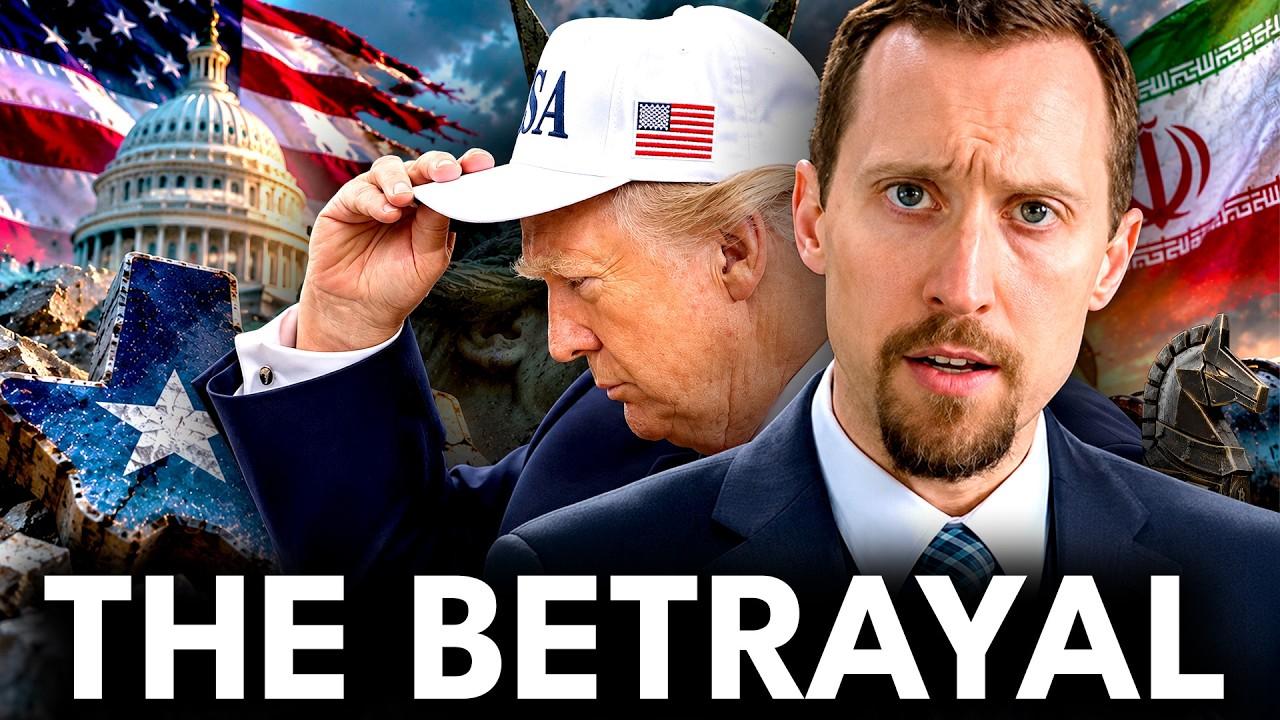
A couple of days after the blue wave hit, I sat down with E.J. Antoni to work through what actually happened. My read going in was already formed: this was a referendum, a vote of no confidence in a Republican Party that had everything, the House, the Senate, a clear mandate, and squandered it. The Iran War is the root cause, full stop. It spiked energy prices, re-accelerated inflation across the board, reversed homeownership affordability that had been trending in the right direction, and handed voters a reason to punish a party that had promised them relief and delivered the opposite.
The generational signal worries me more than the seat count. The 18-to-29 demographic swung hard to the left, not because they became socialists, but because they were promised affordability and got the opposite. Antoni's data on that is stark, and the Ohio numbers on young white male voters specifically are the kind of thing that should keep GOP strategists up at night.
These are voters who gave Republicans a shot. They're now signaling they'll give the other side a turn, and that turn could include real DSA candidates with real power.
What E.J. and I agreed on: this was not a mandate for the left. Voters ran away from Republicans; they didn't run toward socialism. The overconfident left doesn't know that yet and is about to double down on exactly the wrong policies.
Key takeaways
- The Iran War is the root cause of the electoral loss. Energy prices spiked, inflation re-accelerated into everything from groceries to mortgage rates, and homeownership affordability, which had hit a three-year high by February, reversed course every month after. Antoni had a 5.1% GDP forecast for 2026 going into the year. The war ended that.
- Congress is the other villain. DOJ and DOGE handed legislators hundreds of billions in documented savings. Congress enacted less than 1% of it. The Big Beautiful Bill's full expensing provision was the one genuine win. Everything else was a short list.
- The 18-to-29 swing is a generational alarm bell. Young voters went 13 points more Republican in 2024. In 2026, by Antoni's read of the exit data, they swung 35 points back to the left nationally. In Ohio, young white male voters went from 11 points more for Trump over Kamala to 44 points more for the Democratic candidate over Vivek. That's not a blip.
- This is not a mandate for the DSA, it's a rejection of broken promises. Even in California, Prop 40 (a wealth tax increase) got voted down. Voters fled the GOP; they didn't embrace socialism. The overconfident left is about to misread that completely.
- Deregulation is the one lever the executive still controls, and it's bigger than most people realize. The Chevron ruling, the SBA cost-benefit law being used with actual teeth for the first time, the capital requirements overhaul, these move the economy even without congressional cooperation.
- Scott Bessent is the right person in an impossible spot. He opposed the war's timing, inherited Yellen's T-bill time bomb, and has been running Operation Economic Outcast with genuine competence. But no cleanup is fast enough to overcome the Iran War's economic blast radius.
What the Texas Result Actually Means
The clean way to read this result is as a betrayal-of-mandate story, not a partisan one. I said it at the top of the conversation and I'll say it again: what happened with this shift toward the Democrats was essentially a referendum, a vote of no confidence in the Trump administration's ability to follow up on promises. And a lot of those promises were economic.
Antoni's framing was sharp: voters were running away from something, not running toward something. The exit data backs that up. Where DSA-aligned economic policies actually appeared on ballots, property tax increases in Florida, Prop 40 in California, voters rejected them.
The direction was consistent whether it was a red state or a blue state: people don't want what the DSA is selling. They just want Republicans even less right now.
The generational piece is what I keep coming back to. Antoni walked through the swing in the 18-to-29 cohort: 13 points toward Republicans in 2024, then, by his read of the exit polling, 35 points back to the left in 2026. The Ohio number is even more pronounced. Among young white male voters specifically, it went from 11 points more for Trump than Kamala to 44 points more for the Democratic candidate than Vivek, a nearly 35-point swing in two years.
That's Gen Z saying, loud and clear: we gave you the shot, you didn't deliver, now we're trying something else. The scary part is that "something else" increasingly includes people who actually believe in the socialist program, not just the aesthetic.
When I brought up Governor Shapiro announcing a minimum wage hike the day after the election, that's what I was pointing at. You have an overconfident left about to double down on incompetent economic policies. That's the read.
JD Vance acknowledged it the day after. That was admirable. It was also probably a couple months too late.
The Iran War's Economic Blast Radius
Antoni walked through the causation chain methodically, and it's worth laying out clearly because too many people are still trying to separate the political result from the economic one.
Energy prices go up. Because energy is an input into everything, prices start spilling over into the broader economy with a lag, September, October is when it hit, exactly as Antoni and others predicted back in March. That trickle-down into core inflation measures, into trimmed mean CPI and PCE, didn't start reversing until after the damage was done politically.
The homeownership story is the one that hits hardest. The Atlanta Fed's Homeownership Affordability Monitor had been climbing. By February of this year it was at its highest level in three years. Not great, still below what would be considered affordable, but moving in the right direction.
It has fallen every month since. The mechanism is straightforward: energy prices up, inflation expectations up, interest rates up, homeownership affordability down. Voters living that reality in real time don't need an economist to explain it to them.
On real wages: under Biden, Antoni estimates real average weekly earnings, what a paycheck actually buys after inflation, fell about 4% over the full term. Trump comes back in and starts clawing it back. By his estimate, in the 12 or 13 months before the Iran War disrupted things, Trump had recovered roughly half of Biden's cumulative losses.
That's a genuinely good record. Then energy prices hit and those real wage gains started reversing.
Antoni's GDP forecast for 2026 was 5.1% at the median, he had a piece out around February 27th laying out the case. That forecast was predicated on oil ending the year with a handle in the 60s. When WTI went through $100 a barrel, the forecast went with it.
The economic setup for a strong year was real. The war killed it.
Antoni put it plainly: you can make the argument that the Iran War was worth it on national security grounds. The economic cost, however, is documented, the voters felt it, and they reacted.
The Do-Nothing Congress and the Mandate Squandered
This is the part that gets me. We had both chambers. We had a mandate from the 2024 election that was about as clear as it gets. And the list of what Congress actually delivered is painfully short.
Antoni's specific charge: DOJ identified hundreds of billions in potential savings, fraud, waste, abuse, corruption. Congress enacted less than 1% of it. Less than one percent. These so-called conservatives were handed wins on a silver platter and said no thanks.
The SAVE Act didn't pass. Basic voter ID didn't happen. The Medicare and Medicaid fraud is so glaringly obvious, immigrants setting up LLCs, taking money, sending it back to their home countries without delivering the services they're supposed to provide, that the fact Congress did nothing about it is almost hard to believe if you weren't watching it happen in real time.
The Big Beautiful Bill is the exception. Full expensing is a real thing. Antoni's tracking 10%-plus growth in fixed domestic private investment this year, factories, software, the infrastructure underlying the AI buildout, and credits that to the tax incentives from the bill.
Productivity numbers have been strong. These are genuine wins.
But one win against a list of broken promises isn't a record you run on. Antoni framed it as sins of omission and sins of commission. Congress failed to do what was promised, and in some cases did the opposite. That double betrayal is what made the midterm result look the way it did.
Grover Cleveland and the Fork in the Road
This is the section of the conversation that I keep thinking about, because Antoni made the historical parallel back in December 2024 and then watched it continue to play out.
Cleveland was the last limited-government Democrat, Grover the Good, they called him, because he actually meant it when he said the spoils system was corrupt. After his second term, the Democratic Party got obliterated in the 1894 midterms. Antoni describes it as the biggest midterm loss in American history.
A Republican who had previously been Speaker predicted it in terms that sound almost prophetic in retrospect: the Democratic losses would be so great that their dead would be thrown in a mass grave marked unknown. By the time November arrived, that turned out to be less hyperbolic and more accurate. Democrats went from over 200 seats to somewhere in the 90s. More than half, gone.
What followed was the progressive takeover of the Democratic Party, Woodrow Wilson's presidency enabled only because the Republican Party split between Teddy Roosevelt and Taft, and from there the Federal Reserve, World War I, and a chain of consequences Antoni thinks history might have looked very different without.
The parallel he's drawing is obvious: Republicans now face the same fork. Do they go the way of the neocons, or do they course-correct toward what actually got Trump elected in the first place? The Democratic Party made the wrong call after 1894 and became the progressive party it's been ever since. The question is whether Republicans have been sufficiently humiliated to make the right call now.
Antoni is a monetary scientist, not a political scientist, and he said so. But the structural read feels right to me.
The neocons need to be not just defeated but discredited. JD's post-election acknowledgment was a start. Whether the party follows through is a different question.
What Deregulation Can Still Accomplish
Here's the thing: even with a hostile Congress, the executive still has real tools. And this administration has used them better than most people are giving them credit for.
The Chevron doctrine ruling is the one I keep coming back to. Huge, as Antoni said immediately when I brought it up. A lot of people misread the ruling as automatically overturning a bunch of regulations. That's not how it works.
What it means is that every instance of regulatory overreach now has to go through the courts, and those courts are now more likely to side against the agencies. That takes time, but the direction is set.
Antoni flagged something most people haven't heard of: a law connected to the Small Business Administration that requires any regulation with significant impact on small businesses to come with a real cost-benefit analysis. Nobody had ever used it with actual teeth before. This administration is using it, and it's become, in Antoni's words, a huge artillery piece in the war on regulation.
The start-stop engine feature is a perfect microcosm of how regulatory capture produces outcomes that are literally worse than doing nothing. The EPA wrote the emissions testing formula to give bonus credits for every second an engine is off. So manufacturers built engines that shut off at every opportunity, not to reduce emissions, but to game the formula.
The actual result: engines take longer to warm up, catalytic converters take longer to reach operating temperature, and in cold weather and local driving conditions, actual harmful emissions go up. Not down. Up. I deal with this every morning driving my boys to school. There's a stop sign at the end of my block. If I forget to turn it off, the engine restart delay can actually prevent me from clearing the intersection safely. That's not a minor inconvenience, that's dangerous.
And it's the direct result of a regulator deciding to put their thumb on the scale instead of actually measuring what comes out of the tailpipe.
The capital requirements overhaul at the Fed is the financial-sector equivalent. The previous proposal had all kinds of markers attached to loans that had nothing to do with default risk, the actual thing capital requirements are supposed to protect against. What that creates is artificial incentives to hold bad assets and artificial disincentives to hold good ones.
The new proposal under Bowman and Warsh strips a lot of that out. Not perfect, but vastly better. And the debanking pressure on fossil fuel lenders, the Biden-era strong-arming that drove banks away from financing natural gas and nuclear, is gone.
The Texas 2021 blackout is the case study for what happens when capital misallocation runs all the way through an energy grid. Renewable energy credits subsidized wind and solar, overproduction in West Texas drove prices negative, reliable baseload investment got crowded out. And when it got cold enough to actually need that baseload capacity, some of the compression stations that fed the natural gas pipelines were on the parts of the grid powered by wind and solar.
Wind and solar going offline pulled reliable plants down with them. The Texas blackout was a subsidy distortion story, not a weather story.
Bessent, Warsh, and the Treasury-Fed Dynamic
Scott Bessent is in one of the hardest spots in Washington right now, and I think he's handling it about as well as anyone could.
Before he became Treasury Secretary, Bessent was running his hedge fund, Key Square Group, and Antoni worked briefly with him during that period. He can attest directly to how sharp the man is. And what Antoni's read, watching from the outside now, is that Bessent was strongly opposed to the war's timing.
Even Trump has gotten up and said, essentially, that his Treasury Secretary asked if we had to do this, and especially had to do it right now. The economy was about to take off. Antoni's 5.1% median GDP forecast was in that camp.
What Bessent inherited from Yellen was a T-bill time bomb. Yellen ran Treasury like a hedge fund, predicated on Powell cutting rates, locking in debt at lower long-term rates when the bills matured. Powell cut 100 basis points at the end of 2024. Yields went up roughly 100 basis points instead, because markets read the move as political.
Bessent now has massive T-bill issuance he can't easily lock in at long maturities without accepting very high rates. He's stuck in the system she built.
Operation Economic Outcast is the other front he's been fighting on. Using every available avenue, traditional banking system, crypto exchanges, financial pressure across the board, to squeeze Iran in ways the military hasn't been able to. Antoni was genuinely impressed by the scope and execution.
But it's cleanup work. No matter how good the cleanup is, it can't overcome the economic damage the war itself caused.
The Warsh appointment gives me some real hope on the monetary side. Antoni thinks Bowman is free to do the right thing now without being strong-armed, and the direction on capital requirements is evidence of that. The Fed-Treasury coordination that a $40-trillion Treasury market requires doesn't have to mean the Fed is covering government deficits on demand. With both Bessent and Warsh at the table, there's at least a chance that coordination looks like smooth market functioning rather than monetization.
That's the opportunity cost question I keep coming back to: what could have been accomplished with Bessent's competence, Warsh's monetary discipline, and a 5.1% GDP trajectory without the Iran War as the constant wrench in the works? We'll never know. But it's worth sitting with.
About E.J. Antoni
E.J. Antoni is a public finance economist and research fellow at the Heritage Foundation. He focuses on fiscal policy, monetary policy, and labor economics, and has been a frequent commentator on federal spending, inflation, and the economic effects of government policy. He has written and appeared widely on the economic record of recent administrations and was an early voice flagging the inflationary consequences of the Iran War on consumer prices and homeownership affordability.
Sources mentioned
- Atlanta Fed Homeownership Affordability Monitor: the tool Antoni cites showing affordability at a three-year high in February before falling every month after the Iran War began
- Trump Admits Inflation Is the Plan to Erase $40 Trillion Debt: Marty's prior coverage of the fiscal pressure behind Treasury's constraints
- $39B 10-Year Auction Clears at Highest Yield Since 2000 on Near-Record Foreign Demand: the yield backdrop Bessent is operating against
Watch the conversation
Timestamps
- 0:00 - Intro
- 0:35 - The blue wave as a vote of no confidence
- 18:14 - Voters ran away, not toward, the DSA ballot test and the generational swing
- 28:00 - The Grover Cleveland parallel and the Republican Party's fork
- 33:50 - Sponsor break
- 42:27 - Reindustrialization, tariffs, and what actually drove investment
- 52:04 - The Chevron ruling and what deregulation can still accomplish
- 55:20 - Sponsor break / Chevron follow-up and regulatory case priorities
- 1:04:50 - Texas 2021 blackout and renewable energy credit misallocation
- 1:12:34 - Bessent, Operation Economic Outcast, Warsh, and the Fed-Treasury dynamic
Sponsors
- Cash App: For a limited time, new customers can get $21 added to their balance. Just use code TFTC10 when you sign up, and send at least $5 to a friend in the first two weeks. cash.app/app/TFTC
- Square: For up to $200 off eligible Square hardware. square.com/go/tftc
- Bitkey: Use code TFTC10 for 10% off the new Bitkey. bitkey.world
- Aven: aven.com/bitcoin
- CrowdHealth: joincrowdhealth.com/tftc
- Simple Mining: simplemining.io/tftc
- Salt of the Earth: drinksote.com/tftc
Frequently Asked Questions
Why did Republicans lose Texas in the 2026 midterms?
By E.J. Antoni's read of the exit data, it was primarily an economic referendum driven by the Iran War. Energy prices spiked after the war began, inflation re-accelerated into prices throughout the economy by fall, homeownership affordability reversed every month after February, and voters who had been promised relief delivered a punishing verdict. Congress compounded the damage by failing to act on documented savings and broken promises on voter ID, spending cuts, and Medicare fraud.
How did the Iran War affect inflation and consumer prices in 2026?
Antoni traces the causation directly: higher energy prices trickle into every other price in the economy with a lag of several months. By September and October, core inflation measures that had been trending down reversed course. Homeownership affordability, which had reached a three-year high at the Atlanta Fed's Homeownership Affordability Monitor by February, fell every month after. Antoni notes the mechanism runs through inflation expectations, once those rise, interest rates rise, and that affects everything from mortgages to credit cards to business investment.
What is the Grover Cleveland parallel to Trump's second term?
Antoni drew the comparison in December 2024 and watched it play out. Cleveland was the last limited-government Democrat; after his second term, the 1894 midterms produced the largest midterm loss in American history, with Democrats going from over 200 seats to roughly 90. The progressive takeover of the party followed, eventually producing Woodrow Wilson's presidency. Antoni's parallel: Republicans now face the same fork, go the way of the neocons or course-correct toward the limited-government mandate that actually won in 2024.
The Democratic Party made the wrong call after 1894. The question is whether Republicans have been humiliated enough to make the right one.
What did the Supreme Court's Chevron ruling actually change for regulations?
The Loper Bright decision doesn't automatically overturn existing regulations, that's the common misreading. What it means is that every instance of regulatory overreach now has to go through the courts, and those courts are now far more likely to side against the agencies. The effects accumulate over time. Antoni and I both flagged it as one of the most consequential and underappreciated shifts of the past few years for how the regulatory environment will actually function a decade from now.
What is Operation Economic Outcast and what has the Treasury done with it?
Operation Economic Outcast is the Treasury's financial pressure campaign against Iran, using every available mechanism, traditional banking channels, pressure on crypto exchanges, and broader financial sanctions tools, to impose costs that military pressure alone hasn't been able to achieve. Antoni, who has worked in proximity to Bessent and follows the Treasury closely, called the execution genuinely remarkable. The challenge is that no financial pressure campaign can fully offset the economic damage the war itself has caused domestically.
What did E.J. Antoni predict for the 2026 economy before the Iran War?
Antoni's median GDP forecast for 2026, published around February 27th, was 5.1% growth. That forecast assumed oil ending the year with a handle in the 60s, real wage gains continuing, and homeownership affordability improving further off a three-year high. When WTI went through $100 a barrel after the war began, the forecast went with it. The setup for a strong economic year was real, the tax incentives from the Big Beautiful Bill, the deregulatory momentum, the investment buildout, and the war was the variable that disrupted it.