Bessent Pushes CLARITY Act Cloture Vote, Section 10307 Stakes
Treasury Secretary Scott Bessent went on X urging senators to vote yes on the September 15 cloture motion for the CLARITY Act, framing a no-vote as surrendering ground to adversaries. The real story is Section 10307.
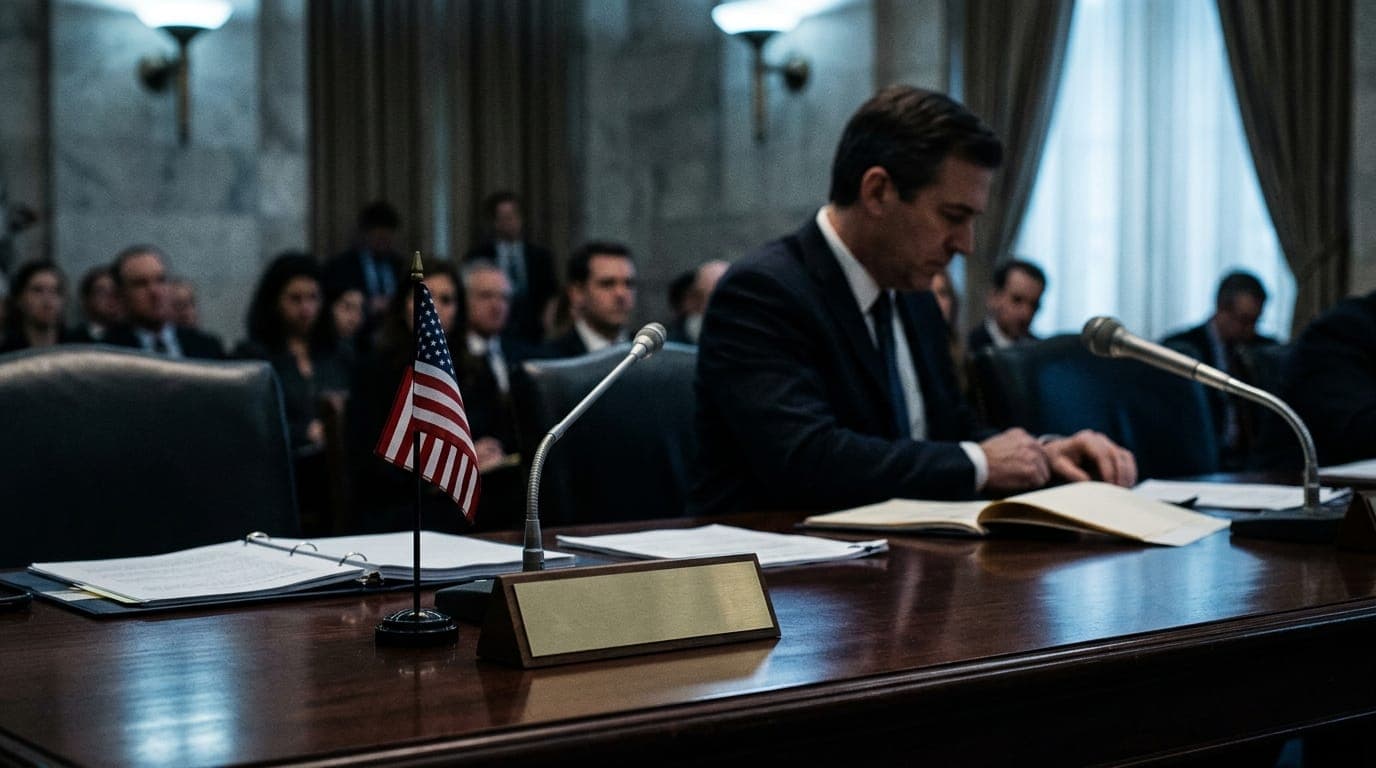
Treasury's public pressure campaign targets Democratic holdouts as Galaxy Research puts 2026 passage odds at just 10%.
Key takeaways
- Treasury Secretary Scott Bessent posted on X on September 9 calling on senators to vote yes on the September 15 cloture motion for the CLARITY Act (H.R. 3633), warning failure would signal weakness to adversaries.
- The procedural vote requires 60 senators to advance, meaning Republicans need at least 7 Democrats, and Galaxy Research puts 2026 passage odds at 10%, down from 75% in May.
- The bill's Section 10307 would require Treasury to formally assess the privacy and financial-inclusion benefits of self-hosted wallets in its national illicit-finance risk framework, the first statutory self-custody floor in U.S. law.
Treasury Secretary Scott Bessent posted on X on September 9, urging senators to vote yes on the September 15 cloture motion for the Digital Asset Market Clarity Act, H.R. 3633. The framing was pointed: a failed vote is not a procedural delay but a concession to adversaries watching how seriously the United States takes the future of digital assets.
"Failing to do so would send a troubling signal to our allies and adversaries alike that America is unwilling to lead on the future of digital assets and willing to forgo enhanced national security tools to combat their misuse," Bessent wrote. Sen. Cynthia Lummis (R-WY) amplified the post the same day, calling it a "strong, bipartisan bill" that would protect consumers and keep the industry based in America.
What the Vote Actually Is
The September 15 vote is a motion to proceed, not a passage vote. Senate Majority Leader John Thune filed cloture before the August recess; the Senate reconvenes September 14. Getting past this gate requires 60 votes, which means the Republican majority needs somewhere between 7 and 8 Democrats to cross over.
The bill cleared the Senate Banking Committee 15-9 on May 14, 2026, and the House passed it 294-134 on July 17, 2025. The version Thune filed cloture on is the July 22, 2026 merged text combining Senate Banking and Agriculture Committee language, running 616 pages. Even if cloture passes, the bill still faces an open amendment process and a final passage vote before anything becomes law. September 15 is the gatekeeper, not the finish line.
Galaxy Research has 2026 passage odds at 10%, down from 75% in May. That collapse in confidence reflects the partisan friction that has built since the House passed the bill with bipartisan support over a year ago. The National Sheriffs' Association dropped its opposition on September 3, shifting to neutral, which removes one organized obstacle but adds no votes.
The Provision That Actually Matters
Bessent's national-security frame is the pressure mechanism. Section 10307 is the substance.
That provision, as included in the bill text, would require Treasury to assess the benefits of self-hosted wallets for user privacy, civil liberties, and financial inclusion as part of the national illicit-finance risk strategy. Whether that language survived unchanged into the Thune-filed cloture version is not yet confirmed; watch for floor amendments targeting it specifically. If it holds, it writes self-custody recognition into federal statute for the first time. That is not symbolic. Defense attorneys for wallet developers and node operators facing DOJ or FinCEN enforcement actions would have a statutory hook that does not currently exist. Every future prosecution framing a self-custody tool as a money-transmission violation would have to contend with Congress having explicitly directed Treasury to weigh the affirmative benefits of that same technology.
With the CLARITY Act stalled, both the SEC and CFTC have been moving to fill the resulting regulatory gap independently, which narrows rather than expands the regulatory perimeter for self-custody. A failed cloture vote leaves that statutory floor unbuilt and the regulatory vacuum intact, likely until 2027 at the earliest.
Bessent's thesis is that the national-security angle moves moderate Democrats without touching the ethics impasse that has stalled the bill in the upper chamber. The bet is that framing a no-vote as geopolitical weakness is stickier than the usual consumer-protection arguments.
What to Watch
The September 15 cloture vote is the binary event. If 60 votes materialize, the bill moves to the floor and Section 10307 enters amendment territory, where it could be stripped as a Democratic negotiating concession. If the vote fails, the 2026 window closes and the self-custody statutory floor stays unbuilt. Watch for any floor amendment targeting Section 10307 language specifically. That is the tell that a deal was cut to get to 60, and whether the self-custody provision survived the price of admission.
Update, September 14, 2026
Senate Republicans dropped a revised 635-page final text on September 14, framing it as their last offer before today's 2:15 p.m. ET cloture vote. Sens. Lummis, Boozman, and Tim Scott released the draft, with Lummis calling it "truly bipartisan" and incorporating 126 substantive Democratic demands accumulated over more than a year of negotiations.
The headline structural change for Bitcoin participants: the final draft keeps Bank Secrecy Act protections preventing software developers from being treated as money transmitters or financial institutions, and miners and validators, previously outside the provision, are now covered. That is a material expansion of scope. The tradeoff worth watching is that the final revision removes references to 18 U.S.C. 1960, the federal criminal statute governing unlicensed money-transmitting businesses, leaving the result as a strong civil safe harbor while keeping that criminal statute outside its scope. Coin Center's Jason Somensatto flagged the gap directly, calling the limitation disappointing and noting that the absence of criminal-law protections makes Michael Lewellen's legal challenge against the Justice Department more consequential.
On ethics, the new language gives state attorneys general a role in enforcing restrictions on covered officials who issue or sponsor digital assets or maintain significant financial interests in digital asset issuers, with covered individuals required to divest or place holdings in a qualified blind trust, and civil penalties reaching 20% of consideration received or $500,000, whichever is greater. On stablecoins, the final draft empowers the Treasury secretary to intervene if stablecoins cause substantial deposit flight from community banks. Despite the concession package, opposition has not dissolved: banks, Democrats, state attorneys general, and developer advocates rejected key compromises within hours of the text dropping.
Polymarket odds for passage this year reached 35% on Monday, its highest level since late July , still a long way from a sure thing heading into the vote.
Update, September 15, 2026
The CLARITY Act is dead for this Congress. The Senate cloture vote failed, ending market structure legislative work in the Senate for 2026 and delivering a major blow to an industry that has invested years and hundreds of millions of dollars into trying to support its interests. Sen. Lummis had already telegraphed the stakes before the vote, warning reporters that a cloture failure meant "I think we're done. It's over. Because we've been working on this bill for over a year, and we've given them over 120 of their requests. That's enough."
Markets responded immediately. Bitcoin slipped back to $76,000 and crypto-related names like Circle, Bullish, and Coinbase added to earlier losses as votes were still being tallied. Coinbase's lobbying operation had been visibly all-in on this vote, with CEO Brian Armstrong posting on X that senators faced a binary choice and that "other countries lead in building the future of finance" if they voted no, warning that "history -- and the crypto voter -- won't forget." It was not enough. The safe harbor for software developers that the September 14 final text tried to deliver -- covering miners and validators under Bank Secrecy Act protections for the first time -- dies with the bill.
The consequence for open-source Bitcoin developers is concrete and immediate. The criminal liability gap that Coin Center's Jason Somensatto flagged in the final text -- the absence of 18 U.S.C. 1960 protections -- no longer even rises to the level of a concern worth debating. There is no civil safe harbor either. With cloture failed, the bill is dead for 2026, and the Senate's legislative calendar after September is consumed by midterm campaigning, appropriations fights, and the debt ceiling, meaning a new Congress would not take up crypto legislation until 2027 at the earliest, and more realistically 2028. DOJ and FinCEN retain full discretion to pursue enforcement actions against wallet developers and node operators with no statutory floor requiring Treasury to weigh the affirmative benefits of self-custody. That is the floor that Section 10307 would have built. It was never laid.
Sources
- H.R. 3633, Digital Asset Market Clarity Act (Congress.gov)
- Sen. Lummis July 22, 2026 press release, merged CLARITY Act text
- Latham & Watkins US Crypto Policy Tracker
- Treasury Secretary Scott Bessent, @SecScottBessent, X post, September 9, 2026
Frequently Asked Questions
What happens if the September 15 cloture vote fails?
The motion to proceed is defeated and the CLARITY Act cannot advance to the Senate floor for debate or amendment. The bill effectively dies for the 2026 legislative calendar. Congress would need to reintroduce or relaunch the process in 2027 under a new legislative session.
Does the CLARITY Act give Bitcoin a specific legal classification?
Yes. H.R. 3633 would give Bitcoin an explicit statutory classification as a digital commodity under CFTC jurisdiction. That is the first time federal law would define Bitcoin's regulatory home, removing any remaining basis for the SEC to assert authority over BTC spot markets.
Why doesn't clearing 60 votes guarantee the bill becomes law?
The cloture vote only unlocks floor debate and the amendment process. The bill then has to survive amendments and pass a final passage vote, which under Senate rules also likely requires 60 votes. September 15 is the procedural gatekeeper, not the end of the process.