BOJ's 7-2 Split Puts Japan's Tightening Cycle in Doubt at 1.25%
The Bank of Japan raised its policy rate to 1.25% on September 18, 2026, the highest since 1995. A 7-2 dissent sent the yen lower and put the entire tightening cycle in question. The fault line runs straight through the board's composition.
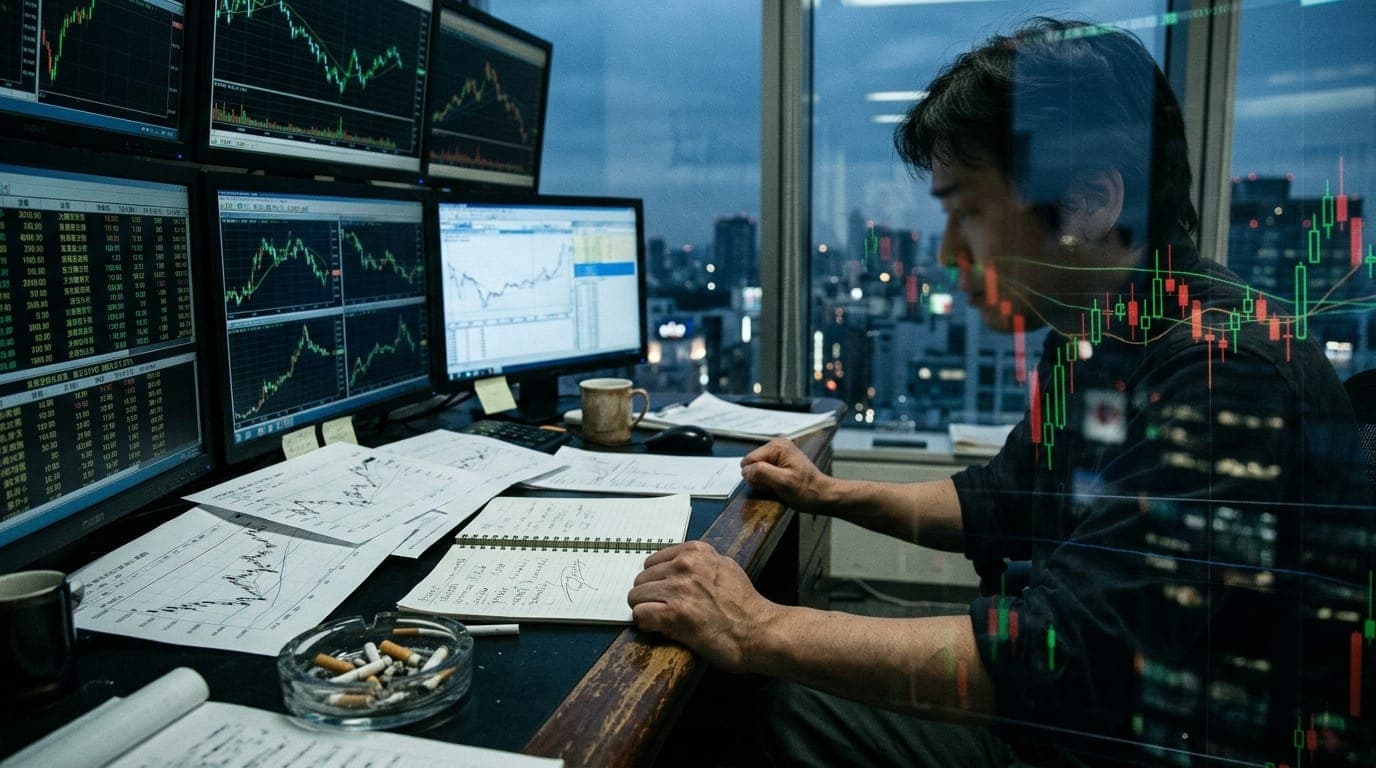
The Bank of Japan just hit a 31-year rate high. The yen didn't get the memo.
Key takeaways
- The Bank of Japan raised its policy rate 25 basis points to 1.25% on September 18, 2026, per the official BOJ statement, the highest level since 1995, but a surprise 7-2 dissent signal undermined the move before markets even closed.
- Both dissenters, board members Toichiro Asada and Ayano Sato, were appointed by PM Sanae Takaichi, a known reflationist; two hawkish members depart next year, meaning the dovish bloc could double to four of nine seats without a majority ever flipping.
- The yen weakened past 157 against the dollar and the Nikkei gained 1.5% following the decision, the opposite reaction a credible tightening cycle produces.
The Bank of Japan delivered its highest policy rate in 31 years on September 18 and still managed to weaken the yen. That is the tell. A central bank raising rates while its own board fractures in public is staging a tightening cycle, not executing one.
The BOJ's official monetary policy statement confirms the 7-2 vote: Toichiro Asada and Ayano Sato voted against the hike. Asada's stated rationale, quoted directly in the statement, was that "the rate of increase in the CPI (all items less fresh food) being below 2 percent recently" meant conditions did not yet warrant tightening. Japan's core CPI for August came in at 1.7%, down from 1.8% in July. This is three months after the BOJ's June 16, 2026 hike, an acceleration from the prior six-month cadence that the board itself couldn't unanimously endorse.
The Fault Line Is Political, Not Technical
The two dissenters were not random. Both Asada and Sato were appointed by Prime Minister Sanae Takaichi, whose view on rate hikes has been publicly documented as hostile. CNBC first reported that U.S. Treasury Secretary Scott Bessent pressed Governor Ueda to take action on monetary policy at the G20 earlier this month, a detail that underscores how much external pressure the BOJ is absorbing from multiple directions simultaneously.
Masayuki Nakajima, Senior Strategist at Mizuho, has flagged the board composition problem in market coverage: two more members, the hawkish Naoki Tamura and Hajime Takata, are due to leave the board next year. If Takaichi fills those seats from the reflationist camp, four of nine board members would be dovish. That is not a majority, but it is enough to keep the market skeptical that the tightening cycle survives. (Nakajima's board-composition analysis has been reported in market coverage; TFTC has not independently verified a primary Mizuho research note.)
"The dissent from Asada and Sato points to resistance against the fastest pace of rate increases in more than three decades and suggests they may increasingly act as a brake on further tightening," said Frantisek Taborsky, currency strategist at ING, in a note published by ING Think.
Hirofumi Suzuki, Chief FX Strategist at Sumitomo Mitsui Banking Corporation, was blunter in comments carried by CNBC: "The two dissenting votes in favor of keeping rates unchanged came as a surprise."
What a Credible Hike Would Have Looked Like
The market reaction is diagnostic. The yen weakened past 157 against the dollar. The Nikkei gained 1.5%. A currency that falls on a rate hike is telling you it doesn't believe the rate path holds.
Ray Attrill, Head of FX Strategy at National Australia Bank, put it plainly in market coverage: "They've just clearly underwhelmed versus expectations here. And I think that one of the more staggering aspects of it was that they couldn't even get the unanimous vote for that. That really raised eyebrows in the market." (TFTC has not independently verified a primary NAB research note for this quote.)
The numbers frame the credibility gap. At 1.25%, Japan's benchmark rate still trails neutral estimates by a considerable margin, with models varying widely on where neutral sits. Japan carries one of the highest debt-to-GDP ratios in the developed world. Every 25 basis points genuinely applied increases debt service costs materially on a government bond pile that is the largest in the developed world.
This is fiscal dominance operating through board composition rather than direct instruction. The result is the same: the central bank bends to the sovereign's borrowing needs, and the currency absorbs the cost.
The Carry Trade Gets Another Lease
The second-order effect is where this matters beyond Tokyo. A credibly tightening BOJ would compress the interest rate differential between the yen and higher-yielding currencies, unwinding the carry trade that has funneled cheap yen into global risk assets for years. Two dissenters, no forward guidance on October, and a board that may drift more dovish means that differential stays wide.
Cheap yen funding continues to flow into risk assets. That is a near-term tailwind for everything priced in dollars, including Bitcoin. But it is debt-funded levitation, not genuine demand, and it comes with a tail risk: if the market concludes the BOJ is raising rates on paper while signaling it won't follow through, JGB holders start repricing duration.
A JGB yield dislocation would be a global liquidity event, not a regional one. Bitcoin is the only monetary asset in this picture with no counterparty at the BOJ.
Japanese retail Bitcoin adoption, including vehicles like Metaplanet's yen-denominated Bitcoin treasury bonds, reflects rational savings behavior under a currency whose stewards are structurally constrained from defending it.
What to Watch
Governor Ueda's December meeting is the next hard test. A unanimous or near-unanimous hike with explicit forward guidance and a yen that strengthens through 150 would falsify the fracture thesis and confirm the tightening cycle is real.
Alternatively, if Takaichi fills departing board seats with centrists rather than reflationists, the dovish drift is contained. Watch the December vote count. Watch the appointments. Those two data points will tell you whether this is a tightening cycle or a performance of one.
Sources
Frequently Asked Questions
A rate hike strengthens a currency only when the market believes more hikes will follow. The 7-2 dissent, combined with no explicit forward guidance from Governor Ueda on timing, led traders to price out near-term follow-through. The yen fell because the market read the split as a signal the tightening cycle may stall, not because the hike itself was insufficient.
Neutral rate estimates for Japan vary across models and have not been officially fixed by the BOJ. At 1.25%, the BOJ remains below most estimates of neutral, though the range of those estimates varies considerably depending on the model used. With a debt-to-GDP ratio that is among the highest in the developed world, the fiscal pressure to keep rates below neutral is intense, which is precisely why the board's composition matters more than the rate level itself.
In the short run, a sharp carry trade unwind triggers a global risk-off event: assets sold to repay yen-denominated loans, dollar liquidity seized, Bitcoin prices under pressure alongside equities. That was the August 2024 playbook. Over a longer horizon, sustained yen weakness driven by political BOJ capture is an advertisement for a monetary asset no government can appoint its way around. Both dynamics are real; the time horizon determines which one dominates.