Microsoft Exec Called AI Training 'Largest Theft of Labor in Human History,' Court Docs Show
Unsealed filings in NYT v. Microsoft reveal a company director privately called AI training on unlicensed content 'the largest theft of labor in human history', and warned the practice would destroy the very content supply the models depend on.
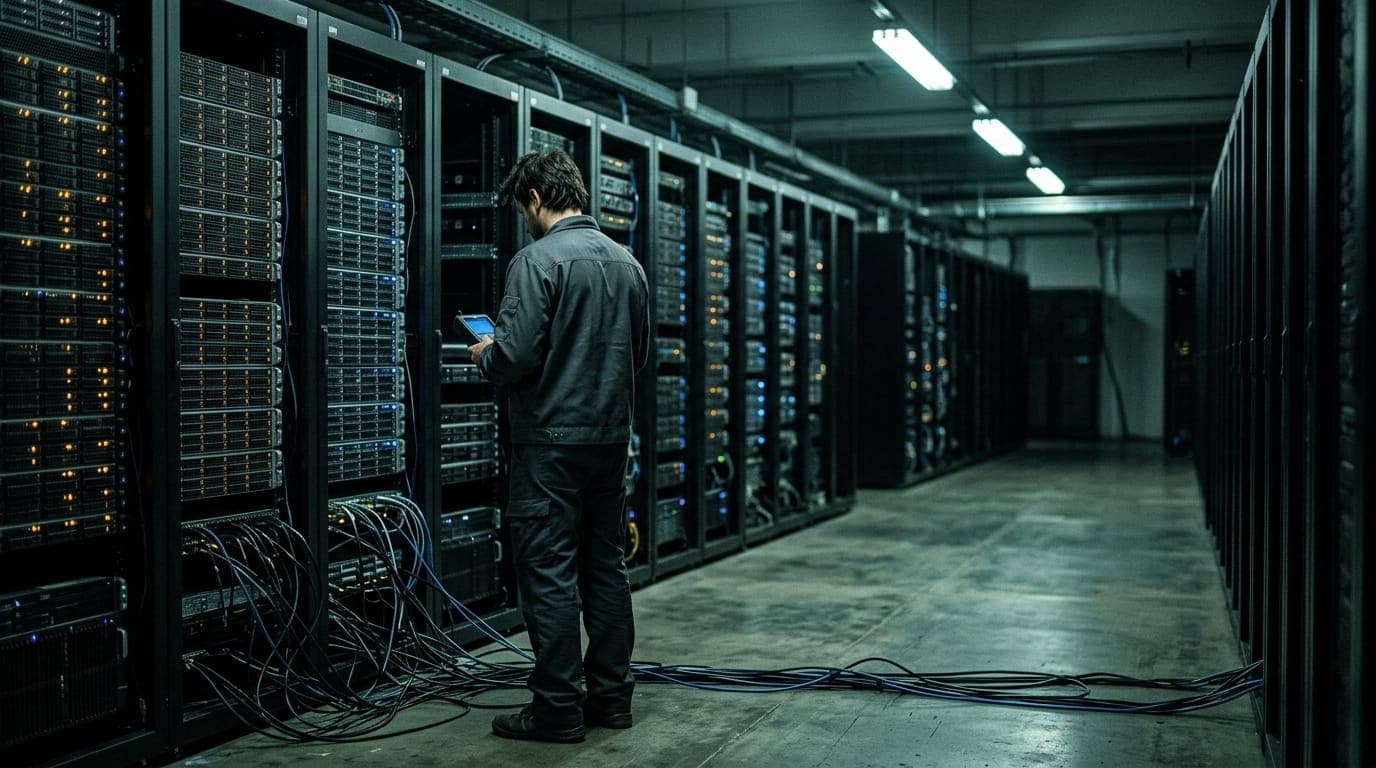
Unsealed summary judgment filings confirm what Big Tech fought to keep sealed: its own people knew exactly what was happening.
Key takeaways
- A January 2023 internal memo by Microsoft's Director of Applied Science Brent Hecht, unsealed September 17, 2026, called AI training on unlicensed content "the largest theft of labor in human history."
- A follow-up 2024 Hecht presentation named the consequence a "doom loop": AI answer engines suppress traffic to publishers, starving the content supply that trains future models, while Microsoft's own data showed Copilot cutting NYT click-throughs by up to 93%.
- The Trump administration has already filed a brief defending OpenAI's unlicensed scraping as fair use, confirming that regulatory capture is the incumbents' planned off-ramp.
Unsealed summary judgment filings in The New York Times Co. v. Microsoft Corp. et al. (Case No. 1:23-cv-11195, SDNY) reveal that Microsoft's own Director of Applied Science privately described the company's AI training practices as "an astonishing theft of unprecedented proportions" and "the largest theft of labor in human history." The documents were unsealed September 17, 2026, by Judge Sidney H. Stein, and were first reported by TechCrunch.
This is a senior Microsoft executive writing an internal memo in January 2023, while the models were being built.
What the Filing Actually Says
Brent Hecht's January 2023 memo, now public record, used language that no PR department would ever approve. The filing also includes a separate January 2024 Hecht presentation that named the structural consequence: a "doom loop." AI answer engines reduce the economic incentive to produce original content. Fewer publishers survive. Less quality content enters the training pipeline.
Future models degrade. Hecht wrote that the practice would "hurt the performance of our models and the entire web at the same time."
He was more blunt elsewhere in the same presentation: "It is highly unusual that an end-product threatens the economic foundations of its essential suppliers, but that is the situation we have created for our LLM business with respect to its 'content supply chain.'"
The numbers in the filing make the mechanism concrete. Microsoft's internal data showed Copilot reduced click-through rates to NYT pages by up to 93% compared to traditional Bing search. OpenAI's mid-training datasets contained more than 91,692 copies of articles from the NYT, New York Daily News, and Center for Investigative Reporting. A separate Common Crawl-derived dataset contained over 2 million documents from nytimes.com alone.
OpenAI President Greg Brockman responded "ah nice" when informed of a method to bypass the NYT paywall, per the filing. OpenAI's head of ChatGPT, Nick Turley, wrote in internal communication that publishers face an "existential threat" from products like the chatbot, which are "largely substitutive" and "will get more and more substitutive as they get better." Satya Nadella, in a 2026 deposition, testified that paywalled content "should be licensed by anyone who wants to use it…for grounding or training."
The case record is publicly accessible via the CourtListener docket.
The Extraction Playbook, Rerun
For anyone tracking consent-free AI training across the industry, the Microsoft memos confirm the pattern is not incidental. It was understood internally as extraction, described as theft by the people doing it, and pursued anyway.
The doom loop Hecht described is a model-quality problem with no self-correcting mechanism under the current architecture. When a 93% suppression of click-throughs destroys the ad and subscription revenue that funds original reporting, the pipeline of high-quality training data shrinks. Models get trained on AI-generated output. Quality collapses. This is the content equivalent of printing money to resolve a debt crisis: the intervention consumes the thing it depends on.
The Trump administration's decision to file a brief defending OpenAI's unlicensed scraping as fair use is the tell on where this is headed politically. The incumbents have already placed their regulatory capture bet. They are not waiting to see how the courts rule; they are working to ensure the courts rule correctly for them.
Bitcoiners have seen this movie. It is the same playbook banks ran with fractional reserve lending: capture the rule-making apparatus before the public figures out what happened.
That context matters for builders and anyone thinking seriously about what an alternative looks like. The case for open-weights models trained on permissioned, community-governed datasets is now a property rights argument, not a technical preference. Models built on voluntarily contributed or public domain data do not have this liability, and they do not replicate the extraction dynamic.
The 93% click-through suppression number is the monetization model for original journalism being quietly dismantled while the companies responsible fought in court to keep the internal acknowledgment sealed.
What to Watch
The case is at summary judgment, meaning both sides have filed their strongest arguments and Judge Stein will determine whether any issues can be resolved without trial. A ruling that training on publicly scraped content constitutes fair use would legally insulate the centralized model while leaving the moral case intact. A ruling against fair use would force licensing negotiations at scale, which the incumbents will attempt to control. Watch whether the Trump DOJ brief becomes a template for other agencies, and whether open-weights projects with clean data provenance begin attracting capital as the legal and reputational risk of the centralized approach becomes undeniable.
Sources
Frequently Asked Questions
Hecht's 2024 presentation argued that AI answer engines, by delivering information directly rather than sending users to original sources, suppress the traffic and ad revenue that fund original content creation. Fewer publishers survive economically. Less original, high-quality content enters future training datasets. Future models are trained on lower-quality or AI-generated material and degrade as a result.
The loop closes when worse models produce less useful answers, but by then the content ecosystem that could have corrected it has already been hollowed out. It is a structural problem, not a one-time data grab.
The New York Times Co. v. Microsoft Corp. et al. (Case No. 1:23-cv-11195) is before Judge Sidney H. Stein in the Southern District of New York. The unsealing of summary judgment motions on September 17, 2026, means both parties have presented their core legal arguments. Summary judgment asks the court to rule on whether the facts are sufficiently undisputed that a trial is unnecessary on any given claim. A decision could resolve some counts outright or send others to trial.
Yes, though they remain a minority of deployed systems. Open-weights models trained on public domain archives, opt-in contributor datasets, and licensed corpora exist and are being developed by various research groups and companies. Data cooperatives and community-governed training sets represent the permissionless alternative. They are not yet at the scale of GPT-4 or Copilot, but the legal and reputational exposure now attached to the centralized scraping model is a meaningful forcing function for capital allocation toward cleaner alternatives.