NVIDIA, Google, and Emerald AI Launch AEMA to Rewire Grid Access
Emerald AI, Google, and NVIDIA co-founded the AI Energy Management Alliance on September 16, 2026, with 18 members including Anthropic, National Grid, AES, and NRG, formalizing the demand-response model Bitcoin miners built, with significantly more political and financial firepower behind it.
Bitcoin miners invented the flexible-load playbook. Now trillion-dollar incumbents are formalizing it.
Key takeaways
- Emerald AI, Google, and NVIDIA co-founded the AI Energy Management Alliance (AEMA) on September 16, 2026, with 18 founding members including Anthropic, National Grid, AES, and NRG.
- AEMA's core argument, that interruptible, demand-responsive loads deserve faster grid interconnection, is the same case Bitcoin miners have made and proved in ERCOT for years, now arriving with institutional lobbying power behind it.
- AEMA claims its framework could unlock 100 GW of existing U.S. grid capacity; that figure is the coalition's own projection and has not been independently verified by FERC, NERC, or any regulatory body.
Emerald AI, Google, and NVIDIA launched the AI Energy Management Alliance (AEMA) today, a formal industry coalition aimed at making AI data centers behave as controllable grid resources rather than static maximum-draw consumers, per the NVIDIA Blog. The coalition debuts with 18 member organizations and a headline claim that "moderately flexible" data centers could unlock 100 GW of existing U.S. grid capacity.
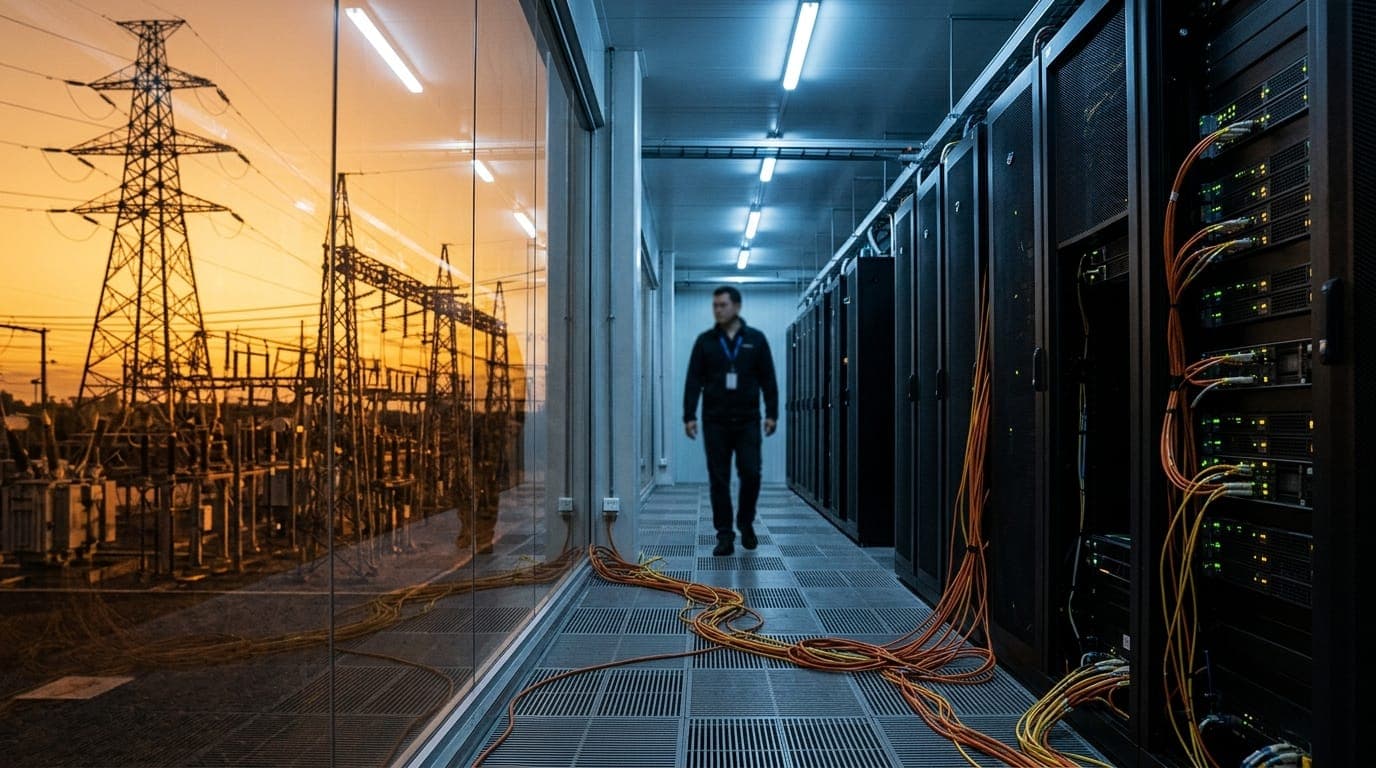
The technical mechanism is NVIDIA's DSX Flex software library, embedded in the Vera Rubin DSX AI Factory reference design, which connects AI infrastructure to grid-balancing services in real time. The coalition's own website, aema.ai, frames 100 GW as enough capacity to power 100 million homes, a figure that should be read as advocacy until a regulator or independent body puts a number on it.
The Playbook Bitcoin Miners Wrote
Varun Sivaram, Emerald AI's Founder and CEO, wrote in Fortune that "if data centers change how they operate to support the communities that host them, they should be rewarded with faster access to power." That sentence is the entire Bitcoin mining demand-response thesis, restated for a different audience.
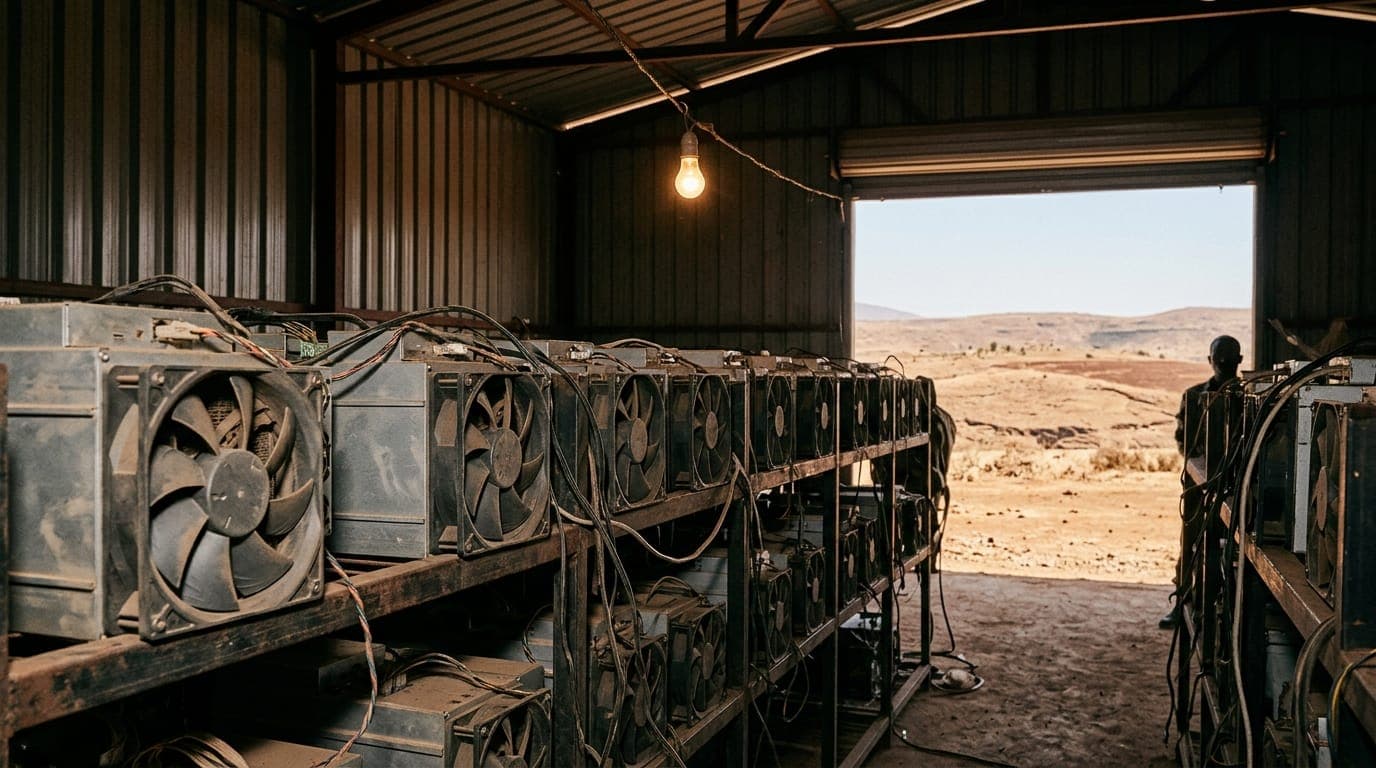
Bitcoin miners have operated as interruptible, grid-responsive loads for years without a formal coalition or a fast-track interconnection policy. During Winter Storm Elliott, miners in ERCOT curtailed over 1.5 GW on short notice. They absorbed stranded West Texas wind generation when nobody else would take it. They built the empirical case that a large, controllable electricity load is a grid asset, against serious regulatory and PR headwinds, with no trillion-dollar institutional coalition providing cover.
AEMA is now formalizing that exact model for AI infrastructure. The AI data center capex buildout has already created a grid interconnection queue measured in years and hundreds of gigawatts of pending requests. Wood Mackenzie has flagged that 72% of U.S. AI data center power requests may be phantom load, which makes the question of who gets prioritized in the real queue existential for operators on both sides of this.
The math is worth sitting with. AEMA is targeting 100 GW of unlockable U.S. capacity. Global Bitcoin mining consumes a significant share of that figure by some estimates, using Bitcoin's own argument to do it.
Who Gets the Fast Lane
The "technology-neutral" language in AEMA's framing is the critical phrase to track. It sounds inclusive. In practice, the entities that write the standard-setting documents and show up to FERC proceedings determine how neutrality gets defined when interconnection queue slots are actually allocated.
AEMA's 18 founding members include Anthropic, National Grid, AES, and NRG, per the Fortune op-ed and NVIDIA Blog. The coalition's prior March 2026 NVIDIA-Emerald partnership, announced at CERAWeek and documented on the NVIDIA Newsroom, named AES, Constellation, NextEra Energy, Invenergy, Nscale Energy & Power, and Vistra. Which of those energy companies have crossed into full AEMA membership versus the earlier bilateral deal is worth confirming at aema.ai before drawing conclusions.
Separately, NVIDIA, Digital Realty, and Emerald AI plan to bring online what they are calling the "world's first power-flexible AI factory" in Virginia, later in 2026, per the Fortune op-ed. That pilot is the proof-of-concept AEMA will point to in every regulatory filing that follows.
The falsifiable version of the concern: if AEMA's interconnection framework, once encoded into FERC or state PUC policy, explicitly includes Bitcoin mining operations as eligible flexible-load participants on equal terms, and interconnection incentives actually flow to miners at the same speed and cost as to AEMA members, then this is a rising tide. If the "technology-neutral" language quietly narrows to exclude mining once the coalition controls the standard-setting process, that's regulatory capture with a friendly press release stapled to the front.
What to Watch
The FERC docket and state PUC proceedings that follow AEMA's launch are the actual test. Watch whether Bitcoin mining operations are named as eligible participants in any flexibility-for-interconnection incentive framework that emerges from this coalition's policy work. Watch whether AEMA's Virginia pilot generates a formal FERC filing that defines "flexible AI factory" in ways that include or exclude other interruptible industrial loads. And watch how AEMA's member energy companies, National Grid, AES, NRG, position miners in their own demand-response portfolios when capacity becomes the scarce commodity.
Sources
Frequently Asked Questions
AEMA is an industry coalition founded by Emerald AI, Google, and NVIDIA that launched September 16, 2026, with 18 member organizations including Anthropic, National Grid, AES, and NRG. Its stated goal is to standardize flexible, grid-responsive AI data center operations and advocate for policy frameworks that reward controllable demand with faster grid interconnection access.
Bitcoin miners have functioned as interruptible, demand-responsive loads for years, curtailing instantly during ERCOT grid stress events and absorbing otherwise-stranded renewable generation, without an industry coalition or fast-track interconnection policy behind them. AEMA is formalizing the identical model for AI infrastructure, with significantly more financial resources and lobbying infrastructure available to it.
No. The 100 GW figure comes from AEMA's own materials on aema.ai. It has not been validated by FERC, NERC, or any independent regulatory or research body. Treat it as an advocacy projection until an external estimate confirms or revises it.