Ethiopia Cuts Bitcoin Miners to 23% of Contracted Power After Drought
Ethiopian Electric Power slashed Bitcoin miner electricity to 23% of contracted supply after El Niño cut reservoir inflows by at least 20%, exposing the structural fragility of sovereign hydro as a mining energy base.
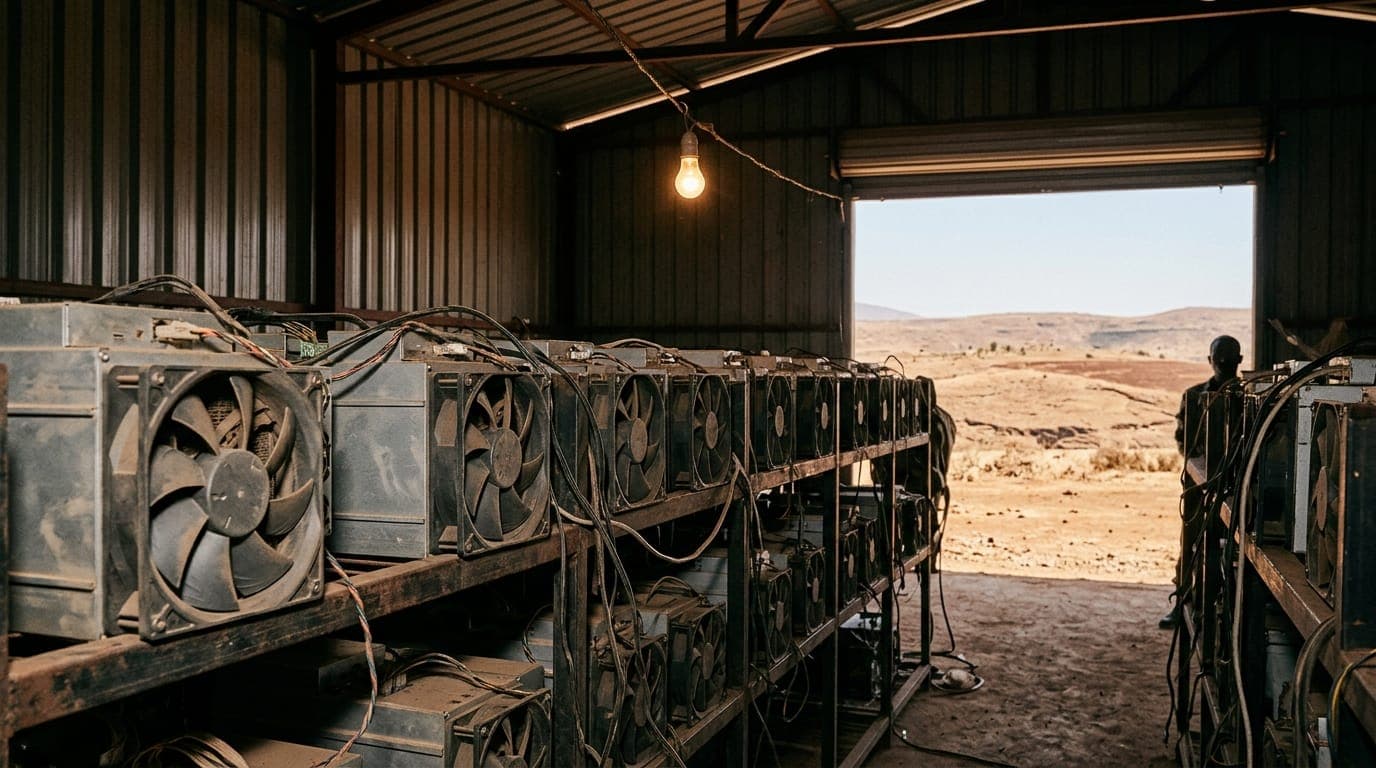
One dry season just erased three-quarters of Ethiopia's mining sector's electricity, proving that sovereign hydro is a weather-dependent subsidy, not a structural energy position.
Key takeaways
- Ethiopian Electric Power slashed electricity deliveries to Bitcoin miners to just 23% of contracted volume after El Niño cut reservoir inflows by at least 20%, a 75% reduction from agreed supply levels.
- Miners were EEP's single largest revenue category last year, generating 50.37 billion birr, more than any other customer segment, yet became the first to be rationed when water got scarce.
- EEP CEO Ashebir Balcha will reassess power allocation in October 2026; if reservoir levels stay low, further cuts are possible and electricity exports to neighboring countries could also face restrictions.
Ethiopian Electric Power cut Bitcoin miners' electricity supply to approximately 23% of contracted volume on September 15, first reported by Bloomberg's Fasika Tadesse. The trigger: El Niño-linked drought reduced inflows into the country's reservoirs by at least 20%, forcing EEP CEO Ashebir Balcha to ration power and put households and strategic industries ahead of mining operations.
The contracts promised miners at least 98% of agreed electricity. They are getting 23%. That gap is not a rounding error; it is a sovereign utility choosing its political constituency over its most profitable commercial customer.
The Revenue Paradox
The numbers make this decision striking. Miners consumed almost a third of Ethiopia's total electricity production from a 9,730 MW installed base (15 hydro plants, 5 wind farms, 1 waste-to-energy facility, per The Reporter Ethiopia). They were also EEP's best customers in pure financial terms: data miners paid 50.37 billion birr in the past fiscal year, more than any other customer category, per EEP's annual performance briefing covered by Ethiopian Business Review. They paid in foreign currency at roughly $0.032/kWh. EEP recorded its first profitable year.
Then the rain slowed. Balcha's statement at the September 15 annual briefing is worth reading directly:
"Because we anticipated this through early forecasts over the past few months, we acted quickly to reduce power supply to data mining."
The cut was deliberate and pre-emptive, not a technical failure. Balcha stated at EEP's August 2025 annual review: "Domestic consumers and strategic industries are always our priority." The September 2026 action is the execution of that stated policy.
Ethiopia's grid runs on water. EEP's own installed capacity is approximately 95% hydro, and the Grand Ethiopian Renaissance Dam alone accounts for roughly 52% of national electricity generation, per The Reporter Ethiopia's coverage of the EEP briefing. When inflows drop 20%, the margin that made cheap mining electricity possible shrinks fast.
What This Exposes About Hydro-Dependent Mining
Ethiopia reached roughly 2.4% of global hashrate, or approximately 23 EH/s, per the Hashrate Index global heatmap. A cut to 23% of contracted supply effectively sidelines the majority of that contribution temporarily. Bitcoin's difficulty algorithm adjusts every 2,016 blocks. The network compensates automatically. This is not a security event.
For the miners themselves, it is something else entirely. The Ethiopia playbook was: find stranded hydro surplus, sign grid offtake agreements with a state utility at sub-4-cent power, spin up ASICs, collect foreign-currency revenue. The flaw in that playbook is that "surplus" is a weather-contingent condition, not a structural one, and a sovereign grid will always have a political rationing queue in which mining is last.
This risk is not unique to Ethiopia. Any miner operating off single-source hydro under a sovereign offtake agreement faces the same political arithmetic when inflows drop or household constituencies get loud. Paraguay's ITAIPU arrangement, Bhutan's hydro exports, Laos's grid dependencies all carry versions of the same fragility. The energy moat that matters is owning the electrons from generation to ASIC, not renting them from a state utility that can reprioritize overnight.
The AI capex parallel is direct. AI inference clusters face identical sovereign-grid risk in emerging-market power-purchase agreements, with one important difference: Bitcoin miners can ship ASICs to a new jurisdiction in days. AI clusters cannot. The Ethiopia event is a stress test that runs on mining first and on AI data center operators later. The phantom load problem in US AI data center planning and the Stargate energy bet face a structurally similar reckoning when power purchase assumptions collide with physical grid constraints.
The falsifiable thesis here: if Ethiopian miners had signed dispatchable, grid-independent offtake agreements (co-located gas, solar-plus-battery, or nuclear where the miner owns the generation asset) and maintained uptime through this drought, the sovereign-rationing risk would be structurally mitigated. That outcome would show the model can work. It did not happen. Every machine running on EEP grid power is subject to EEP's rationing queue, and Balcha made clear in August 2025 that mining contracts were always temporary: "There will be no new contracts in the field of data mining, and we are not interested in continuing with existing ones either."
What October Decides
Balcha stated at the September 15 briefing that EEP will reassess miners' power allocation in October 2026. If reservoir inflows recover, some contracted power returns. If they do not, further cuts are possible, and electricity exports to neighboring countries could also be restricted.
EEP's capacity utilization fell to approximately 60% against a 67% target in the past fiscal year, per Ethiopian Business Review's coverage of the annual performance report. That underperformance, combined with the loss of miner revenue at scale, creates fiscal pressure in the other direction. The October decision is not purely hydrological; it is also budgetary. Whether breach-of-contract claims are enforceable against a state-owned utility in Ethiopian jurisdiction remains genuinely unclear and represents legal and political risk that standard mining PPAs in emerging markets have not adequately priced.
Sources
- Bloomberg, Fasika Tadesse, Sep 15 2026 (first reported by Bloomberg)
- Ethiopian Business Review, EEP CEO Ashebir Balcha annual performance briefing, Sep 15 2026
- Hashrate Index Global Hashrate Heatmap
- AllAfrica, EEP annual report coverage, Sep 15 2026
- The Reporter Ethiopia, EEP profitability and capacity context
Frequently Asked Questions
No. Ethiopia holds approximately 2.4% of global hashrate per the Hashrate Index heatmap. Cutting delivery to 23% of contracted supply removes most of that share temporarily. Bitcoin's difficulty algorithm adjusts every 2,016 blocks, redistributing the network's effective hashrate automatically. This is a hashrate redistribution event, not a security event.
Contracts reportedly guaranteed miners at least 98% of agreed electricity. EEP is delivering approximately 23%. Whether breach-of-contract claims are enforceable against a state-owned utility under Ethiopian jurisdiction is genuinely unclear. This is legal and political risk that standard emerging-market mining PPAs have not adequately priced.
Grid-independent, dispatchable power where the miner owns the generation asset: co-located gas generation, nuclear (long-term), or solar-plus-battery microgrids. A miner who controls electrons from source to ASIC is not in a state utility's rationing queue. A miner on a grid offtake agreement with a sovereign utility is.