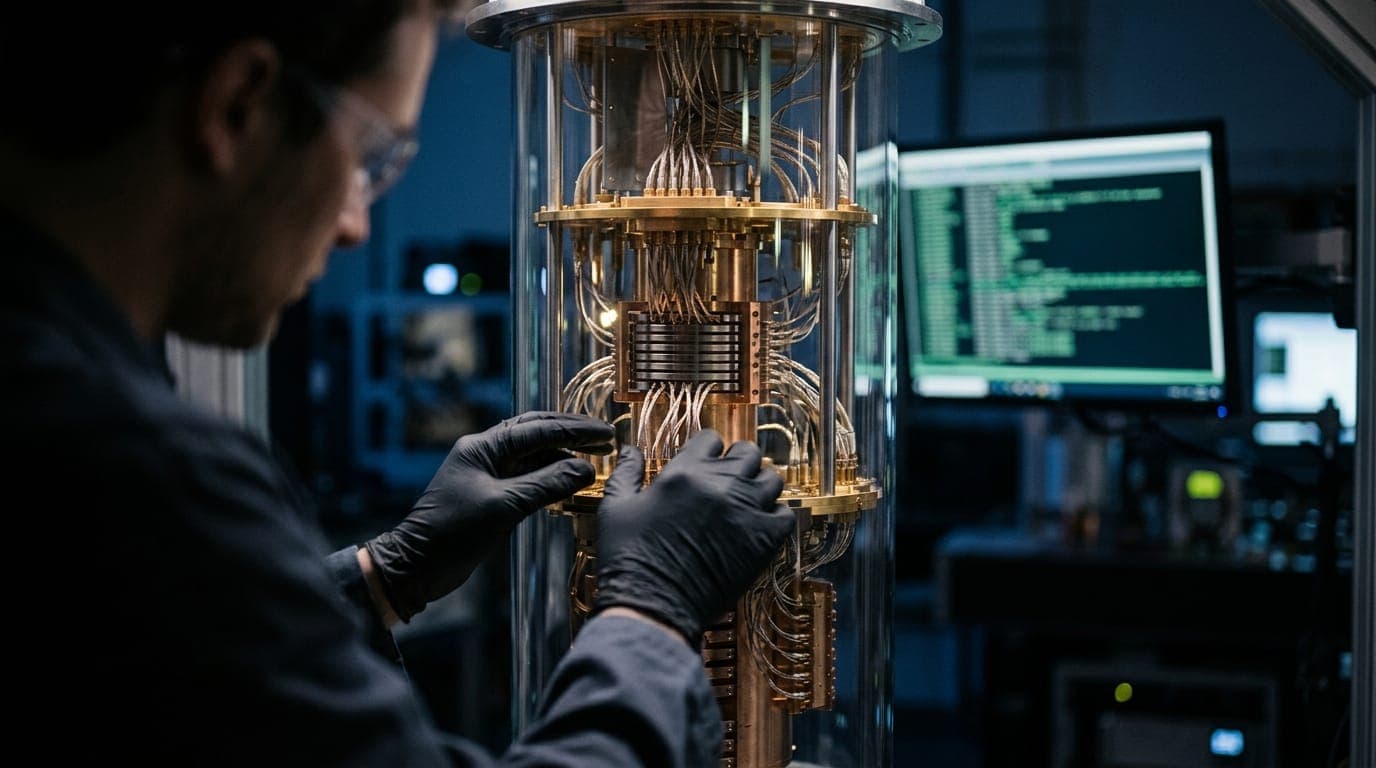
Z.AI Completes 1-Gigawatt AI Data Center on All-Chinese Chips
Z.AI has completed a 1-gigawatt AI data center running exclusively on Chinese-made chips, per Bloomberg. The facility is a direct product of U.S. export controls, and a stress test for the entire sanctions strategy.
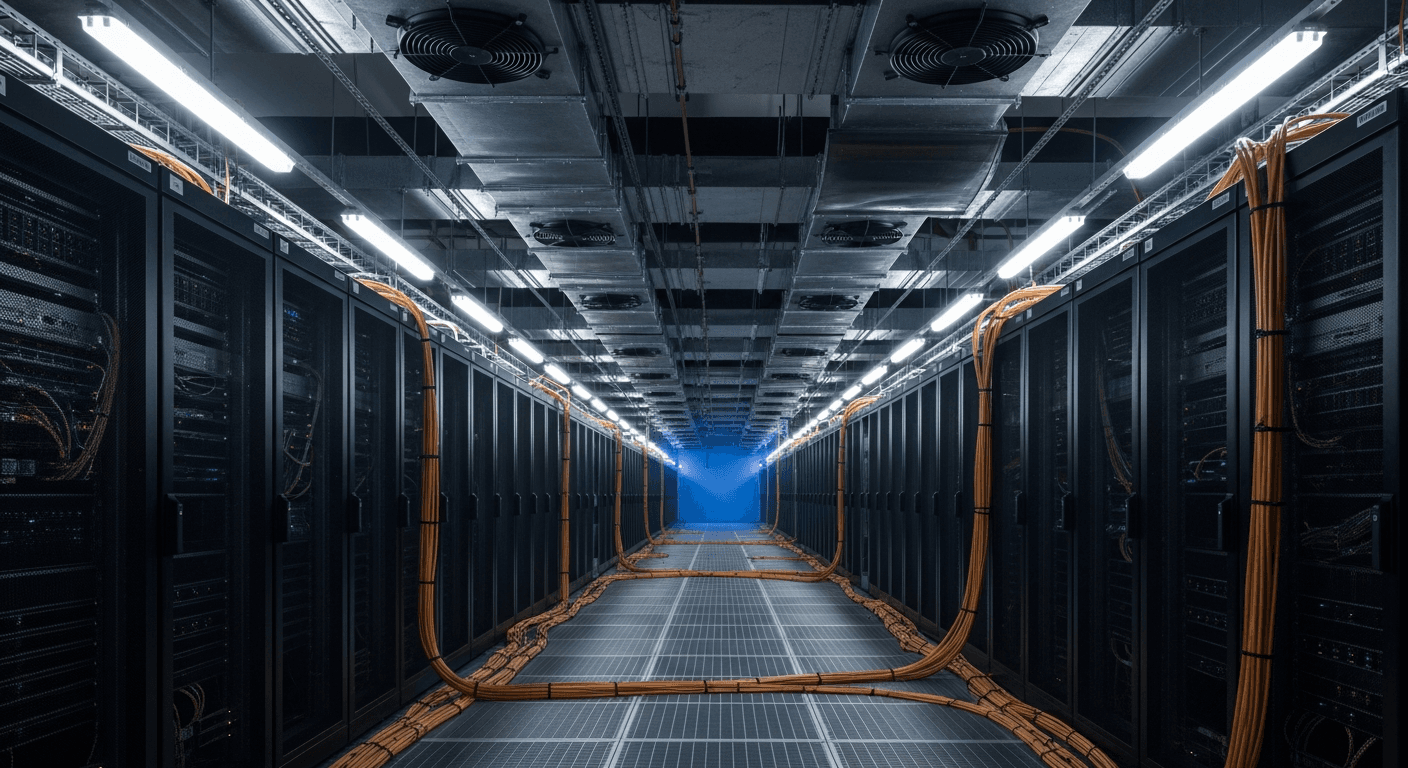
U.S. export controls were supposed to slow China's AI development. Instead, they built the supply chain.
Key takeaways
- Beijing-based Z.AI has completed a 1-gigawatt AI data center running exclusively on domestic chips, with partial operations underway, according to Bloomberg citing a single anonymous source. The facility's location, chip brands, and full operational status have not been publicly confirmed.
- Z.AI was added to the U.S. Commerce Department Entity List in January 2025, cutting off access to Nvidia. The 1-gigawatt build is the direct downstream result: Washington's sanctions mandated a domestic compute stack rather than preventing one.
- A 1-gigawatt facility is a major grid actor. Combined with China's state-directed AI infrastructure push -- Bloomberg reported in June 2026 that the NDRC is drafting a roughly $295 billion, five-year national AI data center plan targeting at least 80% domestic sourcing, a plan that remains in draft form -- this tightens the global power markets that Bitcoin miners and U.S. hyperscalers are already competing in.
Z.AI, the Beijing-based AI company formerly known as Zhipu and spun out of Tsinghua University, has completed construction of a 1-gigawatt AI data center running exclusively on Chinese-made chips, first reported by Bloomberg on July 20, 2026. The facility has begun partial operations and reportedly contains several computing clusters, each housing more than 10,000 domestic accelerators.
One gigawatt is roughly the continuous power draw of 750,000 homes. That puts this site in the same physical weight class as the largest AI campuses under construction in the United States. The entire report rests on a single anonymous Bloomberg source. Z.AI has not issued a public statement, no location has been disclosed, and no chip brands have been confirmed for this facility.
What Sanctions Built
Z.AI was placed on the U.S. Commerce Department Entity List in January 2025, per the Federal Register, cutting the company off from Nvidia hardware. The 1-gigawatt build is the answer to that blacklisting.
The logic of export controls assumes the target lacks a viable domestic alternative. That assumption is failing. Z.AI previously trained its GLM model series on Huawei Ascend chips using Huawei's MindSpore software stack, per Reuters. China's broader domestic accelerator field now includes Cambricon, Moore Threads, and Kunlunxin alongside Ascend. Alibaba launched its own all-Chinese data center in April 2026 using 10,000 Zhenwu chips. Z.AI's reported facility is dramatically larger.
Kyle Chan, a research fellow at the Brookings Institution, framed the structural dynamic clearly in May 2026: "The U.S. has the chips and is short on power, while China has the power and is short on chips." That framing may already need an update. China is not short on chips the way it was two years ago. It has a captive market iterating independently of Nvidia, and every successive round of export controls entrenches that ecosystem further.
The falsifiable version of this thesis: if independent technical verification shows the facility is largely a shell with chips not yet installed at scale, or if Chinese domestic accelerators prove so performance-limited relative to Nvidia's Blackwell generation that GLM models trained on them fall materially behind U.S. frontier models within the next 12 months, the sovereign compute bet is a Potemkin village. That outcome is still possible. The data to settle the question does not yet exist publicly.
The Energy and Centralization Problem
For anyone tracking AI data center buildout and its pressure on power markets, a 1-gigawatt Chinese facility entering operation is not an abstraction. U.S. hyperscalers are projected to spend roughly $630 billion on AI infrastructure in 2026, per Morgan Stanley estimates cited by Al Jazeera. China now demonstrates it can match that physical scale on a sovereign stack. The grid squeeze already visible in the U.S., where AI data centers and Bitcoin miners fight for the same megawatts, has a geopolitical dimension that just got sharper.
The second problem is harder than the energy math. A 1-gigawatt AI training cluster is, by definition, a choke point. The Chinese Communist Party controls this one completely. When that compute produces models deployed across Chinese enterprise, government, and military infrastructure, the result is a centralized surveillance-and-control machine at unprecedented scale. This is not a technological achievement that stands apart from its context. Chinese chip policy and Chinese AI infrastructure are instruments of the same state apparatus. The Bitcoiner read on this is straightforward: decentralized AI and open-source models are not optional nice-to-haves. The alternative is this.
What to Watch
The real test comes with Z.AI's next GLM model release. If a frontier-capable model ships trained on this facility's domestic chips, the sovereign compute thesis gets its first genuine validation. If the models plateau relative to U.S. frontier benchmarks, the Potemkin interpretation gains ground. Independent power metering and chip procurement data, if they ever become public, would resolve the facility's true operational status. Until then, the Bloomberg account is the record, and the record is a single anonymous source.
Sources
Frequently Asked Questions
What chips is Z.AI's data center actually using?
Bloomberg's source did not name the specific accelerators. Z.AI previously trained its GLM models on Huawei Ascend chips using Huawei's MindSpore stack. Cambricon, Moore Threads, and Kunlunxin are the other leading Chinese AI chip competitors. No chip brand has been confirmed for this facility.
How does a 1-gigawatt data center compare to what U.S. hyperscalers are building?
A gigawatt puts the Z.AI site in the same physical weight class as the largest AI campuses under construction in the U.S. However, because Chinese domestic accelerators currently trail Nvidia's Blackwell generation on performance per watt, 1 GW of Chinese silicon yields meaningfully less effective training throughput than 1 GW of Nvidia-powered compute. The gap is real; the question is how fast it closes.
Can Chinese AI models trained on domestic chips actually compete with U.S. frontier models?
That remains the open question. DeepSeek demonstrated that software efficiency can partially offset hardware gaps. Z.AI's GLM series has shown competitive performance at lower cost. Sustained frontier-model training at scale on domestic chips has not yet been independently validated. The next GLM model release after this facility reaches full operation will be the real-world test.