Senate Democrats Demand SEC Rescind Both Crypto Exemptions in Atkins Pressure Campaign
Sens. Warren, Van Hollen, Smith, and Reed sent two letters to SEC Chair Paul Atkins on November 25 demanding he rescind Regulation Crypto Assets and the SEC's innovation exemption, escalating a coordinated campaign to roll back the agency's entire Project Crypto framework.
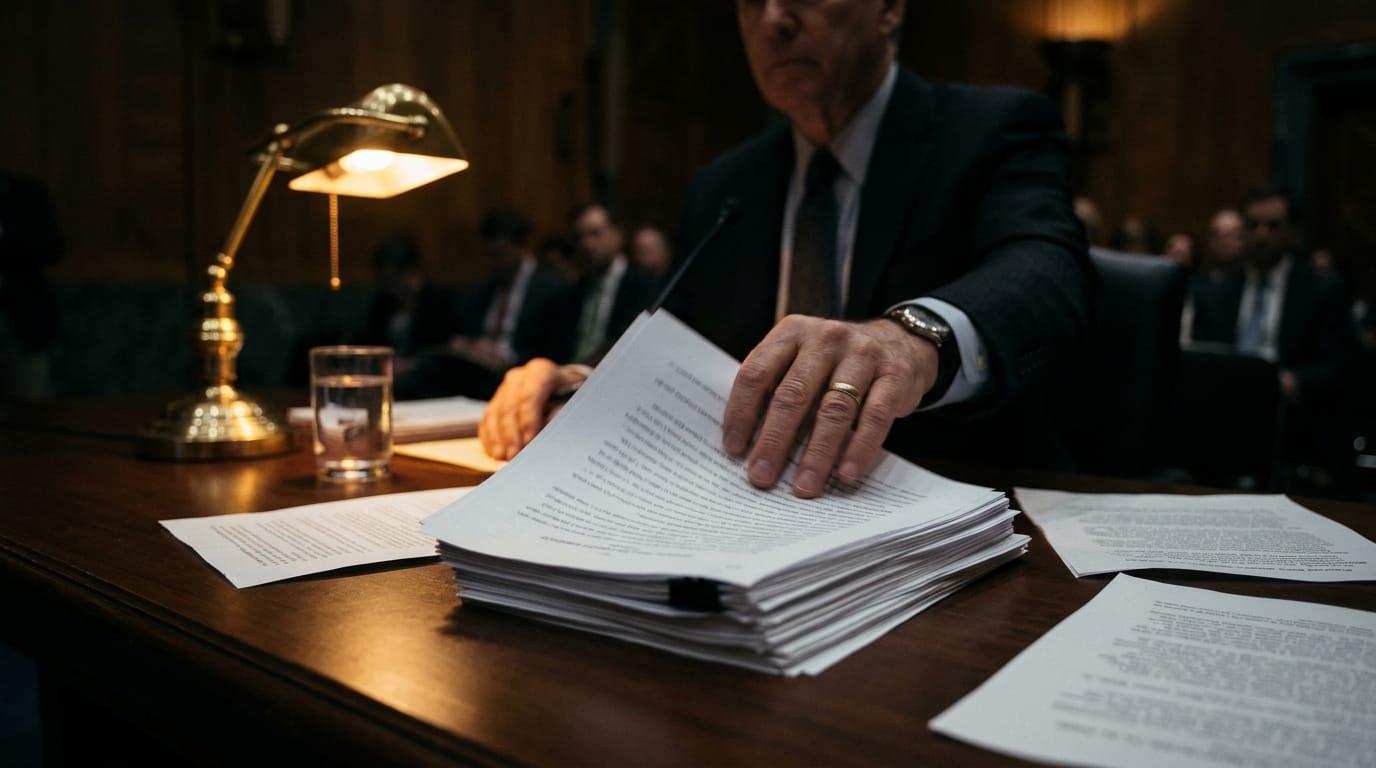
Warren, Van Hollen, and allies sent two letters to Chair Atkins on November 25 targeting every pillar of the SEC's Project Crypto framework.
Key takeaways
- Sens. Warren, Van Hollen, Smith, and Reed sent two letters to SEC Chair Paul Atkins on November 25, demanding he rescind Regulation Crypto Assets and the SEC's innovation exemption for onchain tokenized-stock trading.
- Regulation Crypto Assets, proposed August 18, would allow capital raises up to $75 million per year and startup offerings up to $5 million over four years without full SEC registration. The innovation exemption, released September 17, lets qualifying venues trade tokenized stocks onchain outside the standard registration process.
- Atkins has no legal obligation to comply. The senators' real leverage is oversight and the threat of a future administration reversing course, not binding authority over the rulemaking process.
Senate Democrats escalated their pressure campaign against SEC Chair Paul Atkins on November 25, sending two separate letters demanding he rescind the cornerstones of his Project Crypto agenda. The coordinated move targets both the capital-formation framework and the onchain trading sandbox that together represent the most significant restructuring of crypto securities oversight in a generation.
The first letter, signed by Sens. Elizabeth Warren (D-MA), Chris Van Hollen (D-MD), and Tina Smith (D-MN) alongside other Senate Banking Committee Democrats, demands Atkins withdraw Regulation Crypto Assets, proposed August 18, 2026. That rule would create a startup exemption capping offerings at $5 million over four years and a fundraising exemption capping offerings at $75 million per year, both without full SEC registration. The second letter, signed by Warren, Van Hollen, Tina Smith, and Jack Reed (D-RI), demands rescission of the innovation exemption released September 17, an order enabling state-licensed or CFTC-regulated venues to trade tokenized stocks onchain without standard SEC registration, subject to volume caps and reporting requirements. The story was first reported by The Block.
What the Senators Are Claiming
The senators argue Regulation Crypto Assets would let crypto firms sidestep securities laws, weaken state jurisdiction over offerings, and expose retail investors to unregistered deals with limited recourse. On the innovation exemption, their objection is that allowing onchain settlement of tokenized equities could fragment capital markets.
The April 2026 round of letters from Warren and Van Hollen, challenging an earlier SEC-CFTC interpretive release that placed three asset categories outside securities law, established the Senate Banking Committee minority's posture. November 25 is the escalation: from challenging interpretive guidance to directly demanding rollback of proposed rulemaking and an exemptive order.
The comment period on Regulation Crypto Assets closed October 20, 2026. Sending rescission demands after comments closed places these letters outside the formal administrative process entirely. They are political pressure on the record, not procedural filings.
Why the Thesis Behind the Objections Doesn't Hold
The senators frame this as investor protection. The actual structure of their demand tells a different story.
Regulation Crypto Assets and the innovation exemption both do one thing the 1933 Securities Act was not built to do: route capital formation and settlement around the incumbent intermediary stack. That stack includes the DTCC, prime brokers, registered broker-dealers, and custodians. Those intermediaries extract fees from every leg of the current process. A $75 million fundraising exemption onchain does not expose investors to more risk than a Reg A+ offering run through a traditional broker. It exposes the broker to less revenue.
The falsifiable thesis here: if Warren and Van Hollen introduce or co-sponsor legislation that preserves comparable capital formation pathways while adding tighter disclosure requirements, the incumbent-protection reading collapses. Watch the Senate Banking Committee docket. No such bill materializes, and the thesis holds.
Van Hollen is running for Senate Majority Leader, challenging Chuck Schumer following Democrats' midterm victories, with a vote scheduled for December 1. If he wins that race, these letters are not minority posturing. They are a preview of the oversight agenda, including the prospect of hearings targeting Project Crypto and Atkins directly.
One more thing worth separating clearly: Bitcoin is not the target here. This fight is about securities-law exemptions for token issuers and tokenized equities. But the political energy driving it is the same energy that has historically been aimed at proof-of-work mining, self-custody, and open financial infrastructure broadly. The case that permissionless settlement is legitimate gets harder to make politically every time lawmakers successfully kill a framework that proves it can work.
What to Watch
Atkins can proceed to a final rule on Regulation Crypto Assets regardless of these letters. The senators have no binding authority over SEC rulemaking. Their leverage is appropriations, oversight hearings, and the possibility that a future administration unwinds whatever Atkins finalizes. The final rule, not these letters, is the pressure point to track. Check warren.senate.gov and van.hollen.senate.gov for the November 25 letter PDFs when they are posted publicly; those are the primary documents.
Sources
- SEC Chair Atkins Statement on Regulation Crypto Assets, August 18, 2026
- Senate Banking Committee Minority Press Release, April 2026
- Warren-Van Hollen April 2026 Letter to SEC (PDF)
- Van Hollen Statement on Running for Majority Leader, November 12, 2026
- SEC Regulation Crypto Assets Rulemaking Page
- First reported by The Block (November 25, 2026)
Frequently Asked Questions
What is Regulation Crypto Assets and how does it differ from the innovation exemption?
Regulation Crypto Assets is a proposed SEC rulemaking (RIN 3235-AN38, proposed August 18, 2026) that would create two new capital-formation exemptions: a startup exemption capping raises at $5 million over four years, and a fundraising exemption capping raises at $75 million per year, both without full SEC registration. The innovation exemption is a separate exemptive order released September 17, 2026, that allows qualifying venues to trade tokenized stocks onchain without standard SEC registration, subject to volume caps and periodic reporting. One addresses how crypto projects raise capital; the other addresses how tokenized equities are traded.
Can senators legally force the SEC to rescind a proposed rule?
No. The SEC is an independent agency. Senators can send letters, hold oversight hearings, and apply political pressure, but they cannot compel the SEC to withdraw a proposed rule or rescind an exemptive order. Atkins can proceed to finalize Regulation Crypto Assets on his own timeline. The senators' actual leverage is budget authority, the threat of hostile oversight hearings, and the prospect that a future administration reverses the final rule after the fact.
Does any of this directly affect Bitcoin?
Not directly. Regulation Crypto Assets and the innovation exemption concern securities-law exemptions for token issuers and onchain trading of tokenized equities, neither of which is Bitcoin. Bitcoin is not a security under any reading the SEC has advanced. The indirect risk is political: a successful rollback of these frameworks strengthens the narrative that open, permissionless financial infrastructure is incompatible with investor protection, which has historically been used to justify restrictions on adjacent Bitcoin infrastructure including mining and self-custody.