HRF Funds Seven Bitcoin Freedom-Tech Projects in Round III 2026
HRF's Bitcoin Development Fund awarded Round III 2026 grants to seven projects spanning feature-phone hardware wallets, off-grid solar mining, privacy auditing, and Bitcoin education in 21 African languages.
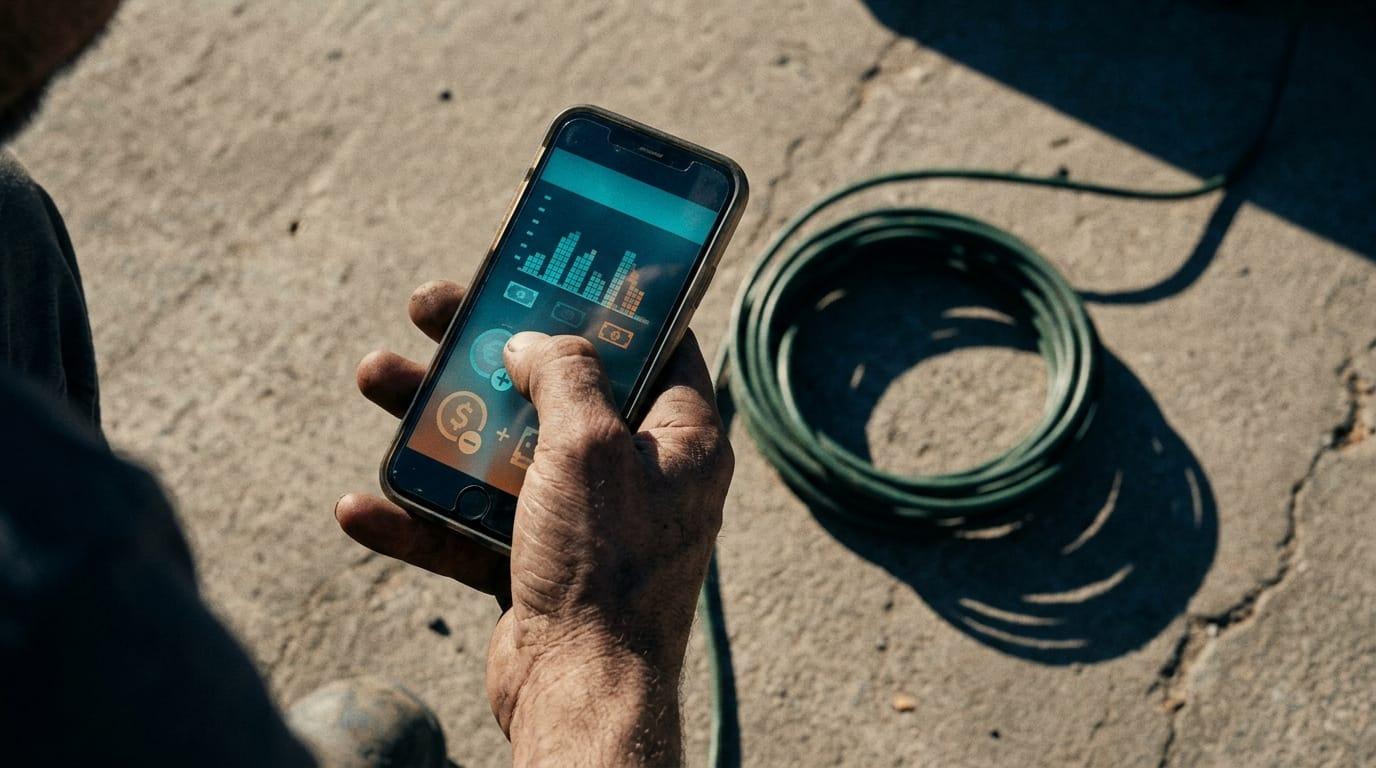
The Bitcoin Development Fund's latest cohort targets the full stack of practical sovereignty: hardware, privacy, energy, language, and censorship-resistant record-keeping.
Key takeaways
- HRF's Bitcoin Development Fund announced grants to seven projects on November 25, 2026 (Round III of 2026), focused on self-custody, financial privacy, and Bitcoin education for people living under authoritarian regimes.
- The cohort covers the practical sovereignty stack: a feature-phone offline signer (CryoBrick), off-grid solar mining paying households directly in bitcoin (Strandedwatt), a user-side privacy audit tool (Stealth), a commodity-parts hardware wallet (SeedSigner), a Nostr-based election-evidence recorder (Pawavox), a 21-language African Bitcoin glossary (Exonumia), and Specter DIY.
- Every project is built to remove a single point of interdiction, supply chain, surveillance layer, language barrier, or custodial dependency, which separates liberation-grade tooling from consumer-grade products.
The Human Rights Foundation announced grants from its Bitcoin Development Fund to seven projects on November 25, 2026, the third round of BDF funding this year. The projects span hardware signing, off-grid energy, privacy auditing, civic-tech, and multilingual education, all aimed at people whose governments actively work to prevent them from holding property freely.
The grant total for this round was not disclosed in the announcement. The full HRF press release is available at hrf.org; this round was first reported by Bitcoin Magazine.
Seven Projects, One Shared Problem
Each grantee is attacking a different layer of the same bottleneck: the gap between someone living under a repressive government and their ability to hold, send, and verify bitcoin without depending on a third party that can be coerced.
CryoBrick transforms feature phones into offline Bitcoin signing devices. Because it looks and operates like an ordinary phone, users under authoritarian regimes maintain plausible deniability. Technical Director Apalok will use the grant for security hardening, peer review, and integration of Bitchat for offline messaging. The design deliberately avoids a dedicated hardware wallet form factor, which is exactly what makes it harder to interdict at a border or confiscate in a raid.
Exonumia Africa is building a Bitcoin Glossary in 21 African languages, coordinating translation through three in-person and 12 virtual sprints with native speakers validating more than 250 terms. Because the terms are human-validated rather than machine-translated, wallet developers can use the glossary as a trusted foundation for localizing software. The resource will be published as a free public good.
Pawavox, created by Nigerian civic-tech founder Jason Omu, lets election observers capture GPS-tagged, timestamped video and voice reports, then publishes them to Nostr so the evidence is resistant to deletion. HRF's grant funds completion of the Nostr integration and expansion across Africa. This is Bitcoin and Nostr doing separate jobs in the same workflow: one for money, one for record. Neither is substitutable.
SeedSigner builds an open-source signing device from inexpensive commodity parts, eliminating any finished-device supply chain an adversary could compromise. Lead maintainer Keith Mukai will use the grant to migrate SeedSigner off the Raspberry Pi Zero to more widely available hardware, ending dependence on a single manufacturer. That migration directly addresses the interdiction risk: if the hardware is available in any electronics market, there is no choke point.
Stealth runs directly on a user's own node and analyzes a bitcoin wallet using the same techniques blockchain analytics firms employ against dissidents, then produces a report with severity levels, confidence scores, and concrete fixes. Lead maintainer LORDBABUINO will use the grant to add support for Bitcoin mainnet and build packages for standard node kits. Running on the user's own hardware means no data leaves the device.
Strandedwatt deploys solar miners in rural Nigerian homes, converting surplus solar energy to bitcoin paid directly to the households that generate it. Project lead Bernard Parah, CEO of Bitnob, will deploy 100 Jua Kali miners under the program. A household running one of these miners earns bitcoin off-grid, with no KYC ramp, no exchange account, and no custodian.
Specter DIY rounds out the cohort as the seventh grantee. Specter DIY is a fully open-source, air-gapped Bitcoin hardware wallet that anyone can build from off-the-shelf components and verify line by line. There is no purchase record, and the finished device does not look like a Bitcoin wallet. HRF's grant to the Specter Association, the nonprofit that maintains the project, funds hardware costs, AI tooling, and vulnerability bounties.
Why the Design Decisions Matter
What matters most about this cohort is how each project is built.
SeedSigner's move off Raspberry Pi Zero and CryoBrick's use of existing feature phones both address the same threat: an authoritarian state seizing or blocking a specific supply chain to neutralize a tool. When the hardware is a phone everyone already owns or parts available at any electronics counter, that attack surface closes. Resistance to supply-chain interdiction is the grant criteria itself.
Strandedwatt is simultaneously Bitcoin energy infrastructure and a financial-access mechanism, with no separation between the two. The energy angle alone is worth noting: off-grid solar mining in underserved regions is exactly the kind of stranded-energy monetization that Bitcoin miners have been deploying at industrial scale. Strandedwatt shrinks that model to the household level, in a country where the legal path to acquiring bitcoin runs through exchanges that collect identity data the government can subpoena.
Stealth's approach flips the surveillance model: instead of a blockchain analytics firm using those techniques to build a case against a dissident, the dissident runs the same analysis on their own wallet first, on their own node, before an adversary does. Privacy not as a preference but as operational security.
The Falsifiable Claim and What to Watch
The thesis embedded in this cohort is that open-source, field-deployable tools specifically designed to remove single points of interdiction will produce measurable self-custody adoption in target regions. That is a testable claim.
The trigger that disproves it: if the grantees ship nothing, fail security review, or if the hardware and software prove unusable for non-technical users in low-connectivity environments, adoption stays at zero outside the developer class and the grants become signal-posting rather than infrastructure. Watch the SeedSigner hardware migration for a release date, the Exonumia glossary publication for wallet developer uptake, and Strandedwatt's 100-miner deployment for on-the-ground payment data.
Sources
- Human Rights Foundation (hrf.org), primary source; check hrf.org/latest/ for the live Round III press release
- First reported by Bitcoin Magazine
Frequently Asked Questions
What is the HRF Bitcoin Development Fund and how does it select projects?
The Human Rights Foundation's Bitcoin Development Fund provides grants to open-source projects that advance Bitcoin self-custody, privacy, and education for people living under authoritarian regimes. HRF selects projects based on their potential to give human rights defenders, journalists, and individuals practical tools to hold and transact bitcoin without relying on intermediaries that can be coerced. Prior rounds have funded projects across dozens of countries; cumulative program history is documented in HRF's BDF reports at hrf.org.
Can CryoBrick or SeedSigner realistically be used by non-technical people in low-connectivity environments?
That is the right question. CryoBrick's answer is that the device looks and operates like an ordinary phone, so the user experience is already familiar. SeedSigner requires assembly from commodity parts, which is a higher bar. The HRF grants for both projects include explicit support for how-to documentation and hardware accessibility, but field usability in low-connectivity environments remains the gap between "grant funded" and "actually adopted." The SeedSigner hardware migration and CryoBrick's published guides will be the first test of whether that gap closes.
How does Strandedwatt pay bitcoin to households, and does it require a KYC account or internet access?
Per the HRF announcement, Strandedwatt converts surplus solar energy to bitcoin and pays it directly to the households running the miners. The project is designed to bypass the exchange-based KYC ramp that is otherwise the legal acquisition path in Nigeria. Specific payment-rail details, including whether Lightning or on-chain payments are used and what connectivity requirements apply, were not disclosed in the Round III announcement. Those details should be available in the full HRF press release and from project lead Bernard Parah's public communications.