Pentagon Has Burned Through Virtually All Its Precision Missiles in Iran War
Two sources familiar with internal U.S. military data told Reuters the Army has used virtually all of its ATACMS and PrSM inventories during five months of Operation Epic Fury. Restocking will take years and cost billions the U.S. doesn't have.
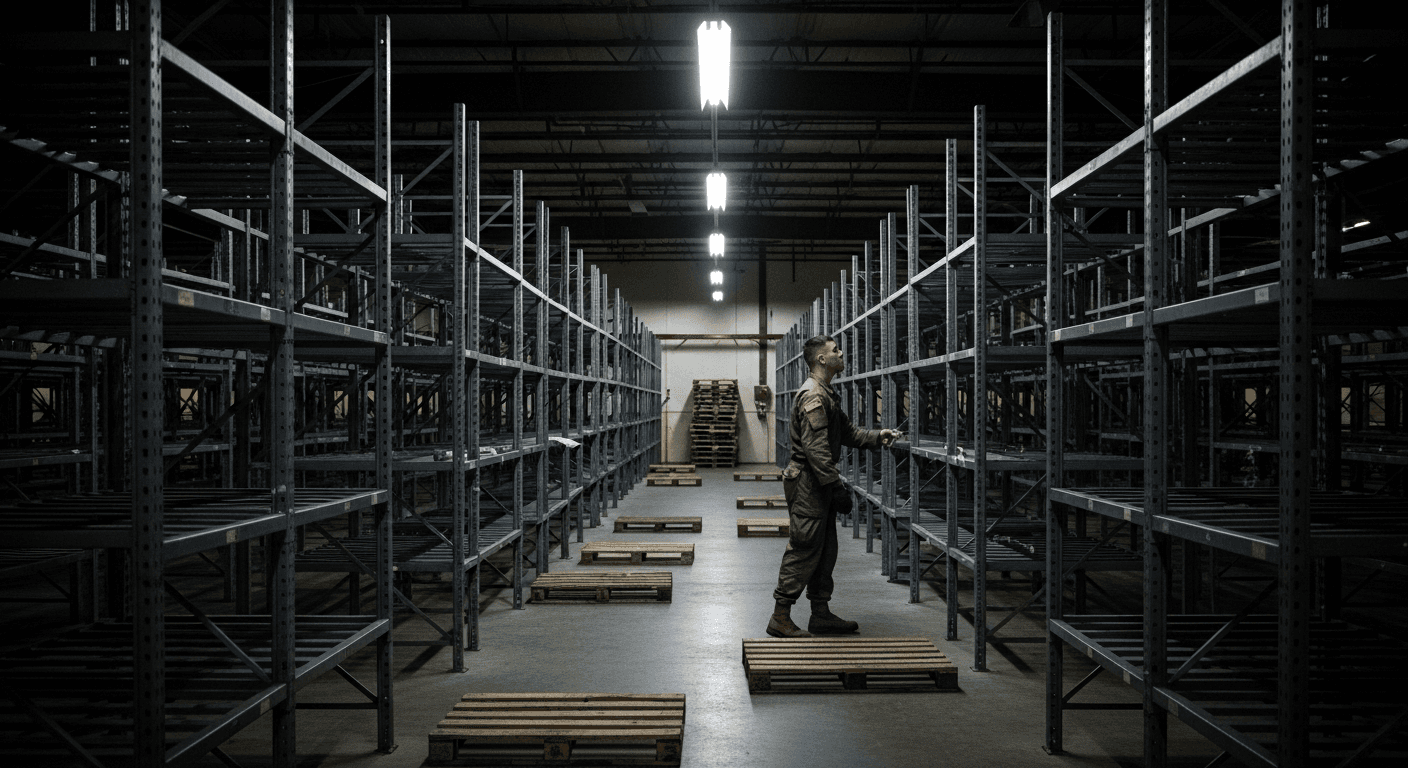
Five months into the Iran war, the U.S. Army's land-based long-range strike capability is effectively spent, and the restock bill will take years to pay.
Key takeaways
- Two sources familiar with internal U.S. military data told Reuters the Army has used "virtually all" of its Army Tactical Missile Systems (ATACMS) and Precision Strike Missiles (PrSM) during Operation Epic Fury.
- Each ATACMS costs over $1 million per unit, production lead times for replacements run two or more years, and the U.S. is caught mid-transition as ATACMS phases out and PrSM production is still ramping.
- The cost-exchange math heavily favors Iran: the U.S. has been firing roughly $4 million PAC-3 MSE interceptors to knock down Iranian drones costing $20,000 to $50,000, a 131-to-1 ratio in Iran's favor per a Project on Government Oversight analysis.
The U.S. Army has used "virtually all" of its ATACMS and PrSM long-range precision missile stockpiles during the five-month-old Operation Epic Fury campaign against Iran, first reported by Reuters on August 4, 2026, citing two sources familiar with internal military data. A fourth source told Reuters that Central Command has been drawing down U.S. military supplies positioned elsewhere in the world to reload, meaning the global reserve is shrinking, not just the theater inventory.
The depletion cuts across both offensive and defensive systems. CNN separately reported that the U.S. has used nearly 80% of key missile interceptors in the conflict. SecDef Pete Hegseth disputed the CNN figure on X, writing "That banner is NOT TRUE, @CNN. Shame on you. We don't hate the Fake News media enough," though his rebuttal did not address the ATACMS and PrSM figures reported by Reuters and corroborated independently by CBS News.
The Production Gap Nobody Planned For
The timing compounds the damage. ATACMS is being phased out. PrSM is its replacement, but the Army had ordered only roughly 380 units through 2024 and 2025, and the missile had not completed its full testing cycle before combat deployment, per CNBC reporting citing a March 2026 Center for Strategic and International Studies assessment. One U.S. Army unit exhausted its entire PrSM inventory early in the conflict.
Lockheed Martin and the Department of War announced a framework agreement on March 25, 2026 to quadruple PrSM production capacity, per a Lockheed Martin investor relations release. That sounds like momentum until you do the arithmetic: even at quadrupled output, meaningful restocking is projected to run into 2027 or beyond.
President Trump responded to the depletion reports with a White House statement: "Our defense companies are, at this moment, making more munitions than they have ever made before, in addition to expanding their plants and equipment at record levels." The production ramp is real. The timeline is the problem.
The Dollar Pays the Tab
The tactical readiness story is real, but there is a larger one underneath it. Pentagon cost estimates for this conflict have already diverged sharply from what was presented to Congress, and the munitions restock adds another layer to a bill that isn't being paid from tax receipts.
Replacing even a fraction of the depleted ATACMS stockpile at $1 million-plus per unit requires emergency supplemental appropriations on top of an already-stressed federal balance sheet. That spending gets financed through bond issuance, which is a gentler way of saying more dollars created to pay Lockheed Martin. The sovereign debt spiral doesn't accelerate in dramatic single events; it accelerates through exactly this kind of compounding: a war of attrition where the cost-exchange ratio is structurally broken in the adversary's favor.
The POGO cost-exchange analysis makes the math explicit. A $4 million PAC-3 MSE interceptor shooting down a $20,000 to $50,000 Iranian drone is a 131-to-1 cost ratio working against the U.S. Iran can sustain that arithmetic. The U.S. Treasury cannot, indefinitely, without consequence to the dollar.
The deeper concern, acknowledged by Reuters' sources, is deterrence. A depleted U.S. arsenal is a visible signal to Russia and China, both of which are watching. Dollar hegemony is underwritten by perceived U.S. military supremacy. Every week that perception is in question is another week a marginal central bank has political cover to diversify reserves away from dollar-denominated assets. That dynamic, not any single policy decision, is what puts pressure on the dollar's long-term role as the world's reserve benchmark.
The falsifiable version of this thesis: if the U.S. restocks at meaningful scale within 12 months without requiring significant new deficit spending, and if China and Russia publicly reaffirm confidence in dollar reserves rather than accelerating diversification, the monetary-order argument weakens. A negotiated ceasefire that halts the ongoing drain before the stockpile gap becomes strategically visible to competitors would have the same effect. None of those conditions currently look likely.
What to Watch
The immediate operational question is whether a resumed heavy bombardment campaign against Iran would require the U.S. to shift to riskier piloted airstrikes in place of standoff precision strikes. The restocking timeline and Iran's ongoing currency collapse will both be indicators of how long either side can sustain the current posture. Congressional supplemental appropriations requests, and how they are financed, are the fiscal signal to track.
Update, August 6, 2026
The Washington Post reported Wednesday, citing two people familiar with the exchange, that Trump demanded answers from Hegseth at Camp David on why he had apparently been misled on extreme munitions shortages that now threaten to limit military options with Iran.
Trump vented that he thought the munitions issue "had been fixed," per both sources, who spoke anonymously citing fear of retaliation.
Hegseth reportedly blamed deputy secretary Stephen Feinberg for the shortages and for failing to ensure Trump was fully informed.
The shortages, particularly in long-range guided missiles and air-defense interceptors, have been part of the reason Trump has pulled back from launching additional massive strikes against Iran in recent days, one source told the Post.
The missile shortage may also have been part of the reason Trump decided not to launch what he described as "the biggest attack since World War II" on Iran over the weekend.
Feinberg later gathered top military and defense specialists for what was described as "a crisis meeting" on Friday night after receiving an angry phone call from the president.
Trump addressed the Washington Post report after midnight on Truth Social, raging against the "leakers" who supplied the story, but issued no denial of the munitions shortage claim itself.
Pentagon spokesman Sean Parnell called the reporting "equally fictional," denying Hegseth misled anyone or blamed Feinberg. The denial pattern is now consistent: administration officials dispute the internal friction story while declining to rebut the underlying inventory data, which is the same posture Hegseth took when he attacked CNN's interceptor figures earlier this week without addressing the ATACMS and PrSM numbers.
Sources
- Reuters (first reported, August 4, 2026)
- CBS News
- CNBC
- Project on Government Oversight (POGO), cost-exchange analysis
- Lockheed Martin, PrSM production framework announcement, March 25, 2026
Frequently Asked Questions
ATACMS (Army Tactical Missile System) is a land-based ballistic missile with a range of up to 300 kilometers, used for precision strikes against high-value targets from well outside enemy air defenses. PrSM (Precision Strike Missile) is the next-generation replacement, with greater range and a smaller profile designed for the modern threat environment. Running out of both simultaneously means the Army loses its primary land-based standoff strike option, forcing a choice between waiting months to years for resupply or accepting the higher risk of manned aircraft operating closer to contested airspace.
Based on current production timelines, meaningful restocking is projected to extend into 2027 or beyond. Lockheed Martin announced a framework agreement to quadruple PrSM production capacity, per a Lockheed Martin investor relations release. But the gap between current inventory and the stockpile levels required for full deterrence posture is measured in hundreds of missiles, and production of a new system ramping from low-rate initial production to full-rate manufacturing takes time that emergency appropriations cannot compress.
The connection runs through deterrence. The dollar's role as the world's reserve currency is not purely an economic arrangement; it is backed by the perceived ability of the United States to project force and enforce the international order it built after 1945. When that military capacity is visibly strained, as Reuters' sources explicitly warned regarding deterrence of Russia and China, it gives adversary nations and nonaligned central banks political cover to accelerate diversification of their reserve holdings away from dollar-denominated assets. That is a slow-moving process, not a cliff event, but each data point like this one moves the timeline forward.