Transcript: Whitney Webb and Mark Goodwin on Stablecoins and Dollar Hegemony
Full speaker-labelled transcript of TFTC with Whitney Webb & Mark Goodwin.

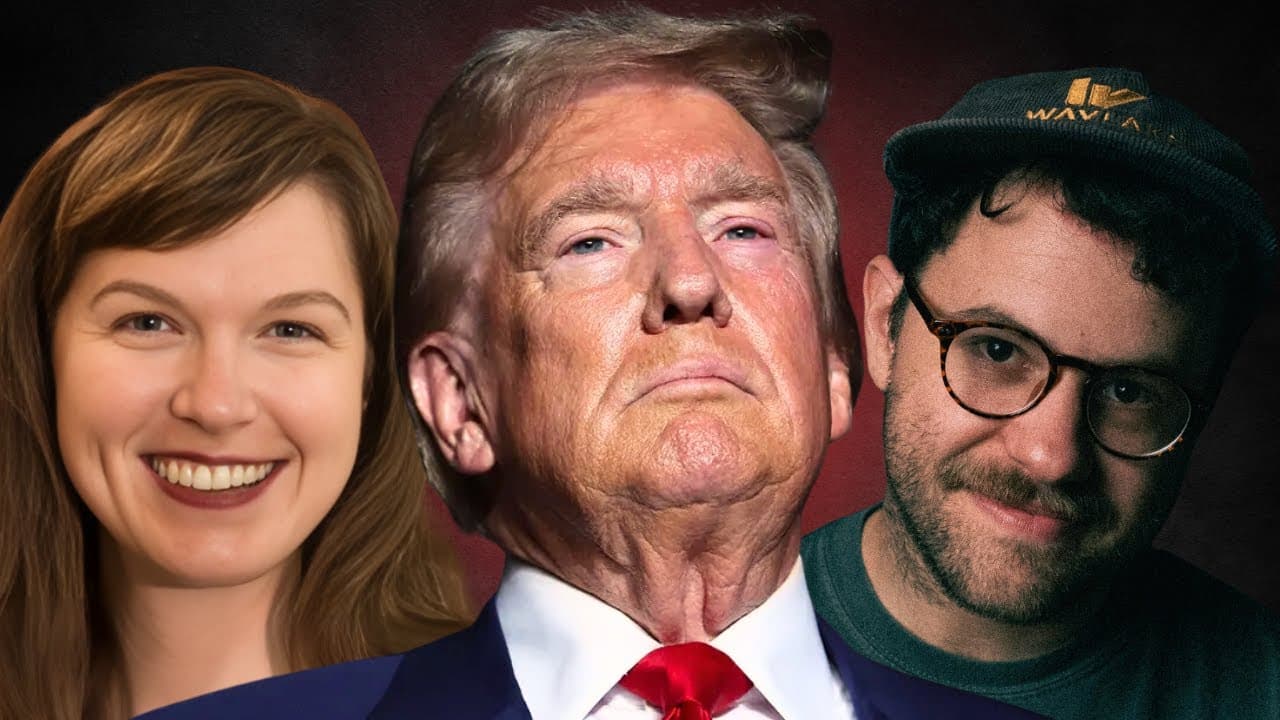
Full speaker-labelled transcript of TFTC with Whitney Webb & Mark Goodwin. Read the written article: Whitney Webb and Mark Goodwin on Stablecoins and Dollar Hegemony. Click any timestamp to watch that moment on YouTube. Machine transcription, lightly cleaned, may contain errors.
Whitney Webb [0:00] the next president, who we know now will be Trump, is going to face some sort of US government debt crisis. When Trump was in office last time, BlackRock designed US fiscal response to COVID that they began implementing before a pandemic was even declared, and it resulted in one of the biggest wealth transfers in American history and printed more money than at any other time in US history. I've been really skeptical that that won't repeat itself. And so you're already seeing sort of signaling that someone like Mike Pompeo, who's been fielded for Secretary of Defense, or some figures that have neoconservative bents, I mean, they were They worked with Obama during '08. They worked with Trump and they worked with Biden and would have worked with Kamala. Their track record is basically stealing wealth from the public.
Mark Goodwin [0:40] Why did we all forget this? Every 4 years, this is the most important election. We have to go vote. We all believe in elections again. I think that the Uniparty is going to do what it wants to do. It's this purple party entity.
Marty Bent [0:51] Investigative journalist Whitney Webb and researcher Mark Goodwin just pulled back the curtain on America's fake democracy and how both Republicans and Democrats serve the same masters. Now they're about to reveal why stablecoins might be the biggest threat to Bitcoin.
Mark Goodwin [1:06] They are actively putting dollar instruments into the Bitcoin blockchain. They're creating all of these ways to create dollars on Lightning.
Whitney Webb [1:14] Stablecoins have the potential to be just as programmable and surveillable as a CBDC could be. And the Fed and the national security community, meaning the CIA among other agencies, have been very open that, that stablecoins will ensure dollar hegemony.
Marty Bent [1:29] Brock to Bitcoin, from elections to surveillance. In the next 90 minutes, Webb and Goodwin reveal the full story of what's coming and how you can stay prepared.
Mark Goodwin [1:38] You've had a dynamic where money's become freer than free.
Whitney Webb [1:48] If you talk about a Fed just gone nuts, all, all the central banks going nuts, So it's all acting like safe haven.
Mark Goodwin [1:57] I believe that in a world where central bankers are tripping over themselves to devalue their currency, Bitcoin wins. In the world of fiat currencies, Bitcoin is the victor.
Whitney Webb [2:07] I mean, that's part of the bull case for Bitcoin.
Marty Bent [2:10] If you're not paying attention, you probably should be. Probably should be.
Whitney Webb [2:13] Probably should be.
Marty Bent [2:15] Whitney and Mark, welcome back to the show.
Whitney Webb [2:17] Hey, great to be here, Marty. Always a pleasure.
Mark Goodwin [2:19] Yeah, thanks a lot.
Marty Bent [2:21] We've got a lot to cover. What should we start with?
Whitney Webb [2:23] Whatever you want.
Marty Bent [2:24] Let's talk about this week. It's timely. The election just happened. People are very bullish in the Bitcoin world. Obviously, I follow you two on Twitter. You are signaling that people may be walking into the viper's den. And let's just talk about it. What do you think the outcome of the election means for the future of America, particularly Bitcoin as a subset of potential policy under a Trump administration? What are we walking into?
Whitney Webb [3:00] Well, I just want to start off with saying that I definitely empathize with the view, just like I did in 2016 and other elections, that the Trump ticket was the lesser of two evils. But I think after the first Trump term and the precedent set by campaign rhetoric versus policy action in that first term, I've been really skeptical that that won't repeat itself, right? And so you're already seeing, since Trump was elected, sort of these signaling that someone like Mike Pompeo or some figures that have neoconservative bents, like Marco Rubio's being considered for a cabinet position. Mike Pompeo's been fielded for Secretary of Defense. People that worked right under Pompeo.
Whitney Webb Or have been tapped to lead the transition team for the State Department, things of that nature. You know, this— the apparent signaling and claims from people like Howard Lutnick, co-chair of the Trump transition team, that RFK isn't really going to have any role in any sort of HHS or HHS subagency. You know, are these the beginning signs of backpedaling? It's, you know, I think it's fair to be skeptical and be vigilant. And, you know, particularly what I would warn against is the idea that now that the lesser of two evils has won, now is the time to sit back and just let things happen and not hold anyone's feet to the fire and not ensure accountability.
Whitney Webb Because I think that's, you know, a recipe for disaster, frankly, when people are complacent and too trusting consistently. Politicians abuse that. And there's a very long, long track record of that happening in American politics with both parties, right? And so what I would— and what I've been saying a lot since the election is that complacency and the efforts to manufacture it are dangerous, I would say. And what I'm concerned about is that the people that were most against a lot of these efforts to undermine our freedoms, a lot of them being on the right, for example, or people that were dissidents of the COVID era and COVID era policies, And gun owners, for example, who obviously have a way to impact, you know, the, the fate of the country if things were ever to get really, you know, tyrannical, you know, if they're overly trusting of the federal government, they're more likely to be, you know, complacent and sort of just sit back and not really do anything because they trust the person that is in power.
Whitney Webb And unfortunately, I think there's bipartisan agendas that even with like, in 2016, Republicans also swept the legislature. They took the executive branch, but it didn't result in the populist platform that was necessarily promised. So I think if people don't want to ensure that the country does go on a better track, there needs to be pushback, and people need to not just sit back in their armchairs and trust the plan or what have you, and need to really ensure that, like I've said for a long time, since I get accused of not offering any solutions. I've said for a really long time, and for many years on your show and other shows, that I have long believed that change is going to come from the bottom up, not the top down, and that people need to really ensure and focus on their local communities, on local resilience, and on building out alternatives that can help us resist a lot of these technocratic agendas that seek to micromanage and control essentially every aspect of our lives.
Mark Goodwin [6:37] Yep. Yeah, I totally agree with that. I mean, last time we were on here, we were like, oh, Trump's gonna win. Obviously he's gonna fucking dominate. It's gonna be a landslide. We were obviously correct. And I mean, I think it's, it's, it's very helpful for— I mean, we all know it's a uni-party. Like, what are we— why did we all forget this? Every 4 years, you know, that seems to be— this is the most important election. This is— we have to go vote. And it's like, we all believe in elections again. We all believe in, in, you know, democratic, you know, process here in America after what we've, you know, kind of experienced basically our whole lives in this. You know, we're all kind of 9/11 kids and here we are kind of like trusting the government again. I feel like there's a lot of people— God damn it.
Whitney Webb [7:21] Sorry about that.
Mark Goodwin [7:23] Are we back?
Marty Bent [7:23] Yeah, it should be working. You said Trump's going to win in a landslide earlier.
Mark Goodwin [7:26] Yeah. Well, yeah, I mean, I think I echo pretty much what Whitney just said last time we were on here. It was like, well, Trump's obviously going to win. That's obviously what happened. Um, and I think, you know, maybe a lot of the things that have happened, you know, the last few years have been kind of setting up for this like huge populist movement. Um, you know, that was again curated by oligarchs, uh, social network billionaires, all these people that kind of control these, these like DARPA cutouts and these projects. And, um, you know, these social networks gearing up to be, you know, like in X's case, half the financial system, you know, whatever we have.
Mark Goodwin We have all these guys working together working on their podcast strategy. That was talked about by Dana White during the acceptance speech, and it was a huge part of the, of the election cycle. And if you look at it, you know, I, I don't really believe in elections. Uh, I thought we kind of all agreed on that. I, I think that the Uniparty is going to do what it wants to do. It's this purple party entity. This idea that there's really this dueling faction between the two of them, I think that's just really Uh, you know, it's like wrestling. I think it's really just this kind of like scripted, um, thing that they give to the masses.
Mark Goodwin Politics have become bread and circus, and now we all get geared up and they use it to divide ourselves, you know, to divide, um, the masses. And they, you know, I think as Whitney said very prudently, specifically kind of aiming this, this Q, uh, Trump as a savior stuff at the dissonant armed group in America. They've been able to manufacture complacency and consent for what they're going to do now. I think Trump has this huge mandate now. It's very obvious. Everyone feels it. He's swept all 3 important elements of the American government system, and now we're going to see what he's going to do. It's not like the whole election cycle I was going around being like, how dare you vote for Trump?
Mark Goodwin But it's over. It's done. Here we are. If you believe in elections and you wanna vote, that's great. You like Trump, fine. But the state hates you. They are murderers, terrorists. They throw good people in jail. Like, the state put Ross in jail. Trump was president for 4 years, didn't free Ross. Let's get him outta here. Fuck yeah, that's a great win. But I really think the mindset should be, let's hold these people as accountable as possible. Let's not, you know—
Whitney Webb [9:47] Yeah.
Mark Goodwin [9:48] I was going to say something gross there. Let's not, you know, dust them, you know, their undercarriages. You know, let's, let's hold them to the fire. Um, that's what we need to do. Um, and I think that there is such an opportunity here when there is a populist uprising and a movement. Unfortunately, I feel like it was really captured into this controlled pen, you know, back to the electoral system, back to the state, back to, you know, Poppy Warpspeed being our savior. And that's just, I think, kind of ridiculous, as Whitney said. It comes from us, from the people. So let's take this movement that there are a lot of truths in this movement that I think that I do agree with.
Mark Goodwin There are elements of freedom and libertarianism and even anarchy tossed around in this MAGA soup. But ultimately, I think the mechanisms are not what I agree with. I don't want the state to have any more power. The only thing I agree that Erik Prince has ever said is let's keep the government as far away from Bitcoin as possible. I don't like this the government moving into Bitcoin stuff. I don't want the government to have a Bitcoin stash. Like, fuck them. I want them to get smaller and get— you know, this is an opportunity to fuck the financial system up. I don't want them a part of it.
Mark Goodwin Let's let them collapse it. Like, get smaller, forced to get smaller because they have to, because they can't compete with the Bitcoin standard. That's what we've been like arguing for so long. It's a long-winded rant here, but it's the moment to push back. It's not a moment to celebrate a win that hasn't even happened yet. In many ways, these policies hasn't happened. We don't know the platform. We don't know who's in the cabinet yet. So let's be very, very, very smart and just push back when we have the opportunity to and not let the state just take over again. I kind of think it's that straightforward.
Marty Bent [11:31] So, Freaks, this episode of TFTC is brought to you by our good friends at Unchained. Do you have an old IRA or 401 that isn't keeping up with Bitcoin? Rolled over into an Unchained Bitcoin IRA and take advantage of Bitcoin's long-term potential while enjoying tax-deferred growth. With Unchained, you hold real Bitcoin and keep control of your keys, reducing counterparty risk through their collaborative custody model while Unchained handles the tax forms. It's very important they handle the tax forms. Get started now with no setup fees and no account fee for the first year. Not only is this the only standard Bitcoin IRA where you can control keys unlike other Bitcoin IRAs, you can take distributions directly in Bitcoin avoiding exchange fees.
Marty Bent Set up a Roth or traditional Bitcoin IRA. com/tftc and experience true ownership of your retirement savings. com/tftc. This rip is also brought to you by our good friends at CoinKite. CoinKite builds the best Bitcoin hardware in the world. There is no second best when it comes to Bitcoin hardware. If you're looking to secure and self-custody your Bitcoin, you can get the MK4 or the ColdCard Q. ColdCard Q has a full keyboard, a QR scanner, NFC enabled, has a battery pack. Put some AA batteries in there, create private/public keys off pair in an air-gapped fashion. Private keys never have to touch an online device. They have their Sats Card, which is the best way to give Bitcoin.
Marty Bent If you're looking to gift Bitcoin for a wedding, a birthday party, a communion, a bar mitzvah, whatever it may be, tap the card on the back of your phone. You get an address to send to, you send it to that address. It lives on the Sats Card. Again, there is no second best when it comes to Bitcoin hardware. The Bitcoin price seems to be going up. You want to take care of your security. before Bitcoin goes to 6 figures. Make sure you get your Bitcoin off exchanges using CoinKite hardware, MK4, ColdCard Q. com. Use the code TFTC. We have a code now, TFTC, for 5% off at checkout.
Mark Goodwin [13:24] Yeah.
Marty Bent [13:25] I think I completely agree with the idea that we shouldn't be complacent and we should be vigilant. We should be holding these people accountable. And to your point about Ross, I think that's the first thing that I'll be looking for day one. Does he get free? All right, there's some accountability. He's not getting free. And I mean, I voted for the first time ever in this election. I voted for Trump and this coalition because it does seem like— and maybe I'm becoming enthralled with the narrative and the posturing of this coalition— but I think the promise of making a smaller government is what enticed me the most.
Marty Bent And so obviously we've talked at length about Elon and many people surrounding Trump in the lead-up to this election, and now that they're surrounding him in his current administration, I think there's more reason than ever to be completely vigilant and make sure these people are being held accountable. But that is what I'll be looking for, is are they actually taking action to gut the administrative state that has Quelled the ability for people to live free, and when it comes to Bitcoin too, like I would push back on. I mean, I don't want the government making rules about Bitcoin, obviously at the consensus level, but when it comes like the United States government acquiring a strategic reserve, this has always been part of the game theory that Bitcoiners have talked about for sixteen years.
Marty Bent S. government. specifically, but for 16 years now, the game theory has been it's going to start with individuals, companies are going to adopt it, pensions are going to adopt it, and then ultimately governments are going to be forced to adopt the better money. And I actually do think it is a means to manufacture a smaller government in the long term, because the way the debt is set up, It just has to grow. It's a leviathan that is forced to grow. And if you have no actionable way to actually reduce the debt, the government's just going to be forced to issue more debt, get bigger.
Mark Goodwin [15:35] Well, what if Bitcoin is the way to do that? I mean, Trump's kind of straight up said that.
Marty Bent [15:40] That's the point I'm making.
Mark Goodwin [15:41] Bitcoin is how we pay the debt. Oh, okay. Go ahead.
Marty Bent [15:42] Sorry about that. Yeah, exactly. So maybe that is the roundabout way that you actually make government smaller in the long run, is you find a solution to solve the debt problem. And the Leviathan just simply doesn't have the means to— or it's not that it doesn't have the means to continue growing, it's just the way it's set up now with the federal debt, it is forced to expand that reach and that misallocation of capital and that abuse of power. I'm hopeful. I'm white-pilled right now because— And then you have other things like, uh, I do think the populist movement is certainly there, and I think what we saw in terms of the overwhelming message that was sent with this election— again, you mentioned taking the House, the Senate, and the White House— I think that that is a signal from the American people, like, we're fucking fed up of this uniparty.
Marty Bent And the other high signal in my mind is the fact that this happened in spite, or despite, the overwhelming propaganda machine that got put in the place of the mainstream corporate media over the last 4 years, but particularly the last 3 months.
Mark Goodwin [16:53] Yeah, but don't— I mean, totally, I think that this is a— you know, we wrote about this like in January with Tokenizing of kind of this idea of the pivot has happened where now it's advantageous for that group that used to control the mainstream media and the electoral process. Um, you know, now they're pivoting to podcast strategies, right? Bukele is tweeting out being like, hey, I talked to Trump, we talked about podcasts. Dana White's talking about like this— that is the new media. And I think that there is an opportunity there. But also it's like, let's not just bait and switch and replace it with these, you know, agents that are— that, that serve kind of similar powers.
Mark Goodwin You know, you look at the Weinstein brothers and people like that, you know, like, you know, they're edge— they're edge group people. They're They're Thiel Capital managers. And here they are, they completely got COVID wrong at the beginning when it mattered. Now here they are acting like they got it right the first time. And the Joe Rogans of the world, you're seeing maybe these aren't that much better than the Don Lemons and Brian Seltzers and CNN. It's just a new apparatus. And so obviously, there's been this big shift. We've seen it with Malay. Obviously, we're seeing it with Trump again, round 2. That this is now the more useful narrative is to push towards this direction.
Mark Goodwin Now that they basically did what they did with the COVID-era policy, which was to— in August and September of 2019, when the repo market explodes, Trump gets together with his money manager, Larry Fink, and they come up with a plan of basically how to get all this money to go right to Wall Street, not to Main Street. Um, and then they crush demand and lock down the country and push these, you know, deregulate these pharma products and push them out, um, in this way that was— they print more money than anyone has ever printed in the history of the United States or the world. You know, they crush demand by locking us all in our houses.
Mark Goodwin This was, this was all scripted before the virus, uh, you know, was dropping out, uh, was running rampant.
Marty Bent [18:59] What was it called? Event, um, was the game The war game they ran.
Whitney Webb [19:04] Oh, right, before COVID Event 201.
Mark Goodwin [19:07] Yeah, but this specific plan with, with Fink was, was the going direct plan. And this was done, you know, this, this was, you know, a, a plan. This was absolutely, you know, this— they had to address this issue of, of the debt. How do you do it? Well, let's print all this money, lock down the economy so that we crush inflation as much as possible by crushing demand, and then we use these trillions of dollars that has no ability to go into checking accounts and into Main Street and use it to buy up all the assets in the world. We'll bring Bitcoin down to $3,000, it 20x's in a year, onshore all of this Bitcoin into the United States, move everything into a deflationary economic system now that we have it all.
Mark Goodwin And then we start pushing a completely different economic and political system onto the people using these new media formats. And now everyone thinks it's this huge, exciting win that the government is adopting these things. They want to cut all these people in the government and bring it down. It's like, well, of course they do. Now they have everything. They have all the assets, they have all the technology, they have the drones to set up the border and to set up their citadels. They have enough Bitcoin to literally pay off the debt if they want to hyperinflate into the dollar, into Bitcoin. And I think that's really what we kind of explored in this Chain series was this idea of maybe this was all a huge plan.
Mark Goodwin And maybe while, yes, there is, I think, a net good that comes from deflationary monetary system, I think ultimately that is a good thing. It's less important who is Satoshi and more important who is Bitoshi, who has all the Bitcoin, where is it? And when you kind of explore and look at the people that were really there that built these things from a regulatory standpoint and a custody standpoint, these people are heavily connected to the the intelligence state, Thiel specifically, and a lot of these people that actually have a huge role in the Trump administration. And so I think it was very obvious and telegraphed, specifically Trump, specifically stablecoins.
Mark Goodwin I've been writing about this for 3 and a half years now that this is what's going to happen. Trump is going to pivot and go right towards Bitcoin. Look at what he actually did. I don't think it's an accident that I was right about all those things. That's what they were doing. They were just saying something else. So, I've learned to not trust what they say and see what they do. And I think when you explore that, I think you can absolutely make a case, which I have repeatedly, that there's actually a lot to benefit the empire of the United States with a monetary expansion into Bitcoin.
Mark Goodwin Of course, they can't dilute it. They can't control it. There's a lot of things they can't do. That's great. But they can pay off the debt and continue US empire with stablecoins and you know, private-issued tokens on public blockchains, it's a boon for surveillance, as a former CIA director would say. So I think there's a lot to sort of unpack about. Maybe we haven't won yet. We're all going to be rich now. It's awesome. But maybe we haven't won yet and there's still a huge war to be fought. And so I think that they are manufacturing that complacency, the same thing they did with Q going into the pandemic, you know, to just get us all to sit in our chairs and be like, patriots are in control.
Mark Goodwin They're arresting the pedos. Like, here we go. Did that really happen? Has that happened?
Whitney Webb [22:24] Some people on Twitter still think so.
Mark Goodwin [22:27] Yeah, but like, how do these people fight? You know, they fight with lawfare. They, you know, this champion of free markets, Peter Thiel, this libertarian god here who's really the guy kind of running a lot of these things, you know, he took down Gawker using lawfare and suits after, you know, the story is after they kind of release some personal stuff about his life, um, and maybe his sexual orientation and some stuff. But really it was because they published the Epstein list.
Whitney Webb [22:57] Yeah, uh, the, the year they went after him was the year that Gawker— it was the first publication to make public the Epstein Black Book. Um, and at the time, Peter Thiel was meeting with Epstein pretty consistently between 2014 and 2015. So hard to know, right, really what, what the reason was. But people were definitely not happy that that Black Book came out because the person who, uh, you know, obtained it was actually Epstein's butler, and he was, you know, killed off in prison in 2015, the same year. So, um, kind of complicated stuff. And as far as Peter Thiel being a free market libertarian, uh, he's pretty open— well, he's on video and in writings has said that he, uh, doesn't like free market competition.
Whitney Webb It's actually for losers, he thinks. And that his definition of a capitalist is someone who accrues, uh, capital. So someone that believes in free market capitalism but isn't a millionaire to Peter Thiel isn't really a capitalist very much. Someone like Reid Hoffman, who backed Kamala heavily, for example, would be more of a capitalist to Peter Thiel than someone like yourself, Marty.
Marty Bent [24:01] Yeah. Yeah, it's been interesting. The Epstein, Diddy stuff leading up to it, and you look at the Leviathan that backed Kamala specifically and Reid Hoffman. On the list as well. Like, it seems like there was anybody who was at Diddy parties or—
Whitney Webb [24:18] Yeah, well, I think there's also, um, you know, it's not— it didn't just happen with Diddy, it also happened with Epstein. There's been a deliberate effort, in my opinion, to cultivate the perception that the only, uh, people that are sexually compromised or that are, uh, pedophiles, um, in the United States are celebrities and Democrats only, when it is— if you look at the evidence, and I wrote a thousand page book that goes over the history of sexual blackmail operations, including those involving children, it's very clearly both parties. And probably no government was more guilty of that than the Reagan-Bush era with the Franklin scandal and a lot of the other things that were, you know, oversaw as part of that.
Whitney Webb Or like Iran-Contra, drug trafficking, helping facilitate BCCI, which the US Senate report admits was also sex trafficking minors to elites of the United Arab Emirates, including prepubescent children. Right. So this is something that has consistently been both parties. And, you know, the idea that it's only one partisan side, I think, is very complicated and ultimately not true and could potentially be used for troubling ends. And as far— you know, I have an article that I haven't finished yet because I've had a lot of other stuff going on about, you know, the overlaps between the Epstein and Diddy networks. And it's really not exclusively partisan. And there's a lot of very deliberate overlaps.
Whitney Webb The biggest one being, I guess, Ron Burkle, who owns the Kroger supermarkets between the two, who hasn't even been discussed at all, even though he was a big Clinton donor. Why does his name not get brought up? But it's like, you know, a lot of focus on, you know, big-name celebrities perhaps and, you know, Democrat candidates. But, you know, Ron Burkle was also all over the Epstein-Clinton flights. Don't you think that people would want to call that out. It's kind of weird that his name's been left out of it. And there's other names as well that have been, you know, left out of it, too.
Whitney Webb You know, I would argue, unfortunately. But I, you know, again, I think it's part of this effort to sort of sensationalize, you know, the very real scandals around Epstein and Diddy and, you know, scandals like that and try and sort of make it more of a spectacle and have people be like, oh, look at these evil naughty celebrities and not really look at how our government has consistently enabled this type of behavior. Why is the FBI or the Fed, you know, the government only going after these people when they did, when most of their crimes were committed many, many years ago? I mean, there's a lot of, you know, things I could, I guess, add to that.
Whitney Webb But essentially, you know, I don't really like that it's being treated as partisan when the historical record very clearly shows it's a bipartisan disease. and that both parties have been very compromised by it for a long time, that it's essentially something that was done through this unholy alliance, if you will, between organized crime and intelligence agencies, which, as I've, you know, I note a lot in my book with a lot of facts to back it up, you can't really tell where organized crime and intelligence agencies end and begin. You know, they're, you know, for all intents and purposes, the same. And so, And I think it's complicated, too, that you have people like this figure named Chuck Johnson, who's very close to Peter Thiel, actually had Peter Thiel become an FBI informant at his behest, openly saying that Jeffrey Epstein was actually a patriot and Ghislaine Maxwell should be released from prison and things of that nature.
Whitney Webb Is there going to be a rebrand or something by media operatives that have ties to the state of Israel, for example? Epstein was also tied to, trying to rebrand their guy as someone that was just trying to keep the Dems from doing the wrong things or something like that. I don't know, but why is someone saying that? You know, personally, I find that stuff kind of concerning. And a lot of, you know, hints from people like Megyn Kelly that we'll be hearing from Epstein really soon and there's gonna be a big twist in the story. You know, I just really don't trust the partisan bent of that.
Whitney Webb Personally, I think it's going to be misused and it doesn't fit with the facts, frankly. Is it true that there are very problematic people involved in these scandals that back Kamala? Absolutely. Absolutely. Reid Hoffman obviously being the most obvious. But it's fair to say that Peter Thiel and also Elon Musk, you know, have their Epstein ties as well. It just hasn't been, I guess, of interest as much. to people in certain media circles. But there's definitely facts pointing to that. A lot of them I've discussed in my book. Some came out after my book was published when a lot of these discovery documents from the USVI case against JP Morgan as it related to Epstein were sort of released, at least aspects of them were, by the Wall Street Journal, which also illuminated the extent to which he met with Reid Hoffman.
Whitney Webb But that was the first time that it was officially confirmed that Peter Thiel met extensively with Epstein previously. It was, you know, I had to speculate about that for the purpose of my book because there were plenty of indicators suggesting that was the case. Now we know it's the case. And there's a lot that hasn't come out, you know, about Epstein. And there's still not a lot of interest in Epstein in particular on the financial crime angle of that, which I think is really significant. And, you know, the fact that they make it sort of this sensationalized, salacious story that it's, you know, all about just these terrible sex acts and stuff.
Whitney Webb It's a lot bigger story, and there's not a lot of interest in going after it, I think, because a lot of the people implicated are some of the biggest people in Silicon Valley. Elon Musk, Sergey Brin, and Larry Page were all subpoenaed as part of that Epstein case. Tom Pritzker of the Pritzker family. And these are people that, you know, play both sides of the political divide also. But they all seem to have that, you know, behind them. And sometimes, you know, it may not be convenient. You know, you have Elon Musk going out saying like Reid Hoffman should be very afraid, you know, about the information about Epstein coming out.
Whitney Webb But, you know, as I said earlier and as I've said on other podcasts and as noted in my book, Elon Musk had business ties. with Jeffrey Epstein and was subpoenaed as part of this, you know, banking probe into the financing or his connections to JPMorgan and other things, which is not just the sex trafficking thing. It's also connected with the financial crime aspect of it. Because if you look into a lot of Epstein's financial stuff, you know, he was involved in essentially collapsing Bear Stearns, which was essentially executed intentionally as part of, you know, the '08—
Mark Goodwin [30:58] Yeah.
Whitney Webb [30:59] crisis. And then, you know, he switches banks to JPMorgan, and that's the bank that buys up Bear Stearns, all of their assets for pennies on the dollar. And, you know, when Epstein popped one of Bear Stearns' most— one of their most overleveraged funds, you know, which helped— which essentially created the conditions that led to Bear Stearns collapsing, you know, people were like, well, he lost a lot of money. But as, as the Martins reported on Wall Street on Parade, He also got a, you know, essentially a secret, you know, multimillion-dollar bailout from the Fed. So he didn't really lose any money, you know.
Mark Goodwin [31:33] Mm-hmm.
Whitney Webb [31:33] And, you know, you don't hear this stuff discussed about Epstein. You don't hear mentions about Diddy teaming up with the Bronfman family or the Lauder family. He absolutely did. And there are connections of that, of course, to the Epstein scandal, as is noted in my book. But again, it's a focus on sensationalism. And trying to use it for partisan means. And ultimately, when we play those games, everyone ends up losing because we're not getting to the truth of the matter. And by not getting to the truth of the matter, we're unable to root out this evil from our society.
Marty Bent [32:03] This rip was also brought to you by our good friends at Zaprite. If you're a Bitcoiner and run a business or an independent contractor, you should be accepting Bitcoin as payment. If not you, then who? If we believe that fiat is systemically fragile and is a risk, the rails that that currency runs on are risk as well. You need to begin accepting Bitcoin as soon as possible. Invest in the future of your business. Create a redundant rail by accepting Bitcoin as payment using Zaprite and reduce risk for your business. I've done this for my business here at TFTC. We use Zaprite. It allows you to easily create invoices, payment links, or connect e-commerce stores, connect your wallets or custodial accounts, and be set up in minutes.
Marty Bent We can also connect our bank accounts, our Stripe accounts, our Square accounts to accept fiat as well. The time is now, freaks. The fiat system is fragile. Invest in the infrastructure that de-risks the future. Invest in yourself. Bitcoin payments with Zaprite. com/tftc to get $40 off their annual subscription. com/tftc, $40 off. This rip was also brought to you by our good friends at Salt of the Earth. You gotta be hydrating, freaks. And while you're hydrating, you gotta be getting your electrolytes. This is the best electrolytes mix that I've ever come into contact with. Pink Himalayan salt with calcium, magnesium, potassium, sodium. No sugar. It tastes incredible.
Marty Bent My favorite is the orange and the pink lemonade. com. com. Use the code TFTC when you make your purchase and you'll get 15% off. I'm telling you, get on it, freaks. You're gonna love this stuff. Well, on this note, anchoring back to accountability vigilance, you mentioned Megyn Kelly. I saw Kash Patel, I believe his name is. I forget what show he was on. He was saying they're gonna release the Epstein and Diddy files. What, um, so in terms of accountability, how in your mind would Epstein-Diddy list information be disclosed properly? Which all the info, like, how, how would you like to see, like, what would make you sufficiently, um, happy with, with like a disclosure of the Epstein Diddy stuff?
Whitney Webb [34:16] Well, I would like them to release all the files, and that includes on things that the government will never release information on, like Chinagate, for example, uh, where Epstein, uh, on behalf of the State of Israel, helped facilitate the transfer of sensitive military technology to China, um, you know, through, um, Well, it was a very elaborate scheme. I've written about it in my book pretty extensively. It was really the Iran-Contra network sort of retooling themselves for the benefit of creating what Samuel Pissar, who's very close— well, Anthony Blinken's stepfather, for one thing, but he was also Robert Maxwell's confidant. He talked about to Congress about that the world was turning into what he called a transideological corporation, where the corporate sector of the United States was merging with the state-owned companies of the Communist bloc, so China and Russia.
Whitney Webb And that's essentially what Chinagate was furthering, because a key part of creating that, of binding these state-owned companies in the Communist bloc and the private sector in the West, was built around technology transfer, which is essentially what, you know, Chinagate was about. And that even though conservatives remember— are the only one, only party, of course, that remembers Chinagate, they remember it as a campaign finance scandal, not a military what, you know, a military scandal fundamentally, right? So there'd have to be a lot of things that come out. And again, I don't think they're interested, and I don't think they will release information that relates to financial crimes or any of really of the intelligence activities of Epstein.
Whitney Webb And I don't know, I mean, we'll see what ends up getting released. But keep in mind, you know, when Trump campaigned in 2016, He campaigned in part, I mean, on many things, obviously, but one of them was, you know, about sort of releasing, you know, JFK files, which was a campaign promise that was released this time. And when it came around to it in his first term, he declined to release a significant amount of documents. Some came out, but one— many notable ones that people had been waiting for were not released at the last minute. And I can't remember exactly what Trump said, but it was something to the effect of, If you had seen what I had seen, you wouldn't release them either, or something like that.
Whitney Webb But then, you know, repeats the promise this cycle that he's going to, you know, put all these assassination files and all of these government secrets out there. And yeah, unfortunately, I'm a little bit skeptical of that just because of the fact that some people close to Trump or that have backed Trump, figures from the Reagan-Bush era, for example, like Ed Meese, who was an adviser to Trump, during his first term, or someone like Oliver North, who, you know, was a key figure in Iran-Contra. And people forget that he, you know, created a domestic terror watch list, essentially, that included people on the left, on the right, that could be rounded up and essentially put into camps if the government ever declared a vague state of emergency.
Whitney Webb You know, this is not a freedom guy. You know, these people have, you know, been supportive and been influential on some of the policy decisions that were made last time. And unfortunately, the Trump administration just like all the Bush, Obama, and Biden administrations, really every administration since the new century started have advanced the war on domestic terror, which is essentially, you know, in terms of software, it's run by Palantir, which has, you know, an outsized influence on the current, you know, Trump administration, as we discussed last time. And, you know, that's very complicated for— because the war on domestic terror is meant to be weaponized against dissidents on both sides of the political aisle.
Mark Goodwin [37:56] Right.
Whitney Webb [37:58] ultimately at the end of the day. And so obviously the Democrats have their plans to weaponize it against certain demographics, but that doesn't mean Trump won't be doing it either, because he's already essentially said that antisemitic speech is going to be challenged, or what he deems antisemitic speech. But now that the definition of antisemitism has been expanded to criticisms of a foreign government, not being allowed to criticize that foreign government, how far is that going to go and what impacts is that going to have? For example, in discussing something like the Epstein case, and how would that impact, that type of viewpoint impact what types of Epstein files are released versus other ones?
Whitney Webb I mean, I would anticipate just because of Trump's rather slavish deference to Israel that any sort of the connections that are clearly there, between Epstein and the Israeli state. I do not really anticipate a lot coming out on that. You know, maybe some more information on the Epstein-Clinton relationship, which is absolutely terrible. Epstein, of course, also had his own relationship to Trump that should honestly be more controversial than it probably is. While it's true they parted ways in, you know, the mid-2000s or so, which was mainly over a competition over a Palm Beach real estate property, that neither of them ended up getting and was questionable in numerous ways.
Whitney Webb Yes, they did part ways, but that doesn't mean that they didn't do things of a questionable nature together before, that there weren't red flags about their relationship prior to that point in time. And, you know, obviously Trump has a very checkered past and a lot of his supporters, you know, forgive that and say it's a new, you know, that he's a new man and all of this stuff. And I don't really care what people believe, but that doesn't necessarily change, you know, what happened, what may have happened in the 1990s or the 1980s or, you know, things of that nature. I don't know. Sorry, I've been rambling for a while, but I would certainly like to see all of the documents come out.
Whitney Webb But the government has never done that. Will it be different this time? You know, given what happened with the JFK file release under Trump, again, I am skeptical. I would very much like to be wrong. Any document that comes out, I'm sure, will be helpful. But with, you know, people like Elon Musk and Peter Thiel and people, you know, like that relatively close to Trump, it's very unlikely that any documents implicating their connection with Epstein or that would shed light on that. You know, maybe they do a selective release. You know, I'm mad at Reid Hoffman. He backed Kamala. So we'll put out more on him.
Whitney Webb I don't know. Again, it remains to be seen. But, you know, I certainly would like to see more transparency. But the way that FOIA requests are currently handled, you know, I'm not— I'm not very hopeful. I mean, frankly, one of the key guys in the Clinton administration on Chinagate, Mark Middleton, who was killed off in the middle of the Epstein scandal sort of unfolding in 2019, he supposedly hung himself on an extension cord and shot himself in the chest with a shotgun. He hung himself? You know, gotta be really sure.
Mark Goodwin [41:04] We've all done that.
Whitney Webb [41:05] It's easy. Yeah. I've had multiple FOIA requests into the Clinton Presidential Library. They have folders on Mark Middleton. Crickets. They don't want certain stuff to come out.
Marty Bent [41:18] Crickets? Like, not even, we can't give you this?
Mark Goodwin [41:21] Just nothing.
Whitney Webb [41:23] They don't really have to, you know, I mean, because FOIA is like, they're supposed to, but like, you have to go through all this lawfare to actually force them to obey the law. A lot of the time.
Mark Goodwin [41:31] Yeah, you know, so I, I think that, you know, this idea of we're gonna get like a, you know, a good release of this stuff, it's like you're looking at all the people that are around Trump right now and how many numerous connections. And as you just said, obviously Elon, he's, you know, we just found out today he's on the call with Trump talking with Zelensky. Like, he's very integrated into this group, you know, absolutely has connections with Epstein. Thiel absolutely has connections with Epstein. Howard Lutnick, the Cantor Fitzgerald, one of 24 primary dealers for the Fed. the guy that custodies Tether's, you know, reserves. He bought an estate previously owned by Epstein via this Guido Goldman Bronfman Comet Trust Group.
Whitney Webb [42:12] For $10.
Mark Goodwin [42:14] For $10. It's a multimillion-dollar estate, you know, in Manhattan. You know, and then, of course, you know, the guy that just got out of jail, you know, Steve Bannon, you know, he was working with Epstein So he's like a Goldman intelligence guy, uh, and he was working with Epstein on a documentary. I guess they filmed like 10 hours, 12 hours.
Whitney Webb [42:38] I think it's believed to be between 18 and 20 hours, the amount of, uh, you know, Epstein footage that Steve Bannon has and he has yet to release. Um, and Bannon was pretty open that he sort of wanted to, uh, that he thought Epstein was part of some— connected to some some sort of intelligence service and that he wanted to sort of do that himself, essentially.
Mark Goodwin [42:58] Yeah.
Whitney Webb [42:59] So, you know, again, it's kind of complicated. It's a— again, it's a truly bipartisan scandal. So, you know, one particular party, if they think they can get an advantage by releasing stuff that implicates the other guys but not themselves, yeah, I think it's possible they will do that. But I don't think that necessarily serves the American public, because as I've strived to point out in my own work on the case, there's a very deliberate effort to weaponize the case and keep it solely focused on a very small range of what Epstein actually did during his relatively lengthy career that involved ties to organized crime and intelligence.
Whitney Webb There's been no interest in going after his most obvious benefactor, Leslie Wexner, despite the fact that Wexner you know, was a never-Trumper in all of this stuff. You know, no interest in going after him at all or any of the people who arguably were the most involved. You know, no interest in getting the immunity removed for Epstein's secretaries like Leslie Groff or someone like Sarah Kellen. Again, I don't really— I think the interest is, you know, weaponizing it potentially for partisan stuff or just not releasing anything at all. So I'll leave it there.
Mark Goodwin [44:11] Yeah, I think getting back maybe just to some of the Bannon stuff, you know, we're looking at this blob, whatever mafia intelligence merger, which obviously Whitney literally wrote the book on. And we're sort of blurring the lines of like, what is intelligence? What is mafia? What even is governance? How are these things all kind of meeting together? And I think looking at the Bannon story specifically as it relates to digital currency is really interesting because I think it kind of nails all of these axioms really well. Bannon was Brock Pierce's right-hand man. They were working on digitizing commodities and creating digital economies in the early 2000s, working in the video game world.
Mark Goodwin Goldman understood World of Warcraft gold was a digital commodity before anyone else did. Goldman comes in and puts a ton of money into Brock Pierce's company, and he's like a kid basically. He puts all this money into Brock Pierce's company, Bannon ends up replacing him, as the, you know, the CEO of the company. And they're working on, you know, literally it's stated, Pierce says this, that they were working with economists to basically simulate and stimulate things in a digital world to try things in an economy that they wouldn't be able to do in the real world with, you know, with much lesser consequences. So we have literally Goldman Epstein connected, you know, people, intelligence connected people working with this guy Brock Pierce to create a digital economy and try these, these new economic policies and new things in video games.
Mark Goodwin And they were incredibly successful at it. And they made, they made a ton of money. And, you know, Brock, I think, is, is a very interesting case of, you know, maybe how modern intelligence, you know, would work. They find a very compromised person. He was a part of the Digital Entertainment Network with Marc Collins-Rector. who is a known pedophile, who, you know, recruited Chad Shackley, his business partner, who, you know, Brock was kind of the third person when he was a minor. And Mark was certainly not a minor at the time. And they created the Digital Entertainment Network and they had this Chad Shackley, Mark Collins, Rector, you know, palace sort of estate in, in Southern California.
Mark Goodwin And they were running basically, you could argue, a blackmail ring that was based on having young boys and meeting them directly with people that were in venture capital and people that were in politics, like the husband of Arianna Huffington of the Huffington Post. I think it's Arianna.
Marty Bent [47:00] Mm-hmm.
Mark Goodwin [47:01] I'm sorry if I'm wrong, but the husband who was a representative there who was involved later had to come out and be like, oh, I'm bi, and hey, You know, it's fine. But there were absolutely inappropriate things going on there, just in the same way that these Diddy parties, you know, that everyone's very excited about, it's kind of the same play. Have these compromising things happen in an area that's their area where they can film everything, and then they can hold all these people accountable. Brock Pierce was a part of that, very much so.
Whitney Webb [47:27] Disney.
Mark Goodwin [47:28] The Digital Entertainment Network also has all of these connections to Disney, to Microsoft, to Enron. There's a lot of spooky things there. Brock Pierce, ends up working with Clearstone out of the Idealabs Group. Idealabs is the first investor, institutional investor in PayPal, and they're heavily connected to Near, which is one of the largest human traffic of movement brokers in the world.
Whitney Webb [47:56] Geolocation.
Mark Goodwin [47:57] Geolocational brokers in the world. But then you see, well, what does Brock do? He's one of the first Bitcoin evangelists. He creates Tether with Craig Sellars, who I generally like. I think Craig's cool, even though I obviously am very skeptical of Tether, but he's kind of the tech guy. one, and Bloomer described Pierce as being this orchestrator. So he's working with Bannon, Bannon his right-hand man, and he's this orchestrator who can create 3 or 4 businesses that really operate as one business. That was sort of the quote that he said. So we're seeing like, you know, that there is absolutely what you would consider modern intelligence, this apparatus that, you know, intelligence in the '40s and '50s, '60s, and maybe '70s, you know, was really academic-based.
Mark Goodwin You know, there was a little bit more office stuff, a little bit more what we think of when we think of what intelligence is, pencil pushers and nerds in offices and academia, and they were really these breeding grounds for intelligence. They figured out into the '80s that where we needed to go was the private sector. That's where we— if we want to compete with the technologists, if we're going to unleash the semiconductor and the internet on the world, we need to compete with them directly. We can't really be doing that with all this government red tape. You know, a huge part of all these operations is money management.
Mark Goodwin It's laundering. It's moving things around so they can finance black operations.
Whitney Webb [49:38] Mm-hmm.
Mark Goodwin [49:39] And that's, that's, that's really what happened here. And so you're looking at the early PayPal group and you have someone like Olevchin. I mean, he literally applied for the NSA and they told him no. And just so you know, You're never going to make any money if you come work for the NSA. If you have a really good idea, you'll never make money here. You won't be able to publish anything that you make here. You know, you're beholden to the government by being an official member of the NSA. Why don't you go drive out to California and go find Peter Thiel? And then, you know, you build all the crypto for PayPal and kind of start this digit— you know, they were really kind of the first group to digitize money.
Mark Goodwin In their, you know, their big blowout, they did this thing called Beaming at Bucks where they did the first ever transfer between infrared ports of a PalmPilot of millions of dollars. They were kind of the first people to do it. And he created all this anti-fraud stuff, all these things as he was building it. You know, he says in this 2013 interview with Charlie Rose that the, the relationships he built with the 3 and 4-letter agencies while building PayPal were the most productive ones that he you know, ever had in his whole career. Obviously, Palantir comes out of PayPal. It's the anti-fraud algorithm known as Igor.
Mark Goodwin It comes out of PayPal, out of the PayPal movement. And you're seeing all of these, you know, you have to look at the, you know, we call it the chain, but you look at all these people that were there at the beginning of this movement, and unfortunately, it just stinks of intelligence. Now, you could argue, which I think is definitely a prudent argument, Well, of course they're going to try to come in and co-opt this shit. Of course. That's what they do. That's what the government does. They're going to come in. If there is this beautiful movement, they're going to come in and try to co-opt it.
Mark Goodwin And that's absolutely possible. It's also absolutely possible that this came out of intelligence and kind of this new splintering group of In-Q-Tel kind of starting in the '90s and going direct— the CIA going directly into venture capital. It's kind of hard to tell where the lines are, where they aren't. And again, as I'm sure you would argue, it doesn't fucking matter who made Bitcoin. It literally doesn't. The protocol is the protocol, and the math is the math. But where it's going and what it can enable and empower is extremely important. And when you see these people that very obviously have the markings of intelligence agents being all over the primordial goop of of the digital, you know, revolution.
Mark Goodwin Obviously, we knew that digital money was coming in some form. It was inevitable. I don't think we thought it would be like Bitcoin, but like, here we are. You have to sort of zoom out and look at all these things and look at this, this whole group. That's why we did this investigation. You know, I pretty much researched myself out of a job. What was supposed to start as just a simple Tether, let's look into Tether, turned into, you know, an 80,000-word investigation of like the early Bitcoin space and now the stablecoin issuers and the regulators and where we're going. And there's so much disgusting stuff all over this.
Mark Goodwin I mean, the, the, the, the Gillibrand connections with NXIVM, you know, both of her parents being involved in a Bronfman-led sex cult, extremely disturbing. And now she's writing the legislator— the legislation, excuse me, that regulates stablecoins. It heavily uses the Terra Luna FTX implosion, which you could argue, and I do, that these were controlled demolitions done to simulate a dialectic basically. If we need to ban algorithmic stablecoins, they all say that everywhere. David Marcus, Thiel, the Reserve guys, the legislators like Gillibrand and Lummis, they specifically say we need to preserve the dual banking system. We can't have Bitcoin-backed money. We need to do treasuries. they're really building this— you look at this whole machine, and they're building this consent towards us all being super stoked about these private stablecoins and Bitcoin being held by the US government.
Mark Goodwin This is sort of where we are. And so, if you look at it as sort of an intelligence play, these are currency speculators. That's what Epstein was. That's what Thiel was. What would they do? How would they fix our debt and move into this new system, they would probably do exactly what they did.
Whitney Webb [54:07] Well, one thing I want to bring up about, you know, people like Gillibrand and Lummis is that they frame a lot— and especially Lummis, you know, frames a lot of her crypto advocacy as necessary to ensure dollar hegemony. Right. And so, as you know, as I understand it, and a lot of rhetoric I've heard in the Bitcoin space for years is that fiat is terrible, it's broken money. We need to move on from fiat. And so hearing things like that from Lummis, hearing Trump at the Bitcoin conference say, actually, the Bitcoin and the dollar are not competing, Bitcoin is going to strengthen the dollar and all of this stuff, you know, I think it does— is a harbinger, should be a harbinger for concern for people that don't want a debt-based monetary future.
Whitney Webb And unfortunately, you know, I mean, it's essentially been admitted that, you know, the next president, who we know now will be Trump, is going to face some sort of US government debt crisis. And of course, that debt crisis is the consequence of wildly irresponsible fiscal policy. Right. And so what's— what I am concerned about is that there will be no accountability for that. There is a plan to use things that were meant, or at least pitched as destroying fiat and the debt-based monetary system, will be used instead to usher in a new version, a newer version of it that, as Mark pointed out earlier, it will likely be deflationary, but only because they've stolen all of the assets and really most things of value.
Whitney Webb So at that point, they do want a deflationary system because they have hoarded all of the wealth and they don't want their wealth to inflate away now that they hold almost all of the cards. Right. And so, you know, what concerns me there then is like, you know, the stablecoin play, you know, as we set up for you know, a long time. Stablecoins have the potential to be just as programmable and surveillable as a CBDC could be. And the Fed and the national security community, meaning, you know, the CIA among other agencies, have been very open that stablecoins will ensure dollar hegemony. S. dollar hegemony.
Whitney Webb And, you know, Trump with the, you know, his family's, you know, stablecoin project. having recently come out. It's about having globalizing the dollar.
Marty Bent [56:30] I don't think that's going to get much adoption.
Whitney Webb [56:31] Well, maybe not that necessarily, but it shows that the intent is to globalize the dollar and essentially use dollar stablecoins, not that aren't necessarily directly issued by the US government, but will be regulated by it to become essentially a de facto world currency. That's essentially the push. And it's essentially been happening relatively quietly for some time in economies that are dramatically unstable and have been made unstable by entities like the IMF, for example, which, you know, the US military refers to the IMF as a financial weapon of military power of the United States government.
Mark Goodwin [57:14] Mm-hmm.
Whitney Webb Right. And so, you know, and then Argentina, of course, a lot of people are using Tether because they're local currency is no good. And that's happening in other places around the world that have also been subjected to essentially financial warfare by these same predatory, again, debt slavery model-based institutions. And so will this actually improve the situation? Will it prevent future irresponsible fiscal policy if this is what ultimately ends up happening? It's, it's, it will come down to people resisting that and saying, no, that's not okay. If really it is true that people in the Bitcoin space are opposed to debt slavery and debt-based monetary, a debt-based monetary paradigm, which is what I have heard for a long time.
Whitney Webb And I absolutely agree with that. And I am also concerned about the introduction now of climate finance as a way to use carbon market schemes or other forms of carbon pricing, or some of these efforts to securitize the natural world, like one that was recently— we recently wrote about, about the Amazon rainforest, for example, being securitized by the guy that invented ETFs and used to be, you know, head of BlackRock's global investments or something like that. You know, that these are going to be used as different places to shovel debt, because if you have a huge debt crisis, you're looking for things to shovel the debt into to make your debt problem go away.
Whitney Webb And so, as we've talked about, I think starting maybe 3 years ago, Marty, on your show, I've been on talking about this effort—
Marty Bent [59:01] A while ago.
Whitney Webb [59:01] A while, right?
Mark Goodwin [59:02] At least 5.
Whitney Webb [59:03] Yeah, an effort to securitize the natural world and create this new asset class that these groups that back this call nature's economy. because they can essentially quadruple or quintuple the amount of assets in the current economy and basically keep the existing casino model that Wall Street and these criminal banks have go on forever. They need that new asset class to keep their models going that generate them a lot of money. And the fact that there's all these efforts from people like Lummis and Gillibrand and others that want to support the dual banking system that rewards irresponsible government fiscal policy and criminal acts of the private banks. You know, I'm concerned about that. And the fact that, you know, in Trump's administration in particular, you have someone like Howard Lutnick closely tied to Tether, but also very connected to ESG, the Sustainable Development Goals. Cantor Fitzgerald has an entire fund dedicated to implementing the UN Sustainable Development Goals.
Marty Bent [1:00:10] Right.
Whitney Webb [1:00:11] Which includes, by the way, digital ID is part of that and programmable surveillable money linking a digital ID to some sort of CBDC or UBI biometric wallet and all of this stuff. This is in the SDGs. And he's, you know, on the board of this company that we've talked about most of this year, actually called SataLogic, that is involved in all of several efforts to securitize nature and turn basically things like the Amazon rainforest into tradable financial products that don't actually conserve anything but are framed as that. And then this effort to basically install a predatory global carbon market over Latin America that at the same time it ends local and national sovereignty or would de facto end it and lead toward toward a more regional government and regional government bloc and try and build out like a smart power grid and 5G stuff throughout the continent under the guise of conserving it and ending climate change.
Whitney Webb Ultimately, as I've argued in that, and Mark and I have argued in some of our other pieces, the goal is really just to use that stuff to shovel debt someplace. 's former VP pick, Nicole Shanahan, we know she's led projects, research projects about how to shovel you— how to facilitate quantitative easing by quantitatively easing into, you know, carbon sequestration projects and tokenized carbon credits and carbon coins and all of this stuff. So this is something that is definitely being talked about by figures that are around the current administration. And if there is a debt crisis, Even though, you know, Trump pulled people out of the Paris Accords and all of that stuff.
Whitney Webb You know, I mean, Elon Musk quit all the advisory panels or councils he was on in the first Trump administration because Trump ended the US's commitment to the Paris agreements. Right. But this time, he's obviously come back in a big way. And as recently as February, was pushing for carbon taxes. And some other form of carbon pricing, and has been a big advocate for that for really several years. And he's really not the only one. There's a lot of Republicans actually that were pushing for carbon taxes when Trump was in office last time. He didn't listen to them. But if it's considered or framed as necessary because of a debt crisis or something like that, the tune may change.
Whitney Webb And with someone like Lutnick, who's so So I mean, he's not Larry Fink, but I mean, he's certainly not like an anti-ESG guy and not an anti-climate finance guy. And I mean, if you look into carbon markets or any of this other stuff, I mean, they're— the reason they've been failing is because they're exposed time and time again as scams. So now the new thing is to frame them as high-integrity carbon markets. We need high-integrity carbon markets, but you're never going to get a freaking high-integrity carbon market when it's criminal bankers making them up because criminal bankers do one thing and that's steal. And so, I mean, that's what the carbon market they will make will do.
Whitney Webb It's essentially inevitable.
Mark Goodwin [1:03:25] What was what Fink saying? He was like, I'm sick of everyone talking about how this is the most important election. We work with both parties. Who gives a shit? I mean, he didn't say gives a shit, but—
Whitney Webb [1:03:38] Well, that is unfortunate. You have Kamala's economic team and Biden's economic team essentially being run by BlackRock executives. And then, you know, when Trump was in office last time, Larry Fink had basically, you know, BlackRock designed US fiscal— the US fiscal response to COVID that they began implementing before a pandemic was even declared. And it resulted in one of the biggest, you know, transfers, wealth transfers in American history and printed more money than at any other time in US history. And, you know, that was BlackRock and they're not going away. And the fact that Fink is, is like, we work with both administrations. I mean, they worked with Obama during '08, they worked with Trump and they worked with Biden and would have worked with Kamala.
Whitney Webb Yeah, he's not— he's not— he's retired the term ESG and uses things like sustainable investing and climate finance and other terms now. But he openly says that it was never about conservation. or saving the planet. It's about profits. And if you look at Larry Fink's track record, like what I just mentioned with COVID fiscal policy, their track record is basically stealing wealth from the public and then using control they take over corporations or pension funds or other things like that to try and force behavioral changes among corporations and the American public. And what sort of behavioral changes Does Larry Fink want? I think we all know by now.
Mark Goodwin [1:05:03] Well, also, all you have to do is look at, is look at the, the lockdowns. I mean, and, and look at how Going Direct was written before there was a talk of a virus. Um, and you have to look at the lockdowns as it was fiscal policy to crush demand, to be able to print a bunch of money, give it to Wall Street, and let them buy everything up. If you actually think about the implications of that, think about the implications of that. They committed the greatest violation of human civil liberties, uh, probably maybe arguably in, in, in human history that, that we are certainly modern era, right?
Mark Goodwin They locked everybody in our homes, completely murdered the, the, um, the middle class, printed more money than anything, and after they had spent all of this time building out the eurodollar market, dollarizing the entire world, and then they inflated it, uh, you know, away. And it's going to continue to inflate away, and we're not— we're going to see the effects of this, um, you know, for our entire lives. But this was a plan. This was done. Um, and I know that's controversial and maybe get you demonetized. I'm sorry, Marty, but I think it really was. If you look at the— you look at the, the, the plans, I mean, they, they planned this before the virus happened.
Mark Goodwin And then they locked everybody down. And what else happened? You know, it's very obvious to look at 9/11 and see, oh wow, there was this huge expansion of the intelligence state because of regulation that happened from this event. The intelligence state expanded in a very disturbing way, extremely so, under Trump and during the lockdowns. And who was able to kind of run in this crisis, you know, run fiscal policy? Who was able to run the data for these— for these— the implementation of Operation Warp Speed, the deregulation regulation of pharmaceutical products, who made billions and billions of dollars and who got crushed and who got, in some cases, literally killed.
Mark Goodwin It's an absolute travesty. And this was done for money. And it was done, I would say, arguably as sort of a controlled demolition to force us all into the new financial system. I know that's controversial, and it's kind of a step to make to be like, wow, was this really all a plan? And I think it was. When you look at the Treasury market and you look at the repo market, I mean, this is a decades-long expansion of the monetary debt system. Let's dollarize everything. In the early '80s, we were the largest creditor in the world, and by '87, we were the largest debtor. Where did all that money go?
Mark Goodwin A lot of it went to Latin America, this whole Latin America debt crisis. There was the savings and loan scandal that was heavily connected to the CIA and the Bush family and James Baker. There were even some connections to some Cantor Fitzgerald subsidiaries in there. We see this huge expansion of debt. We see the Plaza Accord, which was sort of coordinated central banking. We saw coordinated central banking again in 2020. Mnuchin was the one that recommended Powell, and they all came in there and they worked with central banks around the world, and they all came together to say, let's all go to zero interest rates.
Mark Goodwin We have to fight pandemic. And then what happened? The US raised rates faster than ever in history and completely broke the bond market. And the dollar's stronger than ever, even though it's inflating like crazy. And we printed, you know, how many trillions of dollars and basically handed it to BlackRock. These people are financial manipulators. They are currency speculators. They understand this stuff better than anyone. They know how to launder profits. They know how to manufacture consent from the people. They started building out social networks. They started building out blockchains, issuing private bank digital currencies. They basically set everything up in this incredibly perfect way. And here we are with this huge populist movement running in.
Mark Goodwin Trump has more of a mandate than ever. And he really was an essential part of allowing this coup and this robbery to happen, unfortunately. And the people around him are still a lot of those same people, and here they are. And if you really look at what the implications of what we should have learned from COVID era, for some reason, we're forgiving everybody that we just handed the keys to the castle to for the role that they— in the expansion of the monetary supply and the expansion of the security state. And here we are. It's time to hold people accountable. I, I don't know why Trump gave Fauci a medal.
Mark Goodwin I don't know why he gave him any power at all. Um, I don't know why they deregulated pharmaceutical, you know, um, uh, red tape to, to speed things along. I don't know why they let Palantir run all, uh, you know, the data for, for this distribution. But now we're here. Um, we have to learn from the immediate history, um, and we can't get sidetracked by these quick social media pivots and and this feeling that we've won when actually we were just robbed. Our entire generational wealth was— maybe not us because we hold some Bitcoin, right? But anybody that didn't hold Bitcoin before then and has been holding dollars, I mean, they really were robbed.
Mark Goodwin Our parents were robbed, our grandparents, our uncles, or whatever. It's an incredibly nasty thing that happened, and it wasn't an accident in any way, shape, or form.
Whitney Webb [1:10:30] Well, it was a wealth transfer that went beyond the wealth transfer that was the 2008 economic crisis. And, you know, what concerns me is that one of the top people being floated for a Treasury Secretary position under the new Trump administration is this James Paulson guy, who was one of the most successful 2008 criminals and made more money than anyone else, but really should have been prosecuted for the way he did that, because the bank he worked with, Goldman Sachs, actually ended up sort of getting prosecuted for it. No one was really prosecuted in '08. But there were civil cases, very few. And this, what was the— it was called Abacus.
Whitney Webb And there was another one that Paulson and Goldman Sachs worked on together. And that was one of the few that was so egregious, it actually resulted in a civil lawsuit, even though, yes, no bankers went to jail, no banks were really punished. There were some fines handed out, but there was really no accountability. And when you have that scale of wealth transfer in theft happen with no accountability, you can be sure that the same people responsible for that were like, we can continue to fleece the public and steal more if we do it the right way, you know? And so the fact that, you know, he's even— he's being considered, you know, for that position, I find very concerning.
Whitney Webb And as I understand it, the other pick is Scott Bessant, who is a former money manager for George Soros, which—
Mark Goodwin [1:11:52] Hmm.
Whitney Webb [1:11:53] you know, doesn't necessarily appeal to me either, or at least doesn't suggest that it will be fundamentally, you know, different than maybe preceding Treasury Secretary policy at the end of the day. But again, we will see. Hopefully it will be someone not that terrible. And there are some people in his camp that are big sound money people and backing the dollar with something of substance. Maybe something will come of that. But what has been most telegraphed is, has generally been this, this Bitcoin dollar stablecoin play that we discussed earlier. But given that those people are in the Trump camp, if people want to see something different, they should push to have those people elevated over people like Paulson, who, you know, used credit default swap fuckery to make a bazillion dollars at the expense of lots of other people.
Mark Goodwin [1:12:49] Yeah, specifically it was what? It was state pension plans. Basically, he worked with Goldman and created these vehicles that had all of these junk, just total junk mortgages and a bunch of bullshit in them. And he took a negative short position on them, and then he had Goldman sell them to like Arizona state pensions.
Whitney Webb [1:13:08] And that's a good investment.
Mark Goodwin [1:13:10] As a good investment.
Whitney Webb [1:13:11] It's going to fail.
Mark Goodwin [1:13:11] And they shilled it as this good thing. Meanwhile, he has this huge short position on it, and he's considered— it's considered one of the greatest trades ever because he made billions of dollars in a day when it went under. But it's robbery. That is robbery.
Whitney Webb [1:13:26] He stole from regular lower and middle class Americans to make the greatest trade ever.
Mark Goodwin [1:13:32] Right.
Whitney Webb [1:13:32] And I don't necessarily see that as appealing when you have over, you know, arguably, definitely before the year 2000, but since then, so many orchestrated wealth transfers and robbery of people's wealth time and again and no accountability. And this is the person that you'd like to put in charge of the Treasury? And that's been the most floated. The only name that Trump said on the campaign trail as a possible Treasury Secretary was the Paulson guy, and he's still at the top of the list.
Marty Bent [1:13:58] If you look at Polymarket today, it looks like Bassett is leading with 55% probability.
Whitney Webb [1:14:04] Well, better than Paulson, but we'll see.
Mark Goodwin [1:14:06] Yeah, the Poly marketplace is so interesting. I think the 3rd candidate on there is Jay Clayton, right? The former CFTC guy. He's also an advisor to Fireblocks, which is, you know, at one point was going to do the stablecoin issuance for Facebook's Libra. They're heavily connected to the IDF and Israeli intelligence.
Whitney Webb [1:14:27] Israeli intelligence veterans made the company.
Marty Bent [1:14:29] Yeah. And they use MPC, which is insecure compared to multisig. But that's a whole nother technical rabbit hole we could fall down.
Mark Goodwin [1:14:38] Rob Hamilton is fuming right now.
Marty Bent [1:14:40] I mean, a couple of things here. I mean, going back to Cynthia Lummis and Gilderbrand, I don't know Gilderbrand well. I do know Cynthia and her team very well. And even though she may publicly posture like Bitcoin's strengthening the dollar and all that. I think it is important to take into consideration, just like the rhetoric around Bitcoin being adopted as a reserve asset and thinking of the debt situation, the government does have a needle to thread if they are going to allow Bitcoin to proliferate, facilitate growth within the United States of individual Bitcoiners, Bitcoin businesses, because if they send an the signal to the market like, oh, we're dumping the dollar.
Marty Bent We're going all in on Bitcoin. They have this massive $36 trillion debt problem that is systemically important to a somewhat stable financial system globally. And so I think they have to be very strategic about how they position. So I wouldn't be surprised if the head nod to the dollar's going to be around for a while is simply just a—
Whitney Webb [1:15:52] A signal.
Marty Bent [1:15:54] a late hedge against potentially rugging the treasury markets like in a moment's notice. Um, and then yeah, go back to Druckenmiller shorting the bond market.
Mark Goodwin [1:16:04] There's, there's a— I think I saw you talking about that.
Marty Bent [1:16:06] Yeah, Druckenmiller short. Uh, Paul Tudor Jones is recommending that people don't own bonds. And so the government is in this— federal government's in this position where it's like we have this $36 trillion gorilla in the room and we need to figure out how to safely, um, walk it into its cage.
Whitney Webb [1:16:23] Well, I'm sure Howard Lutnick is trying to figure out how to do that since he's one of the biggest traders of US government debt.
Marty Bent [1:16:29] Yeah, yeah.
Mark Goodwin [1:16:31] At one point, you know, like 70% of all US Treasuries were like settled through Cantor and Cantor subsidiaries, which is, which is totally insane.
Marty Bent [1:16:39] Yeah. And like going back to like the, the co-option of Bitcoin, that's what I mean, that's another part of the game theory that's been talked about for a while. It's, uh, and something I've been saying, written about, it's that you don't change Bitcoin, Bitcoin changes you. And that's the optimist, the eternal optimist. Maybe some will say it is naivety or gullibility, but I would not be surprised if people within the government have seen Bitcoin for what it is and are like, oh shit, this is the thing. We need to basically act to make sure that we are well positioned to not get left behind and are trying to figure out a way to basically, I mean, using Jerome Powell's words, Janet Yellen's words, create a soft landing transition in which Bitcoin is allowed to flourish. With that being said, yeah, Jill DeBrand particularly, I don't like her position on privacy, KYC/AML.
Whitney Webb [1:17:39] Well, she's Hillary Clinton's successor in New York. She was picked by Clinton and she considers Hillary her mentor. Yeah, all you really need to know.
Marty Bent [1:17:48] And so that's like, I think again going back to anchoring to accountability, um, and vigilance, that's— I'm cautiously optimistic. Like, that's the other thing, going back to Trump's first term in 2016, like, I'm sure you guys have heard like, um, the narrative that he was completely handcuffed. He got into office and Didn't know how to operate within the bureaucracy of the federal government and sort of had the the uniparty blob forced on him. And I will say this time around does seem like he's learning the lesson. Like he the MSNBC. I don't know if you guys were watching it the night of the election. I clicked for a little bit.
Whitney Webb [1:18:25] I don't think I've ever watched MSNBC.
Marty Bent [1:18:27] I clicked over for the first time in years.
Mark Goodwin [1:18:29] I just I heard it here. Marty loves MSNBC.
Marty Bent [1:18:32] I just wanted to see what these people were saying, and one of the things. It was actually a signal to me I picked up on was that Trump's campaign has not been communicating with the White House transition team, which you're supposed to do for months leading up to the election to ensure that there's an efficient exchange of power when the new administration comes in. Change. Yeah. You see, I mean, the few appointments that we have seen, Wiles yesterday being Chief of Staff. I looked her up, her background. She seems pretty competent. She's the daughter of Pat Summerall, an American hero.
Whitney Webb [1:19:13] I know.
Mark Goodwin [1:19:14] I think that's so funny.
Marty Bent [1:19:15] I love that.
Whitney Webb [1:19:15] Well, sure, but she helped elect Rick Scott to be governor of Florida, who was previously a pharmaceutical executive that committed fraud. And in Florida, Florida. I believe his nickname is Skeletor. He's now a senator. And she was also a big-time Big Pharma lobbyist, including for her firm represents Gavi, the Vaccine Alliance.
Marty Bent [1:19:39] Well, that's what makes all this thing, this coalition interesting, because you do have this sort of embedded gridlock between the people, some of the people behind Trump. Like, it seems like, like, I'm sure you saw The big pharma execs are all on a conference call preparing for the incoming administration.
Mark Goodwin [1:19:57] Yeah, but at the same time, Marty, it's like going back on—
Marty Bent [1:20:01] going back to vigilance and accountability again. Yeah, not saying things 100% as we are, 100%. Like, these are the things I'm looking at. Like, for sure, there is—
Mark Goodwin [1:20:12] you know, I think you're the man. It's just, I think Elon— I mean, he was building, uh, mRNA tech technology for the CureVac in Tesla factories. He's saying the science is unequivocal, uh, you know, huge proponent for vaccines and COVID insanity at the very beginning. Obviously then he pivoted, as all these people did when it was no— when it was like no longer politically dangerous and it no longer really mattered, uh, they all pivoted. Um, Vivek, uh, you know, also heavily involved in mRNA stuff, um, uh, you know, this this— there's so much pharmaceutical money and lobby in that, in that little Avengers group of people that, that, that people are so fucking stoked about. Um, I know you want to say something on that, right?
Whitney Webb [1:20:56] Well, I have a lot to say about, about pharma in general. So really, since before COVID-19, uh, Big Pharma had a major issue with what are known as patent cliffs. And patent cliffs are basically where drugs that they had exclusivity on go generic and they can't make as much money off of them anymore. And there's also a problem. That problem is combining with an R&D problem for traditional pharmaceuticals, where drugs that can be marketed under that exclusivity model just aren't really— don't really— they can't really find anything new that's profitable and works and can pass existing regulations to make it to market. Right. So what most big pharma companies have done, and it really grew substantially during the COVID era, was that they teamed up with technology firms or smaller biotech firms. So out of that, for example, you saw GlaxoSmithKline team up with Google and made Galvani Bioelectronics. On the board was Moncef Slaoui, who was later put in charge of Operation Warp Speed, for example.
Marty Bent [1:21:55] Yeah.
Whitney Webb [1:21:56] And there's a lot of these team-ups where really you sort of have tech merging with pharma to usher in sort of this new era of what are being referred to as precision medicines and various things like that. That was allegedly the motive for the Biden administration to create the Health DARPA, which they called ARPA-H. It was considered under Trump as well, but under the name HARPA. But nevertheless, it exists. And what concerns me about that is, okay, so in Trump's first term, he deregulated biotech extensively, mainly in terms of GMO crops, to the point that— Hmm. Anti-GMO organizations and small farmers sued the Trump administration over the proliferation of GMO crops as a consequence of, of that policy.
Whitney Webb So there is a precedent for him sort of unchaining GMO development. And it's very possible that could happen in terms of medicine since Operation Warp Speed arguably was that. D. Vance. So is Vivek, and so are a lot of other people that extensively backed Trump. For example, Palantir co-founder Joe Lonsdale, his VC firm 8VC is involved with this company called Resilience that has a lot of ties to the CIA, including the head of In-Q-Tel on its board. And they started producing all of the mRNA for the COVID shots, or at least Moderna's COVID shot at some point in our, you know, have built up this huge enterprise with the goal of creating a lot of biotech medicines and all of that.
Whitney Webb And it's very likely because this is a huge thing that it's not just Vance and these guys, the big Silicon Valley guys, the biggest ones are all hugely invested in biotech. It doesn't matter if they backed Kamala or they backed Trump.
Marty Bent [1:23:43] Right.
Whitney Webb [1:23:44] It's essentially across the board. And there's a huge push for this. And it's tied up too with, you know, a lot of push from Silicon Valley and their products itself for like health wearables or wearables that can be applied to healthcare, which have troubling surveillance capabilities. You know, you had like Yuval Noah Harari during COVID say, once they get it in your body, they can read your brain and you'll be sent to the Gulag for not clapping for the leader and whatever, you know.
Mark Goodwin [1:24:12] Please clap.
Marty Bent [1:24:13] Yeah.
Mark Goodwin [1:24:14] Yeah.
Marty Bent [1:24:14] Well, that's why I get like—
Mark Goodwin [1:24:16] Oh, sorry.
Marty Bent [1:24:17] The early signal, like Joel Salatin being like brought into—
Whitney Webb [1:24:20] I think that is very positive.
Marty Bent [1:24:22] It's like, and, and maybe get away from GMO.
Whitney Webb [1:24:26] Well, let's hope so. But again, remember, Trump's first term, and generally Republicans in general, tend to say we're going to get rid of the red tape for innovation in the industry. But the problem with GMO crops, for example, is that they're a threat to health, they're an environmental threat, and they threaten small farmers that don't want to produce GMO crops because they can cross-pollinate and contaminate. And GMO crops have been used time and again to force farmers into debt slavery, where they were introduced in places in the Global South like India, led to a rash of suicides of Indian farmers who were— is this—
Mark Goodwin [1:25:00] That's not true.
Whitney Webb [1:25:00] No, it's definitely a thing because they were trapped in these debt slavery cycles with Monsanto having to buy seeds because they can't save— you can't save GMO seeds.
Marty Bent [1:25:08] seeds, right?
Mark Goodwin [1:25:08] Mm-hmm.
Whitney Webb [1:25:09] And then having to buy the chemicals to grow them and all of this stuff. And it's very problematic. So, you know, it can be problematic in that sense when you deregulate something that threatens people's health around you. And I think that's arguable too with some of these undertested and very controversial biotech, you know, injections, for example, as we saw with mRNA, you know, concerns about shedding, for example, concerns like that. Is it okay to deregulate those things. Not that I'm saying that regulation is always the answer, absolutely not. But I think it could be complicated to do those things.
Mark Goodwin [1:25:45] Well, deregulation is a misnomer. It's a red herring. I mean, the idea of what deregulation is, is it's reregulation. And really the way that it works in practice, and as we've seen historically, is it's kingmaking. They use deregulation with very specific clauses and grandfather expiry terms.
Marty Bent [1:26:07] Setbacks.
Mark Goodwin [1:26:08] Exactly. And so we look at, well, what happened with Glass-Steagall? Again, something Trump campaigned on bringing back and then deregulated the banking industry even more in 2018 and upped the limits from the too-big-to-fail banks from $50 billion to $250 billion, which had honestly pretty big implications on the regional banking crisis. Not that you'll read that. the Thiel-funded Pirate Wires. But the way that Glass-Steagall worked, it was deregulation. It was. Citibank put $100 million into lobbying people like the head of the Senate Banking Committee at the time, Alphonse D'Amato, who was heavily connected to Gillibrand. And what Glass-Steagall actually did was it king-made Citi and Travelers, which became Citigroup, to become this just unbelievable— You know, blob entity.
Mark Goodwin And you know, we saw people jumping in and out of the public sector and private sector moving in. But but really, it it it was guised as getting rid of red tape and blah blah blah. And this is going to be so good, this big boom. But really, it just consolidated and centralized. And I think we're going to see that, you know, again when we're looking, you know, again to bring it back to stablecoins because that's all I know what to talk about. You know, the fucking bill here. These are the same people. And what is this regulation actually going to do? There's clauses in there that literally say, well, if you're already above $10 billion and you're here and, you know, they already have these clauses that, you know, will be good for USDC, like Lummis said.
Whitney Webb [1:27:40] Yeah, she pretty much said that, didn't she? That as it's written, it favors Circle over Tether. So, I mean, that's an example of how these bills kingmake. Not that Tether— we don't obviously have a pretty negative view of Tether, but USDC really isn't much better, and they couldn't be deeper, tight, deep, more deeply tied to BlackRock, among other unsavory entities.
Marty Bent [1:28:00] Right.
Mark Goodwin [1:28:01] But and then, and then the other big part of this thing is that, you know, the, the in this regulatory expression is the idea that anybody using dollar denominations are now under the purview of the regulatory arm of the United States. And that could get really weird, really interesting, like really quickly. Right. Because why are all these groups like Lightning Labs, like LightSpark, which have multiple connections to PayPal— Libra went and visited with Lightning Labs when they were working on Libra. David Marcus then goes and leaves and does LightSpark. They are actively putting dollar instruments into the Bitcoin blockchain. That is what they're trying to do.
Mark Goodwin They're creating all of these ways to create dollars on Lightning. And literally, yes, like Taproot assets, it is in the blockchain specifically. It's a misnomer to say it's on Lightning. They're transacted on Lightning, but there are dollar instruments now on all of your nodes. What does that mean then? Does that mean now everybody using Bitcoin somehow is under the regulatory arm of the United States because there's dollar instruments on there? There's a lot of complicated things that can happen from the way that this is— that the Bitcoin space is moving. com, the guy, the insider trader of 9/11, who is disgusting, what he did. It's disturbing.
Mark Goodwin He's on the board of Michael Saylor's company. Anyway, Michael Saylor, total spook. He's coming in and saying, hey, don't fight the system. Don't be a martyr. Let's bring dollars onto Bitcoin, and it will be a multi-trillion-dollar industry, and the Bitcoin will get stronger. Again, he was the first guy to come out and really start this, hey, maybe Bitcoin isn't really against the dollar. Maybe they're working together. Um, and you know, there's so many people now that are rising up into this space. They've really manufactured consent for bringing dollars on Bitcoin. It doesn't make any sense. It's incredibly dangerous. Um, it's very stupid. Scaling is not going to be done through dollar-denominated tokens.
Mark Goodwin It's stupid. There are other ways to do this. We can create dollar-like instruments that don't touch treasuries, that wouldn't be under the purview of this This Gillenbrand-Lummis law, like you know, kind of like some of the things you guys have been involved with with Feday or with Feddy. You know, there's there's some things here that can be done. I'm not sure that eCash is 100% the answer in any way, shape, or form. I think we need to scale Bitcoin, figure out how to get it to scale. Keep blocks small. We are not closet Bcashers, but fucking figure it out. What covenant solution are we going to do?
Mark Goodwin How are we going to get it so billions of people can hold UTXOs? I don't want everybody using. fucking Aqua Wallet. I don't want them using Tether. I don't give a fuck about that. I don't want them using Liquid. I'm sure there are amazing people working on all those products, but I don't think that the mechanism is where we want to go. I don't want to scale through dollars. I want to scale through Bitcoin. I want to scale through sats. And I think we should be pushing towards that.
Marty Bent [1:30:59] Yeah. I hung out with Ryan Gentry from Lightning Labs for a few hours yesterday.
Mark Goodwin [1:31:03] Great guy. He's great.
Marty Bent [1:31:05] He's super nice. That's what I worry about. I hope the people working at these companies— Tether, Lightning Labs on Lightning via Taproot assets, I think is a genuine attempt to meet market demand, recognizing that people simply aren't transacting with Bitcoin. Particularly in the emerging world, they're using stablecoins because they don't want to stomach the price volatility of Bitcoin. And that product is an attempt to meet the demand of the market. And I— it doesn't scare me as much as it, um, scares you because I, I think Bitcoin ultimately wins. And it goes back to the problem of the debt, um, which like Bitcoin is a superior monetary instrument in every regard. It's just going to take time for people to realize that. And I mean, we can go— the dollar milkshake theory seems to be playing out, and that's— I don't think— of course, I don't think it's a consequence of nefarious intentions, just pure monetary economics and competition.
Mark Goodwin [1:32:11] I think it's absolutely from— yeah, I mean, the US dollar system wants to spread as far as it can because it needs people to use their instruments. It needs volat— it needs velocity. Uh, you know, there's a reason why the US again went in the '80s from being the largest creditor in the world to the largest debtor. That was on purpose. They let the Euro-dollar market build on purpose. They created instruments to build these things. They created mechanisms to spread the dollar faster. You look at— there's some pretty crazy—
Marty Bent [1:32:39] I agree with that. I think the market dynamics I'm describing are a consequence of this attempt to push the dollar on everybody.
Whitney Webb [1:32:51] Yeah.
Mark Goodwin [1:32:51] And I say this a lot, like, I really empathize with people. You know, I've been spending time in South America while working on some of this stuff. And you talk to people and they're like, oh yeah, Tether's amazing. It's great. You know, we love it. That's true. I mean, I'm not like denying that that's true, but like, how much of that is because a lot of Bitcoin scaling opportunities were neutered? You know, how much of that is—
Marty Bent [1:33:14] That's the question. Like, I would push back. I think Bitcoin has scaled tremendously. It is scaling perfectly. If you look at the amount of value settled on an ongoing basis, it's continually going up, tens of trillions of dollars at this point. And again, I think it's like using Bitcoin as a transactional currency with stable value. People just haven't recognized it as that yet. And so they're using stablecoins. I truly believe that stablecoins are an attempt to meet market demand of people who don't want to stomach volatility. I don't like it. I don't think people should do it, but I think recognizing the reality of the situation is that there is this demand for the ability to send dollars over these networks relatively cheaply, very quickly, relatively outside of this regulatory gray area, at least for the time being up to this point. And I don't worry about it. Stablecoins could get to a trillion-dollar market themselves. I don't think it really would prevent Bitcoin's ultimate success.
Whitney Webb [1:34:27] Well, what I'm worried about with stablecoins might be a little different than maybe what you or Mark or some other people are worried about. For example, in the case of Tether, they're openly willing to seize people's wallets at the behest of OFAC or the Treasury Department if they're put on the US government naughty list. I find that very problematic that if someone, for example, in Argentina or another country is holding Tether and the US government decides, I don't know, let's pretend they have a government they don't like. They do right now. Right. But it's someone else. And then they're like, oh, we're going to sanction whoever, you know, they can take someone's dollar-denominated, you know, stablecoins or whatever and just seize them without any sort of accountability.
Whitney Webb And then that way, you know, for as I mentioned earlier about how the US military views the IMF as a tool of financial power, they view sanctions that way too. And if Tether and presumably other other stablecoin issuers, but specifically with this effort to regulate all dollar stablecoins, have them all be regulated by the US government. There is the potential for the US government to very much abuse that and also use it as a tool for wanton financial surveillance in the same way that you have people like Agustín Carstens at the BIS saying, we want to have complete visibility into every, you know, cent essentially that people spend.
Whitney Webb And it will— and now we have the technology to enforce that. We want total control. stablecoins can lead us to that paradigm. And at the same time, I would argue that one of the most damaging things that has happened in the past several hundred years is the debt-based monetary paradigm. Debt crises have been manufactured by criminals time and again to steal people's wealth all over the world, leading to great suffering for people really everywhere. In ways that, I mean, I think people forget that, I mean, pretty much in the case of Latin America, pretty much as soon as Latin American countries became independent, they began to be attacked by banks and started having their first debt crises, again, manufactured most of them by the Bank of England or by British banks or the City of London.
Whitney Webb But that has continued for decades and decades. The cycle repeats and it's happened everywhere. And now, Since the Bretton Woods system in post-World War II, you've had the IMF, you've had the World Bank, and these entities using debt slavery essentially to force countries to do things they otherwise wouldn't do, erode sovereignty, and steal from people and abuse entire populations. That paradigm should not continue, in my opinion. And by allowing it to continue and by trying to yoke Bitcoin, for example, to that paradigm, I think, really would be a loss of an opportunity to use Bitcoin to neuter what is one of the greatest enablers of financial criminality for centuries.
Mark Goodwin [1:37:37] 100%.
Whitney Webb [1:37:37] And I think it's going to be difficult to truly liberate people from the criminal system that runs our government and, you know, most of our world, frankly, if we continue to allow that debt-based paradigm to continue and have a particular government that— I mean, I've noted in my book, for example, has been controlled by criminal elements for a very long time. And maybe people think the criminal elements will be less now, but we can't quite be sure, can we? Do we really want one government to have so much power over people's money, including in countries that are not the United States.
Marty Bent [1:38:17] I completely agree. And that's— I mean, it's— I mean, we've— Matt and I on Rabbit Hole Recap for the last 6 years have been warning, like, people— again, it's like recognizing that there is this use case that's being filled by these stablecoins, but we've been warning for 6 years, like, these are centrally controlled and get rugged.
Mark Goodwin [1:38:33] Yeah.
Marty Bent [1:38:34] At any moment. And that's like— I don't think Bitcoin ever gets yoked to stablecoins. There's definitely some interplay between the two, but I don't think the stablecoin markets have any control over Bitcoin, the protocol specifically.
Mark Goodwin [1:38:49] They definitely don't. Absolutely not.
Whitney Webb [1:38:52] I wasn't saying that.
Marty Bent [1:38:52] No, no, I'm not saying that you are, but I'm saying like, right, there's— people need to get rugged. People are going to get rugged. Yeah, the OFAC list number is going to go up. People are going to be like, all right.
Mark Goodwin [1:39:01] But Bitcoiners might get rugged when— if the price of Bitcoin gets so high, and which is a good thing generally, but these people that hold small amounts in shittily consolidated UTXOs, and they can't spend them, or it's so prohibitively expensive. And so, how can they get them out? They can use key swaps, atomic swaps with groups where they move into dollars and other instruments perhaps. It forces people, if Bitcoin doesn't necessarily figure out maybe a shared UTXO model, or Lightning is really cool for interoperable settlement between institutions, but it's not really that great for individuals for daily payments and stuff. So, where does that wealth go?
Mark Goodwin What are you forced to use? And if we leave Bitcoin where it is with its perhaps inability to service the majority of the world, they're going to have to use dollar instruments. Because that's the only other thing that we've built out that has a network that's ready to be able to scale to that level. So I think that we probably will see dollar instruments take more of a share out of Bitcoin, unfortunately, in terms of transactional peer-to-peer volume. That was the point here. I think Bitcoin's awesome. I'm less interested in it if it's just a reserve asset and less so a peer-to-peer currency. stablecoins stop Bitcoin from being able to be transacted?
Mark Goodwin Obviously not, but price dynamics might be able to limit that. There's an amazing book that came out. There was a paperback edition in 2008 called Who Controls the Internet by Goldsmith and Wu. It came out on Oxford Press and talks about, in the updated version, about how the internet movement, it was this liberation movement. In the '90s, it just focused on all you know, John Perry Barlow and all of these sort of declarations of being like, the internet will dissolve the nation-state and they'll have no ability to control it. It's going to be so fucking based and awesome and it's just totally great and let's go.
Mark Goodwin And then they spent the next decade, the 2000s, like begging regulators and governments to like uphold free speech and markets. And it became like, actually, no, the government or the internet doesn't dissolve borders like that. It really doesn't. And the way that countries and sovereign nations are able to fight and restrict data coming in and out of the country, of course, there's technology like the China firewall or whatever, but it's actually lawfare and it's financial sanctions. Yahoo wants to host Nazi memorabilia on an auction site. This is a real story that happened in the late '90s. and France has a law that says, you know, you can't sell Nazi memorabilia, you would think, oh, well, hey, you know, Yahoo is a US company, who cares?
Mark Goodwin You know, they can just say fuck you. But they can't because they have, you know, financial, you know, instruments that exist in France that can get pressure put on them. And then they ended up actually pivoting away and not listing these things even in the US markets. So the internet and technology, even though it's this hyperconnective tissue, it doesn't just dissolve the nation state immediately. And you look at some of the issues— again, I really recommend people check out this book. It talks a lot about the US control over the internet and the ICANN system, which was sort of done— we apparently kind of gave up sort of root access to ICANN under Obama in 2016.
Mark Goodwin We kind of really didn't. It's kind of a little bit loosey-goosey. And the US actually has still a huge amount of control over the internet. We've seen people get their websites ripped out of DNS for things like Gab. We've seen that happen. The idea that Bitcoin, just because it can't be diluted or seized, which I agree with mathematically, doesn't mean that the instruments that propagate things can't be restricted, doesn't mean that the privacy elements are even going to be possible with Bitcoin. In fact, pretty much nothing you do on the internet is private at all. It's incredibly hard to find any privacy on the internet.
Mark Goodwin That's not going away anytime soon. I think when you see intelligence agencies and law enforcement being onboarded onto these blockchains and of these private issuers, that's not going to stop happening. These bills, these regulations, as the US moves towards digital currency, it's only going to get worse. And we have to kind of like really take a step back and be like, how actually ready are we for this war that's going to happen? Because we're sovereign individuals. It's cool. We actually probably will make it like us because we have a good amount of Bitcoin. We have a capability to spend no matter where the market goes, the mempool, you know, we'll be okay.
Mark Goodwin But a lot of the world probably won't. And so like, how do we want to just get rich? and just kind of fuck off and disappear. Maybe sometimes, yeah. But that's not really what I got into Bitcoin for, and that's not what I want to fight for. So in the same way, I think that we have to be very, you know, not rest on our laurels. The fight is not over. Decentralization doesn't mean unstoppable, and there's no other, you know, granular points. Like, it is decentralized control, but where does it push control to? To ISPs, to energy markets, to chip manufacturers. Like, there are centralization forces within the distribution of Bitcoin, um, you know.
Mark Goodwin And I think Whitney had an amazing tweet a few months ago that everybody fucking lost their fucking shit over, uh, that was like, hey, this sucks, I don't want this to happen to Bitcoin. And I think it actually demonstrated, uh, an incredible understanding of Bitcoin, um, that it does go to these granular points. And, um, we just need to fucking— like, what do we want here? Do we want to just get rich, let the US government get rich, let Michael Saylor become a pharaoh? and Larry Fink build a giant pyramid somewhere and embalm his corpse, and Peter Thiel lives to be 10,000 years old because he's drinking blood or whatever?
Mark Goodwin Do we want that? I don't give a shit about any of those things. I think they're all financial criminals. I would rather someone that isn't born yet be able to, in 150 years, be able to spend a UTXO that's not just because their grandfather held Bitcoin. I want that to be able to happen. And I think Roger Ver was wrong in a lot of ways, obviously technology-wise and scaling-wise, but I think that there is a truth to, let's make this a peer-to-peer thing. How do we enable that? And I know there's a lot of smart people doing it, but I don't think the answer is stablecoins.
Mark Goodwin I don't think— Because I think it's a centralization force.
Marty Bent [1:45:43] Yeah.
Whitney Webb [1:45:44] No.
Marty Bent [1:45:44] And I think shout out to everybody working on eCash. Shout out to everybody working on Lightning, Nostr, And that's what I think. I think we got to stay vigilant, keep everybody accountable. I think Bitcoin is scaling given what it has at its fingertips right now. People are obviously focused on covenants. It's great to see ARK launch. I did the test run of Seconds ARK implementation. That seemed very promising.
Mark Goodwin [1:46:13] Cool.
Marty Bent [1:46:14] Somebody just came out with the 160-bit Apparently, maybe the collision, uh, the covenants without a soft fork. And so that's what, like, we're discovering how Bitcoin works as time goes on too. And I don't know, again, maybe I'm an eternal optimist, gullible, naive.
Mark Goodwin [1:46:31] But so am I. I don't, I don't, I don't think— I think optimism is great and we need optimism, otherwise we wouldn't be doing any of this.
Marty Bent [1:46:37] But we also have to— no, no, that's why I love you two. It's because, like, you also have to be aware of how you can be attacked and have the adversary mindset.
Whitney Webb [1:46:44] Yeah, we get accused a lot of being doom pillars and offering no solutions and all of that. But really, I mean, you know, I feel like at least in my case, and I believe in Mark's as well, but I don't want to speak for him. You know, my views have been consistent ever since I started going on Bitcoin podcasts about, you know, fuck Wall Street and fuck the state. And I just haven't really changed that. But maybe some people have, you know, different opinions now that there's been about face from Wall Street and also the government as it relates to Bitcoin. And I think there is a reason that prominent stablecoins like Tether have tried to cultivate ties and a favorable perception among Bitcoiners. And I would really hope that people would not be fooled by that and would remember, for example, the outsized role of Tether in FTX.
Mark Goodwin [1:47:37] For example.
Whitney Webb [1:47:39] which seems to have been rather drastically memory-holed, or the fact that they've openly partnered with the FBI, which, you know, runs war on domestic terror stuff and does all sorts— is essentially a cover-up agency for the mob, basically, as opposed to actually being a meaningful law enforcement agency and creates their own terror plots that they then foil so they can justify larger budgets.
Marty Bent [1:48:04] Did you see the one from this week?
Whitney Webb [1:48:07] Oh, the, the, the natural guy? Yes. Oh, huh? No, I didn't.
Marty Bent [1:48:11] Oh, Monday, right before the election, they're like, oh, we caught a domestic white supremacist terrorist who's gonna bomb the, uh, the grid system.
Mark Goodwin [1:48:18] His name, Joe Rogers.
Marty Bent [1:48:20] Luckily, he was co-conspiring with 5 FBI agents. It's like, what the fuck is going on?
Mark Goodwin [1:48:24] Oh no.
Whitney Webb [1:48:25] Well, they, they do that to justify, you know, expanding their budget and expanding their powers.
Mark Goodwin [1:48:30] Look, you need us.
Whitney Webb [1:48:31] We stopped terrorism, except we, like, told him to do it and we gave him the gun and we gave him the bomb and we told him it was a good idea and we were his only friends. We weren't really his friends. We were feds. I mean, it happened. So many examples of that. So, yeah, Tether thought it was cool to team up with them and the Secret Service. And the Secret Service is part of the World Economic Forum PAC that's trying to end online anonymity and online privacy. So So that's fun, right? And, you know, again, I think, you know, this, this effort to sort of use stablecoins to manage US government debt, the problem I have— and I under— I can sympathize a little bit with the idea we don't want the dollar collapse because that causes economic instability. I mean, yes, that's obvious. But the problem is when you reward criminal activity from the private banks and the central bank.
Marty Bent [1:49:24] Mm-hmm.
Whitney Webb [1:49:25] that has been going on, well, really the Fed's entire history and really arguably for the private banks as well, they will continue that criminality. And if we allow them to do that, they will do it in the next iteration of whatever monetary paradigm they're poised to introduce with all digital currencies and things of that nature. And I don't think that the bankers deserve our trust.
Mark Goodwin [1:49:51] Yeah.
Whitney Webb [1:49:51] They rob us and they've never been held accountable. They've never given the money back and they keep screwing us and finding new ways to convince us to trust them. And I think it's bad. I think debt slavery is terrible and should never, ever be used again. People should do their best to do everything they can to really root it out because debt slavery is slavery at the end of the day. There's been a global effort to herd us into a slavery system. So let's not give it to them, please. Yeah.
Mark Goodwin [1:50:24] You know, and we're criminals now. They just haven't written the laws like that. Like, we've just seen that. I mean, as much as we want to fucking talk about how badass Bitcoin is and all this stuff, it's like, you know, there's nothing that Ross did necessarily that was illegal. Maybe some things, but, but, but, but for the most part, those legislations and those laws came out like kind of through discovery in this weird way of, oh, actually, no, that is illegal. Actually, it is illegal for the Tornado Cash people to do what they did. Actually, it is illegal for the samurai guys with— but to exchange prime numbers? To write code that lets you exchange prime numbers with yourself? I mean, the samurai one is really insane. I think there are some things you could argue with the Ross stuff, maybe that was true. Obviously, I think he's a hero and fuck the state, obviously.
Marty Bent [1:51:10] For example?
Mark Goodwin [1:51:10] But I think the samurai thing is really interesting. It's like, in the Tornado Cash. Like, they wrote those laws, uh, it wasn't illegal what they were doing when they did it, uh, and it's certainly not illegal just because you write a speech, you know, you write code and then someone uses that code to do something bad with it. It's not illegal to make a gun and then someone uses that gun and shoots someone, uh, obviously that's bad. Um, did we disconnect there or are we still here?
Marty Bent [1:51:32] We're still here.
Mark Goodwin [1:51:33] No? Oh, great, sorry. Obviously it's, you know, it's not illegal to make a gun and then have someone take that gun and do something illegal with it. The, the maker of the gun isn't responsible. Somehow, that's not the case with digital asset mixing. And I think that without privacy, I think a lot of this anti-state stuff goes away, unfortunately. We need privacy. We need to figure that out. And they're going to just move the laws to arrest the good people that are working on these projects. And as they begin to— again, what I really think is happening with the stablecoin play is extending the regulatory reach of the US government by saying anyone that touches a dollar is under our jurisdiction.
Mark Goodwin Well, they just spent the last 30 years spreading the dollar all across the world. It's— the globe is dollarized. And so now they have jurisdictional, you know, rights over everybody, and they can, you know, make up the rules and say, well, hey, if you did this without KYC or whatnot, now you're a criminal. I think it's a scary precedent to drop down into. And so I think as much as we need to, you know, press to get our heroes out that, that did get arrested, we also need to sort of like establish that this is speech.
Marty Bent [1:52:48] Yeah.
Mark Goodwin [1:52:49] And this is something that needs to be defended, you know, from the amendment level. And that can't be applied to people outside of the United States. It is ridiculous that Roger Ver was arrested.
Marty Bent [1:52:58] Let's give— let's give props where props are due to some people on Wall Street. particularly Ross Stevens at NYDIG, who really stuck his neck out there and wrote a white paper about why Bitcoin is speech. It should be labeled as such.
Mark Goodwin [1:53:12] And it's funny, and he quoted all the inscription shit, uh, that, uh, you know, apparently it's like CCP or whatever. Um, I've just heard some absolutely ridiculous comments on some of the Ordinals stuff, and I don't give a shit about Ordinals, but I like the inscription stuff, and, and I think that it is speech. And if, if maybe Bitcoin is going to be used to empower the state. Well, hey, maybe we can invert some of that stuff and we can publish ridiculous things on it and make some cool things happen with people like us that have Bitcoin that can use it in a dissonant way.
Marty Bent [1:53:43] And I think that's the big question. The big hope is that, is Wall Street going to use their will to bend Bitcoin or is Bitcoin going to use its will to bend Wall Street to act in a more free, freedom-oriented fashion. I have to get on a call. We need to do another episode soon because in your latest piece you mentioned LightSpark's UMA, which I think is actually a big problem that needs to be highlighted and talked about and avoided.
Mark Goodwin [1:54:10] I agree. Thank you, Marty. And, uh, see, man, you are the man. I agree. We'll do a whole rip on that shit.
Marty Bent [1:54:16] We need to catch up on that. I've got to hop on this call. Thank you guys for doing what you're doing. Let's do it again real soon because I do want to jump into that topic specifically because I think that's something that people should be aware of.
Whitney Webb [1:54:27] Yeah, sounds great.
Marty Bent [1:54:28] Thank you.
Mark Goodwin [1:54:29] Make America great again, baby.
Marty Bent [1:54:31] Make America healthy again. Joel Salatin. I'm gonna say Joel Salatin. I saw that, I was like, maybe, maybe we're gonna get something here.
Mark Goodwin [1:54:38] Yeah, let's do it, baby.
Marty Bent [1:54:39] Peace and love, freaks.