Brookfield Bets £20B on AI Data Center at UK Power Station
Drax Group, Brookfield Asset Management, and Radiant announced a deal to build a gigawatt-scale AI data center at Drax Power Station in North Yorkshire, with total investment potentially exceeding £20 billion if built in full. The crown jewel is a pre-existing 4 GW grid connection in a country
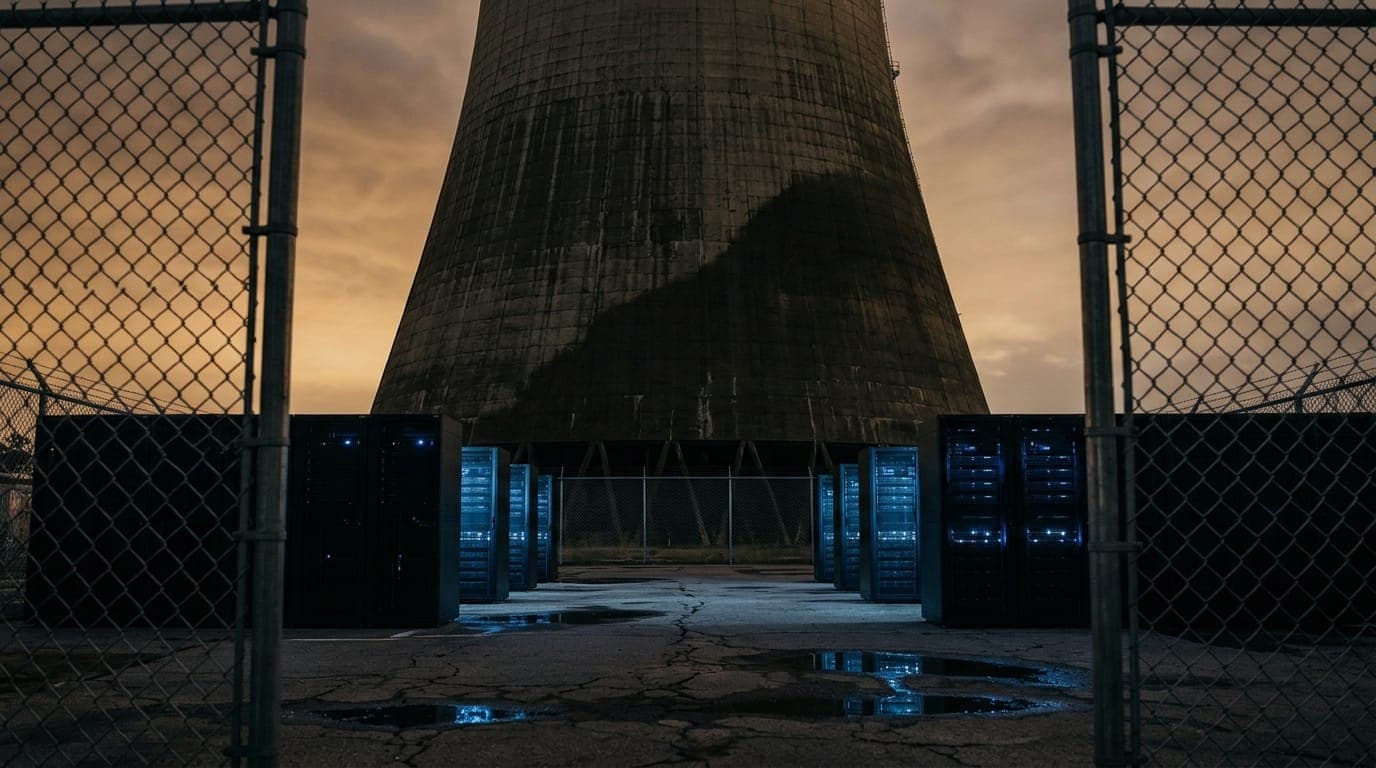
Grid access, not compute hardware, is the binding constraint, and institutional capital just proved it.
Key takeaways
- Drax Group, Brookfield Asset Management, and Radiant announced a deal on November 3 to build a greater-than-1 GW AI data center at Drax Power Station in North Yorkshire, with total investment potentially exceeding £20 billion ($26.8B) if constructed in full.
- The project's real asset is Drax's pre-permitted 4 GW grid connection at a moment when UK data center developers face years-long interconnection queues. Phase 1 (100 MW, £2.5B) cannot break ground until an anchor tenant is secured.
- As institutional capital races to lock up grid-connected, dispatchable power for AI compute, Bitcoin miners are pushed further toward stranded, curtailed, and off-grid energy sources, reinforcing the case that Bitcoin is the buyer of last resort for power the AI industry cannot use.
Drax Group, Brookfield Asset Management, and Radiant signed an agreement November 3 to jointly develop, deliver, and operate a gigawatt-scale AI data center on the Drax Power Station estate in North Yorkshire, England. The partnership targets greater than 1 GW of compute capacity at full build, with Brookfield projecting total investment could exceed £20 billion ($26.8B) including semiconductors, a lifetime ceiling figure, not a check already written.
Per the Drax Group press release and the accompanying Drax RNS regulatory filing, Phase 1 commits £2.5 billion for up to 100 MW of capacity, with commercial operations targeted for early 2028, subject to regulatory approvals and an anchor tenant commitment. Phase 2 adds another 500 MW between 2028 and 2031. No anchor tenant has been named.
The Real Asset Is the Grid Connection
Drax's contribution to the partnership is powered land, 2.6 GW of dispatchable biomass generation capacity, and a pre-existing 4 GW grid connection. That last item is the crown jewel. UK data center developers routinely wait years in the National Grid interconnection queue. Drax already has the connection. Brookfield and Radiant are essentially paying a premium to skip the line.
Drax CEO Will Gardiner put it plainly: "Drax Power Station is one of the few UK sites that can provide large-scale reliable power directly to data centre customers by utilising existing and underutilised generation capacity."
Drax shares surged more than 8% on the day, touching an intraday high of 884p. Analysts at JPMorgan were positive on the announcement, noting it could raise Drax's data-center valuation and ease concerns around the post-2031 subsidy cliff.
That subsidy cliff matters. Drax has received more than £7 billion in UK taxpayer subsidies since 2012 to burn biomass for electricity, according to multiple published reports, though the precise figure should be confirmed against Drax filings or DESNZ data. The current subsidy structure runs through March 2031, with rates halved from 2027.
The data center pivot is Drax's exit strategy: replace government contract revenue with hyperscaler rents. If AI tenant demand disappoints, the site's generation capacity becomes available at reduced cost, a scenario that has flexible, interruptible load written all over it.
What This Means for the Energy Race
Brookfield, one of the world's largest alternative asset managers, is now directly intermediating AI compute capacity by controlling power infrastructure. Permissioned capital allocating permissioned compute on permissioned grid connections. Morgan Stanley estimates a 32 GW US data center power deficit through 2028, warning that electricity constraints could favour deep-pocketed tech giants and squeeze smaller players. The Drax deal is a direct institutional response to exactly that constraint, playing out in the UK.
The parallel is already unfolding across Europe. German energy company PreussenElektra has partnered with Nvidia to assess whether its former nuclear power sites could host AI data centers, examining existing energy and site infrastructure as well as available land to determine whether they meet the technical and operational requirements of high-performance AI data centers. Every GW locked up for AI compute is a GW no longer available to any other high-load buyer.
Bitcoin miners sit directly in the crossfire of this resource race. On a grid-connected site like Drax, mining is not the use case that wins.
But the dynamic works in Bitcoin's favor at the margins. As AI data centers concentrate on firm, uninterruptible grid power and pay premium rates for it, the economics of stranded, intermittent, and curtailed energy improve for miners. Bitcoin miners are on track to earn about as much from artificial intelligence as from mining by year-end, according to CoinShares portfolio managers, with miners reporting $512 million in AI and high-performance computing revenue in Q2, or about 32% of total, with roughly 70 contracts ramping up set to add about $400 million in AI revenue per quarter. The longer-term structural play is that AI clears the premium grid connections, and Bitcoin occupies the energy no one else can monetize.
The falsifiable version of that thesis: if AI hyperscalers do not displace miners from grid-connected generation at scale over the next three to five years, the displacement argument doesn't hold. Watch whether miners retain access to grid-connected sites at competitive rates as AI capex accelerates.
What to Watch
The "anchor tenant required before construction begins" clause in the Drax RNS is the most important sentence in the announcement. Phase 1 has not started. The £2.5B is a conditional commitment.
The $26.8B is a ceiling projection that includes semiconductors not yet purchased and capacity not yet built. Who signs as anchor tenant, and when, determines whether this becomes the UK's largest data center or an announcement that aged poorly.
Sources
Frequently Asked Questions
Why build an AI data center at a power station rather than a greenfield site?
Grid interconnection in the UK can take years. Drax already has a 4 GW connection and 2.6 GW of dispatchable generation on site, bypassing the single biggest bottleneck facing AI data center development in Europe. The land and the power are already there. That combination is rare enough that Brookfield is willing to structure a multi-decade, multi-billion-pound partnership around it.
Is the $27 billion a committed investment?
No. Brookfield's £20B ($26.8B) figure is a "constructed in full" projection that includes semiconductors. The committed Phase 1 amount is £2.5 billion, and that commitment is contingent on securing an anchor tenant and receiving regulatory approvals. No anchor tenant has been named publicly.
What happens to the Drax site's power if AI demand disappoints?
Drax's biomass subsidy runs through March 2031, with rates halved from 2027. The data center deal is designed to replace that subsidy revenue with hyperscaler rents. If tenant demand falls short, the site's dispatchable generation capacity becomes available at lower cost. That scenario is a natural fit for flexible, interruptible load, the category Bitcoin mining occupies.