Texas Halts 1,800 AI Data Center Projects as Grid Math Breaks Down
Gov. Greg Abbott directed PUCT and ERCOT to audit all queued data center projects before any can connect to the Texas grid, halting roughly 1,800 projects and exposing a 474 GW interconnection queue that is more than five times the state's all-time peak demand.
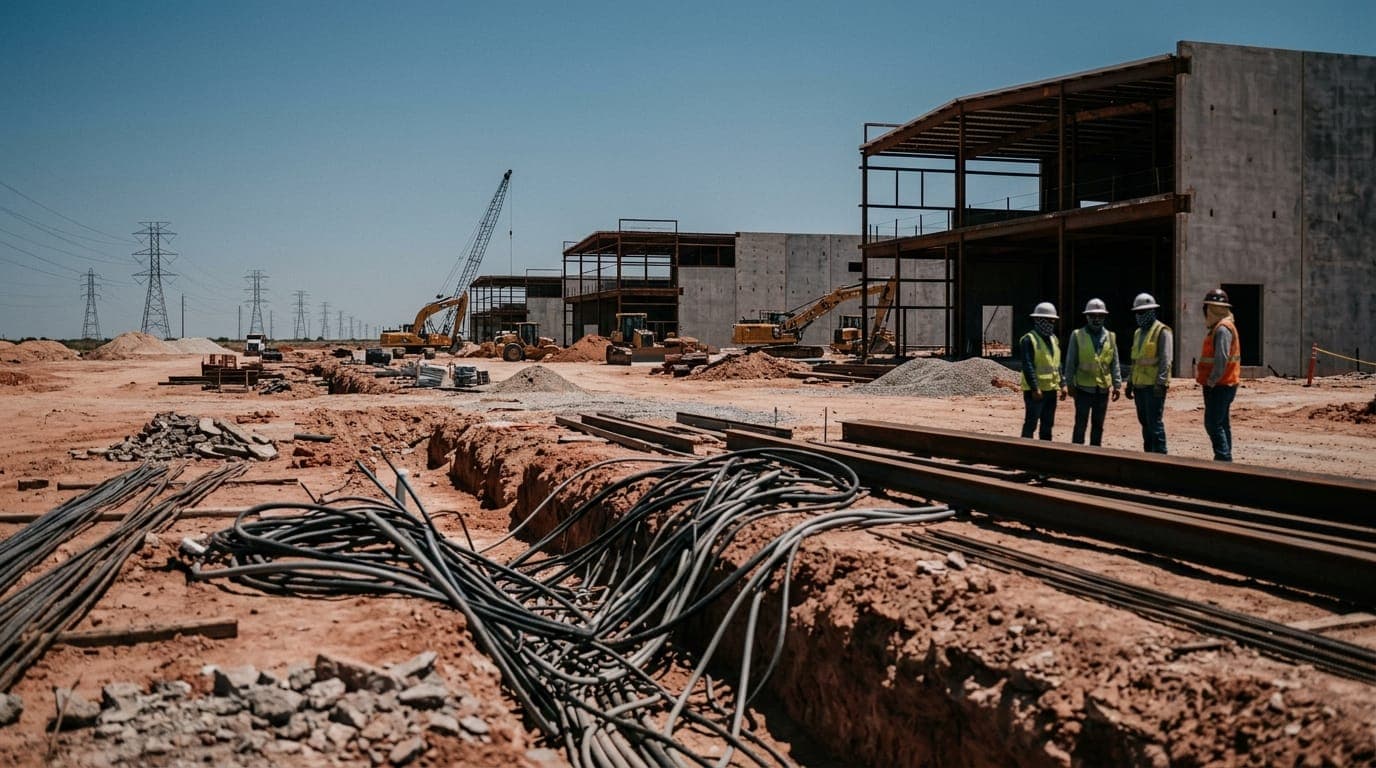
The AI capex supercycle just met a constraint that no equity raise can print away: electrons.
Key takeaways
- Texas Gov. Greg Abbott directed PUCT and ERCOT on August 3, 2026 to audit every data center in the interconnection queue before any project can connect to the grid, halting roughly 1,800 projects.
- ERCOT's queue holds approximately 474 gigawatts of requested new demand, more than five times the state's all-time peak, with Abbott attributing roughly 90% of that load to data centers.
- The halt is bipartisan and spreading: New York imposed a moratorium on new hyperscale data centers above 50 MW, and the backlash is now registering inside Republican Party political strategy heading into the 2026 midterms.
Texas Gov. Greg Abbott directed the Public Utility Commission of Texas and ERCOT on August 3 to conduct a comprehensive audit of all data centers in ERCOT's interconnection queue. Any project that fails to comply is denied grid connection. By August 20, Abbott confirmed the scale on X: "My directive has halted up to 1,800 data center projects."
The Numbers Behind the Freeze
ERCOT's interconnection queue holds requests totaling approximately 474 gigawatts of new electricity demand. Texas's all-time record peak is roughly 94 gigawatts. That is a five-to-one mismatch between what has been requested and what the grid has ever actually delivered. Abbott's own figure puts roughly 90% of that queued demand from data centers.
The roughly 474 GW queue did not appear overnight, but the political response to it arrived fast. Abbott simultaneously required data centers to fully fund their own infrastructure costs, preventing pass-through to residential ratepayers, and directed that data centers must not take water needed by local communities. A coalition of major operators, including CleanSpark, Hut 8, Google, Amazon, Microsoft, CoreWeave, Core Scientific, Oracle, Equinix, Galaxy, and Compass Datacenters, announced compliance with Abbott's standards by mid-to-late August.
The ratepayer-cost protection has been in motion since a June 2026 directive to PUCT and ERCOT. The August audit order was the escalation.
Abbott put it plainly in his official press release: "I established clear guardrails to ensure data centers protect our electric grid, conserve our water, respect our neighborhoods, and pay their own way."
Physics Over Politics
The political framing around Abbott's move is real but secondary. Axios's Alex Isenstadt reported that the NRSC privately warned AI companies that voter anger over data center siting is threatening Republican Senate prospects in Ohio heading into the midterms. New York imposed a statewide construction moratorium on new hyperscale data centers exceeding 50 megawatts. Pennsylvania Gov. Josh Shapiro signed Executive Order 2026-05 requiring data center developers seeking state support to cover electricity costs, obtain permits, hire local workers, and meet environmental standards.
The bipartisan nature of the backlash is worth noting, but the more durable constraint is not political. A roughly 474 GW queue against a grid that peaks near 94 GW is a physics problem, not a permitting one.
TFTC has covered the phantom load dynamic before: a substantial portion of interconnection queue demand in any grid at any time is speculative paper, developers holding spots without firm build commitments. Abbott's audit is the first hard regulatory forcing function separating real projects from option positions on grid access. The question the audit will answer is how much of the 474 GW was ever real.
That answer matters beyond Texas. If AI energy demand is partly a bubble of queue-stacking rather than committed load, then the infrastructure investment theses, utility capex plans, and energy-transition cost projections built on top of "AI will consume all the power" are overstated. The AI capex debt machine has been running on the assumption that demand is infinite and the only bottleneck is construction speed. Grid physics is the first hard check on that assumption.
The Bitcoin mining contrast is instructive. Miners spent years in Texas operating as interruptible, dispatchable load, taking curtailment agreements with ERCOT and getting paid to go offline during peak demand events. That model is the opposite of a hyperscale baseload hog that requires a dedicated multi-gigawatt grid connection and community consent it never bothered to secure.
Lancium, which built much of that playbook and is embedded in the Stargate buildout, has already committed to comply with Abbott's standards. The flexible-load model now looks prescient against the backdrop of 1,800 frozen projects.
PJM, the grid operator covering much of the mid-Atlantic and Midwest, has already filed rules to cut AI data centers first during grid shortages. The regulatory direction is consistent across grid operators. This is not a Texas anomaly.
What to Watch
PUCT is expected to vote on the audit's scope and timeline. Projects in advanced construction stages may move through the review faster than greenfield proposals.
The key variable is how many of the 1,800 projects survive the audit with meaningful modifications versus how many simply disappear, which would reveal the phantom-load share of the queue. If the bulk of projects pass through with minimal changes, the grid-constraint thesis softens. If a large portion cannot demonstrate real committed load and funding, the AI power demand narrative takes a significant revision.
Sources
Frequently Asked Questions
Does Abbott's audit apply to Bitcoin miners in Texas?
The directive targets data centers in ERCOT's interconnection queue. Bitcoin mining operations that already operate under existing grid agreements as interruptible load are structured differently from new-queue applicants. Several companies operating in both mining and AI infrastructure, including CleanSpark, Hut 8, and Lancium, have announced compliance with Abbott's standards. Pure mining operations with existing ERCOT curtailment agreements are not clearly subject to the same queue-audit process, though PUCT's final determination on scope is pending.
What happens to projects already under construction?
Reports indicate projects at advanced construction stages may move through the audit on a faster track or receive separate treatment. PUCT's vote on audit scope will determine the exact process. No official determination has been published yet.
How does Texas's approach differ from New York's and Pennsylvania's?
Texas suspended new grid approvals pending a compliance audit, with a path to approval for projects that meet Abbott's standards. New York imposed a hard construction ban on new hyperscale projects exceeding 50 megawatts. Pennsylvania imposed permitting requirements and community-consent conditions for projects seeking state support but did not halt approvals outright. All three represent a decisive shift from the open-door stance that defined data center policy across the political spectrum as recently as 2024.