Transcript: Anas Alhajji: SPR Releases Fix Nothing
Full speaker-labelled transcript of TFTC episode #779 with Anas Alhajji.

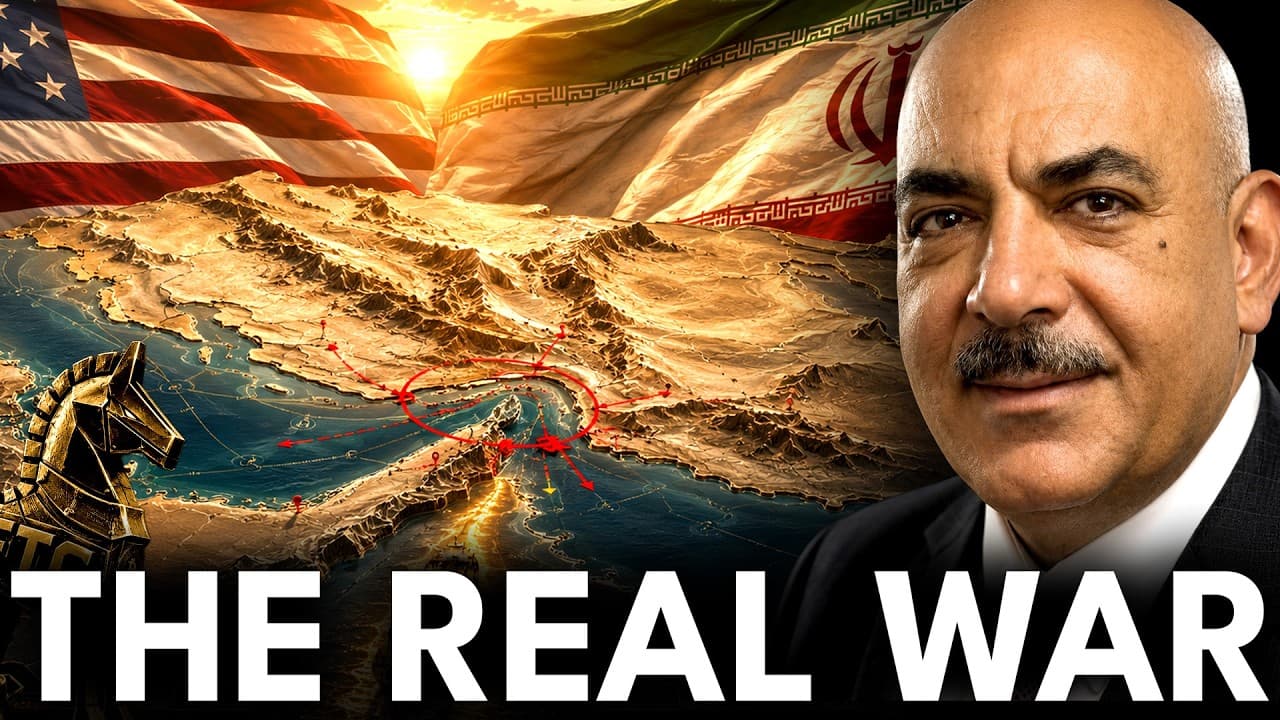
Full speaker-labelled transcript of TFTC episode #779 with Anas Alhajji. Read the written article: Anas Alhajji: SPR Releases Fix Nothing. Click any timestamp to watch that moment on YouTube. Machine transcription, lightly cleaned, may contain errors.
Anas Alhajji [0:07] You've had a dynamic where money's become freer than free. Let me talk about a Fed just gone nuts. All, all the central banks going nuts. So it's all acting like safe haven. I believe that in a world where central bankers are tripping over themselves to devalue their currency, Bitcoin wins. In the world of fiat currencies, Bitcoin is the victor. I mean, that's part of the bull case for Bitcoin. If you're not paying attention, you probably should be. Probably should be.
Marty Bent [0:35] Probably should be. Dr. Anas Elhaji, welcome back to the show.
Anas Alhajji [0:39] Thank you. Thank you. It's always a pleasure.
Marty Bent [0:42] It's been a while since you were last on, and you haven't been on since the war in Iran started. And I was rereading through the notes of our last recording, and it was when the saber rattling around Iran was really beginning to heat up. Last time we spoke, he called Iran's nuclear standoff the never-ending crisis and said sanctions cannot take Iran's exports anywhere close to zero. We're now looking at a conflict that appears to escape the narrow Iran-Israeli frame and spread into arteries of the global energy trade. But before we go into price, just give us the map. It's obviously been evolving, started between the US, Israel, and Iran in recent weeks. It looks like the Houthis in Yemen have entered the fray in the Red Sea. There's been a memorandum of understanding ceasefire on, off, on, off. Oil prices up above $100, down to low $70s, high $60s back in the— I haven't checked today, but I imagine $80s or $90s. What is the map looking like today?
Anas Alhajji [1:46] Well, a couple of things before we look at the map, because there are some important issues that people must understand, that the, what we call the Iranian regime, is not a unified regime. So there are people who wants to negotiate, there are people who are sincere and they want to build the country and they want to build the nation, and there are the others who are after themselves. So there are elements of the IRGC, which is the Revolutionary Guard, who benefited greatly from the sanctions over the last 3 decades. And they literally make billions of dollars, and sanctions enable them to control the economy of Iraq and everything that comes in and out. So for them, a peaceful resolution basically will literally put them aside, and they don't want that. So for the last 10 years or so, they've been trying really hard to derail any negotiations. And when you see their reaction and you see the attacks, You can tell where the negotiations are going from the severity of their attacks, which means that the more severe the attack, that means the negotiations were doing very well and they want to derail them. And the issue right now is with those guys. But the bigger issue is, it just happened, those guys who are now gaining control in Tehran, they are the international arm of the regime, which means that they are connected to the Houthis, they are connected to Hezbollah, they are connected to the others in Iraq and other places, even to the drug cartels in South America and other places. Those guys do not care about the future of Iran or building a nation. Those guys behave like drug cartels, exactly like drug cartels. Look how the drug cartels for 80 years right now, the United States been fighting them until now, they were not able to conquer them. And they are awfully rich. They are well trained. They have the most advanced kind of armors in the world. They have all kind of weapons, and they fight. So those guys are behaving the same. So what is the problem? The problem is the U.S. is sending a regular army, a regular navy, trying to fight in their thinking a regular army and a regular navy, navy. And that is not the case. You are sending a regular army to fight a guerrilla war or a militia, and that does not add up. That's where one of the mistakes that's been done. The other mistake basically being done by the Trump administration is they failed to understand the motives because they thought, oh well, those guys are after building Iran and the nation, and therefore we can do this and we can do this and we can— No, they are not after that. They are literally after control and money. And if you go for a peaceful resolution, that means you wipe out all their income sources, and that does not fit. And that's what the Trump administration has to understand. So the Trump administration been after them in the recent attack for 14 days. They've been after those guys. Notice that they did not kill any of the negotiating team. They were after the extremists at the IRGC. And everything they've done, it seems they did not do much simply because those guys are mobile. They keep moving. And that's why the whole structure of the war has to change to be able to make any advancement in the region. At the same time, again, this part of the regime is the international arm of it. So they have people all around the world. And that is another problem. And that forces the US government and others to think about another strategy on how to work the area.
Marty Bent [5:39] And that— so let's get into the state of the area, because obviously when the war started, there was bombing on both sides. And I think one of the biggest fears in the first month was the degradation of the refinery infrastructure, particularly in Qatar. With the natural gas refinery, water salination plants potentially targets. You had a bunch of pipelines and other refineries across the region that were taking on heavy damage. And initial reports going to take years to build that capacity back. Now, again, like I said earlier, it looks like the Houthis are getting involved in the Red Sea, beginning to bomb Saudi tankers. So what is the state of, I guess, the supply chain of oil and gas look like right now as it stands today? And then obviously the strait through which a lot of—
Anas Alhajji [6:32] Before we answer this question, we have to— people have to answer the following question. And this is kind of the answer to this will lead us to other questions. Do people believe that this war is about Iran and its nuclear program?
Marty Bent [6:48] I don't.
Anas Alhajji [6:50] Or is it part of a larger change that is happening around the world That includes trade wars, sanctions, tariffs, Venezuela, Panama Canal, China, Russia, Greenland. Is this part of the— of course, you add Ukraine and the European Union to this, Nord Stream 1, Nord Stream 2. So is this part of that big picture or is just limited to Iran and nuclear program? Once people understand that we have to make that distinction and then they get the answer, we can get other answers to the other questions because the whole issue at the end, if this is part of this global change, then everything fits because the United States forced Russia out of Europe, as you know, Russian share in natural gas market declined from 55% to 14%, and U.S. share in natural gas market in the EU increased from zero to 30%. Now you look at Asia, Qatar is not able to export LNG to Asia. So what did the news two days ago? Qatar is going to import American LNG. to export it to Asia instead of Qatar.
Marty Bent [8:18] Why?
Anas Alhajji [8:18] So all of a sudden the US, well, again, when you start asking those questions, you start realizing things are not what the media is telling us and what people are telling us. So you go back and look at what happened to Nord Stream 1 and Nord Stream 2 and to the, how they shut down the Ukrainian pipeline when the contract ended, and you look at how the US LNG has become an integral part of US foreign policy, and then you look at what happened in Egypt yesterday. In Egypt yesterday, we have an attack on LNG terminal, and then 2 regasification units, both of them are American, by the way, got hit. And the question is why and who did that? And the Egyptian government refused basically to say more than it is a there were two drones and that's it. And then the media start telling us, oh, it's two thousand mile two thousand kilometers from Iran and one thousand four hundred kilometers from Yemen, and they started kind of redirecting our attention. Into into something that does not make any sense. Okay, so Iran is sending a drone two thousand kilometers, and no one will know until they hit their targets. They cross several countries, by the way, several countries, and no, it tells you that the whatever we are hearing from the media is just not not the right story.
Marty Bent [10:02] I mean, I can't stop thinking about the— I think one thing that many people, particularly the mainstream media, aren't pulling into this is the National Security Strategy document that was written last year by the Trump administration. And it seems—
Anas Alhajji [10:16] This is part of it, basically. I don't want to kind of like sound like talking about conspiracy theory or anything else. I really would like to move to the energy markets and talk about the economics of it. But if you go back to the National Security Strategy that was released right last November, it focuses on energy dominance and AI dominance. But you cannot have AI without energy. So everything boils down to energy dominance. And the only way you can have energy dominance is to have the resources You don't have all the resources in the world, so you control the U.S., then indirectly control Canada, and then directly or indirectly control Venezuela. And now you want to directly or indirectly control the energy sources in the other side of the world. Well, what's better than waterways? Look at what's happening in Iraq today. All of a sudden, the company, the Russian company. that was controlling one of the largest oil fields being kicked out. US companies are taking over. ExxonMobil and Chevron are returning to Iraq. Here's the problem. They already left Iraq. They are coming back to the same fields. You ask them, why did you leave? Because they said 1, 2, 3, 4, 5, 6, 7. Okay, now you are back, but 1, 2, 3, 4, 5, 6, 7 is still there. Nothing changed. So what changed in your attitude until you want to go back to Iraq now? And you look at other things, a lot of— there are more questions than what we even can ask questions, let alone answers. I'm going to give you one. Last week, Lloyd's of London informed shippers that if they pay Iran to pass Hormuz Strait, they will cancel insurance. I mean, this is kind of like the FBI or the State Department or someone else will do that. Why they are doing the job of a foreign government? Why insurance company is threatening them? Because people were saying, oh, they canceled the insurance in the Gulf on March 1st simply because risk is very high. Yeah. Well, if it is about risk, paying Iran reduces risk. So why you cancel the insurance then? So this is one of them. Then you add other things to the equation, which a lot of things do not make any sense out of this. We heard about the releases of the SPR. And we can discuss the issues of SPR and what did kind of the conspiracy about the SPR, et cetera. But you look at the SPR releases and you look at the impact. Supposedly Trump wanted lower gasoline prices, but releasing oil from the SPR does not have any impact on gasoline prices. simply because our refineries are running at maximum. And if they are running at maximum, they cannot use more crude anyway. So it doesn't matter.
Marty Bent [13:39] I heard some commentary on this. I mean, somebody was comparing Trump's draw of the SPR to Biden's. And the commentary I saw is that he was making a trade because if you look at where the oil price was when Trump was draining it, he was trying to sell it. sell it high to lock in, I guess, some profits or something like that.
Anas Alhajji [13:59] No, they cannot. This is, okay, I have, I've written a lot about this and I have a long video on this, kind of a timeless video. Let me explain something about the SPR that is very important. The release of Biden probably will end up the highlight of Biden presidency in a very positive way. Because if you go back and look at everything we've been told, even by analysts, it's all wrong. Why it's all wrong? 'Cause they told us oil prices will go to $250 because of the sanctions on Russia. And we were going to— I was on your show basically, and I said this at that time. And they said, we are going to lose up to 5 million barrels. Remember that?
Marty Bent [14:45] Mm-hmm.
Anas Alhajji [14:46] Because of the sanctions. And I said, none. And what happened? We did not lose any Russian oil, yet prices increased to $120, $130. And Biden released 211 million barrels, 180 from the SPR. That's the Biden release plus the congressional, the Congress mandated releases. There were 211. So if we did not lose the Russian oil, And that $211 million being swallowed by the market, how do you explain that? Everything the analyst told us about basically was completely off, completely wrong.
Marty Bent [15:24] So how does that compare to Trump's draw on the SPR?
Anas Alhajji [15:28] I will explain in a minute. But what happened is we were coming off the lockdowns and the demand was— the increase in demand was massive. So what happened in 2022 was a repeat of 2007, 2008. Where the demand outstrips supply regardless of what happened in Russia. We did not lose Russian oil. It was demand that was extremely strong and therefore the actions of Biden, and I'm being completely apolitical here, the actions of Biden basically at that time was one of the smartest moves of his presidency because otherwise prices would have gone above $200 and then destroy the world economy, destroy the US economy. Now you come to the Trump administration release on daily basis. It is the largest release in history, so it's way higher than Biden. So in total, Biden release is larger, but it's been done over a long period of time. With Trump, it's smaller in total, but on daily basis it's larger, and it has tremendous impact on the market simply because the amount is very large. The confusion we've gotten basically was about products versus crude. And that is really one of the main problems we have today. Throughout this crisis, after the initial period, let's say, so we start in April instead of starting in March, the crisis in the energy market was in the products, not in crude. So we have serious problems in the products market. And for your audience, I used this analogy before and I'm going to use it again here. I'm going to explain what happened in the diesel market and you can apply it to any other market, but diesel because we still have diesel crisis until today and that's why I want to explain it to people. What happened in the initial period is after the insurance was canceled, and ships were not able to leave, and then we started all those problems and the claims of blockage and the US blockage, et cetera. We have 3 major refineries in the Gulf, one in Kuwait, one in the UAE, and one in Saudi Arabia. None of them was able to export anything. So we lost their products, and that created panic in the market. The problem is these are massive, some of the biggest refineries in the world. And we lost that, and the panic basically kind of took hold. As a result, governments around the world panicked, and they banned exports of petroleum products for fear of shortages. The method differ from country to country. So China, for example, it was outright ban—no export period—and this is one of the reasons why it led to their decline in imports, by the way. Because now they don't need to import to re-export. Anyway, India imposed taxes, heavy taxes, and South Korea put a minimum, said as long as you meet this minimum, you can export above that, or maximum, whatever you want to call it. So we started losing diesel from around the world as a result. So we have the first effect, then we have the secondary effect as a result. Here diesel prices start going up. Again, this applies to other products too. This is just an example. If you are a trader and physically you own diesel or crude or gasoline or just fuel or anything else, and you know prices are going to go up next week and the margin between this week and next week is way higher than the cost of storage. Will you store? Sure. So hoarding basically started. So that made the situation even worse because of this. So because of these situations now, we have people panicking because they want the diesel. So India was, and this is true example, India was selling a shipment of diesel to South Africa. The shipment was around East Africa, around Tanzania, Madagascar, and someone in Singapore bought it. Of course, they paid the higher price, so the ship got diverted. Now it's going to Singapore. Someone in China panicked. Now they bought the same shipment and redirected it from Singapore to China. On the way to China, a Japanese company panicked. Now they took it to Japan. But that shipment should have been delivered to South Africa a week ago. Now, 2 weeks later, it's still in the ocean. Now take one ship and multiply it by hundreds, probably thousands, and you can see how the situation got exacerbated. As if this is not enough, we have Zelensky basically taking his time bombing the Russia refineries and bombing the ships and the outlets and all the stuff. And he literally turned Russia into an importing country instead of exporting. So in a sense, we did not only lose the gasoline out of Russia, Russia now is taking the gasoline out of the market out of India that's supposed to go to Singapore. So you put all of those together, you can see You can see the impact. But what made the situation really scary right now is we have what I call right now the 4 Seas Crisis. Until last week, it was the 3 Seas. Now after the attack on Egypt, it's the 4 Seas. So we have the Gulf, we have the Red Sea, we have the Black Sea, and we have the Mediterranean Sea. We have problems in all of them. And the question that needs to be answered is, now Kazakhstan exports stopped for the third time this month. Why Ukraine is halting the exports of Kazakhstan? Seriously, why the Trump administration is not saying a single word? We lost 1.4 million barrels a day. 1.4 million during crisis when Babylmandib is semi-closed and And Hormuz is semi-closed. And we lost 1.4 million. Not a single senator, not a single congressman said anything. And everyone is complaining about gasoline prices and diesel prices. What the situation is really kind of, once you start looking at it in a different way, you try to kind of like ask questions, say, okay, what is really going on? Why Zelensky is doing this over and over and over? You look at the media and the big accounts on Twitter and other social media accounts, they've been fooling us all along, whether intentionally or out of ignorance. So the Saudi refinery in Jazan was hit. There is no oil in Jazan, by the way. The whole area, the southwestern Saudi Arabia, does not have any oil. All the oil, all the crude basically is far in the east. So this is the refinery. That's it. So we did not lose that much oil because the refinery was hit. That's mostly domestic, and there are some product exports out of it. And then two days later, the gig was hit, which is an essential part of Aramco in the eastern province, and they accused an Iraqi group that is part of the Iranian. regime, and as a result, the US and Saudi Arabia bombed them the following day. But the amount of oil lost from Saudi Arabia was very, very limited. And the reason why, because you cannot kill, kill the horse twice. The Saudis cannot export from the east, they cannot export from the west. So whether their production goes up or down, it doesn't matter because they cannot export. During this time, we lost the 1.4 million Barrels a day out of Kazakhstan. That was a real loss, but the media and social media accounts kept talking about Saudi Arabia, and they ignored Kazakhstan completely, where the real loss was. And the question is why? Seriously, why? And those analysts basically why why they are doing this? And during this period, of course, hundreds of videos were fake videos or old videos. So we have some big accounts basically, literally when Gaig was bombed 3 days ago, I can guarantee you that some of those guys never heard of it before. And because of the use of AI, because some of those accounts depend heavily on AI in their postings, they went to AI and said Gaig, and the news is fresh. The AI has not collected the information yet. The only information exists from 2019 when a gig was hit, when we lost 5.5 million barrels a day. And those guys basically were too young at that time to even know it existed. So they literally pulled the 2019, they start posting it as if it happened today with the pictures, with all the announcements, with everything. We lost 5.5 million barrels. That was from 2019. So we ended up with the Four Cs crisis with all this misinformation. And then we ended up with something I call the obsession crisis. And this is related to what you guys do on daily basis, et cetera. And many of your followers basically do. We know that the first rule of investing is do not fall in love with your stock. Do not fall in love with whatever you are investing in. But obsession leads to that love. And we have people who got obsessed with the idea that oil prices will go to $150.
Marty Bent [25:47] Mm-hmm.
Anas Alhajji [25:48] I'm talking about Brent, okay? And they went on and on and on and on and on. And it got so nasty that anyone will say, no, it's not going to go to $150, became the enemy. But it was the result of that obsession. And that obsession led to literally taking the social media fake news and promoting it because it fits with the obsession of $150 or $120 oil. So in a sense, we got it from all sides. We have physical crisis on the ground and we have a mental crisis.
Marty Bent [26:24] What's up, freaks? This episode is brought to you by Block's Bitcoin ecosystem. You probably know Cash App, you probably know Square, Yeah, definitely know BitKey if you've been listening to the show for the last couple of years. What matters most is that these are not disconnected random products. They are part of a broader push to make Bitcoin easier to buy, easier to hold, and easier to use in the real world. Cash App helps people stack Bitcoin. BitKey helps people custody without turning self-custody into a weekend engineering product. Square helps merchants run their businesses and increasingly plug into the Bitcoin-native payments rails. Listen, this is the kind of ecosystem Bitcoin needs. We've been talking about this on the show for a while. We know that we need the different parts to line up to make Bitcoin everyday money. Block is doing just that. Check the episode description for the current Cash App, BitKey, and Square links. What's up, freaks? When you take Bitcoin seriously, you start with custody. You want to control your keys, avoid single points of failure, and make sure your savings cannot disappear because you or someone else screwed up. That is what Unchained has been focused on since 2016. Unchained is the leader in collaborative multisig custody and Bitcoin financial services that keep you in control. They secure over $12 billion in Bitcoin for more than 12,000 clients. That means about 1 out of every 200 Bitcoin sits inside an Unchained vault. Their model is simple. You hold 2 keys, they hold 1 key. It always takes 2 keys to move Bitcoin, meaning their single key can't access your Bitcoin on its own. Just resilient shared custody that gives you institutional-grade security while keeping you sovereign. Unchained also lets you trade straight from your vault, access Bitcoin-backed commercial loans, open a Bitcoin IRA where you hold your own keys, and set up personal, business, trust, or retirement vaults. They even offer inheritance solutions built for long-term hodlers, or opt for the highest level private client service with Unchained Signature and get a dedicated account manager, discounted trading fees, exclusive access to events and features, and much, much more. If you want a partner that helps you secure and grow your Bitcoin without giving up control, go to unchained.com and use the code TFTC10 at checkout to get 10% off your new Bitcoin multisig vault. That's TFTC10 at unchained.com. From your perspective, what is the single most important physical constraint right now. It's like the fog of war, not only literally on the ground.
Anas Alhajji [28:30] For those who are interested, and I will send you the link, you can send it to them, there is a part of the newsletter that is out of the paywall so they can read it without paying. And that sums up, it's very short, but sums up the whole situation. We are in deep trouble. Any way you look at it, we are in deep trouble. So if you look at the Saudi economy, the Saudi numbers being published yesterday, it was -4.5%. In the first quarter, it was +3%. This is a country was one of the most promising countries in the world, and it tanked. And Saudi Arabia, relative to other oil-producing countries, fared very well because they tried to diversify their economy and they have pipelines to divert From east to west, but other countries, if you look at Iraq, you look at Kuwait, you look at Qatar, they have no other choice. They got stuck. So even at minus 4.5%, the Saudi performance was way better than others. But now you take it worldwide, you got to think the following: those countries, whether you're talking about Saudi Arabia, UAE, Qatar, Kuwait, and Iraq, those are countries. They are heavy, heavy purchasers. They are heavy consumers. They are heavy importers. They are the one who import all kind of things, whether from wheat to planes. And they are the one who's supposed to make those massive investments in the United States. And they are the ones who are expected to be the largest donors to the poorer countries in the world. All of that is gone. All of that is gone. The consumption is gone. The investment is gone. The aid is gone. Yeah. So what do you expect is going to happen? The Q2 data, the second quarter data, is not out yet. Only we have very few countries that came out with the data. And even if we get out of the data, if you think— and this is a message to the audience— if you really think that the oil prices and the oil market is heavily manipulated by the government and by the Trump administration, If you really believe it, then you must believe that the economic data is manipulated too. It's just logical. Okay, I believe when it comes to the oil market that yeah, there is some manipulation, but based on evidence for the last hundreds of years, basically, it's— and there are many theories, there are books and articles on this— you can manipulate the market or cheat the market twice, 3 times, and that's it. And then the market figure it out. And then you lose that edge. And even OPEC basically realized this long ago. That's why they became very innovative in the way they make their announcements, because once they are discovered, people will, will know what the game is. So they became very innovative. And to think that the Trump administration is repeating the same thing again and again and again, and you are being fooled again and again and again, it is your problem, not Trump's problem. That tells you it's not. There is some manipulation in the market. That's absolutely correct. But we do have some structural issues. We have major decline in demand and we have demand destruction. Don't because one of the problems when we talk about that obsession that we talked about earlier, we still have today until today we have analysts, well-known names who think that oil prices have not increased. To match the crisis, and that is absolutely not correct. Because if you look at at prices in March, medium sour crude in Asia was sold above $170. That was the record. We have some shipments being sold close to $200, and the damage came from there. You are living in the United States or Europe; probably you are not feeling it. But in Asia, they felt it when China stopped importing six million barrels a day. They did because prices were $170. And even when they declined, they declined to $155 and they stayed there for a while. And people are still saying, well, Brent, sorry, WTI is $95 only. That's absolutely correct. But you are looking at the wrong marker. You are looking at the wrong market. They don't use WTI in Asia. WTI is for North America. You want to look at the prices in Asia, you look at Dubai and Oman. Okay. And that was one of the problems. So what happened is those countries basically and refiners reacted to those extreme prices. But that's not the only story. You look at what happened in Japan. The Japanese yen, as you know, collapsed. So oil prices in yen were the highest ever. And Japanese refiners are not going to buy that oil. There is no way they are going to buy at the highest price ever. That's why their inventories declined substantially, because they would rather use their inventories than to pay the highest price ever. So I'm going to tell you, you've been in this market, you've been there for a while. How many times you heard about Japan basically having, uh, the highest prices ever?
Marty Bent [33:40] Quite a few, because they're heavily dependent on it, right? Sorry? They're heavily dependent on oil, right?
Anas Alhajji [33:48] No, no, I'm talking about Japan refiners paying the highest price ever. How many times you heard that?
Marty Bent [33:53] No, never.
Anas Alhajji [33:55] Why? But this is the reality. Why the media, why analysts are not talking about that? So there are— there is this obsession thing that, oh, we still need for prices to go up. Well, if the damage is already happening and already happened because prices went up, and Japan basically was damaged. You cannot kill the horse twice. The horse already been killed. You cannot kill it twice. That's it. It's not there. And if it's not there, then you cannot feed it. It's dead.
Marty Bent [34:26] So the demand destruction was so strong in Asia and parts of the world, like a higher price doesn't make sense because nobody's going to pay it. They'll just—
Anas Alhajji [34:35] But even you look at the United States, look at the data that was released this morning. This morning, the decline in gasoline demand is almost 2.5% year over year and has nothing to do with EVs, by the way. It has nothing to do with EVs at all. And so how do you explain that? US demand was going up. Now it's 2.5%. It was going up by 1.7%. So the difference is between 1.7% and 2.5%. That difference is very large. So the damage is already happening even in the United States, but we still need more time to get the data. In other countries, you look at Pakistan, you look at Bangladesh, you look at Tanzania, Kenya, and South Africa, Egypt, those countries are completely devastated. And it's not only oil. Let's remember that— this is my cheating sheet here. Okay. Hermes Strait is not only about oil, it's about helium, and you cannot make any computer chip without helium. It is about fertilizers, and we cannot find food without fertilizers. It is about methanol, and you cannot make biofuel without methanol. There are many products we cannot make without methanol. Uh, it's about aluminum. Aluminum prices basically set at record high right now as a result of that. So it's not only about that. And once you start adding those together and you see the massive increase in prices and costs and everything else, it's not only about energy, it's about everything else. It was my mistake because I was supposed to buy 2 laptops and I kept delaying it. And now prices are going up. Mm-hmm. All the high-end computers basically went up. And I, on the morning show that I was— I speak on every single morning, I told them that there was a time when an air conditioning unit need to be changed, but I can wait. But the moment the crisis happened, immediately I decided to change it. And the cost is about $20,000, by the way. Because I know if I wait, the cost will go up. The same unit that I paid $20,000 at the beginning, that's only 5 months ago, now it's $26,000.
Marty Bent [36:59] Nice.
Anas Alhajji [37:01] And this is in the United States.
Marty Bent [37:02] 30% inflation there.
Anas Alhajji [37:02] So the problem and the crisis, or what we've seen so far, is only the tip of the iceberg.
Marty Bent [37:12] Yeah, well, I'm happy you brought that up, particularly fertilizer, because I had somebody in my DMs The other day, um, basically saying that they have a buddy that works at a fertilizer refinery in Louisiana, and the workers there have gotten notice that their, their hours are being reduced to 80%. And he thinks it's, uh, basically like an extend and pretend before furloughs and layoffs come because they started importing fertilizer from, from Morocco because the input cost here, the refineries in the US went from something like $400 to $1,700 or something like that.
Anas Alhajji [37:54] In addition, basically we have a new problem that we covered in the Daily Energy Report today that banks are going to support the building of $15 billion AI center south of Dallas.
Marty Bent [38:13] Mm-hmm.
Anas Alhajji [38:14] And when you are talking about $15 billion AI center, of course the energy consumption is just beyond imagination. And they are going to build their own gas-fired power plant. And the question that we raised is where that gas is going to come from. And when we work this backwards, we found out that there will be a time, probably in 2 to 3 year time, When US LNG is going to fight, literally fight with the data centers over gas.
Marty Bent [38:44] Freaks, look at me. I'm glowing. I've got like an angel's halo going around me. You know why that is? Is I feel good. I feel taken care of. I feel blessed, healthy, happy. And that is because I'm a CrowdHealth member. My family and I have been CrowdHealth members for 5 years now. Literally this month, 5 years ago, we joined CrowdHealth. We've had 2 babies, we've had multiple health events, and we're never going back to health insurance. CrowdHealth is crowdfunded healthcare. So you, you sign up for CrowdHealth, you pay a monthly fee, you help out. with other people's bills, and it's significantly cheaper than health insurance. We were on COBRA as a family of 3 when I left my last job before I went full-time with TFTC, went on The Crowd Health. Now as a family of 5, we pay, I believe, $700 a month. It's significantly cheaper. They're going to negotiate prices lower for you. They've consistently negotiated healthcare prices as much as 50%, 60%, 80% in many cases. They help out with babies. If you have a pregnancy, you pay the first $3,000 and The Crowd covers the rest. If you have a regular health event, you pay $500 and the crowd pays the rest. Go to joincrowdhealth.com, sign up today, use the code TFTC, opt out of health insurance. I'm uninsured, baby, and I love it. Use the code TFTC at joincrowdhealth.com and you'll get $99 a month for the first 3 months that you're on the CrowdHealth platform in the community. Bitcoiners, you found sovereign money. Now find sovereign health and sovereign healthcare. All right, freaks, you know I don't take sponsored money from products I wouldn't use myself, so listen up. The Aave and Bitcoin Visa card is one of the most interesting things I've seen in the Bitcoin lending in a long time. Here's the deal. You can get a line of credit up to $1 million backed by your Bitcoin without selling a single sat. No games, no annual fees, no minimum draws. And your Bitcoin is custodied by BitGo, one of the most trusted names in digital asset security. Aven never lends it out. There's no rehypothecation. You stay in control. You can lock in a fixed rate for up to 10 years. 10 years. That's 10 times longer than most lenders out there. Or go interest only for up to 5 years. Rates start at 8.99% APR for a product that lets you keep your stack and still access liquidity. It's hard to beat. On top of this, guess what? You also get 2% unlimited cash back every time you use the card. Spend fiat, keep your Bitcoin. That's the whole game. If you've been stacking for years and you need liquidity without triggering a taxable event, this is worth a serious look. Go to aven.com/bitcoin. That's aven.com/bitcoin. check it out. Well, this has been a common theme through our discussions throughout the, throughout the years. You said you've been saying natural gas isn't a bridge to the future. It is the future.
Anas Alhajji [41:17] It seems like. Absolutely. Absolutely. But now it's getting like what I— as you know, I've been bullish on LNG, etc. But whatever we have right now is, is way above the expectations. And one of the problems is once the cost goes up, Everyone got hurt because for LNG you have only limited margin. And for the AI, the competition is so severe that if your cost— basically you cannot manage your cost, you have a serious, you have a serious problem. And with AI, by the way, people are talking about solar and wind, etc. You cannot afford to lose power for 1 second, not even 1 second. So you need reliable energy, and that's why they are moving toward nuclear and natural gas as a result of that. It's nice to have solar and wind next to you as redundancy basically becomes important, but you need those things. So if you look at all the data centers around the United States, all of them have backup. And the irony is all that backup is a diesel backup.
Marty Bent [42:24] So what does this mean? What do the next 30, 60, 90 days look like? What, what should we be hoping for in terms of any resolution?
Anas Alhajji [42:38] I really want people to read that paragraph, that long paragraph that I wrote, and it sounds gloomy and kind of very pessimistic view. And probably we have to go through that to get the better future that we are looking for. Otherwise, things the way they are will drag on for a very long time, and this is not in the interest of anyone. Let's get it over with. Let's get the bad news and, and get it over with, and let's have that demand destruction and everything else until we move forward. Otherwise, it's going to be very, very difficult situation, and, uh, something got to give. Things do not add up. So I'm going to give you another example on how things got together. I don't know how much time we have left.
Marty Bent [43:26] You have plenty, it's 20 minutes.
Anas Alhajji [43:28] As you know, the Saudis couldn't export their oil through Bab el-Mandeb on their own ships. So Saudi oil is going through Bab el-Mandeb, but on someone else's ships. And Saudis have one of the largest VLCC fleets in the world. And now the discussion is going toward, okay, how they are going to export it through the Suez Canal. Here are the issues. If they want to export it through the Suez Canal, the Suez Canal cannot handle a fully loaded VLCC. So you got to forget about that. They can send the ships that can take 700,000 barrels to 1 million, 1.1. That can go through. But if you are talking about two, two point two, they cannot. Long time ago, they found a solution. The solution is, if you can imagine the map, you send the ships north in the Red Sea. You go to Egypt just before you reach the Swiss Canal on the left. There are a couple of lakes there on the left. There is a small town called Ain al-Sukhna. Ain al-Sukhna—they built a terminal there. With storage facilities, and is connected to the Mediterranean via a pipeline called Sumed. Sumed, that's the West Mediterranean Pipeline. And the pipeline, if you can imagine the map, it goes west, crosses the Nile, crosses Cairo, and then turns north and goes to Alexandria. Next to Alexandria, there is a small town called Sidi Qaya. They made the terminal there, and it has a storage facility of about 22 million barrels. So those big ships basically will go historically. They used to go to Anasakhna, unload some. They will float, and because of the shape of the ship, now they can go through the Swiss Canal. But later on, the Saudis basically kind of because of efficiency and better management, everything else, they learned I don't even have to send all of them at all. I can just unload everything in Anasakhna. and send it via pipeline because the pipeline capacity is 2.5 million barrels a day. And I can send it to the other side. Ships can come from the other side and load. I don't have to go through the Suez Canal and pay for it and all that stuff. So the question now is, can Saudi Arabia export 6 million barrels a day, which is the amount of export they had before, through this method, both Suez Canal and Sumit Pipeline to compensate for the losses of Hormuz and Bab-el-Mandeb? And the answer is yes, they can. And you can work the math, you can work the capacities, everything else. They literally can. That's the easy part. The problem is now ships, instead of going from Bab-el-Mandeb directly to Asia, now they have to go from the Mediterranean all the way around Africa to go to Asia. Once you start playing the math, there will be a time when the Saudis wanted ships, but there are none, 'cause all of them in the ocean.
Marty Bent [46:41] Mm-hmm.
Anas Alhajji [46:42] Those that are going to deliver and those who are returning. And therefore they have to stop exports and they have to stop production. That's the problem right now with the supposedly the new system, if we are going to go with that new system. So we do have a serious problem. But with the hit to Egypt the day before yesterday for the LNG terminal and the two regasification terminals, this is very serious because the question is whoever did that, did they really meant? Did they really mean to hit the LNG, or that was a message about the Swiss Canal because? That unit on the Mediterranean is very close to the Suez Canal, very close. So was that a message, look, we can close the Suez Canal too? Or that was the LNG, it literally was intended. And of course there are several suspicious leaderships and countries you can put there. But the issue here is, even if all the stars line up for the Saudis and the rest of the world, Aside from the risk, we will reach a point where we have more oil on water and we don't have enough ships. And what is the problem? The problem is a large number of the ships that could be available are sanctioned because they carry either— they carried in the past or they're still carrying the Iranian oil and the Russian oil. So in a sense, you look at all of this, it's kind of like almost a self-made crisis. Once you start expanding and looking at the details of it, the final issue here is when we talk about those sanctions, we got to remember that in the short run, China was prepared, and China built those massive inventories of almost everything. So China was doing very well throughout this period. The only way to hurt China is to drag whatever we are in right now until, let's say, a year from now. That's when you start hurting China. But by that time, the whole world would collapse, and probably the US economy would collapse even before that happens. So there is a serious problem there that it's not only Hormuz, it's not only Bab-el-Mandeb, it's really this trade war and the issues with China and everything else that we got to look at. And when Trump visited China, the Chinese tried to be nice, so they imported LNG from the United States to please Trump. What they've done last week, the same shipment that arrived in China, they resold it at a higher price.
Marty Bent [49:32] And now China's talking about trade routes to Europe through the Arctic too, as well, which gets to Which gets to the question, how does all of this impact the relationships between the US, Gulf states? I mean, Europe is obviously affected by this. And I've been viewing this through the lens of, seems like a big proxy war with China in this AI race at the end of the day.
Anas Alhajji [49:54] But this time, emotions are very raw. So when people in the Gulf basically are extremely angry that they've been hit, Their economy's been hit, their factories been hit, the refiners been hit, and their emotions are very raw against— they are against the Iranians, and they are blaming Trump because supposedly they have those contracts with Trump and they paid a lot of money and etcetera, etcetera, to be protected, and they were not protected. You look at countries like Kuwait, Bahrain, Saudi Arabia, etcetera. They were not protected. So the emotions at this stage are very raw. That's why we see articles like one yesterday saying that Saudi Arabia literally should tilt toward the Chinese big time as a result of that. And that goes back to your old theory about the dollar and the Bitcoin and all this stuff. If you remember that, we did this, what, 3 years ago or something like this?
Marty Bent [50:53] Yeah.
Anas Alhajji [50:54] So if that happened, that is a crisis. But why the Saudis are even talking about, Or why some Saudis are talking about this, because the emotions are very raw. And the Europeans are the same thing. They are suffering from the highest jet fuel prices ever, diesel prices, energy prices, everything is just too expensive. And they blame the United States because from their point of view, if Trump and Netanyahu did not go to Iran, we would not have this problem. And of course, From my point of view, our problem with Europe is not only the United States. Our problem with Europe is its leadership. And if you look at what they've been doing, it's crazy. I mean, crazy beyond imagination. I'm going to tell you a story. Just last— this week, Germany signed a contract with Canada to import LNG from Canada. from Northwest Canada. So if you can imagine the map from that corner where Alaska meets with Canada, that's where they are building an LNG terminal. So Germany wants to buy LNG from there, but Germany has all the choices from around the world that are way closer to Germany. But yet they chose this one because it had the lowest CO2 footprint per unit. Why? Because they use hydroelectric. They don't use fossil fuel. But it is fossil fuel. Okay, so here is the issue. How you are going to get that gas to Canada, to Germany? Look at the map. We are talking about northwestern Canada. So that's almost like cross the ocean from Japan. Mm-hmm. Okay, how you are going to get that to Germany? The only way to get it to Germany is to have an LNG carrier going from the North Pole, because this is close to the North Pole, going all the way south to the South Pole, going around South Africa, going back again to the North Pole. Imagine the footprint of the fuel that is used in the carrier just to get that LNG to Germany. So that's the first crazy story. The second crazy story is they said, "Oh no, no, we are not going to do that. We will be doing something else." What you are going to do? Oh, we are going to do swaps. What do you mean swaps? Oh, we take that LNG from Canada. We send it to nearby Japan and China. Okay, and then whatever Japan and China was going to get from the U.S. From the Gulf, we get it from there. So we do this swap, so we save. Here is the crazy thing: by their own definition, U.S. gas is dirty because they chose the Canadian one because it had the lowest CO2. That's not the case for the U.S. And the second one is they are anti-fracking, and that gas came from shale where it's fracked. So why don't just go ahead and get it from the United States? It's cheaper, it's better. You are getting it anyway. Why you have to play like, like this? So you take this mentality of the European leaders and apply it to so many things, and you'll find they are playing all those games like that, and they are destroying Europe. The, the industrialization of Germany basically have become so obvious right now. It's a big problem. Finally, I would like to end with, with the following. As we speak right now, we have 15, literally 15 events around the world. All of them are bullish for oil, for energy in general. 15 events. We never seen something like this in history in terms of everything lining up this way. Now, does not— that does not mean oil prices will go through the roof. No. It just means that the economies will self-destruct. That's what that means. So we have the 4 seas crisis. If you look at the Panama Canal, in addition to everything we've seen, we have the Panama Canal. So when we talk about the waterways, by the way, as you all know, Panama Canal is a waterway. Bab-el-Mandeb is a waterway. Suez Canal, which was nearby the incident that happened, that's a waterway. And then we have the Hormuz Strait, that is a waterway. The Black Sea, the only way to exit the Black Sea, that's a waterway. And guess what? You've seen the video of those Moroccans crossing to Spain?
Marty Bent [55:38] Mm-hmm.
Anas Alhajji [55:39] That's another waterway. And one of my colleagues asked me today whether this is just another event of a waterway rather than an immigration issue. So almost every waterway we know of basically is having problem. The Turkish waterways, well, Zelensky from time to time is bombing ships there. That's other waterways. And the Danish waterways there, they are thinking about blocking the Russian, the sanctioned Russian ships from passing. So that's another waterway. Anyway, so we have the Panama Canal because of low water level. So shipping is slowing down. Yeah. Then we have the Rhine River, where the water level is just like 30-40 centimeters only, so barges cannot go through. They carry everything, including fuel and everything else. So we have we have problems there in France because of the heat wave. The water and the the temperature of the water in the rivers is little bit high to cool the nuclear plants, so they shut some of them down, and now they are using oil instead. to generate electricity. So you start looking at all those events worldwide and you can see that where are we heading now? We have a serious problem in all those events basically taking place. We lost, by the way, Libyan production from 2 oil fields because of disputes among the tribes. So that was another one.
Marty Bent [57:16] Yeah.
Anas Alhajji [57:17] And now we are coming into the refining maintenance season. And what next?
Marty Bent [57:22] Hurricane season too.
Anas Alhajji [57:24] Oh, hurricane. Yeah, you're right. There was, by the way, we lost some production because of the recent storm. What, Bertha? I think the name was Bertha. Yeah.
Marty Bent [57:31] Yeah. And then it's not really oil and gas related, but then obviously Taiwan's an island that is a waterway that can—
Anas Alhajji [57:40] Oh, absolutely.
Marty Bent [57:41] Pop off at any moment. What would your advice to this administration be?
Anas Alhajji [57:46] I would rather just avoid talking about the politics here because it's too late. The damage already happened. And it seems that there is a lot of things that we don't know. But one issue when it comes to investment, I think, And I still think that LNG is going to be one of the best investments ever. And LNG names, especially American names, basically are going to pay off handsomely. And natural gas basically in the United States is going to go up and down. So it's kind of very dangerous trade and investment. But for LNG, I mean, it's kind of like the best choice any way you look at it, even 10 years from now, 15 years from now. On the oil front, it is a very dangerous trade, not because of the politics of it, not because of manipulation, simply because of the demand destruction and the demand decline that happened. And as a result of this, everyone is looking at China and say, okay, only China was not affected that much by this crisis. So what we need to do to avoid this crisis again? So they are going to study China and they're going to find out that the success of China stemmed from the fact that they knew the information ahead of time and they prepared for it. So they linked energy security to national security. They linked energy sources to energy security, and therefore they made the immediate link between energy sources and national security. And therefore cost does not matter anymore. So when you— so what will happen now is every country, including European countries, are going to look at their domestic sources. And in most cases they will say, okay, we have those climate change policies that failed on solar, wind, EVs and batteries. Now we are not going to use the word or the expression climate change anymore. We are going to use national security because no one can argue with us when we say national security. So we are going to provide a lot of subsidies. We are going to give tax breaks. All this criticism about subsidies and tax breaks will disappear once you start talking about national security. And once you do that, you are going to see emphasis on solar, wind, storage batteries, EVs. So one of the best investments probably will be in the future or in the coming years, basically storage batteries in addition to LNG, because this is going to be very big no matter what, and governments are going to subsidize it. So it's going to happen. But that does not mean the emphasis on climate change and their national security does not mean that renewables are going to take over. It's exactly the opposite. Now, countries basically are going to hold on to coal We are bullish on coal. Coal is going to stay with us for years to come after Hormuz. So Hormuz saved coal. And then there will be a lot of emphasis on natural gas. Natural gas, like we said before, is going to be the future. Hormuz has sealed the case for natural gas and LNG. So when it comes to energy, I think the road is very clear right now. The idea that we will go back to the past is not going to happen. Hormuz is not going to be the same. Bab-el-Mandeb is not going to be the same. And the whole oil industry is not going to be the same.
Marty Bent [1:01:27] It's a brave new world.
Anas Alhajji [1:01:32] Yeah. The issue of national security, basically, and that's where the fear is. Remember, there were governments that owned the companies, oil companies, and then they privatized them. but they still own 49% or 20% or 10% or whatever. And I fear that there will be a time when we are going to see nationalization even in the West.
Marty Bent [1:01:59] It's already happening.
Anas Alhajji [1:02:00] We'll see more government control. It's already happening in AI.
Marty Bent [1:02:04] Into—
Anas Alhajji [1:02:04] It's already happening. Yes, yes.
Marty Bent [1:02:06] Rare earth metals.
Anas Alhajji [1:02:07] So the fear is it might move to the energy sector.
Marty Bent [1:02:11] Where do you think they would start? Batteries or? natural gas? I mean, you sort of already have it, right, with the renewable energy credits. I guess it's not really nationalization. They don't have equity stakes in these companies, but—
Anas Alhajji [1:02:25] In a sense, the SPR is the Strategic Petroleum Reserve, but I don't think it's going to be enough because when it comes to energy dominance, those who created the concept of energy dominance basically they missed one area, and it is the most important area, which is refining. If the United States wants energy dominance, they need to increase refining capacity by at least 4 million barrels a day above today, which means that probably we need at least 3, 4 refineries, new refineries. And you need more because some of the refineries have to literally They are so old that you need to get rid of them. So probably we need more than that. But for the energy dominance, you need more refining. And the refining sector did an incredible job in terms of financial performance in recent months. I mean, just look at Valero and all the other sisters, just incredible performance.
Marty Bent [1:03:30] And we wouldn't even talk about Venezuela. And if the US wants to take advantage of that oil, it's—
Anas Alhajji [1:03:37] Ask me.
Marty Bent [1:03:37] I mean, what is the state? Last time we talked, it was about Guyana and the deposits. Obviously, since we last talked, Maduro was taken out. It seems like the US is partly taking part in regime change there. I think there's—
Anas Alhajji [1:03:56] Since December. It was very clear, and we published reports on that basically saying that, look, Venezuela, based on various pieces of information we have, they can increase production up to or export to 1.1, probably 1.2 million barrels a day, and then they stop, and then they need way more time to increase production and exports. And that's where we are right now. So they reached their maximum, and now we need that investment to take place. For it to increase production, the problem is people have to realize that the problems are too many, and the Trump administration and the Venezuelan government have done a big, very big mistake. It's a historic mistake, which is the speed in which they change the laws in Venezuela to allow the American companies to come back. That's a big mistake because any new Chavez, any new young Chavez basically can come back and said, "Look, this was under duress. The American army was in our capital, and our leadership was threatened, and therefore they had to change the laws, and they did not consult the Venezuelan people, etcetera. And therefore all of those basically are void. They should have taken their time." literally to change those laws so they can be on kind of firm ground to make the changes. Because if you look historically at what happened, you can see it. And not only in Venezuela, basically in various countries, the same thing. So I think they have not learned from history that they should have taken their time to change those laws. Trump was in a hurry, and those guys in charge in Venezuela were in a hurry. Yeah. And they've done it quickly. And that is a very big mistake. To increase Venezuelan production by another 1 million barrels a day, they need 3 years. The problem is US companies, even in the negotiations, are still having serious problems. Why? Because the change into the law— change of the laws was so quick. There is a kind of mismatch between certain laws and those laws. Just to give you an idea on how the mismatch happened. Remember when Trump allowed Iran— what, that was a month and a half ago— when he, uh, removed the sanctions or suspended the sanctions on Iran, and he said Iran can sell its oil freely and for US dollars?
Marty Bent [1:06:28] Mm-hmm.
Anas Alhajji [1:06:29] Okay, well, it did not work out. Iran did not sell a single drop of oil to any country except China despite that. Why? Because the Trump administration missed 2 things. First, to deliver that oil, you deliver it on ships, and those ships were sanctioned individually. So no country is going to allow those ships to come in no matter what. So they allow— they kind of ease the sanctions on one side, but when it comes down to practical things on the ground, It did not happen. And then Iran is still out of the SWIFT system. So how are you going to pay them? And the Iranians said, if you're not going to pay me cash, I'm not going to take anything from you. I'm not going to deal with you. So you take this idea of conflict between the policies. You have Trump easing the sanctions, but all the other laws are still there. So easing the sanctions meant nothing. We have the same problem in Venezuela now. Yeah. They changed the laws here, but we still have many things here, here and here that do not work to achieve that objective. So companies are still struggling. The other thing is because of what's been happening in the last 15 years or so, think about it this way. The cream of the crop of Venezuelan engineers left the country long ago. To work where? To work in Aramco and ADNOC and BP and Eni and Total around the world. And guess what? Their salaries are international salaries. So they got paid handsomely. Those guys are not going to go from, let's say, $250,000 a year to $40,000 or $50,000. There is no way. Right. Okay, which means that you have to pay them the same international salary to bring them back, and that changes the calculus because they kept telling us it's so cheap, it's so cheap, it's so cheap. But if the cost is going up, that changes the calculus, and this is one of the problems. Otherwise, they have to bring the American engineers, and the American engineers are the most expensive engineers in the world. So they have all kind of problems right now, and they can be solved on the margin. But in terms of politics and political instability, I think Venezuela is still an explosive keg, and we don't know what's going to happen tomorrow. And the reason why, because the actual Venezuelans on the street Have not benefited from the change that happened until today. They haven't seen it, and they need to see it to believe in it.
Marty Bent [1:09:30] Damn! A lot going on all over the world.
Anas Alhajji [1:09:32] Man, I'm sorry. I have bad news today. It's all bad news. So I don't know what to say.
Marty Bent [1:09:37] No, it makes it. I mean, going back to national security strategy, I think yes, energy dominance was a theme. But the other big theme in that was like, hey, we're going to stop. expanding our military excursions throughout the rest of the world to try to pack it in, focus on the Western Hemisphere. And seems like almost immediately, I mean, obviously when Maduro was taken out overnight, it was very odd how it happened. Thank God it was very swift and quick. There's no ground war. I think everybody's like, okay, this makes a little sense. But then when Iran started, it's like, wait a second, you just went back on everything you said was the strategy. No more Middle Eastern wars. And you literally start one 3 months later.
Anas Alhajji [1:10:15] One of the criticisms that's been pointed out against what I've been saying basically is saying that those plans are too complex for President Trump and his team. In a sense, they think that they don't think highly of them in terms of being smart, and therefore I am completely wrong. I have no problem, and I hope I am wrong, because if I am wrong, that means things are better. But they have to realize that these plans being constructed over a long period of time, way before Trump. And Trump and his team basically just executed the plan, and probably they executed it badly. It does not mean that all these plans that we see today are coming out of Trump. So the issue here is, whether you like it or not, If you look at how the United States took over 30% of the EU LNG from 0 to 30%, if you think that just happened, no, it did not happen just like that. There were plans. There were plans. They put those plans and we have construction and we have things and we have companies and we have government involved and we have President Trump and President Biden going around basically marketing this LNG. etc. This did not happen overnight. These things happened because of a plan. So to think what— because they are trying to sell us the idea that, oh, Netanyahu came into Trump and said, we are going to attack Iran, and Trump just got convinced, and all of a sudden we have all the US Navy overnight there and just happened. This is naive. Just to put those ships there takes months. to prepare. So it cannot be just the way they are describing it as just, you know, things just happen. There is more to the story than that.
Marty Bent [1:12:09] And then you have the variable of like drone warfare, asymmetric drone warfare really throwing a wrench in conventional naval, naval battles as well. So that adds a layer of chaos and unpredictability to the, to the mix that you'd like to think people would have the foresight to imagine. But I mean, whether it's the drones going from Ukraine to Russia or Iran to Gulf states, I think it's pretty clear that these, these drones are, are having an asymmetric effect.
Anas Alhajji [1:12:39] Absolutely. Absolutely.
Marty Bent [1:12:41] Well, Nasr, it's, it's always a pleasure. I know it's Friday afternoon for both of us.
Anas Alhajji [1:12:46] Thank you. Thank you.
Marty Bent [1:12:46] I appreciate you always coming on.
Anas Alhajji [1:12:50] And I apologize to the audience. I don't have better news to tell you, but just be careful out there and just focus on the real things. Don't be fooled by the media. Don't be fooled by this big account on social media, et cetera. And don't take my words for granted in any way. Take my words basically and judge them against everything else you hear, because that's the way to go. If you just take things for granted and you have that obsession that I criticized in the beginning, you are going to lose money. So be careful and best of luck for all of you.
Marty Bent [1:13:23] Thank you. Beware, freaks. Peace and love.
Anas Alhajji [1:13:26] Okay.
Marty Bent [1:13:27] Thank you for listening to this episode of TFTC. If you've made it this far, I imagine you got some value out of the episode. If so, please share it far and wide with your friends and family. We're looking to get the word out there. Also, wherever you're listening, whether that's YouTube, Apple, Spotify, make sure you like and subscribe to the show. And if you can leave a rating, on the podcasting platforms. That goes a long way. Last but not least, if you want to get these episodes a day early and ad-free, make sure you download the Fountain podcasting app. You can go to fountain.fm to find that. $5 a month gets you every episode a day early, ad-free. Helps the show, gives you incredible value. So please consider subscribing via Fountain as well. Thank you for your time, and until next time. Okay.