Solo Bitaxe Miner Wins $200K Block Reward on 1 TH/s Budget Rig
A single Bitaxe Gamma running at roughly 1 TH/s validated Bitcoin block #957,382 on July 9, collecting 3.1382 BTC worth ~$200,000 through Public Pool's zero-fee solo mining service after just eight hours of runtime.
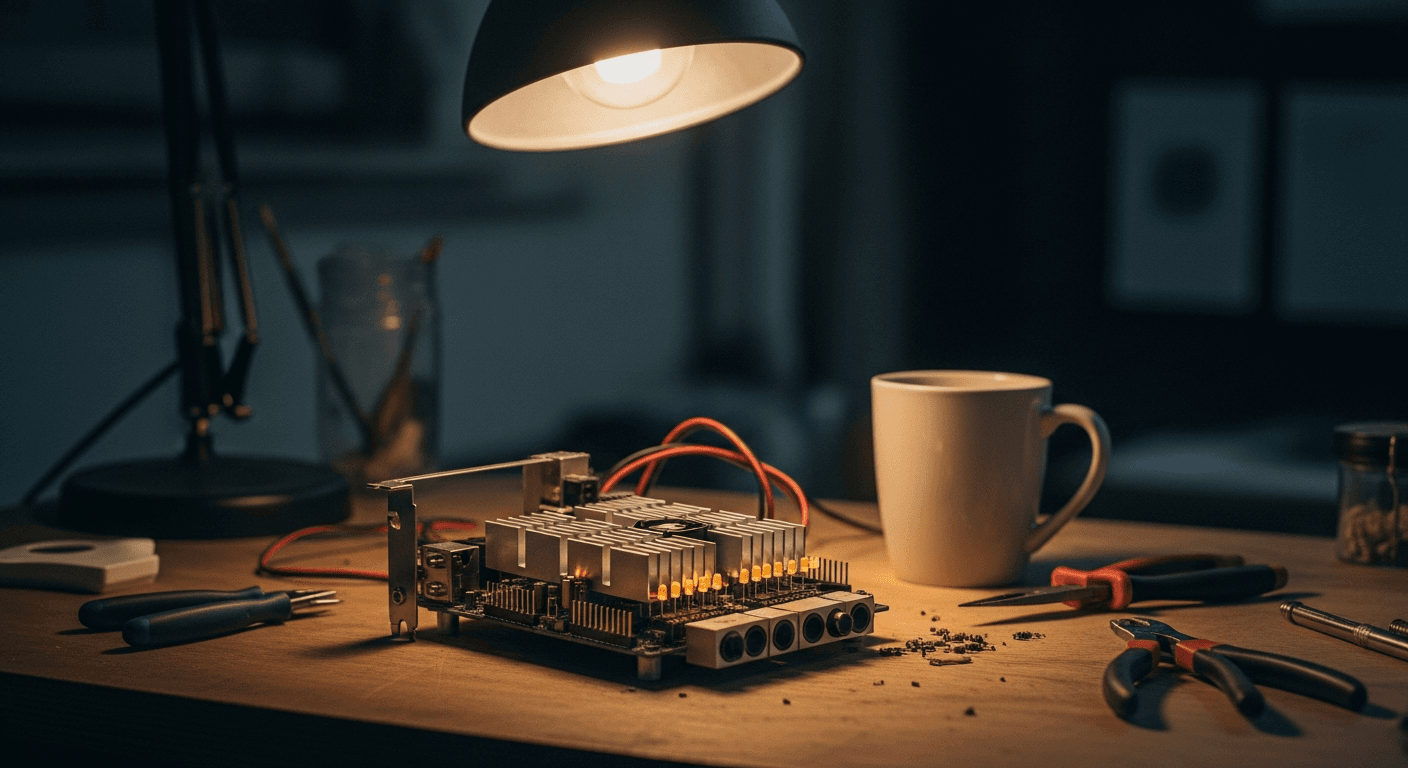
A $150 open-source ASIC beat odds of roughly once every 16,000 years to claim Bitcoin's full block subsidy in eight hours of runtime.
Key takeaways
- A solo miner running a single Bitaxe Gamma (1 TH/s, $60-$150 retail) validated Bitcoin block #957,382 on July 9, 2026, collecting 3.1382 BTC ($200,000) through Public Pool's zero-fee solo mining service with no pool cut taken.
- Solo Bitcoin block wins have risen 41% year-over-year: 24 blocks claimed in the past 12 months, paying out a combined 75.44 BTC (~$4.7M) to solo miners, per the Bennet.org solo block tracker.
- The Bitaxe runs on the same Bitmain BM1370 chip as industrial Antminer S21s, draws 15-21 watts, costs under $150, and requires no full node to solo mine, making the barrier to participating in Bitcoin's block reward economy as low as it has ever been.
A hobbyist running a single Bitaxe Gamma validated Bitcoin block #957,382 on July 9, 2026, at approximately 03:30 UTC, collecting a 3.1382 BTC reward (3.125 BTC subsidy plus roughly 0.0132 BTC in transaction fees) worth approximately $200,000, per on-chain data from mempool.space. The device posted a winning share difficulty of 294.14 trillion against a network target of roughly 134 trillion, more than double what was required, after just eight hours of runtime.
Public Pool, the zero-fee solo mining service the miner used, confirmed the win on July 10.
"🎉 Block #2 on hosted Public-Pool. By a lone Bitaxe."
The miner kept 100% of the reward, with no pool fee or cut taken.
What a $150 Device Just Did
The Bitaxe Gamma is open-source hardware built around the Bitmain BM1370 chip, the same silicon inside industrial Antminer S21s. It draws 15-21 watts, connects via Wi-Fi, runs AxeOS firmware, and retails for $60-$150. At roughly 995 GH/s (~1 TH/s), it represents an almost incomprehensibly small fraction of the global Bitcoin network's hashrate.
Statistical models put the expected wait for a 1 TH/s device at somewhere between 16,000 and 18,000 years per block. This one won after eight hours.
The electricity cost to run a Bitaxe for a month at US average residential rates (~$0.13/kWh) works out to roughly $1.71 (18W × 730 hours × $0.13). That is the carrying cost of a lottery ticket that just paid $200,000.
This is the second block mined by a lone Bitaxe through Public Pool's hosted service. The first came through a self-hosted Public Pool instance.
The Trend Behind the Lucky Strike
The individual win is striking. The aggregate trend is more significant.
Solo miners have validated 24 Bitcoin blocks over the past 12 months, a 41% increase year-over-year, paying out a combined 75.44 BTC (~$4.7M), per Bennet.org's solo block tracker, which pulls data from the mempool.space API. The July 9 win marks the 12th solo block of 2026. The average interval between solo wins sits at 15.2 days.
Bennet.org notes that solo-mining attribution is inherently imperfect and the list is not comprehensive. The 41% YoY figure should be read with that caveat. But even a directionally correct reading of the data points to a growing participant base, and a growing participant base is a structural shift, not a Poisson distribution fluke.
The thesis: Bitcoin's proof-of-work protocol is indifferent to capital size. A $150 device and a 100-megawatt data center submit hashes of equal validity. The protocol pays whoever finds the winning nonce, regardless of how they got there. That property is enforced by the consensus rules on every block.
The trigger that would disprove the decentralization narrative: if the 24-block annual win rate falls within normal statistical variance for a static population of solo miners at current global hashrate, this is lottery math with no structural meaning. Watch Bennet.org's methodology and participant count data. If the solo miner population is not growing, the trend disappears.
The concentration context matters here. Five pools (Foundry, AntPool, F2Pool, SpiderPool, ViaBTC) control more than 75% of global hashrate, per mempool.space data. The Stratum V2 first block and the SBI pool shutdown are both relevant data points on how mining power is concentrating and redistributing at the top of the stack. The solo miner data is real empirical evidence that the permissionless floor of the block production economy is holding in parallel, and growing.
The open-source hardware stack is what makes this repeatable. Public Pool handles the node; the miner just plugs in, with no platform lock-in, no minimum hashrate requirement, and no brokerage account needed. That reduction in technical friction expands the addressable population of solo miners.
More participants in the solo mining pool makes the 24-block trend more likely to be structural rather than a statistical run in a static pool. For a deeper look at the home mining setup considerations behind these rigs, the Bitcoin Home Mining Playbook covers the practical stack.
What to Watch
The next data point is whether the solo block pace holds through the second half of 2026. Twelve blocks in roughly six months puts the annual run rate at 24, exactly matching the trailing 12-month figure.
If bennet.org's tracker shows the win rate accelerating alongside genuine growth in solo miner hardware deployments, the decentralization thesis gets stronger. If the pace reverts toward statistical expectation for a flat participant pool, it was variance. Either outcome is informative.
Sources
Frequently Asked Questions
What are the actual odds of a 1 TH/s Bitaxe mining a Bitcoin block?
At current network hashrate, a 1 TH/s device holds roughly one-trillionth of global mining power. Statistical models across multiple sources place the expected wait at 16,000 to 18,000 years per block. The July 9 win came after eight hours of runtime.
What is Public Pool and why did the miner keep 100% of the reward?
Public Pool is a zero-fee Bitcoin solo mining service. Unlike traditional pools that distribute rewards proportionally across all contributing miners, Public Pool directs the entire block reward to whichever single miner finds the winning hash. No fee is deducted.
Is the rise in solo block wins evidence of mining decentralization or just variance?
Both possibilities are live. The 41% year-over-year increase in solo blocks could reflect a genuinely growing solo miner population (measurable decentralization) or it could fall within normal variance for a static participant pool at current global hashrate. Bennet.org's tracker acknowledges attribution is imperfect. The thesis holds if solo miner participation is structurally expanding. It would be disproved if the win count is within expected variance of a flat participant base.